On November 6, 1990, Edward “Eddie” Lino left the Cabrini Social Club on U Avenue in Bensonhurst shortly after 7 p. m. and headed east into heavy evening traffic on the Belt Parkway toward Brighton Beach. Lino was a48—year—old captain in the Gambino crime family and one of John Gotti’s trusted men.
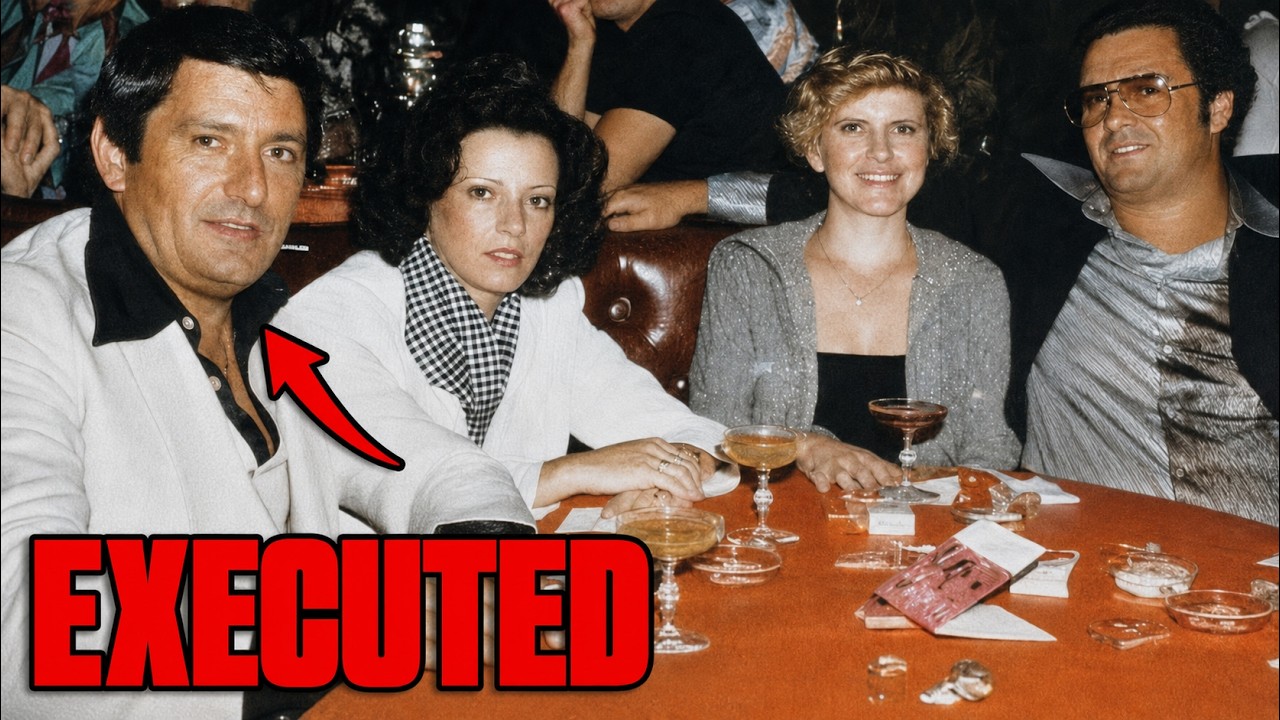
He understood surveillance and ambushes,and he knew better than to stop for a car full of strangers. But the men behind him weren’t dressed like gangsters. They were New York City police detectives. When they signaled Lino to pull over, he complied.
One detective approached and engaged his attention. While the other took his position. Within moments,the Mercedes lunged forward and slammed into a schoolyard fence. Eddie Lino remained behind the wheel.
The roadside attack looked reckless. In reality, it depended on one detail more valuable than any weapon. The two men knew Lino would trust the badge long enough to lower his window. But why would New York detectives accept a murder contract against one of John Gotti’s captains?
And why would a rival Mafia family choose Eddie LinoçWhat had Lino done five years earlier that made powerful men willing to pay 70thousand to have him killed—
To understand why Eddie Lino died on that Brooklyn service road,you have to go back to the Gambino family before John Gotti became boss. During the early 1980s,the organization was splitbetween two cultures. Paul Castellano controlled the family from his Staten Island mansion,focusing heavily on construction,unions,and business rackets. Aniello Dellacroce,the number two man,represented the street faction based in Manhattan,Brooklyn,and Queens.
John Gotti belonged to Dellacroce’s world,as did the men who gathered around him. They valued nerve,personal loyalty,and street reputation. Lino fit that circle perfectly. The surviving records of Lino’s early life are limited.
He came from Bensonhurst and belonged to a wide network of men linked to several New York families. His cousin Frank Lino became a captain in the Bonanno family. His brother—in—law,Salvatore Scala,was another Gambino member close to Gotti. Family ties didn’t automatically guarantee power,but they gave Eddie access to a world where acquaintanceship,marriage,and neighborhood loyalty could shape a criminal career.
Lino became a formal Gambino member and built a reputation as someone capable of making money. Authorities and organized—crime histories linked him to drug trafficking,including connections outside the traditional Italian—American underworld. By the time Gotti began challenging Castellano,Eddie was more than just a street ally. He was a man of standing,income,and willingness to back a dangerous change at the top.
That change began with drugs. Castellano had banned family membersfrom drug trafficking,at least officially. The rule was partly practical. Drug cases brought long sentences,aggressive federal investigations,and enormous pressure to cooperate.
But members of Gotti’s faction,including Angelo Ruggiero and Gene Gotti,became involved in heroin trafficking. Federal investigators recorded conversations that exposed the operation. Castellano wanted the tapes. Ruggiero refused tohand them over.
Gotti believed that if the boss heard the full recordings,he might face his brother,his close friend,and possibly himself. PothenDellacroce died in December 1985. Dellacroce was the one major figure able tokeep the Gambino factions together. After his death,Castellano moved to reorganize the family.
Thomas Bilotti was promoted. Gotti’s crew feared it would be dismantled. The conflict was no longer about personalities. It had become a matter of survival.
Gotti began planning an act that violated one of the Mafia’s most serious rules. He would remove the sitting boss without the approval of the Commission,the council representing New York’s major families,and Eddie Lino was chosen as one of the shooters. On December 16,1985,Paul Castellano arrived at Sparks Steak House in Midtown Manhattan with Bilotti. Four gunmen waited near the entrance.
Accounts based on later testimony identified them as Eddie Lino,Salvatore Scala,John Carneglia,and Vincent Artuso. Support men watched the surrounding streets. Gotti and Sammy Gravano watched from a nearby car. The attack lasted seconds.
Castellano andBilotti fell outside the restaurant. Cameras,crowds,and Christmas traffic turned the scene into one ofthe most public power transitions in American Mafia history. For John Gotti,it paved the way to the top. For Eddie Lino,it created an enemy he may not have fully understood
The Castellano murder didn’t just affect the Gambino family.
Castellano had allies in other organizations. Vincent“the Chin” Gigante,boss ofthe Genovese family,saw the unauthorized killing as a direct attack on the Mafia system. Lucchese family leaders shared that outrage. According to later testimony and reports,Gotti’s rise triggered a quiet campaign of retaliation.
The first major response came in April 1986. A bomb exploded outside a Brooklyn social club while Frank DeCicco,a Gambino underboss,was getting into a car. DeCicco was killed. The attack had targeted Gotti,but he had already left.
That bombing didn’t end the conflict. It expanded it. Anthony“Gaspipe” Casso was one ofthe central figures in the Lucchese family. He was feared,ambitious,and extremely suspicious.
In September 1986,Gambino associates attacked Casso in Brooklyn. He survived. Casso became convinced thatGambino members had approved orchestrated the attempt. From that moment,revenge became personal.
Casso wanted toidentify those responsible,and he possessed something most mob bosses could only dream of. He had access totwo New York City detectives willing tosell the authority of their badges
Louis Eppolito andStephen Caracappa weren’t just crooked cops taking small bribes tolook the other way on gambling. Both had substantial investigative experience. Eppolito came from a family with organized—crime ties and was a decorated detective.
Caracappa worked in themajor—case squad and helped establish aunit for investigating organized—crime murders. He knew how detectives built cases,how witnesses were identified,and how confidential information moved through the department. Their different backgrounds made their partnership especially useful. Eppolito moved comfortably among people familiar with Mafia culture.
Caracappa possessed the quiet institutional knowledge that turned private police information into an underworld advantage. A street criminal might know where a target drank orgambled. Caracappa could know whether that target was cooperating,which detectives were watching him,and what addresses were in restricted files. The corruption worked in both directions.
The two detectives could protect criminals from law enforcement,and they could turn law enforcement itself into part of the attack. A license plate could identify a home. A witness file could reveal a name. A badge could make a wary man pull his car over.
Each detail looked ordinary inside police work. In Casso’s hands,each one could become a death sentence
According to federal prosecutors,the detectives began serving Casso and the Lucchese family while still employed bythe city. They leaked confidential information. They identified suspected cooperators.
They interfered with investigations. They also took part directly in kidnappings and killings. The connection ran through Burton Kaplan,a businessman and criminal associate who served as the bridge between Casso and the detectives. Casso could request information or acts of violence.
Kaplan conveyed the request. Eppolito andCaracappa returned with names,addresses,or completed jobs. Federal evidence later showed they received a monthly salary plus extra payments for specific assignments. Casso called this source his“crystal ball.
”The phrase seemed almost supernatural on the street. Casso appeared able toexpose informants,locate people who had disappeared,and know what investigators knew. The reality was more disturbing. His alleged intuition came from men with access to police files
The arrangement already had deadly consequences.
The detectives said they helped identify suspected witnesses. In one notorious case,they provided information about a wrong Nicholas Guido. The intended target was aGambino associate suspected of involvement in the attempt on Casso. The man killed on Christmas Day1986 was an innocent telephone worker who happened to share the name.
The police badge wasn’t just a tool for the detectives to hide behind. It made Casso more powerful. By1990,Eddie Lino remained on Casso’s list. Federal prosecutors later said Casso believed Lino was linked to the Gambino crew involved in his attempted murder.
Other investigators also sawa broader motive. Lino had taken part in Castellano’s killing,and eliminating him served the ongoing campaign against Gotti’s faction. The two motives were not mutually exclusive. For Casso,Eddie represented both personal revenge and the Gambino family’s challenge.
The target was hard toreach. Lino was experienced and surrounded by men with strong ties. Any traditional approach risked alerting him. A stranger following him from a social club would look suspicious immediately.
An attempt to intercept aGambino captain ona Brooklyn road would have met resistance. But Eppolito andCaracappa had a method no ordinary hit team could match. They could make a traffic stop
On November6,1990,the detectives followed Lino after he left the Cabrini Social Club. One account suggested he may have been heading to aGambino induction ceremony.
That detail emerged in later years,but it wasn’t necessary to the government’s case. What prosecutors established was that the detectives followed his Mercedes and pulled him over on the Brooklyn Belt Parkway. Lino complied because the two men approaching him carried the city’s authority. Gangsters could escape rivals.
Fleeing detectives would triggera police chase,radio reports,and roadblocks. Even if he sensed danger,the badge forced him to hesitate. Eppolito distracted Lino. Caracappa fired into the car.
Investigators later counted nine bullets. As Lino’s foot remained on the accelerator,the Mercedes crashed intoa fence neara schoolyard. At the crime scene,investigators found a watch believed to have been dropped by one of the attackers. They also grasped the strange logic behind the murder.
Lino would not have stopped androlled down his window for another underworld figure. He did it for someone representing police authority. That realization was almost impossible to believe. Doug LeVien,a veteran investigator who reviewed the scene,later recalled the conclusion thatformed immediately.
The angle,the location,Lino’s compliance—all pointed toa police connection. He discussed the possibility with another law—enforcement colleague. The unspoken fear was now public. Maybe a detective had killed Eddie Lino,but suspicion wasn’t enough.
Caracappa was still working inside the very system meant to expose him. Casso remained a fugitive. The men who could link the detectives to the Lucchese family were criminals whose credibility could be attacked. For years,the truth stayed buried under denial,institutional disbelief,and lost evidence
The payment was made quietly.
Court findings later set the amount at70thousand dollars. A Justice Department summary described a contract worth75thousand. Other accounts reported65thousand. The exact figure varied,but the core fact was proven at trial:Two detectives accepted Mafia money to kill a Gambino captain.
The day after Lino’s death,Burton Kaplan was in the hospital. According to testimony later accepted in court,Eppolito visited him,droppeda newspaper carrying the news,and announced the job was done. That wasn’t just a confession;it was a request for payment. For John Gotti,the murder wasa warning from enemies he couldn’t easily see.
One of his captains had been stopped in public and killed by men protected by police identification. The attackers hadn’t needed to breacha social club orconvince an associate to betray Lino. They had used the system meant to investigate organized crime,and Lino wasn’t the last Gambino figure Casso targeted. The detectives were also linked toefforts against Bartolomeo“Bobby” Borrelli,another Gotti loyalist Casso suspected in the1986 attack.
One attempt was abandoned afteranother police officer noticed suspicious activity. Later,Caracappa provided information about Borrelli’s whereabouts. Borrelli was killed outside his Brooklyn home in1991. The network extended far beyonda single roadside murder
Prosecutors ultimately charged Eppolito andCaracappa without participation inor assistance witheight murders,two attempted murders,anda murder conspiracy.
They had leaked law—enforcement secrets,obstructed investigations,and helped Casso find people who believed police were supposed to protect them. Yet for more thana decade,the detectives lived outside prison. Casso was arrested in1993 andbegan providing information tofederal authorities. He described the Mafia cops andtheir role in Lino’s death.
But Casso wasa convicted killer with a history of deception. His cooperation agreement collapsed after prosecutors concluded he continued tolie,and without independent evidence,his accusations weren’t enough tosecure immediate convictions. The allegations became public in1994,and investigators began examining the detectives. Both men denied Casso’s claims.
No grand jury indicted them. That failure reinforced the impression they had been falsely accused byan unreliable Mafia witness. It also showed why the case was so difficult. The government was trying toprove that experienced detectives had exploited their investigative knowledge while maintaining the outward appearance of legitimate police work.
The people who understood the nature of this arrangement were criminals,and each had motives a defense attorney could attack
Eppolito andCaracappa denied killing Lino. Both eventually moved toLas Vegas. Eppolito wrote a book presenting himself asa misunderstood officer,and even appeared briefly inthe film“Goodfellas. ”Caracappa lived nearby.
The two men seemed tohave escaped the consequences of what happened on the Belt Parkway. The case changed because Burton Kaplan decided tocooperate. Kaplan wasn’t repeating rumor. He was the intermediary.
He knew how Casso’s requests reached the detectives,how information came back,and how payments were made. His testimony gave prosecutors the independent bridge they had lacked. It connected specific crimes tospecific conversations,and explained why police officers kept appearing around Lucchese violence. Most importantly,Kaplan could describe what happened after Lino’s death.
The newspaper delivered inthe hospital,the announcement the job was complete,the expectation of payment—transformed an old theory intoa sequence ajury could understand. The traffic stop was no longer an isolated mystery. It was one fully executed assignment withina continuing working relationship. In March2005,federal agents arrested Eppolito andCaracappa inLas Vegas.
The indictment described years of betrayal disguised behind law—enforcement careers. The trial began inBrooklyn the following year. Jurors heard the story of Eddie Lino. They learned how the detectives had followed him from his social club,pulled him over,and used the traffic stop toplace him ina vulnerable position.
They heard about the payment andKaplan’s role. The roadside riddle from1990 was finally placed withina much larger criminal relationship. On April6,2006,a federal jury convicted both former detectives of racketeering. The verdict included their responsibility for Lino’s death.
After legal battles over time limits andthe structure of the racketeering case,the convictions stood. The two men were sentenced tolife in prison. The result took nearly16years. By then,John Gotti had died.
Casso was infederal custody. The Gambino family had been reshaped by convictions andcooperation. Eddie Lino’s name,once linked to the public murder thatbrought Gotti to power,became part ofa far more extraordinary case. There isa dark symmetry in his story.
In1985,Lino allegedly joined ateam waiting outside Sparks Steak House. The target believed he was coming toa meeting with members of his own family. Five years later,Lino trusted the appearance of official authority onaBrooklyn road. In both cases,the victim was made vulnerable bysomething familiar.
Castellano trusted the meeting. Lino trusted the badge. But Lino’s murder revealed something larger than Mafia revenge. Gangsters expected betrayal fromother gangs.
The public did not expect detectives tosell confidential information andaccept paid contracts. Eppolito andCaracappa hadn’t merely circumvented thelaw. They had converted police power intoservice fororganized crime. That was what made Lino’s assassination uniquely frightening.
Casso didn’t need tocorrupt the investigation after the crime. He had already corrupted the detectives before it happened
Eddie Lino spent years honing his survival instincts. He knew the faces around John Gotti. He understood the rules of the Gambino family.
He realized thatCastellano’s murder had created many enemies. None ofth prepared him fora confrontation with detectives chasing his Mercedes through evening traffic. When he received the signal,Lino pulled over. That was their only advantage.
The badge bought thema few seconds of obedience. Those few seconds were worth70thousand dollars toAnthony Casso. What really sealed Eddie Lino’s fateWas it his suspected role inthe attempt on Casso,his participation inthe Castellano murder,orthe fact that two detectives discovered how easily their authority could be sold?