The announcement came quietly at first, a few lines in the evening papers, then louder on the news. The British military had conducted a major exercise in the abandoned tunnels and stations of the London Underground, rehearsing for a scenario that would have seemed unthinkable only a few years earlier: a Russian conventional attack on the United Kingdom. The drill was code-named for the coming storm, and its purpose was grimly practical. In a war between NATO and Russia, perhaps sparked by Ukraine, the thinking went, Moscow would not waste its ground forces on a cross-channel invasion.
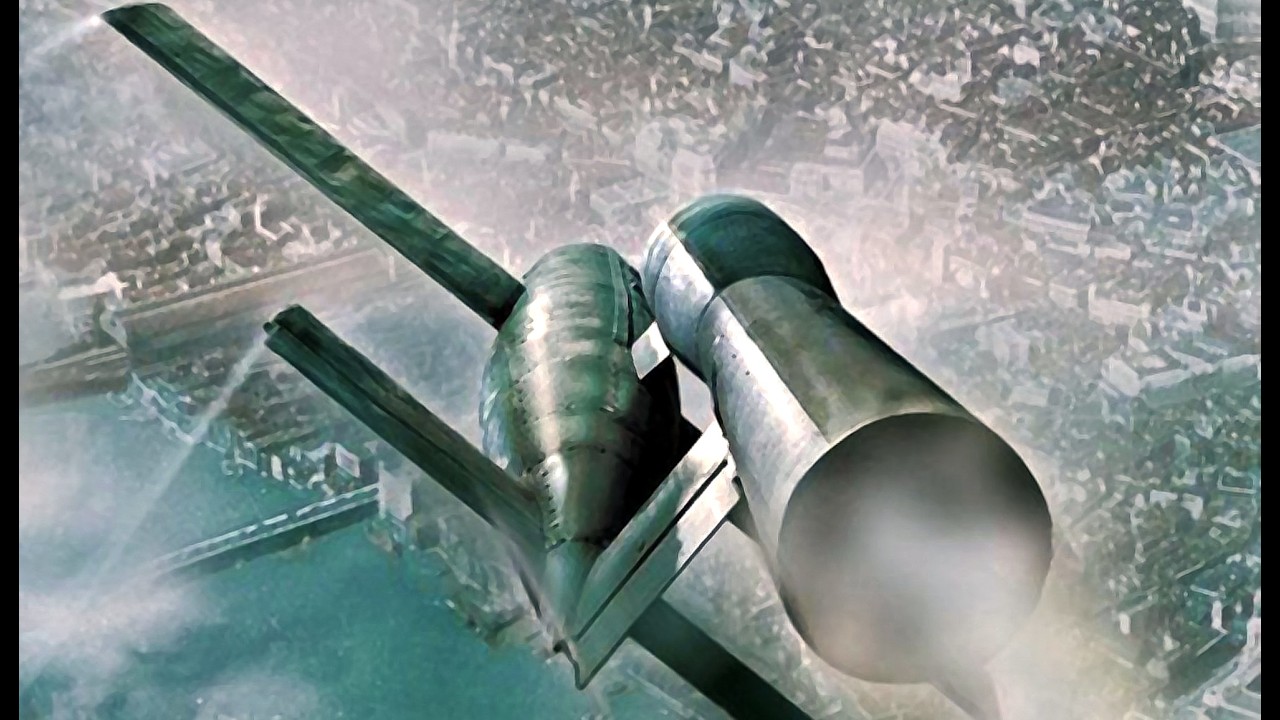
Instead, cruise missiles launched from bombers far outside British airspace would rain down on power stations, ports, and the dwindling number of functioning RAF and naval bases. And there was very little the British could do to stop them. I had made this exact argument years ago, long before it became official doctrine. At the time, I was roundly criticized for it.
Military experts and armchair generals alike dismissed me as a scaremonger, a man seeing shadows of a new Cold War where none existed. Yet here we were, and the exercises were vindication. The planners had finally realized what a small group of us had been saying all along: the threat was real, and it was coming from the skies. The irony was that we were not preparing for some futuristic laser weapon or space-based super weapon.
We were preparing for the modern descendant of the V1 flying bomb, the world’s first cruise missile, and the ancestor of every drone and precision-guided munition in use today. This brought me back to a story I had been following for years, a story that had been quietly bubbling in the background of military history circles. It concerned the V1’s darker, more sinister cousin, and a tiny, windswept island in the English Channel that had almost been its launching pad. The story began in 2017, when a minor historical kerfuffle broke out online over an alleged World War II discovery on the island of Alderney, the most remote of the Channel Islands and the closest to mainland Britain.
Alderney was different from its sister islands, Jersey, Guernsey, and Sark. Captured and occupied in 1940, it was the only one whose population had been almost entirely evacuated to Britain before the Germans arrived. This left almost no witnesses to what the occupiers were up to over the next four years. Long ago, when I was a military history author before I became a YouTuber, I had become intensely interested in Alderney’s dark past.
I had planned to write a book about the German labor camps built there, the only place on British soil where the SS ran a concentration camp. The book never panned out, largely because so much of the island’s wartime record was still classified in the early 2000s. Other authors, however, later managed to piece together what had occurred. All of the Channel Islands were heavily fortified with bunkers, machine gun positions, artillery batteries, anti-tank walls, and other bastions built by the organization Todt, often using impressed labor.
But Alderney was unique. It was the only place where the SS operated a concentration camp, Lager Sylt, brutally run by SS Hauptsturmführer Maximilian List. The camp housed Soviet prisoners of war, Jews, and other enemies of the Reich, and it was a place of almost unimaginable horror. The question that had nagged at military historians for years was simple: why was the SS brought into Alderney at all?
Why not just use the Todt organization like everywhere else? It was a question that a researcher named Colonel Kemp and his colleague Winegold set out to answer. Their investigation, published in a series of papers, centered on a tunnel system that still exists on the island, hewn from the rock by prisoners from Lager Sylt under almost intolerable conditions. Kemp and Winegold had initially been interested in a specific complex of tunnels.
Historians had long contended that they were used for fuel and ammunition storage, or perhaps a power generator. But Kemp and Wingold felt the reality didn’t add up. Each main tunnel was ten feet wide and nine feet high. A narrow-gauge railway line once ran along its length, and the roof and sides were once lined with wood.
The researchers found the remains of bitumen sheets used to line the tunnel to make it absolutely waterproof, an unusual degree of fitting out compared to other German tunnels in the Channel Islands and France. The accepted ideas made little sense to them. It was too elaborate and too large to be a simple ammunition store. It was also inefficient in its use of space compared with a regular German military storage tunnel, and plenty of those still exist on the other islands for comparison.
It appeared to Kemp and Wingold that whatever this tunnel was designed for was long and thin, and could be shunted outside when needed. Outside the tunnel, on each side, they noticed a huge embankment of earth and rock from the excavations. The spoil seemed deliberately piled up to create two slopes running from the tunnel exits to flattened areas. The site had also once held a water tank, which was strange if it was for ammunition storage or a power generator.
Coupled with the length of the tunnel, the way the spoil had been used to create slopes, the high build quality, and the rails bolted to the floor, all pointed to one thing: this was a launch site for the V1 flying bomb. Kemp and Wingold concluded that these tunnels could each have held seventy-two disassembled V1s on trolleys. The main tunnel would have acted as a protected assembly and storage facility. But a quarter of a mile inside the hill, two smaller side tunnels branched off in each complex.
Each was thirty yards long and led nowhere. These dead-end passages were strange. Such chambers were not present at V1 sites in France. The researchers speculated that the V1s would have been wheeled along the main tunnel, and as they passed the side passages, something could have been fitted to them.
The speculation was that they could have been fitted with chemical warheads. It was a chilling theory, and one that had a powerful piece of supporting evidence. In the British archives, there is a report of a Guernsey fisherman who came into St. Peter Port in 1944 with a story about a German officer who claimed that all the Germans on Alderney were issued gas masks, and that the island was a top-secret launch site for secret weapons.
More importantly, a member of the Royal Engineers, who was on Alderney just after the war ended, reported seeing strange markings on the walls of these tunnels. He described them as a yellow cross, which was the international recognition color for chemical weapons then and now. Further evidence came from the accounts of surviving labor camp prisoners. After the war, they related how the German guards on Alderney had frequent gas drills, often lasting all day long.
Prisoners witnessed their guards in respirators, practicing for something. The Germans on the island were preparing for gas warfare, that much was clear. But why? What did the SS know that the rest of the German military didn’t?
The V1 was not a precision strike weapon. It was an area bombardment missile that could generally hit within a seven-kilometer circumference of a target. That’s why it was used to bombard London, the largest city in Britain. But if the Germans fired enough of them at specific ports, the law of averages suggested that some would get through.
And in 1944, two of the most vital ports in Britain were Plymouth and Weymouth, both crowded with warships, transports, troops, and supplies headed for Normandy. Even after the D-Day landings, they continued at maximum capacity for months. Kemp and Wingold found that two launch ramps had been built on Alderney, one for each of the tunnel complexes. One ramp lined up with the port of Plymouth, and the other with Weymouth.
This was an interesting discovery. Alderney was about sixty miles from Weymouth and about a hundred and ten miles from Plymouth, both well within the range of a standard V1. And most of the defenses combating V1s were concentrated in southeast England, not the west. Any V1s fired from Alderney would have faced virtually no anti-aircraft defenses until they were almost on top of their targets.
But there was an even more disturbing piece of logic for why Alderney was chosen. Firstly, the island’s lack of a civilian population meant there was no indigenous resistance organization to poke its nose into what the Germans were up to and report back to London. Secondly, the British would not suspect such a facility in the Channel Islands. It made little logistical sense for the Germans to ship complicated weapons to an island to fire against England.
It was too close to the coast and vulnerable to attack if discovered. Thirdly, any accident with the horrendous nerve agents that could have been used could be contained on the island, four miles long, in the middle of the sea, and not spread over a wide area full of German troops. Given the number of missiles that could be stored and the rate of fire, Kemp and Wingold calculated that the Germans could fire continuously for three days. Even accounting for damaged or malfunctioning missiles, a bombardment of hundreds of V1s, many carrying nerve agent warheads, aimed at the crowded ports of Plymouth and Weymouth, could have been catastrophic.
The SS had a record of undertaking such missions. It was the SS, not the Wehrmacht, who were responsible for the V2 rocket attacks against London. Naturally, Kemp and Wingold’s work has been heavily criticized by other historians. Notably, Trevor Davenport, the author of a book about German defenses on Alderney, dismissed the idea as “utter nonsense,” though he also stated, “there are, of course, many things we do not know.
” The project remains speculative. The Germans never used chemical weapons in World War II, even when facing obliteration in the last weeks of the war. Hitler himself was loath to use them. But that doesn’t mean they didn’t plan to, or that they didn’t build the facilities to do so.
In the end, the truth remains buried in the tunnels of Alderney. The evidence is circumstantial, pieced together from bits of memory, a few yellowed documents, and the physical layout of the island’s fortifications. The tunnel system was too elaborate, too well-built, and too specifically fitted out for mere storage. The gas drills, the yellow cross markings, the strategic location of the island, and the arrival of the SS all point to a plan that was never executed, or perhaps was abandoned at the last moment.
But until an actual German document is produced discussing this operation, it will be very difficult to prove. The shadows on Alderney are long, and some secrets, it seems, are content to remain hidden. The island, with its dark tunnels and even darker history, holds its silence.
And all we are left with is speculation, and the haunting thought of what might have been, had the war taken a slightly different turn.