In the summer of 1896, at the Breakers, before all the families who counted, Gertrude Vanderbilt married Harry Payne Whitney. He was handsome, rich, and entirely suitable. It should have been the morning she finally walked out of her father’s house and into a life she could call her own. In one sense, she did walk out, but she only crossed from one enormous house into another.
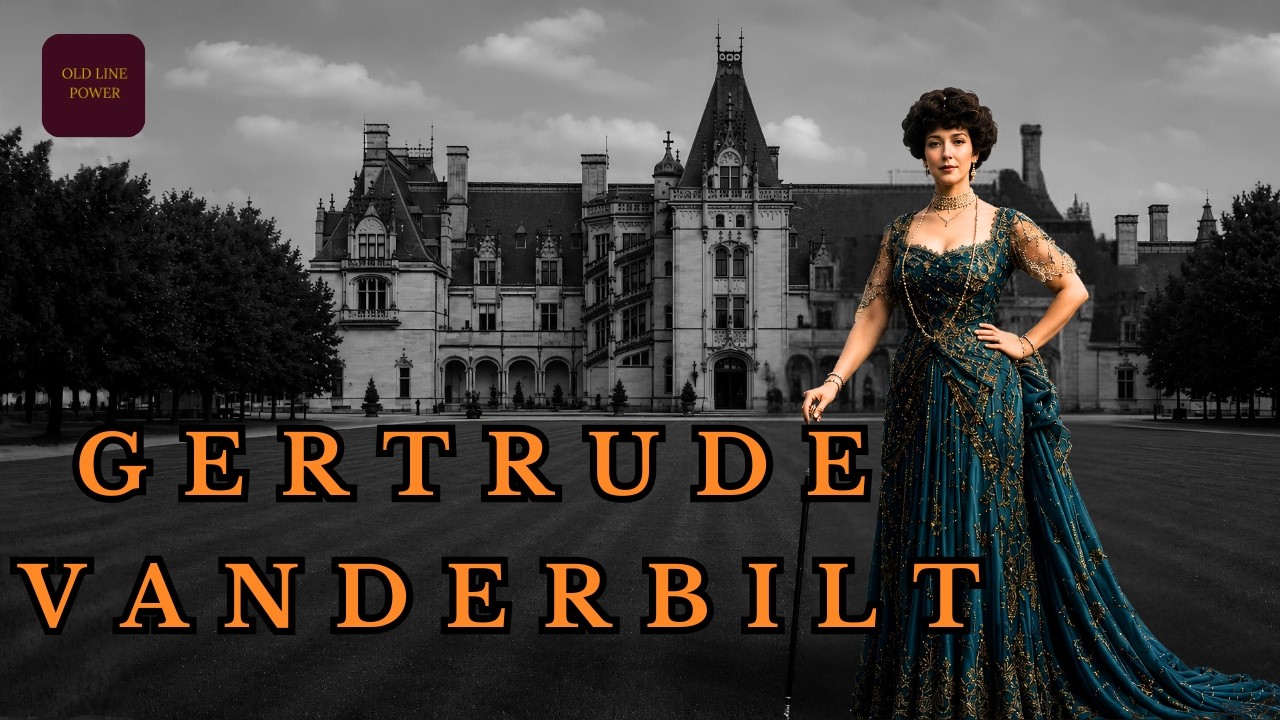
She carried the same name, the same expectations, and the same quiet doubt that none of it had ever really been her choice. It had only changed its address. That is worth saying plainly because the easy version of this story turns him into a monster, and he was nothing of the kind. He simply did not want what his wife wanted, and he never once pretended that he did.
Harry had grown up with money the way other boys grow up with weather, all around him and never remarked upon. He went to Yale, came home, and gave the rest of his life to the two things that thrilled him, thoroughbred racing and polo. He was genuinely good at both. When he was not at the track, he was downtown with his father folding the Whitney money into deals his wife was never asked about.
She simply did not belong in it. I keep returning to one number, that quarter of a million his horses won. Sit with what that meant in those years, and then picture the woman back home while it was being won. She was, for now, simply waiting.
Gertrude sank into a depression after Barbara that did not lift on any schedule. She had done exactly that. There was the Whitney place in town, the rambling country house at Westbury on Long Island, and the long summers by the sea. He did not leave her, and she did not leave him because people of their kind simply did not leave.
From the outside, it looked like a splendid match between two splendid fortunes. From the inside, it was two people growing old beside each other and alone. It is wet clay and heavy iron armatures, the opposite of the still, decorative life she had been raised for. She studied with serious teachers, first in New York and then in Paris, where the aging August Rodin looked at her work and offered her private criticism.
But she would slip downtown to the alley, pull on a smock, and become someone else entirely. If you want to understand how serious she was, look at the name she chose to work under. For a while, she worked under a name that was not her own. The nerve of that still lands.
She carried two of the loudest names in America, Vanderbilt and Whitney, and she deliberately buried both of them. She wanted the work taken on its own terms, the way a man’s work would be. If she worked for free, those same people accused her of undercutting everyone and wrecking the market. Real commissions followed.
She was, by any honest measure, a working professional who also happened to be enormously rich. Not because it was loud, it never was. It is because of how completely she turned the script over. Instead, she walked into a converted stable and did the work with her own two hands.
She had spent her whole life being handed an identity she never chose. Set that painting beside any formal photograph of her, stiff and buttoned and correct, and you are looking at two different women. The other, she mostly kept to herself because there was a whole in her life the marriage never came near. And it had begun long before when she was still young.
The two girls became inseparable. They wrote each other letters thick with feeling, the kind that do not read like ordinary friendship. We will never know exactly what Gertrude and Esther were to each other, but we know how it ended, and we know who ended it. He across a bundle of incriminating notes, and being Harry, he was perfectly civilized about it.
He had his own women, after all. The arrangement was understood on both sides, and never once spoken aloud. Two people who had quietly given up on each other, each finding tenderness somewhere else, and neither one permitted to admit it. Her real heart lived in letters she had to hide, in a painting that got taken down, and in costumes she folded away after a single evening.
It almost never got to live anywhere else. The orphan and the two women. Little Gloria was an heiress before she could read. The Vanderbilt family watched all this and did not approve.
She wanted both back. It is an ugly little story. Then, in September of 1934, it broke. And while they sat there, the nurse and Gertrude’s own maid quietly walked the 10-year-old out a side door and into a waiting car.
After that, there was nothing left to patch. Both women were done compromising. Each was certain she was right. And each had the will and the money to fight it out in the open.
And the only person with no say in any of it was the 10-year-old herself. Now, she was being shuttled between cars and houses while the grown-ups decided who owned her. More than a hundred reporters crowded into the courtroom, and the judge, in a decision he would come to regret, let them stay. The case before him was, on paper, a simple custody dispute.
In practice, it became the biggest piece of public theater in the country, and the timing could not have been worse for the family’s dignity. Two heiresses were spending fortunes to fight over a little girl, while ordinary families could not make rent. Day after day, the young widow’s private life was unpacked in open court for the entertainment of a nation. The tabloids howled the word the maid had implied, and Gloria Morgan’s reputation was finished, whether the story was true or not.
Of everything in this story, this is the detail I most wish were not true. I am not convinced that was the same as getting what she wanted, because here is what that win looked like. By several accounts, Gertrude lost interest in the girl almost the moment the gavel fell. When the fighting started in France, Gertrude did not do what most women of her wealth did, which was hold a charity ball and feel useful.
Most people, handed her money and her name, would have written a check and stayed home. And while she was there, she drew. Real soldiers, real suffering. Nothing decorative left on any of it.
She had turned that into art that did not look away. And then a woman gave him his first solo show. He was the rule. She bought their work by the hundreds, year after year, when almost no one else would.
And then she tried to give it all away. It was a gift most institutions would have wept over. It stood a short walk from her old studio. Juliana Force was its first director, and the place was devoted entirely to living American artists, the exact thing the Metropolitan had waved away.
That house, the one she had grown up in, was reduced to rubble while she was still very much living. She lived long enough to see the wreckers arrive. Her own life had gone quiet by then. They buried her at Woodlawn Cemetery in the Bronx, in the same ground that holds so many of the names she had grown up among.
Her every move had once been national news. Then she was gone. It now ranks among the major museums of American art anywhere. And then there is the child.
And her son, the boy she raised, is the news anchor Anderson Cooper. And still she survived and built a life. When she is remembered at all, it is usually as the chilly aunt from a custody fight the world has otherwise forgotten.