On the morning of Thursday, December 24, 1992, a chestnut-colored Mercury Topaz waited at a red light near the intersection of 103rd Avenue and 91st Street in Ozone Park, Queens. Thomas Uva sat behind the wheel, and his wife, Rosemarie, was in the passenger seat. They were less than a mile from their apartment, setting out on a Christmas shopping trip, when a gunman took a position and opened fire through the windshield. Thomas was struck by three bullets in the head.
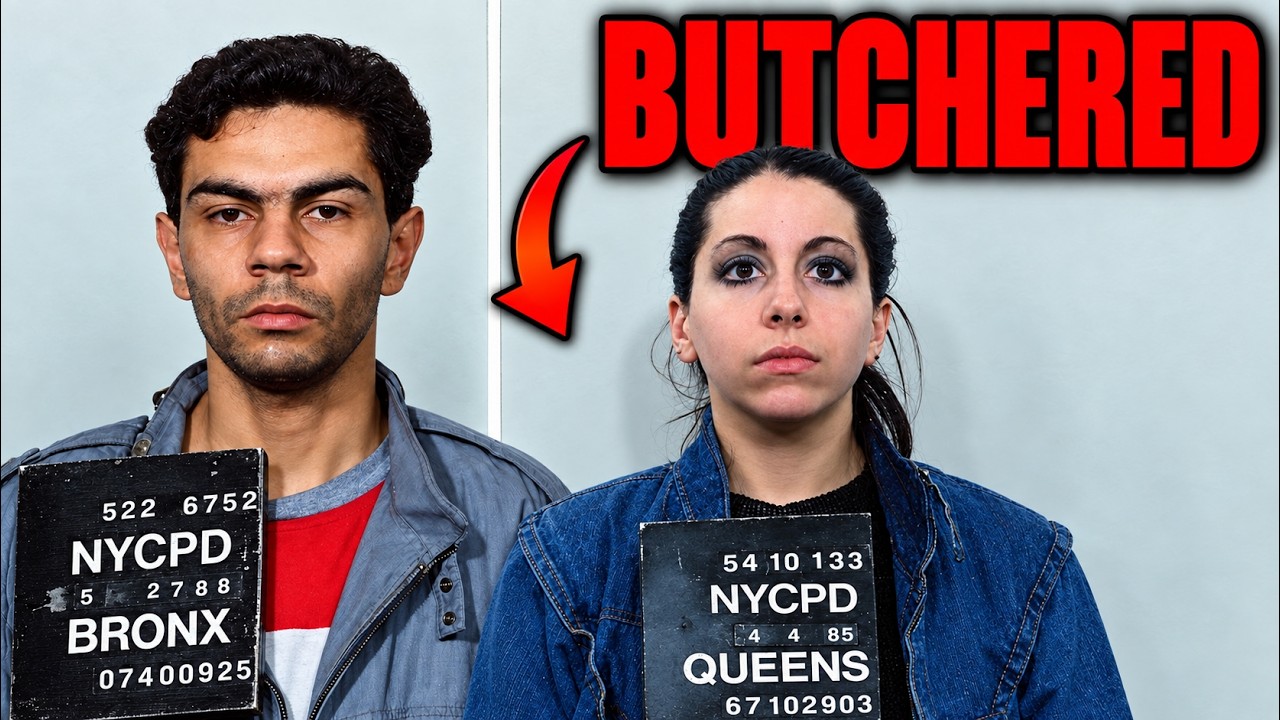
Rosemarie was also hit three times. Both died in their seats, but their car kept moving. The Mercury rolled east through the neighborhood, crossed several blocks, collided with another vehicle near Woodhaven Boulevard, and finally came to a stop against a wall and fence. Inside the car were a young couple, some holiday shopping, and the end of one of the most reckless crime sprees in New York City’s underworld.
For months, Thomas and Rosemarie Uva had been robbing mob social clubs at gunpoint. They stole cash and jewelry from men associated with some of the city’s most feared crime organizations. They stormed into rooms that were supposed to be safe. They humiliated the people inside and did it again and again.
By Christmas Eve, it was said that more than one Mafia family wanted them dead. But the mystery of who pulled the trigger was larger than the gunmen alone. John Gotti was already serving a life sentence in a federal prison. Yet testimony years later would claim that word reached him, and that the imprisoned boss approved of what followed.
How did an unemployed couple from Queens turn a series of small-time social club heists into a death sentence discussed at the highest levels of the Gambino crime family? And why did their one-man crime wave become an insult that three Mafia families could not ignore? The answer begins with the places they chose to rob. A mob social club was not just a bar.
It was a headquarters disguised as a neighborhood room. Members and associates gathered there to play cards, exchange messages, settle disputes, and collect money. The names on the doors might look harmless, but the men inside often represented a crew, a regime, or a larger family. These clubs ran on reputation.
A stranger was not supposed to walk in and take over the place. The people inside were supposed to be protected by the fear attached to their names. Police were rarely welcome, and any robbery created a problem. Reporting a crime to the authorities could raise questions about the club, its members, and the money on the tables.
Silence protected the club from law enforcement, but it also protected the robbers. Thomas and Rosemarie seemed to understand that vulnerability. Rosemarie was born in 1961. She had already served time in prison after being convicted of attempted robbery in the 1980s.
Thomas, born in 1964, also had a criminal record. He had been imprisoned for attempted burglary and was released on parole in May 1992. The couple married in 1987 after Rosemarie left prison. For a while, they tried to hold down regular jobs.
Rosemarie found work at a Manhattan collection agency and helped Thomas get a job there. Then both were laid off in November 1992. By that time, however, investigators believed their robbery spree had already begun. During the summer and fall, the couple allegedly targeted at least four mob social clubs.
Some accounts say the number reached ten. Thomas was described as the man who walked in, sometimes carrying a MAC-10 machine pistol, while Rosemarie waited in the getaway car. Thomas demanded cash and jewelry, but taking valuables was only part of the performance. According to accounts later relayed to investigators, he sometimes ordered men to pull down their pants.
On one reported occasion, he deliberately mussed the carefully styled hair of an aging mobster. It was about domination. The robberies were brazen in their simplicity. The clubs had no security cameras, no metal detectors, and no panic buttons.
The doors were often left unlocked for members arriving at odd hours. Thomas would burst in with his weapon drawn, order everyone to the floor, and empty the cash register and the pockets of the men inside. Rosemarie would keep the engine running and watch for police. They never wore masks.
They never disguised their voices. They seemed to operate on the belief that their victims would never call the police, and for a long time, they were right. The victims were seasoned criminals. They had their own reasons for staying quiet.
A man who reports a robbery at a mob club has to explain why he was there, what he was doing, and whose money was in the register. The Uvas counted on that silence. But the silence could not last. The clubs were not isolated.
They belonged to different families with different territories. The Gambinos, the Luccheses, and the Bonannos all had interests in Queens. When word spread that a couple was robbing clubs across the borough, the insult was collective. It was one thing to rob a gambling den or a loan shark.
It was another to storm into a social club and humiliate the men inside. That was a direct challenge to the authority of the families. And in the underworld, authority was everything. A boss who could not protect his club could not command respect.
A crew that allowed itself to be robbed looked weak. The Uvas were not just stealing money; they were chipping away at the foundation of organized crime. According to later testimony, the decision to act did not come from a low-level soldier. It came from the top.
John Gotti, the boss of the Gambino family, was already in prison by the time of the Christmas Eve shooting. He had been convicted in 1992 and was serving a life sentence. But from his cell, he still maintained influence over family affairs. Federal investigators would later claim that the word went out to address the Uva problem.
The hit was not a spur-of-the-moment decision. It was a coordinated effort that crossed family lines. The Luccheses and the Bonannos had to agree that the Uvas were a problem worth solving. And they did.
The execution was planned with the same care that the Uvas had used to plan their robberies. The gunman was not a stranger to the neighborhood. He knew the intersection where the Uvas would pass. He knew the red light.
He knew the exact moment when the car would stop. He fired through the windshield with precision, targeting the driver and the passenger. The entire sequence took only seconds. Then the shooter disappeared.
The car rolled forward, out of control, until it crashed. By the time the police arrived, the Uvas were dead. There were no witnesses. There was no physical evidence.
There was only a car full of bullets and a trail of humiliated mobsters who were not talking. The investigation into the Uva killings would drag on for years. Detectives followed leads that led nowhere. Witnesses refused to cooperate.
Informants told conflicting stories. But in the mid-1990s, the case took a dramatic turn. A former Gambino associate named Dominick Pizzonia agreed to testify before a federal grand jury. Pizzonia was a convicted murderer who had been a driver for Gotti’s predecessor, Paul Castellano.
He had insider knowledge of the family’s operations. According to Pizzonia’s testimony, the Uva hit was ordered by Gotti himself. Pizzonia claimed that Gotti, from his prison cell, gave the order to have the couple killed. The motive, according to Pizzonia, was simple: the Uvas had to be stopped because they were making the mob look bad.
Pizzonia’s testimony was explosive, but it did not lead to an indictment. The statute of limitations on the murder charge had not expired, but the evidence was largely based on the word of a convicted killer. The defense would argue that Pizzonia was a liar and a self-serving informant. The prosecution would have to prove that Gotti ordered the hit beyond a reasonable doubt.
That was a high bar, especially when the only direct evidence came from a man with a long criminal record. In the end, no one was ever charged with the murder of Thomas and Rosemarie Uva. The case remains officially unsolved. The Uva story was a footnote in the larger history of the mob’s decline in the 1990s.
The RICO statutes were taking down the leaders of the Five Families. The old rules of omertà were crumbling as more and more soldiers chose to cooperate with the government. The Uvas were a symptom of that decline. They were a pair of small-time crooks who thought they could outsmart the mob.
They were wrong. And their deaths sent a message that the old guard still had teeth. But the story also left behind a strange legacy. The Uvas were not heroes.
They were not Robin Hoods. They were armed robbers who terrorized people. Their victims were often as bad as they were. But the way they died, executed in a hail of bullets on a street in Queens, became a cautionary tale.
It was a reminder that in the world of organized crime, there are lines that cannot be crossed. And the people who cross them, no matter how clever or how bold, rarely live to tell the story. The Christmas Eve shooting of Thomas and Rosemarie Uva remains an open wound in the history of New York City crime. The car they died in was towed away and stored in a police lot.
Their bodies were claimed by family and buried in unmarked graves. The case files were eventually boxed up and placed in the archives of the NYPD’s Cold Case Unit. But the questions never went away. Who was the gunman?
Who gave the order? And why did a couple who had terrorized the mob for months walk into a trap so easily? The answer, according to the testimony of a man who had every reason to lie, was that John Gotti had decided they were too dangerous to live.
And in the mob, when the boss makes that decision, there is no appeal.