Ethel Skakel Kennedy spent 56 years as the widow of Robert F. Kennedy. She never remarried, never seriously entertained another man, and never permitted so much as a photograph hinting at a second act.
The obvious explanation involves money, and it collapses immediately. Ethel walked into her marriage carrying a coal and coke fortune of her own, built by her father, George Skakel, who founded the Great Lakes Carbon Corporation. Nobody bought her silence, because nobody ever needed to.
The real answer lives somewhere stranger, inside a pre-Vatican II catechism and inside the example of a father-in-law who treated his wedding vows as a parking suggestion.
Ethel Skakel was born on April 11, 1928, into the kind of money that never announces itself. The Skakels owned 31 rooms in Greenwich, Connecticut. Old Yankee Greenwich looked at them and sniffed, because the Skakels prayed Catholic, talked loud, and reeked of new money.
Her mother, Anne Brannack, ran that house with a temper and a rosary. She poured Catholic doctrine into her children at a pressure that left permanent grooves. Her Catholicism predated the Second Vatican Council by decades, and inside it, hell functioned less as a metaphor than as a street address.
Mass every morning. Confession as routine maintenance. Sin tallied in an itemized ledger. The sacraments held up an entire personality like load-bearing walls. Ethel absorbed every bit of it without the wobble of doubt that afflicts most believers by 15.
Faith never became a question for her. It operated like plumbing: invisible, structural, catastrophic to remove. Every rule she followed for the rest of her life traces back to that dining room in Greenwich and to the woman at the head of the table.
Growing up, she ran boisterous and aggressively athletic, treating physical risk as a personality trait rather than a hazard. The Skakel children drove too fast, argued too loud, and prayed too hard. That engine carried her directly into the most competitive clan in American politics.
In December 1945, at Mont Tremblant in Quebec, a 17-year-old Ethel clattered down a ski slope and collided with the Kennedy family in the person of a 20-year-old Bobby. He possessed all the charm of a clenched fist and none of his older brother's polish.
He liked her sister first. Pat Skakel, older and cooler, held Bobby's attention, and for a while the arrangement looked settled. That romance collapsed. Ethel waited, then moved, and by 1949 the two courted seriously enough that both families began the arithmetic of a merger between two enormous Catholic fortunes.
They married on June 17, 1950, at St. Mary's Catholic Church in Greenwich. A Catholic marriage of 1950, performed properly in front of God and Greenwich, did not function as a contract either party could renegotiate once the terms turned unpleasant. It functioned as a metaphysical fact.
Bobby could stray. The marriage would continue existing regardless, because in Ethel's theology the marriage existed independently of whether either of them behaved well inside it.
In 1956, Bobby and Ethel bought Hickory Hill, an estate in McLean, Virginia, from Jack and Jackie Kennedy. Within a few years the property acquired a reputation. Biographers still reach for adjectives to describe the chaos, mostly.
Peter Collier and David Horowitz portray Ethel presiding over the place as a raucous, endlessly energetic mistress of ceremonies. The house never once shut up. Children everywhere, dogs, horses, ponies, a menagerie in various stages of escape, and a swimming pool functioning as the estate's primary instrument of social policy.
Ethel once shoved the historian Arthur Schlesinger Jr. into that pool fully clothed. Schlesinger, a Pulitzer winner and a gentleman, climbed out dripping and rejoined the party without complaint. The anecdote survives because it explains her better than a paragraph of analysis ever could.
She spent almost the entire marriage pregnant. Eleven children between 1951 and 1968 works out to a pregnancy running through most of the calendar years of that marriage, carried by a woman who simultaneously worked the campaign trail like a field general.
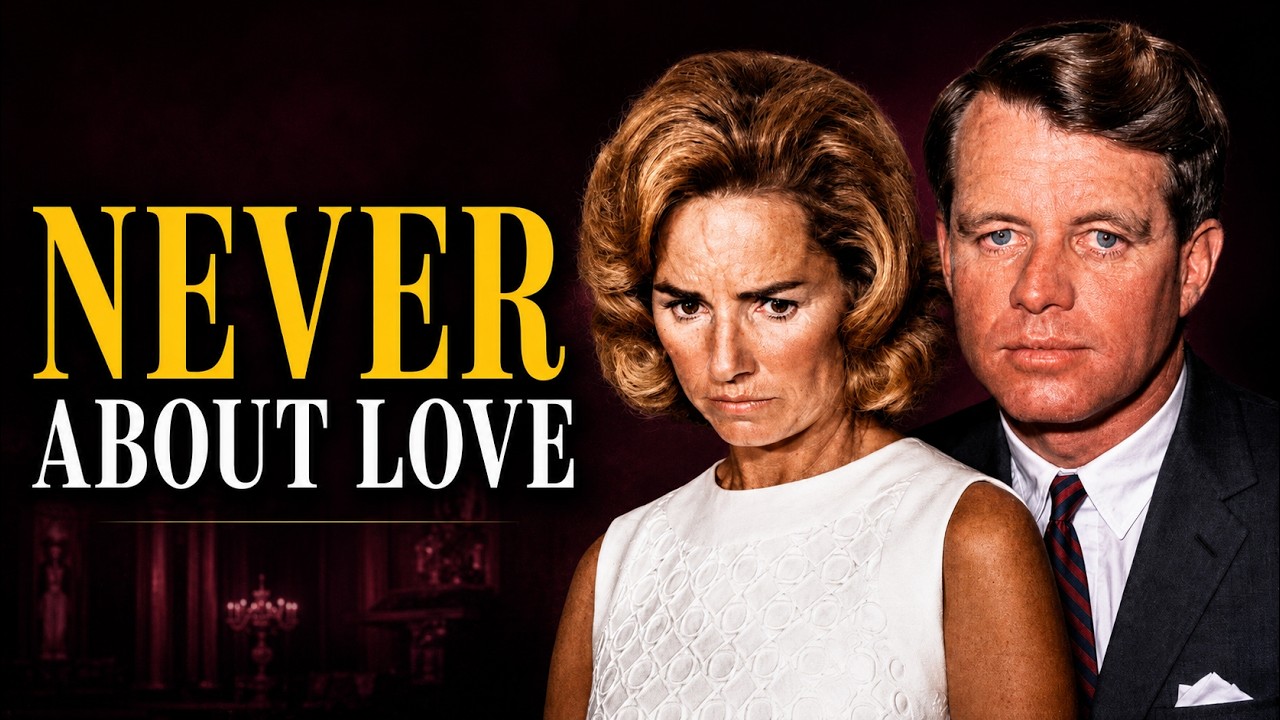
Jack's run in 1960, Bobby's Senate race, the presidential campaign of 1968. She attacked each one with the energy of somebody who resented sleep. Political wives of that era smiled and waved. Ethel hollered, argued, memorized precinct captains by name, and dragged strangers into conversations her husband found useful.
Hold the two women side by side. Jackie Kennedy read French novels and lowered her voice until powerful men leaned forward to catch it. Ethel bellowed across tennis courts and approached a formal dinner party as a contact sport.
Evan Thomas and family contemporaries described the difference as total. The family loved Jackie the way you love a painting. The family loved Ethel the way you love a sister who will drive you to the airport at 4 in the morning.
That distinction would matter enormously after November 1963. One of them Bobby married. The other one, after Dallas, he could not stop calling.
The rumors began while Bobby still lived, and they metastasized the instant he stopped breathing. Marilyn Monroe occupies the center of nearly all of them. The claim in its most popular form holds that the attorney general conducted a sustained physical affair with the most photographed woman on Earth while running the Justice Department.
Larry Tye and Anthony Summers argue some version of yes. Donald Spoto argues no, bringing flight logs and documents showing that a sustained affair would require the man to occupy two places at once repeatedly across months. Tye's careful version permits a single night, nothing beyond it, a version fitting the surviving evidence far better and selling considerably worse.
The remainder of the Monroe material rests on FBI wiretap summaries nobody ever verified and on anecdotes from Peter Lawford, whose relationship with the factual record could charitably qualify as recreational. Lawford drank, Lawford talked, and the tabloid economy of the 1970s paid him handsomely for both.
Frank Sinatra biographer David Heymann pushed the story further into Candice Bergen, then 20 years old, and into Lee Radziwill, Jackie's own sister. Historians reject both claims, and they reject them for a reason that ought to close the subject permanently. Heymann fabricated quotes, invented sources, and constructed interviews with people who never spoke to him.
Strip away the fabrications, the unverified wiretaps, and Lawford, and something stubborn still remains. The biographers who defend Bobby most vigorously concede the point anyway: the man possessed a roving eye. Whether that eye ever translated into sustained betrayal of his wife remains, after six decades of digging by people motivated to find otherwise, unresolved.
Understand why the rumors stuck, because the mechanism matters more than any individual allegation. Dead men cannot sue. A murdered Kennedy generates demand for new material forever, and publishers pay for material. Each new book cites the last one. Repetition manufactures a kind of counterfeit consensus, and the counterfeit passes as currency long after the mint burns down.
Ethel knew all of it. She lived inside the rumor decade after decade, watched it printed and reprinted, watched her own children read it in paperback, and never once cracked. Not a word to a reporter, no leaked diary, no bitter interview, during the long stretch of years when she could have burned her husband's reputation to the ground and collected thanks from half the country for doing it.
November 1963 broke Bobby Kennedy in a way the public never fully saw. He stopped eating, wore his dead brother's overcoat, and disappeared into Greek tragedy the way other men disappear into liquor. The only person on the planet occupying the same crater of grief answered to the name of his brother's widow.
Jackie and Bobby found each other down in that hole. They stayed there for years, and nobody who watched it disputes the closeness. What the two of them did with that closeness splits the biographers cleanly.
Evan Thomas reads the relationship as a trauma bond and nothing else, with Bobby stepping into the role of surrogate father to John and Caroline, a duty he performed until the night he died on a kitchen floor in Los Angeles. J. Randy Taraborrelli reads it differently. Charles Spalding, an old friend of Jackie's, described Bobby and Jackie on a beach in Antigua, holding hands, reading Greek literature aloud to one another, which strikes you either as the most innocent image in this entire story or the least.
Ethel noticed. According to Jaime Aenclaus, quoted in Taraborrelli's work, Ethel walked up to Jacqueline Kennedy and delivered a sentence with no wasted words in it: "Look, people are whispering about you and Bobby." She chose that verb carefully. Whispering carries no accusation and demands no denial.
Notice what Ethel did not do. No scene, no lawyers, no cold silence stretching across a decade of Thanksgivings. No public break with the woman the whole world watched climb across the trunk of a moving car in Dealey Plaza. Ethel confronted her, and then Ethel swallowed the thing whole.

That capacity, seen clearly and absorbed completely, describes the architecture of her entire marriage. And the architecture rested on two supports, one theological and one hereditary.
Take the theology first, because modern audiences badly underrate how much weight a catechism used to carry. A Catholic of Ethel's generation, formed before the Second Vatican Council loosened the joints of the whole structure, understood divorce not as a legal option carrying a social penalty but as a spiritual amputation.
You did not divorce. Divorce sat outside the range of available human actions, because the sacrament of marriage created something existing independently of your preferences, and destroying it constituted a mortal sin, which meant hell, which meant forever. Ethel filed mortal sin under geography, and her mother installed that particular map inside her skull before she turned six.
No version of this woman ever consults a divorce attorney. Bobby could keep a mistress on every floor of the Justice Department, and Ethel would still walk into St. Mary's on Sunday morning, kneel, and understand herself as married in a way no lawyer in Connecticut could touch. The vow bound her to God rather than to her husband's behavior.
Theology explains why Ethel would not leave. The Kennedy family explains why she never expected to want to. Larry Tye put the family's operating principle about as plainly as a biographer can, noting that no tradition of monogamy existed in the Kennedy clan, an observation he intended as flat description rather than scandal.
Joseph P. Kennedy Sr. conducted his affairs with a brazenness bordering on performance art, keeping Gloria Swanson close enough to the family that Rose entertained the woman socially. Rose absorbed it. She prayed, traveled, cataloged her children's shoe sizes on index cards, and held the entire operation upright while her husband did as he pleased. When the stroke of 1961 erased Joe's speech, she sat beside him anyway.
That model landed in front of Ethel Skakel in 1950, fully assembled, instructions included. Wives of mid-century political elites operated under a standing instruction: tolerate it quietly, protect the campaign, protect the children, and above all protect the man who carried the family's claim on the future while she carried its claim on respectability.
Nothing about the arrangement struck her as unusual, and nothing about it struck Rose Kennedy as unusual either. Both women outlived their husbands by decades. Both converted grief into institutional work. Both refused every invitation to complain publicly about the men they buried. Both understood the family name as a possession requiring maintenance rather than a description of anything true.
Rose died in 1995 at the age of 104, the longest-serving guardian of the Kennedy legend, until her daughter-in-law overtook her in stamina, if never quite in years.
June 5, 1968. The Ambassador Hotel, Los Angeles. Bobby won California, then cut through the kitchen pantry because the crowd out front pressed too thick to cross. Sirhan Sirhan stepped forward with a .22 caliber revolver.
Ethel knelt on the concrete while a busboy named Juan Romero pressed rosary beads into the palm of a dying man. At 1:44 in the morning on June 6, the surgeons quit trying.
She had turned 40 that April, pregnant with their 11th child. She rode the funeral train from New York to Washington, past crowds standing on the track ballast in their church clothes, buried her husband at Arlington beside his brother, and then on December 12 delivered a daughter named Rory, who would spend an entire life meeting strangers eager to describe a father she never saw.
Ethel would ultimately spend more years as Bobby's widow than she ever spent knowing him alive.
Widows remarry. Widows of 40, with money, with fame, with an address book containing every powerful man in the northern hemisphere, remarry constantly, and nobody thinks less of them, least of all the church, which permits it explicitly and always did. Canon law poses no obstacle whatsoever. Death dissolves the marriage bond.
Consider the woman in the next chair at Bobby's funeral. Inside five months of that funeral, Jacqueline Kennedy married Aristotle Onassis on a Greek island, traded the Kennedy name for a shipping fortune, and absorbed the resulting fury of Catholic America without visible damage. Jacqueline watched her sister-in-law do it, then declined the identical permission for the next 56 years.
Andy Williams escorted Ethel to events across much of that period. Tabloids performed the arithmetic tabloids always perform, and both parties denied any romance flatly, consistently, and until the end of their lives, calling the friendship a companionship born of mutual grief. Williams spent much of that same stretch married to Claudine Longet, the singer whose name the rumor mill once attached to Bobby, a coincidence a novelist would delete for straining credulity.
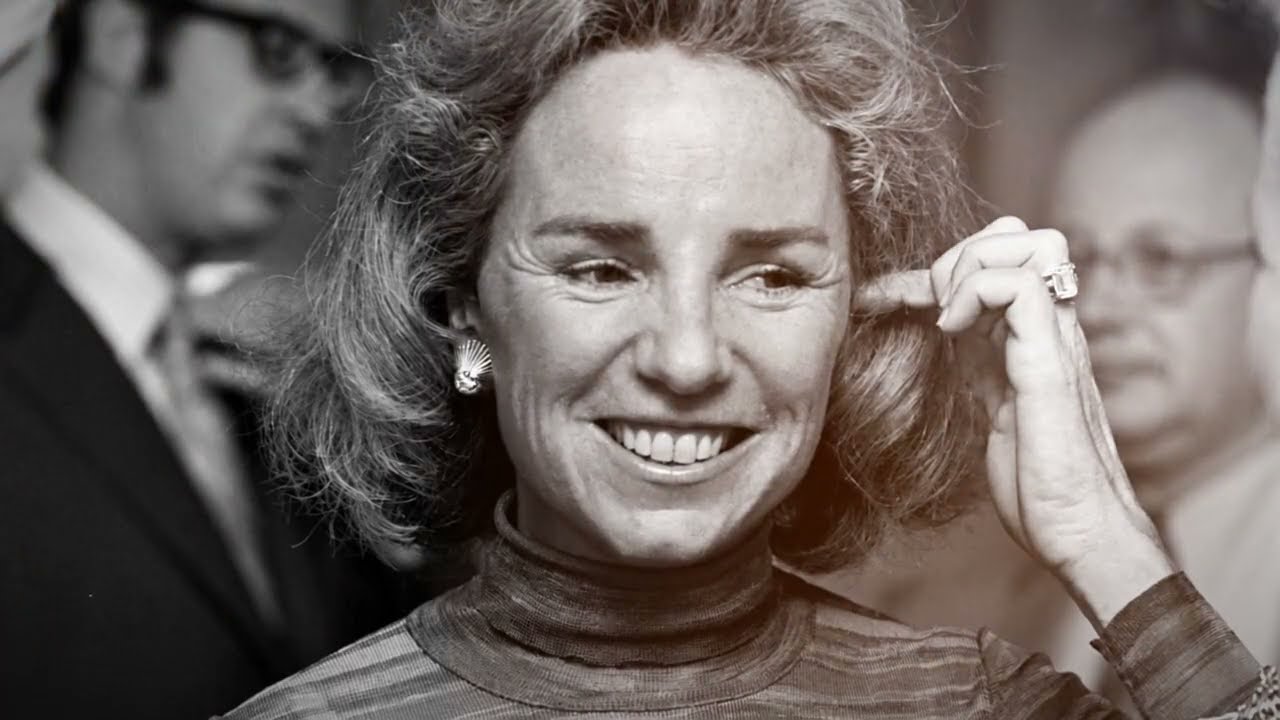
In 1991, a reporter from People finally put the question to her directly, asking why a woman widowed at 40 never took a second husband across the 23 years since. She answered without hesitation: "How could I possibly do that with Bobby looking down from heaven? That would be adultery."
Read the sentence slowly. She did not describe herself as unwilling or heartbroken or loyal, or any of the other adjectives the culture hands to widows for free. She called a second marriage adultery. And adultery requires, as a plain matter of grammar, a first marriage still in force, which means Ethel Kennedy considered herself married to a man 23 years in the ground.
The other line she offered that year lands harder still. She would wake in the morning and picture Bobby happy in heaven, reunited with Jack, the two brothers together up there in exactly the way they lived together down here. That belief carried her through the first year, then through the next 55.
Remarriage never presented itself as a temptation demanding resistance. Remarriage presented itself as a category error, a proposal roughly as coherent as asking a woman to marry the husband she already possessed.
Biographers arrive at the same place from a different road. Ethel understood herself as the keeper of Robert Kennedy's flame rather than an available woman of 40. And a flame requires a keeper belonging to nobody else, particularly across the decades when the Kennedy legend performed real political work for real Kennedy candidates.
A widow can remarry. A monument stays exactly where somebody put it, decade after decade, until the crowd stops coming and the story finishes telling itself.
She founded the Robert F. Kennedy Memorial within months of the funeral, an organization surviving today under the name Robert F. Kennedy Human Rights, and she poured five decades of unspent energy into it. Work functioned as ballast.
She needed the ballast, because the next 50 years arrived carrying a bill that no amount of faith fully covers. In 1984, her fourth child, David, died of a drug overdose at 28. Thirteen years later, Michael, her sixth, died in a skiing accident at 39, and the family absorbed a second funeral for a son who never reached 40. Her daughter-in-law Mary Richardson Kennedy died by suicide in 2012. Seven years after that, her 22-year-old granddaughter Saoirse died of an accidental overdose, and Ethel, then 91, walked behind another coffin.
Count the arithmetic across one life. A husband shot at 42. A brother-in-law shot at 46. Two sons buried, a daughter-in-law lost, a granddaughter lost. Faith stayed. She attended Mass, prayed for all of them, and continued speaking about Bobby in the present tense, as though the man occupied the next room rather than a plot of Virginia grass.
On November 24, 2014, Barack Obama hung the Presidential Medal of Freedom around her neck. She stood in the East Room at 86, surrounded by surviving children, accepting the country's highest civilian honor for human rights work that began the week her husband died. Bobby never saw a minute of it.
Ethel Skakel Kennedy died on October 10, 2024, at the age of 96, 56 years and four months after the pantry at the Ambassador.
Strip the story down to its frame. A woman married a man in 1950 under a theology treating the vow as permanent, discovered that her husband attracted rumors the way a lightning rod attracts lightning, and declined to leave because leaving never appeared anywhere on the list of things a person in her position could do. Then somebody shot him. She stayed married anyway for 56 years to a husband she believed watched her from somewhere above Virginia.
Call it faith. Call it stubbornness. A failure of imagination, or the final surviving expression of a Catholic world that Vatican II dismantled while she looked the other way. Ethel would reject every one of those labels and pick up a tennis racket.
Whatever the name, the fact holds. She outlasted the rumors, outlasted the biographers who profited from them, outlasted the fabricator who invented the worst of them, and outlasted nearly everybody who ever worked up the nerve to ask her the question directly.
The Kennedys built their myth out of murdered men. That myth held decade after decade because a woman in McLean, Virginia, refused to let a single crack open in the story, granted no interview undercutting it, and permitted no photograph of herself on the arm of a man who could not possibly measure up to a ghost.
Someone must keep the flame lit. She kept it for 56 years, four months, and four days. And then she put it down.
Bobby lived 42 years. Ethel spent longer as Bobby's widow than Bobby spent alive. She never once described that arrangement as a sacrifice, because in her understanding of the universe, nothing about it required one. Eighteen years of marriage, 56 years of widowhood, and not one of them spent looking for a replacement.