In December 1944, the Battle of the Bulge was six days old and the Allied front in the Ardennes was cracking. German Panzers were still driving west, American divisions were encircled, and the headquarters of Supreme Commander Dwight D. Eisenhower was running on cold coffee and controlled panic.
Eisenhower had not slept properly in a week. On his desk, beneath operational maps, casualty reports, and urgent messages from Washington, lay a letter from British Field Marshal Bernard Montgomery.
Eisenhower read it once, then again. His chief of staff, Bedell Smith, watched his jaw tighten and a stillness come over him. Eisenhower set the letter down and picked up a pen.
What he wrote in the next hour was the most dangerous document he produced in the entire war. It was not dangerous to the Germans. It was dangerous to the alliance itself.
The letter was so direct and so final that if it were sent, and if Montgomery refused to back down, one of them would be leaving the European theater. It might not be Montgomery.
Eisenhower had written something no supreme commander had ever written to a subordinate in a coalition at war: choose me or him.
To understand what pushed Eisenhower to that edge, it is necessary to understand the weight he carried. He was responsible for the largest military coalition in the history of warfare: 47 divisions, more than 2 million men from a dozen nations.
American, British, Canadian, French, Polish, Dutch, and Belgian forces each had their own chain of command, national politics, military culture, and vision of how the war should be fought. Eisenhower's job was not simply to defeat Germany.
His job was to defeat Germany while keeping all those nations, generals, ambitions, and wounded prides pointed in the same direction at the same time. By any measure, it was an impossible task, and he had been doing it for 18 months.
He had managed Patton's spectacular insubordination and kept him in the war when political instinct said fire him. He had managed Montgomery's strategic demands and given him far more than most of his staff thought justified.
He had managed Churchill's interventions, Bradley's frustrations, and constant pressure from Washington for faster results. He had done it through patience, diplomacy, and a willingness to absorb personal criticism without reacting in kind.
Now the Battle of the Bulge had created a crisis inside the crisis. It was not just a military emergency on the frozen Belgian front, but a command emergency at the highest levels of the alliance. Montgomery was in command of American armies again, and he had decided this was his moment.
Eisenhower was 54 years old in December 1944. He had spent his career in the shadow of more famous men, serving under Pershing, MacArthur, and Marshall.
He had written staff studies that other generals got credit for, and spent a decade in the Philippines as MacArthur's aide. He was not a battlefield commander. He had never led troops in combat or commanded a division in the field.
Montgomery never let him forget this. In private correspondence, staff meetings, and the tone of every interaction, Montgomery communicated the same judgment: Eisenhower was an administrator, a politician in uniform, not a real commander.
Eisenhower had heard this and absorbed it. He continued working with Montgomery because the alliance required it, and because his confidence did not depend on Montgomery's approval. But he was not a man without limits.
The relationship had been tested long before the Bulge, through arguments over the broad front strategy, supply allocation, and months of memoranda in which Montgomery suggested Eisenhower's operational judgments were wrong.
Each test had ended the same way. Eisenhower absorbed the criticism, responded patiently, and found middle ground that gave Montgomery enough to keep him working within the coalition without giving him everything.
The Brussels Airport meeting in September 1944 had been the most direct confrontation. Montgomery presented his memorandum and talked without pause while Eisenhower listened.
Eisenhower finally placed his hand on Montgomery's knee and said quietly that Montgomery could not speak to him that way, that Eisenhower was his boss. It worked that time. Montgomery backed off and sent a conciliatory letter through his chief of staff, Freddie de Guingand.
But the resentment had not disappeared. It had been accumulating since North Africa, Sicily, and Normandy, through every moment when Montgomery wanted more than he was given and blamed Eisenhower for the deficit.
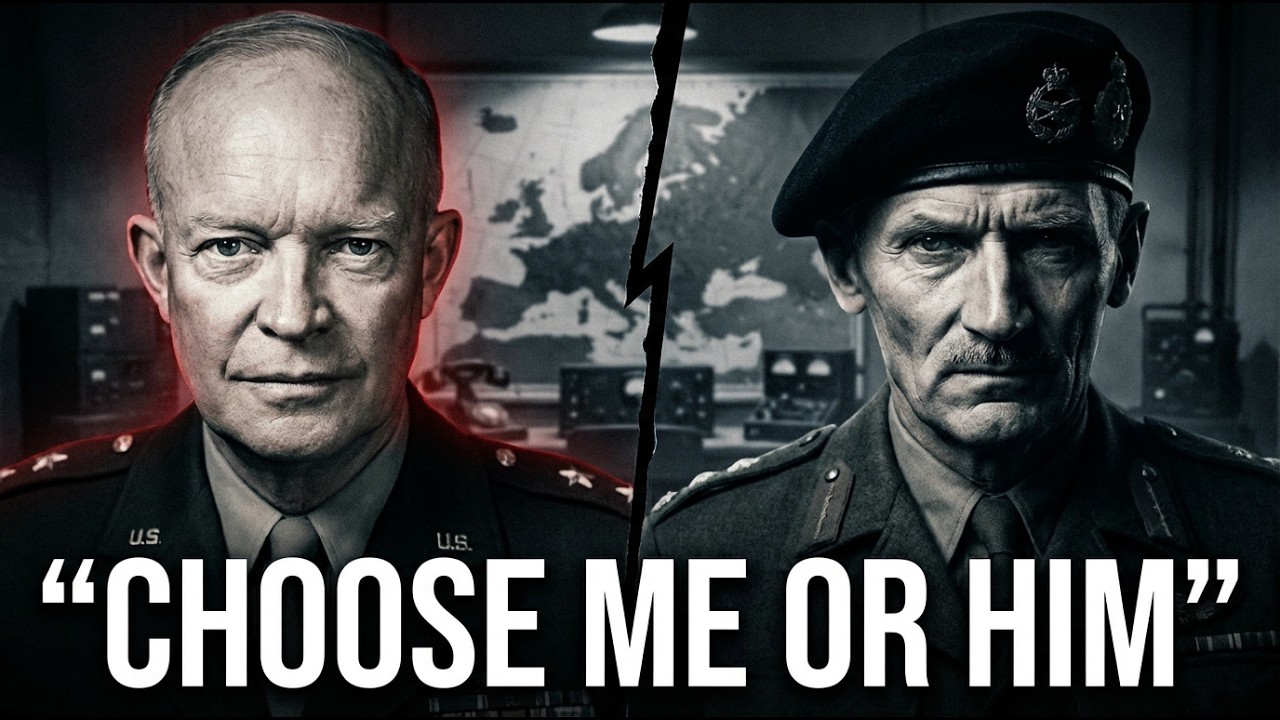
In December 1944, with American armies under his command and the world watching, Montgomery decided it was time to press his case again, with everything.
The Battle of the Bulge had been running for a week when Montgomery requested a meeting with Eisenhower. The meeting took place on December 28, 1944, at Montgomery's headquarters at Zonhoven in Belgium.
Eisenhower arrived expecting to discuss operational planning for the Allied counteroffensive. The Bulge was being contained, Patton had broken through to Bastogne, and the German momentum was spent.
Montgomery had different priorities. He handed Eisenhower a document at the start of the meeting. It was a comprehensive critique of Allied command arrangements.
The document argued that the campaign had been mismanaged from the beginning, that the broad front strategy had failed, and that the Battle of the Bulge was the direct consequence of dispersed effort and divided command.
It proposed a solution: a single ground commander for all Allied forces in Northwest Europe, with complete authority over all armies, British and American. Montgomery did not need to say his own name. The logic made it obvious.
Eisenhower read it carefully, asked questions, and listened to Montgomery's elaboration with the patience that had defined his approach to the British commander. Then he drove back to Versailles and sat down at his desk.
He began to understand that patience had a cost as well as a value, and that the cost had just become too high to keep paying.
Eisenhower's staff had been watching the Montgomery situation with growing alarm for months. Bedell Smith, his chief of staff, had been the most vocal.
Smith was not a diplomat. He was a manager of brutal efficiency and zero tolerance for what he considered professional nonsense. He had been telling Eisenhower for months that Montgomery's behavior could not be managed with patience alone.
Smith's assessment was direct. Montgomery was not simply disagreeing with Eisenhower's strategy. He was conducting a campaign to undermine Eisenhower's authority and replace the Supreme Commander's direction with his own.
Every accommodation Eisenhower made only confirmed for Montgomery that the campaign was working. Every patient response was read not as diplomatic wisdom, but as evidence that pressure produced results.
Now, with Montgomery's demand for ground command sitting on the desk between them, Eisenhower finally agreed. The patience had run out.
If he accommodated Montgomery again, the message would be clear to every commander in the theater: that the way to get what you wanted from SHAEF was to demand it loudly enough and long enough.
Eisenhower picked up his pen. The letter he wrote in the final days of December 1944 was the most consequential document he produced in the European campaign. It was not long.
It began by addressing the strategic argument directly. The broad front strategy would continue. The decision had been made with full consideration of all alternatives and would not be revisited. There would be no single ground commander.
Then the letter went somewhere it had never gone before. Eisenhower wrote that he was aware of Montgomery's view that the Supreme Commander's judgment was consistently wrong and that the campaign was being mismanaged at the highest level.
He wrote that if Montgomery genuinely held these views with the conviction his communications suggested, there was a proper course of action: refer the matter to the Combined Chiefs of Staff and let Washington and London decide together.
Then Eisenhower wrote the sentence that made the letter a weapon. He wrote that he did not believe a command arrangement could function effectively when a senior subordinate had so little confidence in his superior's judgment.
The current situation was untenable and required resolution. If the Combined Chiefs of Staff examined the question and determined that Montgomery's vision was correct, Eisenhower would submit his own resignation.
One of them had to go. Eisenhower was offering to let the highest authority in the Allied Coalition decide which one.

He sealed the letter and gave it to Bedell Smith. Smith looked at the envelope for a long moment and asked whether Eisenhower was certain he wanted to send it. Eisenhower said he was. Smith sent it.
The letter reached 21st Army Group Headquarters and was read by Freddie de Guingand before Montgomery saw it. De Guingand's reaction was immediate and unambiguous. This was not another diplomatic rebuke. This was an ultimatum.
De Guingand had spent 18 months managing the gap between what Montgomery wanted and what the alliance would give him. He understood what the letter meant with complete clarity. Eisenhower was calling Montgomery's bluff.
If Montgomery forced the question to the Combined Chiefs of Staff, there was no realistic outcome in which Montgomery won. De Guingand knew the political landscape with precision.
He knew Churchill's priorities, what the Americans would do in Washington if forced to choose, and that Britain was now the junior partner, dependent on American resources, manpower, and political will.
He went to Montgomery immediately and laid out the situation in terms that left no room for misunderstanding. Montgomery had one choice, not two.
He could accept the command arrangements as they stood, withdraw his demand for ground command, and commit to working within Eisenhower's chain of command. Or he could be removed from command of 21st Army Group before the end of the war.
Montgomery listened. For a man who had not seriously entertained the possibility that he was wrong since at least 1942, this required a moment to absorb. He asked about Churchill.
De Guingand's answer was immediate: Churchill would not fight this battle for him. Not this one. Not now.
De Guingand asked permission to go to Eisenhower personally, not to argue strategy or negotiate new command arrangements, but simply to manage the immediate crisis and prevent an irreversible rupture while the Battle of the Bulge was still being fought. Montgomery gave him permission.
De Guingand flew to SHAEF Headquarters and met with Eisenhower and Bedell Smith. He did not attempt to defend Montgomery's recent communications or argue that his demands were reasonable.
He said what could be said. Montgomery had been under severe strain. The weight of operational command in a major battle, combined with months of strategic disagreement, had produced communications that went beyond what any senior officer should send to his superior.
He said Montgomery understood this and would write to Eisenhower directly. Eisenhower looked at de Guingand for a long moment. He had known him for years and trusted him in a way he had never quite trusted Montgomery.
Eisenhower told de Guingand what he needed. Not a negotiation or a new proposal for command arrangements, but a clear, direct, unambiguous statement from Montgomery that he accepted Eisenhower's authority and would operate within the chain of command. Full stop.
De Guingand flew back to Belgium and reported the terms. Montgomery asked what would happen if he refused or qualified his response. De Guingand gave him the honest answer he had been giving for months: he would be relieved of command. There was no version of this in which he won.
Montgomery picked up his own pen. His letter to Eisenhower arrived at SHAEF headquarters on January 1, 1945.
By the standards of genuine contrition, it was incomplete. Montgomery could not concede the strategic argument. He would carry that conviction to his grave and beyond, into memoirs, interviews, and public lectures.
But he did what the crisis required. He wrote that he was sorry if his communications had caused offense. He acknowledged Eisenhower's position as Supreme Commander and committed to working within the command structure Eisenhower had established.
He used language that walked back, however obliquely and painfully, the most inflammatory of his recent positions. He signed it and sent it.
Eisenhower read it. It was not everything he had asked for. Montgomery was constitutionally incapable of everything Eisenhower had asked for. A man absolutely certain of his own judgment for 57 years could not become uncertain because of one letter.
But it was enough. Enough to step back from the edge, to allow the machinery of the coalition to keep turning, and to let the armies finish what they had started in the Ardennes before turning east toward the Rhine.
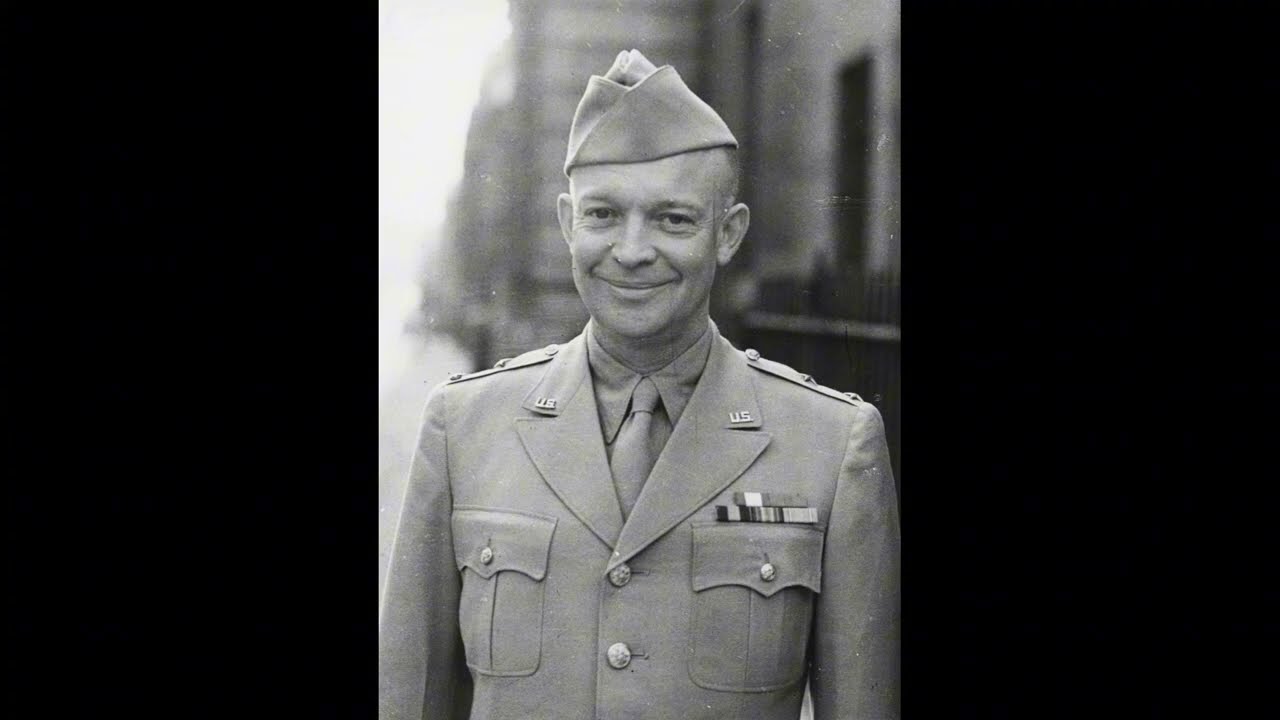
Eisenhower did not publish his letter. He did not brief the press. He did not tell Bradley or Patton what had happened, though both men learned the outlines through the networks of information that always exist inside military organizations.
He simply accepted Montgomery's response and moved on to the next problem. That was Eisenhower, the man who absorbed everything and kept moving.
But in his own private correspondence, in a letter to General Marshall in Washington in the first week of January 1945, he said something he had never written before.
He said that Montgomery was the most difficult problem he had managed in the entire war. Not the most dangerous enemy. Not the most complex operational challenge. The most difficult problem.
He said he had come very close to forcing the Combined Chiefs of Staff and had been fully prepared to do so. He was glad it had not come to that, not because he doubted the outcome, but because he understood what it would have cost the alliance to find out.
The war in Europe ended four months later. In those four months, Allied armies crossed the Rhine, overran the German industrial heartland, linked up with Soviet forces at the Elbe, and accepted the unconditional surrender of the Third Reich.
Montgomery commanded 21st Army Group to the end. His forces performed well. The Rhine crossing was a professional success, and his advance into northern Germany was methodical and effective.
He accepted the surrender of German forces in northwestern Europe on Luneburg Heath on May 4, 1945. He was given his field marshal's baton and celebrated in Britain as one of the great commanders of the war. He spent the rest of his life arguing that he should have been given more.
Eisenhower became the 34th president of the United States. He commanded NATO and oversaw the construction of the peacetime alliance that defined the Cold War era.
He almost never spoke publicly about the December 1944 confrontation. When pressed in later years about his relationship with Montgomery, he was diplomatic. He acknowledged Montgomery's gifts and praised his planning ability.
He noted, with characteristic understatement, that managing a coalition required compromises that not everyone found comfortable. He did not say what he had written to Marshall in January 1945.
Historians found it later in the archives, in the declassified collections that slowly emerged in the decades after the war. When they read the letter Eisenhower sent to Montgomery and the letter to Marshall explaining how close everything had come, they understood something the public narrative had obscured.
The Western alliance had not been held together by goodwill and common purpose alone. It had been held together by one man's extraordinary willingness to absorb punishment for the sake of the coalition, and by his equal willingness, when the moment demanded it, to make clear that there were limits.
The letter was never sent to the Combined Chiefs of Staff. The ultimatum was never publicly delivered. The crisis was resolved in a Belgian headquarters, a SHAEF conference room, and an exchange of carefully worded correspondence the newspapers never saw.
But the letter existed. Eisenhower wrote it. He meant every word. And Montgomery, who had spent two years treating the Supreme Commander as an obstacle to be managed rather than an authority to be respected, finally understood in January 1945 what de Guingand had been telling him for months.
Eisenhower was not just a politician in uniform or an administrator managing a coalition from behind a desk in Versailles. He was a man who had chosen for 18 months to absorb disrespect and condescension because the war and the alliance required it, and because winning was more important than being right.
When he finally decided that enough was enough, when he picked up his pen and wrote the letter that said choose me or him right now, Montgomery discovered what everyone who had worked closely with Eisenhower already knew.
The patience was a choice, not a weakness. The man who had been called militarily ignorant, who had been dismissed as unsuitable for real command, had more iron in him than the field marshal had ever imagined.
The letter almost fired Montgomery. The fact that it did not says something important about Eisenhower. The fact that it was written at all says something equally important.
Some men lead with noise, spectacle, and the performance of command that fills newspapers and generates legends. Others lead with something quieter and harder: the patience to wait, the judgment to know when waiting is done, and the courage to act when that moment arrives, even when acting means risking everything.
Eisenhower was the second kind. History, which initially struggled to know what to make of a commander who sought no glory for himself and claimed no battlefield legend, has been finding its way to the correct verdict for 80 years because Eisenhower held it. The letter in the December archives, the one that almost changed everything, is the clearest proof of what holding it actually cost.