Just after midnight on June 5, 1968, Ethel Kennedy stood behind her husband in a Los Angeles hotel kitchen, wearing a polka-dot dress. She was seven months pregnant with their eleventh child. Robert F. Kennedy had just won the California primary.
He was shaking hands with a hotel worker named Juan Romero when three shots rang out. Ethel found herself on the concrete floor, pushing photographers away and shouting at a security guard to stop pressing on her husband's chest because it was making him bleed more, not less.
She rode with him in the ambulance. She also rode in the hearse two days later, when life support was finally withdrawn. She was 20 days short of her fortieth birthday. She had 10 children waiting at home and one not yet born.
That is the part of the story every documentary shows. The polka dots, the hotel worker, the rosary someone placed in her hand. What almost no one shows is the 56 years that followed.
Ethel Kennedy did not collapse in public, and she did not disappear into private mourning either. She held a birthday party for one of her children just nine days after burying her husband. She kept life going at Hickory Hill with the same tennis matches, the same crowded dinner table, and the same energy for the seal-hunting trips Bobby had built the place around.
Friends who visited in the months after the assassination left feeling unsettled, not because she seemed broken, but because on the surface she seemed perfectly fine. She was not fine. She was doing what her mother-in-law Rose had done a generation earlier in the same compound: practicing the one skill the women of the Kennedy family had been trained in since childhood, whether they wanted the training or not. The skill of grieving in a way no one else is forced to watch.
Consider the logistics she managed that week. Ten children ranging in age from one to 17, none of whom fully understood what had happened to their father. A staff of nurses, teachers, and household helpers who all needed direction. A funeral that tens of millions of people would watch, which meant every choice she made — what she wore, how she stood, whether she cried where cameras could catch it — would be read as a statement about the whole family's composure.
Underneath all of it was a woman not yet 40 who had just watched, up close, the man around whom she had built her entire adult life take three bullets in a hotel kitchen. There was no time in Ethel Kennedy's schedule to fall apart. So she did not, not visibly, not on any documented occasion, for the next 56 years.
Over the following five decades, journalists asked Ethel Kennedy some version of the same question again and again. How did you survive that? How do you keep surviving it? Her answer barely changed. She said she did not spend much time thinking about the past. She said she had been blessed with faith. She said she lived in the moment.
It is a good answer. But it is also, if you sit with it, a door closing. A woman who buried a husband, two sons, a daughter-in-law, and two grandchildren, and who outlived nearly everyone who could fully understand what she carried, simply telling you she does not look back.
This is not resilience by accident. This is deliberate resilience, built the way you build a dam. Not because the water might come, but because you already know it will.
She was married to Robert Kennedy for 18 years. She spent another 56 years as his widow and never remarried. Not once, not even when men asked. Not even decades later, when she was in her seventies and eighties and there was no longer a scandal to fear.
In 1991, a journalist finally asked her directly why. She did not hesitate. How could I do that with Bobby looking down at me from heaven? This was not a line from a eulogy. She said it 23 years after his death. And her marriage was still the central fact of her life, more real to her than anyone who might have knocked on her door since.
So the real question is not how Ethel Kennedy survived. Survival is not the interesting part. The Kennedys were used to surviving disasters. It was practically the family motto. The interesting part is what 50 years of concealed grief in front of everyone does to a person, and to the 11 children who grew up inside that silence. Some of them made it through. Some did not.
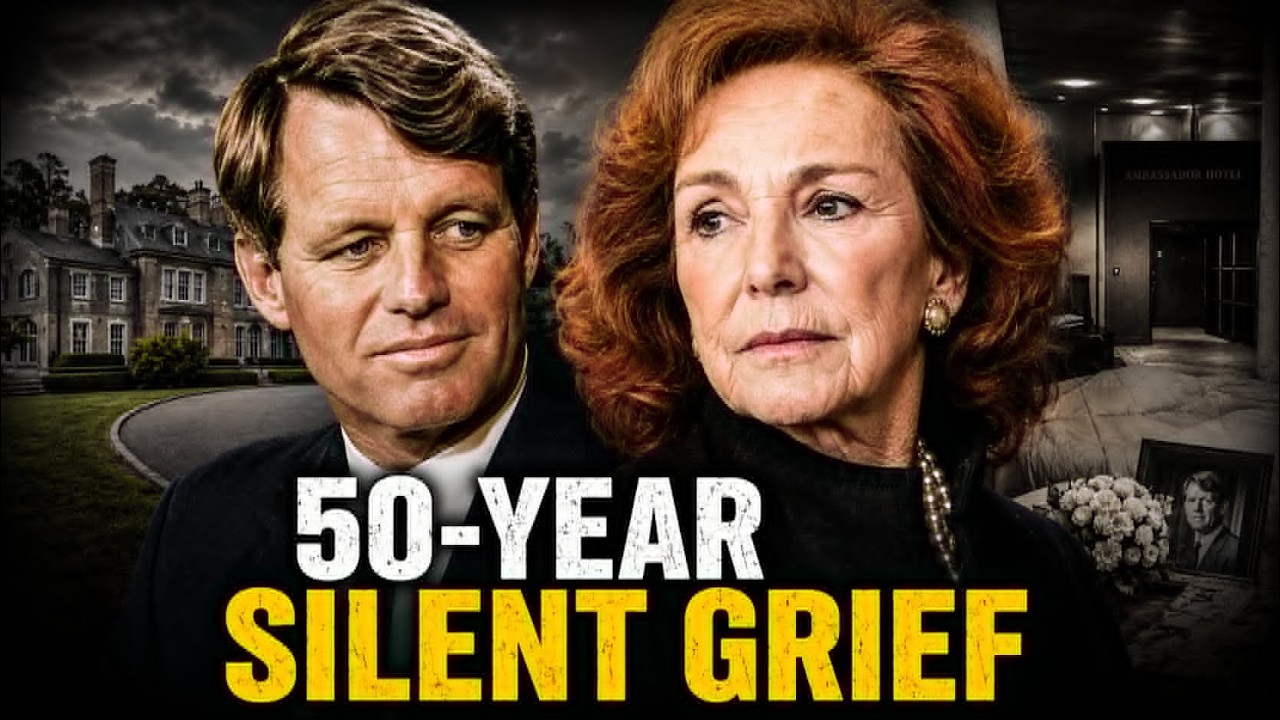
Long before she was anyone's widow, Ethel Skakel was rich enough to make the Kennedy family look modest by comparison. Her father, George Skakel, built a coal and coke business into one of the largest private companies in America. The family lived in a 31-room mansion in Greenwich, Connecticut — the kind of house where children needed a schedule just to find each other.
Ethel was the sixth of seven children. She was raised Catholic, raised loud, and raised to compete. Horses, swimming, sailing, and rough football on the lawn. Gentleness was not a Skakel family value.
She met the Kennedy family the traditional way wealthy Catholic families met each other in the 1940s: at school. She and Jean Kennedy were roommates at Manhattanville College, and Jean took her home. There she met Jean's brother. But the brother she fell for first was not Bobby.
In fact, Robert Kennedy dated Ethel's older sister for nearly two years before anything happened between Robert and Ethel. The two intertwined families were about to link again on a ski trip to Mont Tremblant in Quebec in 1945, when Ethel and Robert ended up alone together more than either had planned. Patricia's relationship with Robert cooled. Ethel's did not.
They got engaged in February 1950. They married four months later, on June 17, at St. Mary's Church in Greenwich, in a wedding so large that Skakel money and the Kennedy name together turned it into a genuine society event, covered like a minor royal wedding. Ethel was 22.
She told an interviewer decades later that she and Robert simply wanted a big family and did not discuss it further. It was not a big deal, she said. We both came from big families.
They had 11 children in 17 years. Kathleen in 1951, Joseph in 1952, then Robert Jr., David, Courtney, Michael, Kerry, Christopher, Max, Douglas, and finally Rory, born six months after her father's death.
For most of the marriage, Ethel was either pregnant, recovering from childbirth, or both, while running a household that by the late 1950s had moved to a 13-room estate outside Washington called Hickory Hill, which they bought from Robert's brother Jack and his wife Jackie.
To understand the real nature of that house, forget the somber black-and-white photographs. Hickory Hill at one point had a pet seal in the swimming pool. It had a genuine menagerie of dogs and ponies and at least one kinkajou. Ethel threw parties whose primary goal was chaos. Throwing guests into the pool in their formal clothes was not a rumor. It was a recurring joke that happened more than once.
She ran that circus the same way she had played football as a child: she set the tempo, she did not follow it. Ethel was not a peripheral figure in that house, as some politicians' wives of her era were content to be. She organized the football games that ended in minor injuries. She decided the dinner party needed a surprise dunking to be memorable. She kept a collection of animals on the property because she wanted to, and Robert rarely refused her anything. Guests expecting a formal Washington dinner sometimes left soaked, or after being bitten by a feathered creature, or both. It was deliberate chaos, and Ethel was the designer.
These details matter later, because the same instinct that made Hickory Hill run on chaos in the 1950s and early 1960s is what kept the house running with the same racket for decades after the man she built it for was gone.
Behind the parties, Robert's career moved fast, and the whole family moved with it. Chief counsel on a Senate committee. Campaign manager for his brother's presidential run in 1960. Attorney General of the United States at 35, appointed by his brother, the new president. Ethel campaigned, hosted, raised money, raised children, and believed — by every account, sincerely — that they were building something that would last for decades.
Historians have not treated the marriage itself as a simple love story, whatever Ethel's later devotion to Robert's memory suggested. Rumors of affairs on his side circulated for years, some tied to Hollywood figures, most never confirmed by anyone with direct knowledge, and impossible to separate entirely from that era's passion for turning Kennedy men into legends. Ethel's name was at various points linked emotionally to family friends in gossip columns, and everyone involved always described it as innocent. There is no serious evidence she was ever unfaithful. What is clear is that she chose, publicly and repeatedly, for the rest of her life, to remember her marriage as a straightforward relationship — whether that reflected its reality or what she needed it to be to get through 56 years alone with its memory is a question only she could answer, and she never really tried.
By 1955, she had already begun to learn the price this family charged those who married into it. That year, her parents George and Anne Skakel died together in the crash of their private plane. Eleven years into her marriage, Ethel had already buried both parents in a single afternoon. In 1966, she lost a brother the same way, in another plane crash.

Long before Los Angeles, and before any of the deaths that made her famous for composure, Ethel Kennedy knew exactly what it felt like to take a phone call that ends a life you built your identity around. She did not get a break between one grief and the next. She got a pattern.
Meanwhile, the family kept expanding. Kathleen was followed by Joseph, then Robert Jr. in 1954, David in 1955, Courtney in 1956, Michael in 1958, Kerry in 1959, Christopher in 1963, Max in 1965, and Douglas in 1967. Nearly all of those births happened while Robert was on a campaign trail, or chasing organized crime as chief counsel of the McClellan Committee, or serving as Attorney General. During some of the most turbulent years of the civil rights movement, Ethel was running two full-time jobs at once: a family of nine, then ten, children, and an extension of her husband's political career, attending rallies eight months pregnant because that was simply what a Kennedy wife did.
It went on that way for three years before the first blow. On November 22, 1963, Robert took a call from J. Edgar Hoover at Hickory Hill, standing beside the pool, and learned his brother had been shot in Dallas. Ethel watched her husband collapse into a version of himself no one in the family had seen before. Not the confident, fighting Bobby, but a man said to have spent weeks afterward reading Greek tragedies, searching for a philosophical framework wide enough to hold what had happened to his brother.
Ethel's job in that period was the one that would become very familiar to her over the next decade: holding the family together while the person she loved quietly fell apart in stages the country was not allowed to see.
Robert Kennedy ran for president in 1968, driven by grief and duty, and Ethel campaigned with him through most of the primaries. She was seven months pregnant when California voted. It was said the decision to run at all worried her. Robert had received threats before, as most of the Kennedy family had in the late 1960s, and a presidential campaign meant months of public exposure for the family, the greatest since Jack's assassination five years earlier. She campaigned anyway, because that is what her marriage had always asked of her. And because withdrawing from a Kennedy campaign in 1968 was not an option on the table.
That spring carried omens. On April 4, while campaigning in Indianapolis, Robert learned of the assassination of Martin Luther King Jr. in Memphis, minutes before he was to speak to a crowd of Black Americans who had not yet heard the news. He climbed onto a truck and announced it himself, following it with an impromptu appeal for the country not to answer violence with violence — a speech historians consider the most important of his career, delivered less than two months before he was killed. Ethel was not there that night. She was at home running a family that was about to lose a second brother to an assassin's bullet, and still not entirely able to get past mourning the first one five years earlier.
She was standing a few feet behind Robert in the hotel kitchen on the night of June 4 into June 5. They were celebrating a victory that had made him the favorite for the nomination. Sirhan Sirhan fired eight shots. Ethel dropped to the floor beside her husband and stayed there, physically resisting people she believed were making things worse until the ambulance arrived. He died 26 hours later, on June 6.
What followed was an almost entirely public funeral. His body was flown to New York, and tens of thousands of mourners filed past the coffin at St. Patrick's Cathedral for two straight days. Then a funeral train carried his body from New York to Washington for burial at Arlington, beside his brother, and the route itself became a kind of national vigil. Crowds lined the tracks along the entire eight-hour journey, in some places six or seven deep in the summer heat, just to watch the train pass. Two mourners were killed when a train coming the other way struck them as they waited. Ethel made that entire trip visibly, through the windows. A widow for the second time in her extended family in less than five years, with 10 children behind her and one not yet born.
She was not yet 40. She had 10 living children and another on the way. She had just watched, up close, the second Kennedy brother in less than five years die by assassination.
What she did next tells you almost everything about the 50-year grief that gives this story its name. She did not withdraw. Nine days after Robert's funeral, she went ahead with a birthday party that had been planned for one of the children, because canceling it, in her view, would have meant letting the assassination win twice.
Friends who visited Hickory Hill in the following weeks described a woman who managed, hosted, organized, and laughed at the appropriate moments, and many of them suspected that deep down she had not actually begun to grieve. She had simply skipped the collapse stage and moved straight to the continuation stage, because 11 children do not wait for their mother to be ready.
Rory Kennedy was born in December 1968, six months after her father's death. Ethel raised Rory and her 10 siblings largely alone, relying on inherited wealth and the momentum of a family name, in a house that never stopped being loud even after the man who filled it with noise was gone.
She founded the Robert F. Kennedy Memorial almost immediately after his death — now the RFK Center for Justice and Human Rights — turning her grief into a real institution rather than letting it remain a private wound. That became her second career. Decades of human rights advocacy, gun-control work, and awards given in her husband's name to journalists and activists continuing the causes he championed. She co-chaired national gun-control coalitions at a time when doing so, as the widow of an assassinated presidential candidate, carried an unmistakable and painful authority no one could argue with. By any measure, it was real, serious work.
She was also, unmistakably, a woman building a life-size memorial to a marriage that lasted less than two decades, and spending the next 50 years refusing to let it end.
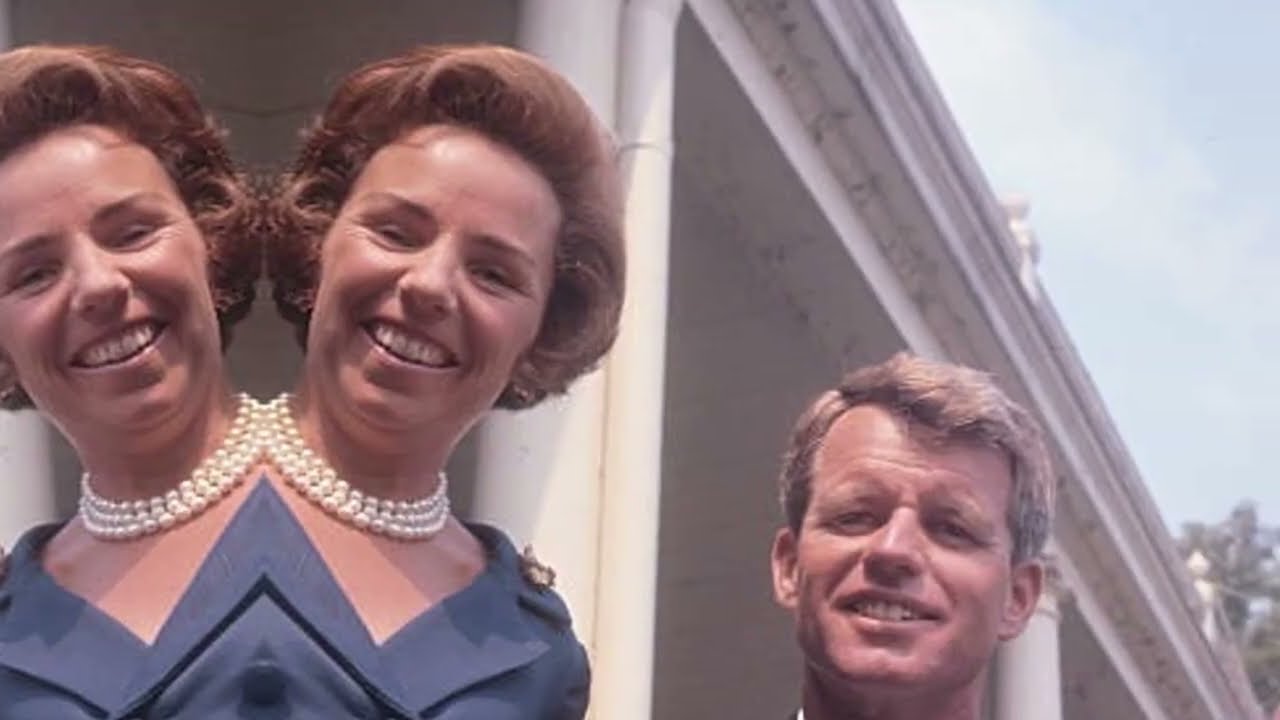
Journalists who covered the family loved a phrase that stuck to Ethel and her in-laws for the rest of the century: the Kennedy curse. It is a tidy label, and it is also — if you actually compare the deaths — a way of making something structural look supernatural. Assassinations, plane crashes, drug overdoses, a skiing accident, a suicide, a drowning. These events do not share a single cause. What they share is a family that kept putting its members in high-risk situations generation after generation, while insisting publicly that everything was fine and that tragedy was fate rather than pattern.
Ethel Kennedy lived at the center of that pattern longer than almost anyone else connected to the name. She buried a husband, two sons, a daughter-in-law, and two grandchildren. And the press had a ready word for all of it, one that never allowed anyone, including her family, to ask hard questions about what more than 40 years of untreated grief does to 11 children raised in its shadow.
Then the losses kept coming, spaced far enough apart that each arrived as a fresh, separate wound rather than blending into the one before. In 1984, her son David died of a drug overdose in a hotel near the family compound in Palm Beach. He was 28. David had struggled with addiction for years by then, a battle the family tried to manage privately, with little public success. He was 12 the year his father was assassinated, among the children old enough to fully grasp what had happened and young enough that no one built them a framework for getting past it. His uncle Ted said afterward that the family prayed David had finally found in death the peace he had not found in life — a sentence that reads less like consolation and more like an admission that everyone around him had known for years how much pain he was in.
In 1997, her son Michael died in a skiing accident in Aspen, hitting a tree while playing football on a slope on New Year's Eve. He was 39, and his death coincided with another scandal — allegations involving a teenage babysitter that had put his marriage and reputation under heavy pressure before the accident. Ethel buried her second son 13 years after burying the first, and by every account handled the funeral with the same organized, quiet grief she had shown at every funeral since 1968. Journalists covering the event again noted how composed she was. No one asked out loud what that level of control was costing her at the time.
In 2012, her daughter-in-law Mary Richardson Kennedy, Robert Jr.'s wife, died by suicide. In 2019, her granddaughter Saoirse died of an accidental overdose at 22 at the family compound in Hyannis Port. In 2020, her granddaughter Maeve and great-grandson Gideon drowned in a boating accident in the Chesapeake Bay.
By any honest accounting, Ethel Kennedy spent nearly 60 years as one of the most experienced mourners in modern American public life, and discussed almost none of it directly. When People magazine asked her in 2012 how she had survived all these losses, her answer was almost eerily consistent with what she had been saying since 1968. She said she was not the type to dwell on herself. She said she lived in the moment, and faith took care of the rest.
The children who survived built lives that ranged from genuine distinction to genuine trouble, often both in the same person. Kathleen became lieutenant governor of Maryland, the first Kennedy woman elected to major statewide office, carrying the family's political line forward in a way her father would likely have been proud of. Joseph served 12 years in Congress representing Massachusetts. Kerry took up the human rights work Ethel had started, running the RFK Center for decades. Robert Jr. built a respected career as an environmental lawyer. He then spent his later years as one of the country's most prominent vaccine skeptics, and mounted an independent presidential campaign in 2024 before dropping out and endorsing Donald Trump — a decision said to have divided the rest of the family and drawn public condemnation from his siblings just weeks before Ethel's death. She lived long enough to watch one of her sons become one of the most controversial figures in a family that was never short of controversial members.
Maybe that is true. It is also arguable that it was the only strategy she had left for surviving. A woman who examined all those losses fully, one by one, in public, the way modern culture now asks grieving people to do — who narrated them and processed them and shared them — might never have made it to 96.
Ethel Kennedy's silence was not an absence of grief. It was the container she built to hold decades of it, so it would not spill onto 11 children who needed a strong mother more than they needed a drowning one.
There is one strange, almost incidental footnote about how long that early romance stayed alive in cultural memory. Decades later, Taylor Swift wrote a song called "Starlight," inspired by the story of Ethel and Robert meeting young and falling in love at a party in the 1940s. All sailboats and summer nights and a version of young love that never has to survive an assassination, or raise 11 children, or endure 56 years of aftermath. Ethel was said to be delighted by it. Her family played it for her on her 96th birthday, a year before she died. It is a strange thing to contemplate a pop song about the beginning of a marriage still bringing joy to the woman who lived through everything the song did not have to mention.
She never remarried. Men were said to have proposed over the years, and by all accounts she had long since stopped entertaining the idea well before that 1991 interview in which she explained her reasons. The line about Bobby looking down from heaven is either the most romantic thing a widow ever said to a reporter, or the statement of a person who found staying faithful to a dead man easier than risking love for a living one and losing that too. Fifty-six years is long enough that the reasons were probably both.
She died on October 10, 2024, at 96, of complications from a stroke at a Boston hospital. Her family's statement said she had been reunited with the love of her life, our father, Robert F. Kennedy, along with her children and grandchildren who predeceased her: David and Michael, her daughter-in-law Mary, her granddaughters Maeve and Saoirse, and her great-grandson Gideon. She was buried at Arlington, close to him.
Her funeral was held at Our Lady of Victory Church in Centerville, Massachusetts, not far from the family compound where she spent so many summers hosting the chaos that defined her marriage. The family arrived in a motorcade of black cars. Her coffin, covered in white flowers, was carried past reporters who had covered this family's funerals for half a century and who, by their own admission, had begun losing count. Robert F. Kennedy Jr. attended with his wife, the actress Cheryl Hines, amid a fresh round of family tension over his political choices that year. Even in death, Ethel's funeral could not entirely avoid being, in part, a news event about someone else. That had been true of nearly everything in her adult life, and it remained true at the end.
Eighteen years of marriage, and 56 years of widowhood. She spent three times as long as Bobby Kennedy's widow as she did as his wife. And by her own account, in her own words to journalists who asked her across five different decades, she never stopped organizing her life around a man she lost before she turned 40.
That is the 50-year silent grief. She was not a woman who could not move on. She was a woman who decided very early that moving on was never the assignment. Surviving meant staying loud, staying busy, and staying loyal to 11 children, one marriage, and a name that had already cost her more than most families lose in a century. But she never let the cameras see the real price her survival paid.