The cremated remains of ten of history’s most notorious war criminals were dumped into a Munich stream and their urns smashed to fragments in a clandestine U. S. Army operation that remained classified for decades, newly detailed accounts reveal, shedding light on one of the most macabre episodes of the post-World War II era.
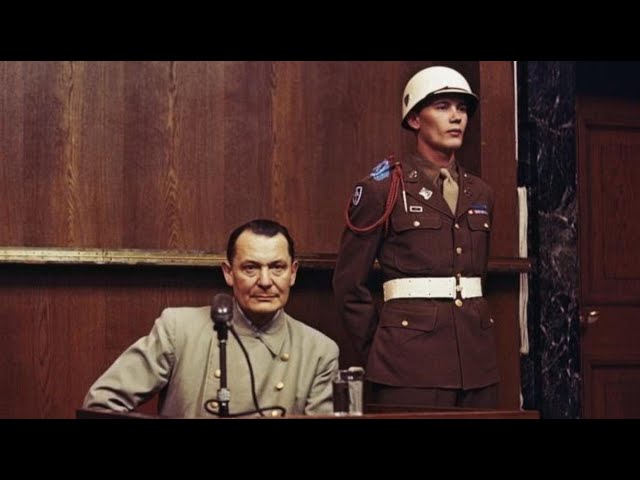
The revelation comes as historians and researchers continue to piece together the full story of what happened after the Nuremberg executions on October 16, 1946, when ten senior Nazi leaders were hanged at the Palace of Justice in the ruined German city. While the trial itself and the fates of the defendants have been extensively documented, the disposal of their bodies, personal effects, and the contents of their prison cells has remained shrouded in secrecy for generations.
The International Military Tribunal convened on November 20, 1945, in Nuremberg to sit in judgment of the surviving leaders of Nazi Germany. The proceedings continued until October 1, 1946, when the judgments were handed down. Of the 24 defendants, 11 were sentenced to death by hanging.
Reichsmarschall Hermann Goering, the most senior German leader placed on trial, cheated the hangman by committing suicide the night before his scheduled execution using a vial of cyanide smuggled into his cell.
The remaining ten were hanged by a special team of U. S. Army executioners using two gallows constructed in the Nuremberg Palace of Justice gymnasium.
Those executed included Field Marshal Wilhelm Keitel, former chief of the German armed forces; Joachim von Ribbentrop, Hitler’s foreign minister; Dr. Ernst Kaltenbrunner, SS Obergruppenführer and chief of the Reich Main Security Office; Alfred Rosenberg, head of the Reich Ministry of the Occupied Eastern Territories; Dr. Hans Frank, head of the General Government of occupied Poland; Wilhelm Frick, Reich Minister of Interior; Julius Streicher, publisher of the Nazi Party newspaper Der Stürmer; Fritz Sauckel, general plenipotentiary for labor deployment; Alfred Jodl, Colonel General and chief of the operations staff of the Armed Forces High Command; and Arthur Seyss-Inquart, Reich Commissar of the occupied Netherlands.
The executions were botched, resulting in several cases of slow death by strangulation lasting up to 28 minutes instead of the intended quick deaths from broken necks. Several of the condemned smashed their heads on the trapdoor of one of the gallows as they fell, the opening being too small to accommodate their bodies properly.
Master Sergeant John C. Woods conducted the hangings, assisted by Sergeant Joseph Malta and Billy Ford, all members of the 6850th Internal Security Detachment at Nuremberg. Woods was a controversial figure who had been discharged from the U.
S. Navy in 1930 after being diagnosed with constitutional psychopathic inferiority. He had falsely claimed hangman experience and was selected as an army executioner during the war, hanging 34 American soldiers in France in 1944.
Internal reports suggested that Woods bungled at least 11 executions of convicted U. S. servicemen before he arrived at Nuremberg.
But what happened to the bodies of the Nazi leaders after their executions represents perhaps the most bizarre and carefully concealed chapter of the Nuremberg story. The operation to dispose of the remains was swiftly enacted by the U. S.
Army in what became a top-secret and rather macabre undertaking.
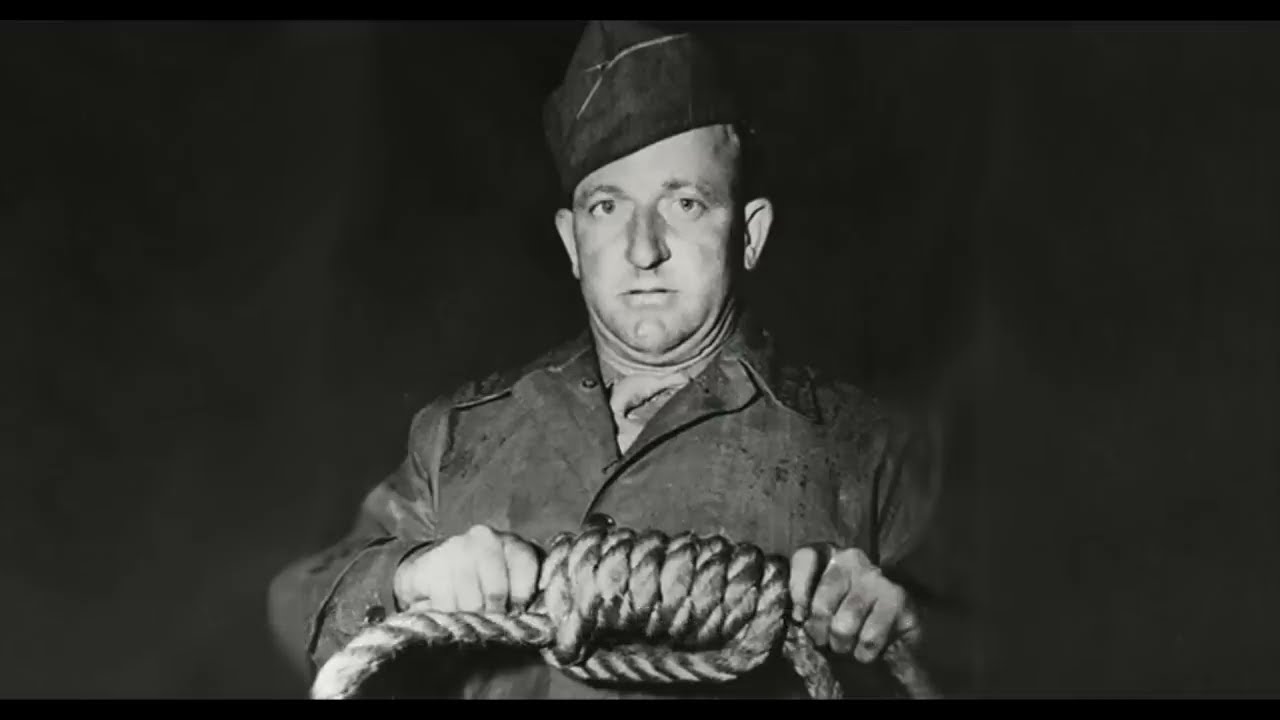
After carefully photographing and labeling the bodies, they were all stripped naked and placed into standard plain wooden coffins. This included the body of Goering, who had cheated the hangman. Each coffin was labeled with a false name, with each corpse being given the identity of a fictitious American soldier.
Goering, for example, became “George Munger.”
On the morning of October 17, 1946, the eleven coffins were loaded aboard U. S. Army trucks under the command of a military police battalion that formed part of the Nuremberg trials guard force.
A twelfth empty coffin was added to the trucks, the reason for which would soon become clear.
The trucks, escorted by jeeps, left Nuremberg’s Palace of Justice early in the morning and drove to Munich to a huge cemetery called the Ostfriedhof. The trucks pulled up outside the cemetery’s crematorium, built in 1929. The crematorium staff were informed that the remains of 12 American soldiers killed in action in 1945 had been recovered from the battlefield and, in accordance with their families’ wishes, were to be cremated.
The crematorium was surrounded by heavily armed U. S. soldiers while the cremations were under way, watched by several officers.
It took all day to complete the cremations. The ashes of each war criminal were placed into urns carefully labeled with their false American identities.
At the conclusion of the operation, the urns were loaded aboard a truck and driven under escort to U. S. Army Mortuary Number One at 25 Hohlmannstrasse in Munich, otherwise known as the Villa Hueber, the attractive white house of a wealthy textiles manufacturer that had been commandeered by the U.
S. Army.
Next came the disposal of the ashes. Not far from the villa is the Schwabach, a small tributary stream of the river Isar that runs through Munich. On October 17, U.
S. soldiers took the urns to the stream and tipped the contents into the water. Then, using axes and their boots, they carefully smashed the urns into fragments and drove away.
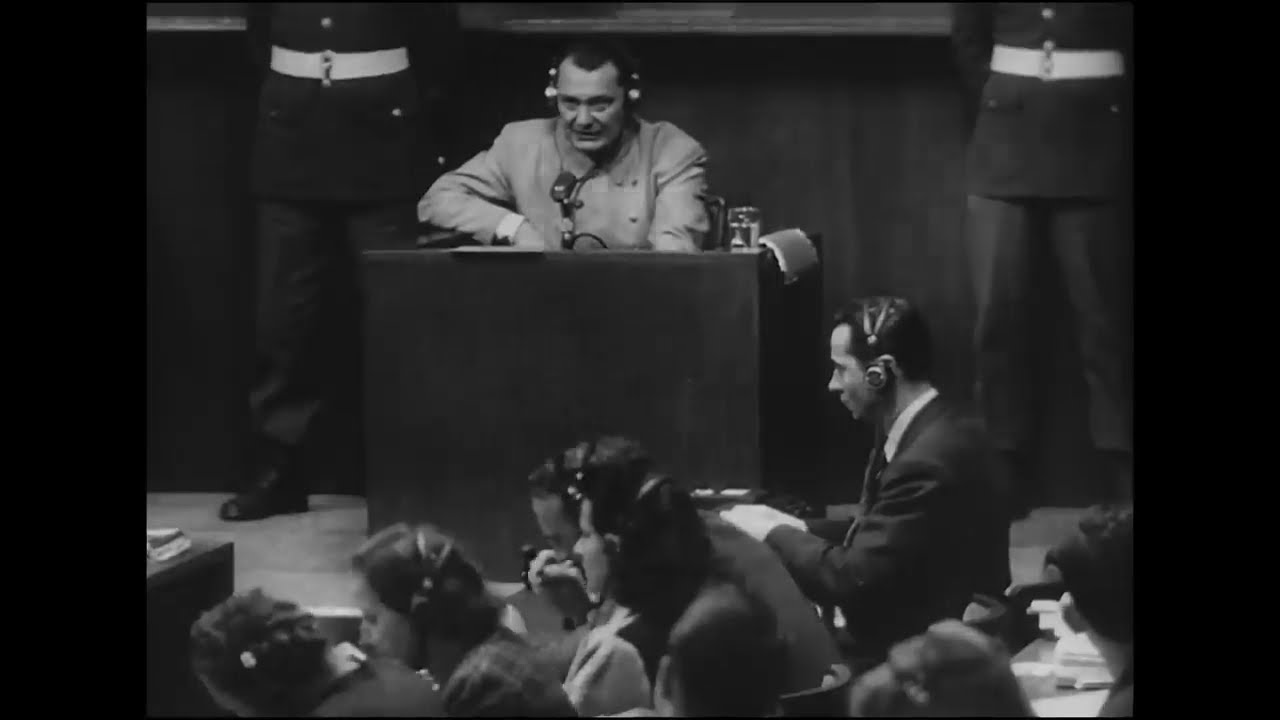 The second part of the cleanup operation involved the disposal of the executed men’s possessions. Those who had stood trial in their military uniforms had those uniforms stripped of all insignia and decorations. These materials were placed in storage at Nuremberg.
Field Marshal Keitel’s medals and decorations, including his Knight’s Cross and World War I Iron Crosses, were all destroyed along with his field marshal’s baton. Strangely, his two golden party badges were retained, though the swastikas were defaced before being handed over to the finance director of the U. S.
occupation zone in Germany for sale to help offset the costs of the executions, which had run to some $4,500.
Regarding Colonel General Jodl, all of his decorations and medals were destroyed. Hermann Goering had many decorations and was captured wearing his distinctive neck assemblage of the Grand Cross of the Iron Cross, the Knight’s Cross, and the World War I Pour le Mérite, or Blue Max. The Americans destroyed all of these decorations as well as his World War I Iron Cross First Class.
However, Goering’s solid-gold Nazi Party badge, his diamond-studded pilot’s observer badge, and other decorations made from precious metals were not destroyed but were defaced by scratching out or otherwise damaging the swastikas before they too were sent to the finance director to be sold, presumably for scrap.
Goering had many sets of his medals, and copies of his Blue Max, Grand Cross, and other decorations were recovered from his train at Berchtesgaden station or looted from his private property and survive in collections around the world today.
Although not hanged at Nuremberg, Grand Admiral Karl Dönitz, former head of the German Navy, received ten years imprisonment at Nuremberg. His U-boat war badge with diamonds was taken from him, its swastika crudely excised, and this was also sent to the finance director for scrap jewelry.
Most of the executed men had left behind papers, letters, or diaries in their cells. These were gathered and sorted into categories, though some of this material subsequently disappeared. All uniforms in storage bearing Nazi insignia were burnt.
Other clothing, personal possessions, and less precious jewelry were turned over to the relatives of the executed, along with any cash up to 1,000 Reichsmarks. All other cash and precious stones went to the finance director.
One man was missing from the cremations in October 1946. Robert Ley had been head of the German Labour Front under Hitler. The American psychologist at Nuremberg, Dr.
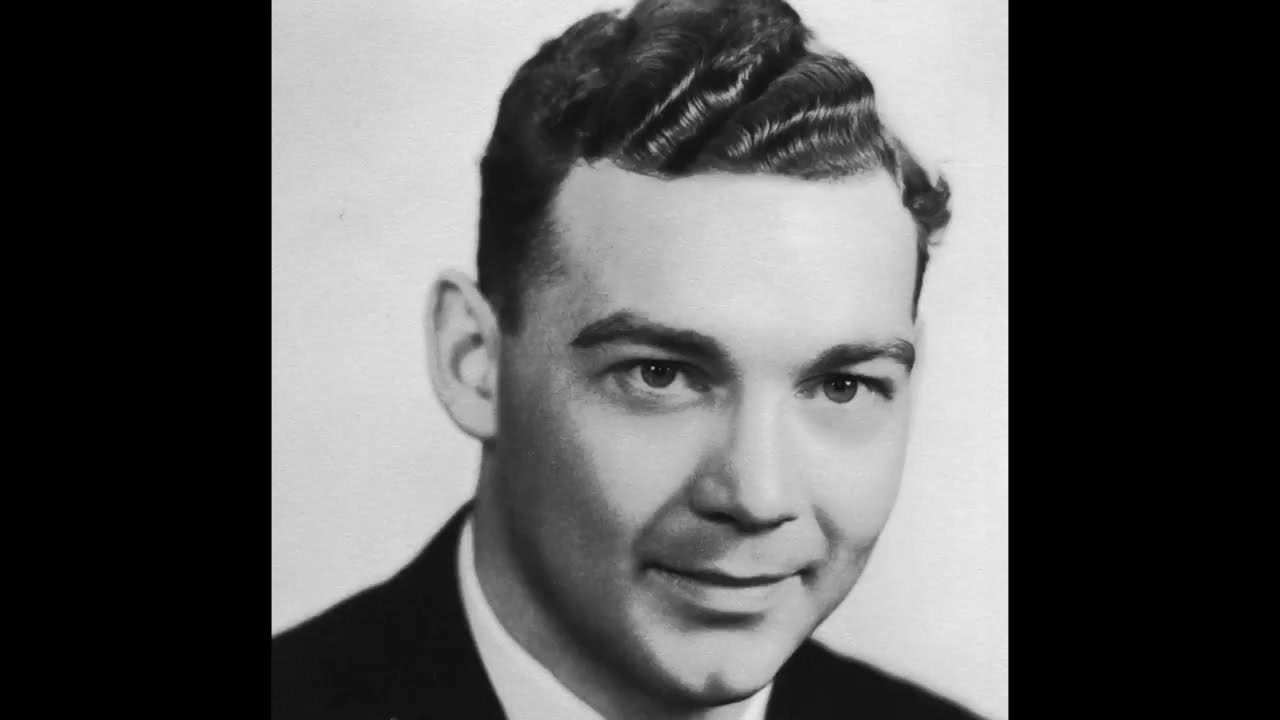 Douglas Kelley, thought that Ley was mentally ill, but before further tests could be made, Ley managed to hang himself in his cell on October 24, 1945. The body was cremated, but in a bizarre move, Dr. Kelley had Ley’s brain smuggled out of the prison for study, and a section of Ley’s brain tissue was found among Kelley’s papers in 2013, long after Kelley himself killed himself in 1958.
The meticulous nature of the cover-up operation demonstrates the extraordinary lengths to which U. S. authorities went to prevent the graves of the Nazi leaders from becoming shrines for future generations of sympathizers.
By falsifying identities, destroying evidence, and scattering the ashes in an unmarked stream, they ensured that no physical trace of the executed men would remain for posterity.
The operation also reflected the broader geopolitical context of the emerging Cold War, as the United States sought to prevent any possibility of Nazi revival or the creation of martyrdom sites that could be exploited by extremist movements. The destruction of the bodies and the careful disposal of personal effects was part of a comprehensive effort to erase the physical legacy of the Nazi leadership.
Historians have noted that the suppression of information about the disposal operation was itself a significant decision, reflecting concerns about public reaction and the potential for the story to generate unwanted attention. The fact that these details remained classified for decades speaks to the sensitivity of the subject and the determination of authorities to control the narrative surrounding the aftermath of the Nuremberg trials.
The fate of the personal effects and the proceeds from the sale of defaced decorations also raises questions about the financial aspects of the operation. The decision to sell the precious metals and other valuable items to offset the costs of the executions, which amounted to approximately $4,500, represents a pragmatic approach to the expenses incurred by the U. S.
military in carrying out the sentences.
The story of what happened to the bodies of the Nuremberg defendants serves as a reminder of the complexities and moral ambiguities inherent in the pursuit of justice for crimes against humanity. While the trials themselves represented a landmark in international law and the establishment of principles of individual accountability for war crimes and crimes against humanity, the subsequent handling of the remains and personal effects reveals the more mundane and sometimes macabre realities of administering justice in the aftermath of unprecedented atrocities.
The revelation of these details also highlights the importance of archival research and the continued efforts of historians to uncover the full truth about the post-war period. As documents are declassified and researchers gain access to previously restricted materials, the complete picture of this pivotal moment in history continues to emerge, offering new insights into the actions and motivations of those who shaped the post-war world.
The Nuremberg trials and their aftermath remain a subject of intense historical interest and debate, with the disposal of the bodies representing one of the most secretive and unusual aspects of the entire process. The fact that these details have only recently come to light underscores the importance of continued research and the value of transparency in understanding the full scope of historical events.