On May 8, 1945, the world celebrated the end of the war in Europe. In Paris, crowds flooded the streets. In London, half a million people gathered outside Buckingham Palace. In New York, ticker tape fell on a million upturned faces.
On that same morning, somewhere in Soviet-controlled Poland, an American soldier woke up behind barbed wire. He had survived three years in a German prison camp. Soviet soldiers had cut the wire the night before and told him he was free.
He was not free. The flags had changed. The guards had changed. Everything else was the same.
His own government knew he was there. They had known for months. And for reasons that made sense on paper in Washington, bringing him home was going to have to wait.
To understand how this happened, you have to go back three months earlier, to a palace on the Black Sea where three men divided the world.
In February 1945, Franklin Roosevelt, Winston Churchill, and Joseph Stalin met at Yalta in Crimea. Roosevelt was dying, though few knew how close the end was. Churchill was exhausted, his empire quietly unraveling. Stalin sat across from both of them with the patience of a man who knew exactly what he wanted.
Among the dozens of agreements reached at Yalta was one that seemed straightforward. Article 3, section B of the prisoner repatriation protocol stated that all prisoners of war liberated by Allied forces would be returned to their country of origin as rapidly as possible. Roosevelt signed it. Churchill signed it. Stalin signed it.
The moment the conference ended, Stalin had no intention of honoring it.
General John R. Dean was 50 years old, a career soldier, and the head of the United States military mission in Moscow. He was America's primary military liaison to the Soviet Union, the man whose job it was to keep communication open between Washington and the Kremlin during the final phase of the war.
By 1945, Dean was one of the most frustrated men in the American military. He had been stationed in Moscow since 1943. He had sat across the table from Soviet officials hundreds of times. He had made requests, filed paperwork, sent cables, and attended meetings that lasted hours and ended with nothing.
In the spring of 1945, before the war in Europe had even ended, Dean's mission began receiving reports about American prisoners of war being held in Soviet-controlled territory. He filed a formal request with Soviet command. No response. He filed another. Silence. He sent a third request in late March. Then a fourth.
By the time Germany surrendered on May 8, General Dean's mission had contacted Soviet authorities no fewer than nine times about the welfare and repatriation of American POWs in their custody. Nine times they were ignored, delayed, or given answers that explained nothing.
Washington already knew something was wrong. Dean's cables had been going up the chain of command for weeks. The reports were sitting on desks in the War Department. Nobody told George Patton. Nobody told the American public.
Patton was 59 years old and one of the most gifted battlefield commanders in American history. His Third Army had advanced faster and farther than any comparable force in modern warfare, from the beaches of France to the borders of Czechoslovakia in less than a year.
He was also a man with a documented history of losing control at the worst possible moments. In Sicily in 1943, he slapped a soldier suffering from combat exhaustion and called him a coward. Eisenhower issued a formal reprimand. Patton's career nearly ended there.
In April 1945, barely three weeks before the German surrender, he made public remarks about the Soviet Union at a social function that set Eisenhower into damage control mode again. Patton knew he was on thin ice. He knew one more major mistake would cost him everything.
He read the intelligence reports anyway. And then he couldn't stop thinking about them.
The man who brought those reports to Patton's desk was Colonel Oscar Koch, 45 years old, quiet, precise, and methodical. Koch was the G2, the chief of intelligence for the Third Army, and he had been quietly building a picture of the prisoner situation for weeks.
Koch laid it out for Patton in early June. Estimated 4,000 to 6,000 American military personnel were in Soviet custody, possibly more, at multiple locations across Soviet-controlled Poland, Eastern Germany, and the borders of Czechoslovakia. There was no confirmed timeline for repatriation and no transparency from Soviet command about numbers or conditions.
Then Koch told him the part that changed everything. It wasn't just about leverage or post-war bargaining chips. The deeper reason, the one General Dean had already documented in his cables from Moscow, was far more disturbing.
In the final months of the war, as the Red Army swept westward through Germany, its soldiers had done things that no military command wanted documented. Looting on a massive scale. Violence against civilian populations that went far beyond the accepted brutality of war. The systematic stripping of entire cities, factories, and farms.
American soldiers in those liberated camps had seen it. They had watched it happen around them as they were marched east. They had talked to locals. They were living, English-speaking witnesses who would go home and tell people exactly what they had seen.
Stalin didn't want witnesses. That was the real reason. Not paperwork, not logistics, not bureaucratic confusion. He was holding American soldiers because letting them go meant letting the truth go with them.
Patton stood up from his desk and walked to the large map on the wall of his headquarters at Bad Tölz, Bavaria. The thick red line dividing the American and Soviet zones cut through the center of Germany. He looked at the locations Koch had marked.
He had made a promise, not in words, not in any ceremony, but in the way that combat commanders make promises without saying them out loud. You fight for me, I bring you home. That had always been the agreement.
Patton picked up a pen and wrote in his diary that night. The entry was short. He wrote about the men who should have been home by now. He wrote about the promise that combat commanders make without ceremony, without words.
He filed a formal request up the chain of command the following morning. A detailed report with names, estimated numbers, camp locations, and Koch's intelligence summary. It went to SHAEF, to Supreme Headquarters, to Eisenhower.
The Soviet response arrived three days later. It was brief and precise in its dishonesty. We have reviewed American claims regarding prisoners of war. We find no evidence of American military personnel in our sector. All liberated prisoners have been processed according to Yalta protocols and returned to appropriate Allied authorities. If American command believes otherwise, they are mistaken. Our records are complete and accurate.
Patton read it, then read it again. He had the names. He had the testimony. He had Koch's intelligence. He had Dean's cables from Moscow, nine formal requests, nine non-answers, a paper trail that stretched back three months. And the Soviet Union was telling him these men did not exist.
What happened next would not be a battle. There would be no dramatic charge, no liberating army crashing through gates.
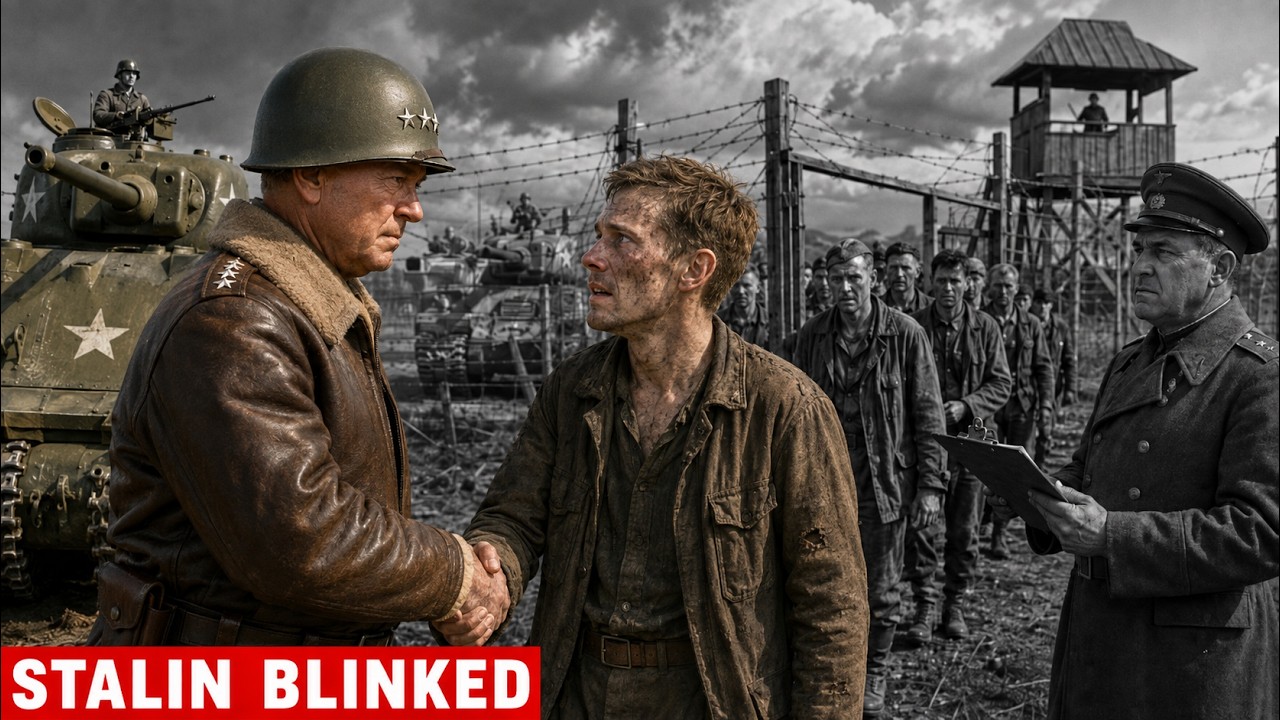
In Moscow, General Dean sat down for another meeting with Soviet officials. The officer across the table was courteous. He expressed understanding of the American concern. He assured Dean that all records were being reviewed, that any remaining American personnel would be identified and processed according to agreed protocols. He used the word processed four times in 20 minutes.
Dean wrote it all down. He cabled Washington that evening. The cable joined the stack of cables that had already been sent, the stack that sat on desks in the War Department while men in suits decided what to prioritize, what to risk, what to trade.
In Bad Tölz, Koch had been digging deeper. What he found was not a simple bureaucratic failure. It was not confusion born from the chaos of a continent reorganizing itself after six years of war. What Koch found, piece by piece, was something more deliberate.
The Soviets were sorting the prisoners, not processing them for return. They were separating them into categories based on language, name, origin, and ethnic background. They were looking for anyone who might qualify as a Soviet citizen under Stalin's expansive definition of that term, which included not just Russian nationals, but Ukrainians, Belarusians, Baltic nationals, anyone from territories the Soviet Union had absorbed before or during the war.
Many of the men the Soviets were pulling from the population were American citizens by any reasonable standard. Some were Americans of Eastern European descent. Some were men born in countries that no longer existed in the form they had when those men were born. Some were simply men whose names sounded Slavic to a Soviet officer with a clipboard and the authority to make decisions.
Once you were pulled from the American group, you disappeared into a different process entirely. You did not go home.
This was the machinery Dean had been trying to describe in his cables from Moscow. It was the early mechanism of what would later be documented as Operation Keelhaul, the forced repatriation program that Western Allied command had quietly agreed to at Soviet insistence, under which hundreds of thousands of Soviet-claimed nationals would be returned to Stalin's authority whether they wanted to go or not.
Many of them did not want to go. Some had fought against the Soviet Union. Some had fled it. Some were simply people who understood exactly what awaited them when they got back. Some chose to die before they would let themselves be put on those trains.
American soldiers in the liberated camps had watched this happen around them. They had watched families dragged from vehicles. They had watched men fight back with their bare hands against soldiers with rifles. They were still there. Still behind wire. Still waiting because they had seen it.
Patton took Koch's full briefing on a Tuesday morning in mid-June. He sat without moving for a long time after Koch finished. Then he said one sentence. Koch remembered it. It was Patton's assessment of the situation, and it was accurate. These men had watched everything, and now they were being kept as the price of that silence.
He requested a meeting with Omar Bradley. Bradley was 52 years old and in almost every way that mattered, he was the opposite of Patton. Where Patton was combustible, Bradley was steady. Where Patton led from the front and trusted his instincts, Bradley thought in systems, logistics, and supply lines.
When Patton laid out the situation, Bradley listened without interrupting. He asked precise questions. He wanted to know the sourcing on the camp locations, the confidence level on the prisoner numbers, what exactly Koch's intelligence chain looked like. Patton answered everything.
Then Bradley sat back and told him something he didn't want to hear. Operation Downfall was still on the table. That was the name for the planned Allied invasion of the Japanese Home Islands. The operation that military planners believed would be necessary if Japan refused to surrender.
The projections were devastating. Conservative estimates placed American casualties at a quarter million. Other estimates went much higher. Soviet entry into the Pacific War was not optional. It was built into the mathematics of survival.
Stalin had promised at Yalta to declare war on Japan within three months of Germany's defeat. Those three months were running now. Every decision made in Europe in the summer of 1945 had to be weighed against what it might cost in the Pacific.
Bradley said it plainly. I understand what you want to do, George. I understand why. But I need you to understand what we might be trading for it.
Patton understood. He didn't like it, but he understood. What he said next was not an argument. It was a question. If we don't hold them to Yalta now, when will we ever hold them to anything?
Bradley approved a limited redeployment. Elements of the 90th Infantry Division, battle-tested from Normandy through Bavaria, along with armored support from the 11th Armored Division, would move to forward positions near the Soviet zone. They would not cross the line. They would not engage. But they would be there and they would be seen.
On June 22, 1945, American armor moved east. Not in the thundering columns of the previous year, not with fighter cover and artillery preparation, just movement, measured and intentional. Units took up positions along the border between the American and Soviet occupation zones.
The Soviets saw it within hours. Their observation network along the border was thorough. Reports moved up the Soviet chain of command. American military buildup on our border. Tanks, artillery, infantry. Posture aggressive.
The reports reached Marshal Georgy Zhukov, 48 years old, broad-shouldered, deliberate. Zhukov had commanded at Stalingrad. He had planned and executed Operation Bagration, the largest single military offensive in human history. He had taken Berlin.
He looked at the reports from the border and did not order a response in kind. He picked up the telephone and called Eisenhower.
That decision, to call rather than to mobilize, tells you something important about where things actually stood in the summer of 1945. Zhukov was not a man who made calls out of weakness. He made them out of calculation.
His calculation in late June of 1945 was that the political cost of a direct confrontation with American forces over the prisoner question was higher than Moscow had anticipated. The tanks on the border were not by themselves enough to change Soviet policy. But they were a signal that the Americans were willing to escalate.
The conversation between Zhukov and Eisenhower was tense and formal. Eisenhower presented the documentation: names, unit designations, dates of liberation by Soviet forces, camp locations identified through reconnaissance. He was not making accusations. He was presenting data and making clear that the standard Soviet response of general denial was no longer going to close the conversation.
Zhukov said the records would be reviewed again, more carefully this time. Eisenhower said American forces would remain in their current positions until all documented personnel were accounted for. The call ended.
Then the waiting began. And in the waiting, Koch's intelligence teams picked up something that hadn't been in any of the original briefings. The Soviet guards at the prisoner camps were anxious, not because of the Americans on the border, or not only because of that.
What Koch's sources were describing was something internal, a confusion of orders that had been building for weeks. The soldiers actually guarding the camps were low priority assignments, tired men poorly supplied, far from any command structure that was paying attention to them.
They had received orders to hold the Americans in place, and those orders had come from high enough up that nobody at the local level was going to question them. But nobody had told them why, and nobody had told them what to do next.
They were holding 5,000 American soldiers in former German camps in the middle of occupied Europe with no clear instruction about when that would end or what purpose it was serving, while American armor sat on the horizon and the men in Moscow argued about bigger things.

The machinery of Soviet bureaucracy was, in one small and critical place, running on momentum rather than intention.
On July 16, 1945, in the New Mexico desert at a location called Trinity, the United States detonated the first nuclear weapon in human history. The test was successful. The yield was larger than the scientists had predicted. The light was seen for more than 100 miles in every direction.
Stalin had been informed through his own intelligence network that the Americans were close to a successful nuclear test. He had known this for some time. What he did not know until the Trinity results began filtering through Soviet intelligence was how close and how complete the American achievement actually was.
On July 24 at the Potsdam Conference, Harry Truman told Stalin in a brief, carefully worded exchange that the United States had a new weapon of tremendous destructive force. Stalin's face, according to every Western account of that moment, did not change. He already knew.
But knowing and confirming are different things. What Stalin confirmed at Potsdam was that the United States had crossed a threshold that changed every equation on every table in every room where decisions were being made.
The prisoner transfers began in the weeks that followed. This is the part that gets lost in simpler versions of the story, the part where the tanks alone get the credit, or the diplomacy alone gets the credit. The truth was a convergence.
Patton's armor on the border was real pressure, and it mattered. Dean's months of documentation gave Eisenhower something concrete to present to Zhukov. Bradley's willingness to approve the redeployment gave the pressure physical form. And underneath all of it was the knowledge that the Americans had a weapon that neither conventional armies nor geographical depth could answer.
The releases happened in groups, July into August. One hundred men at one crossing point, 200 at another. Thin, exhausted, blinking in the light of something that felt almost too late to be real.
Patton was present at several of the transfer points. He stood at the border and watched them cross. He shook hands. He asked about conditions. He listened to what they had seen, and what they described was consistent with everything Koch had been reporting for months.
By late August, when the accounting was done and the transfers had stopped, there was a number that nobody in official Washington wanted to attach to a press release. Somewhere between 200 and 500 American military personnel remained unaccounted for.
The Soviets said the record showed no additional personnel. The records were complete. The process was finished. Koch's intelligence said otherwise. Quietly, through sources that couldn't be officially acknowledged, his teams were picking up indicators that some men had been moved, not released, deeper into Soviet-controlled territory.
These were not men who had been lost in the chaos of war. These were men who had been deliberately placed beyond the reach of anyone who might ask about them.
Patton filed a formal protest, then another, then a third. He sent letters to Washington, to the State Department, to members of Congress he had contact with. He attached Koch's intelligence summaries. He attached Dean's original cables. He built a paper trail with the thoroughness of a man who intended for it to be read by someone eventually.
Most of the letters were acknowledged and filed, not acted on. The Cold War was assembling itself from the pieces of the agreement that was falling apart. And individual soldiers, even hundreds of them, were becoming the kind of problem that a larger problem made it easier to postpone.
Patton understood what was happening. He had watched it happen in real time from the inside. He had also just made the mistake that would end his career.
In September 1945, at a press conference in Bad Tölz, Patton said that the Nazi Party was comparable to the Republican or Democratic parties back home, a political organization, not a criminal enterprise, and people who had been members shouldn't be automatically excluded from contributing to reconstruction.
The quote went out on the wire services that night. Washington exploded. Eisenhower called him the following morning. The conversation did not last long. Eisenhower had warned him multiple times on the record, in writing, face-to-face. Patton had heard every warning.
On October 2, 1945, Eisenhower relieved Patton of command of the Third Army, the army Patton had built from the breakout at Avranches, the army that had driven further and faster than any comparable force in history.
He was given command of the 15th Army instead. The 15th Army had no combat troops. Its mission was administrative, the documentation and historical analysis of the European campaign. Patton, the man who had made history, was now being asked to write it down.
He accepted the assignment. He kept writing his letters. He booked a flight home for December 26.
The 15th Army occupied a requisitioned building in Bad Nauheim, a quiet German spa town that had spent the war largely untouched. No bomb craters, no shattered windows. It felt to Patton like an insult.
He sat at his desk in Bad Nauheim and he wrote. Not the official history. He wrote letters. He wrote in his diary. He wrote about the prisoners. He wrote about the men who had not come home, the 200 or 300 or 500.
He wrote about what the returning soldiers had told him at the transfer points, what they had seen in the camps, what they had seen in the villages around the camps, what the Red Army had done in the territories it controlled.
He wrote about Operation Keelhaul, though he did not yet have that name for it. He described what it was, the forced return of hundreds of thousands of people to a government that would punish them for having survived in the wrong place.
He addressed the letters to Washington, to the State Department, to members of Congress, to old colleagues who had influence and access. He was not naive. He knew what happened to letters that arrived without political backing. But he also knew that he was going home in December.
He believed that if he could stand in front of the American people and say what he had seen, it would matter. That the truth delivered plainly to people who had sons and brothers and fathers who had worn the uniform would be impossible to simply file away.
He booked his flight for December 26.
December 9, 1945, was a Sunday morning, cold and gray. Patton was not working. He was going pheasant hunting with General Hobart Gay, his chief of staff, the man who had been at his side through the entire campaign.
They drove out in a Cadillac Model 75 staff car. Two other vehicles accompanied them. The roads were clear. On the outskirts of Mannheim, crossing a set of railway tracks on the Käfertaler Secondheim Road, an army truck made a left turn directly in front of Patton's car.
The collision was low speed. The truck was barely damaged. Gay was shaken but unhurt. The driver was unhurt. Everyone in the accompanying vehicles was unhurt. Patton was thrown forward against the partition between the front and rear compartments.
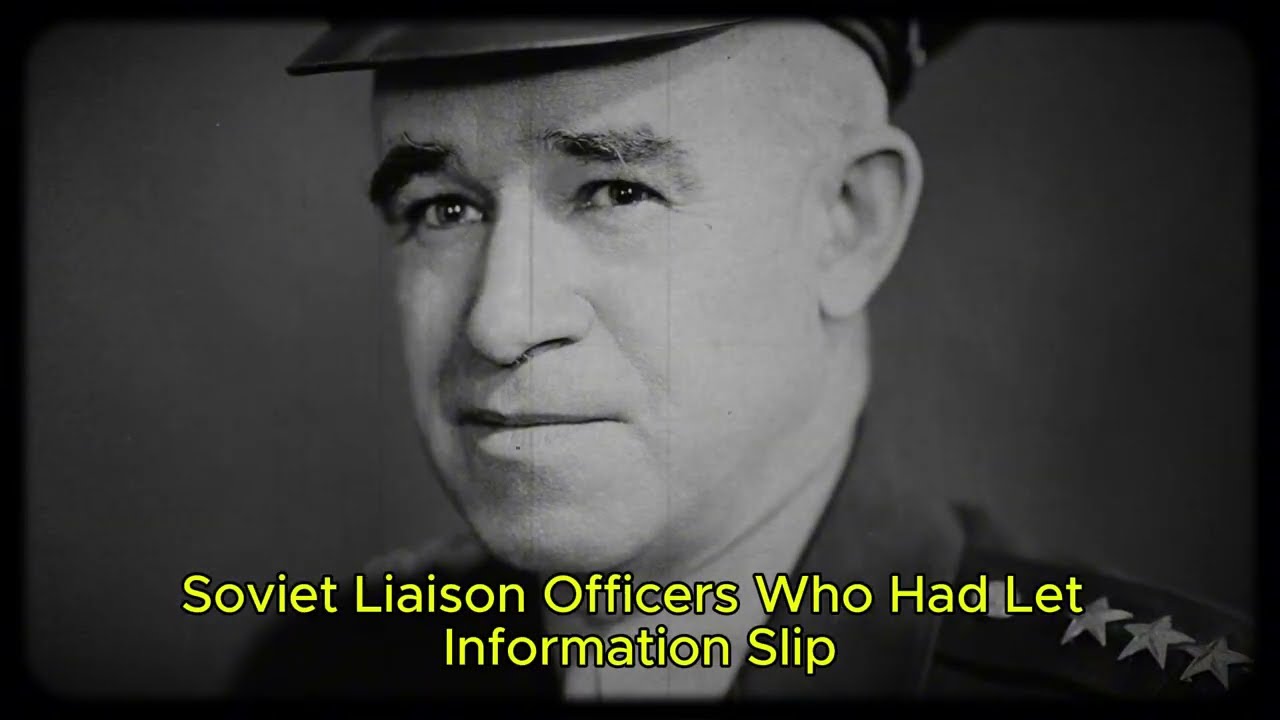
He did not lose consciousness immediately. He looked at Gay and said, My neck hurts. I think I'm paralyzed.
He was right. The fracture was at the third cervical vertebra. The spinal cord was not severed, but the damage was severe enough that Patton had no function below the neck from the moment of impact. He was conscious. He could speak. He could think with complete clarity. He could not move anything below his shoulders.
He was taken to the 130th Station Hospital in Heidelberg. The army's best available neurosurgeons were flown in. X-rays confirmed the fracture. He had turned 60 the month before. He was 12 days away from flying home.
He spent the next 12 days in that hospital bed. Beatrice, his wife of 35 years, flew across the Atlantic the moment she received the cable. She arrived in Heidelberg and sat beside his bed and held the one hand that could still register that she was holding it.
He told her he intended to recover. He told her they were going home together. He told her he had things to say and people to say them to and that a broken neck was not going to stop him from saying them.
On December 21, 1945, 12 days after the accident, Patton developed a pulmonary embolism, a blood clot that moved into his lungs. In 1945, there was no treatment that could reliably address it. At 5:50 in the afternoon, George Smith Patton Jr. died. He was 60 years old.
He had been in the army for 36 years. He had commanded forces in Morocco, Sicily, France, Luxembourg, Germany, and Czechoslovakia. He had never been seriously wounded in combat, not once, in two World Wars. He died in a hospital bed in Heidelberg 12 days after a low-speed traffic accident, 17 days before he was scheduled to fly home.
He was buried at his own request with his men, not in Arlington, not in the ceremonial ground reserved for generals and statesmen. He was buried at the American Military Cemetery in Hamm, Luxembourg, among the soldiers of the Third Army in the country where they had fought together in the winter of 1944.
The letters he had written from Bad Nauheim were received, acknowledged, and filed. The prisoners he had documented, the 200 or 300 or 500 who had not come home, remained undocumented in any official sense. The Soviet Union maintained that all American personnel had been accounted for. The United States government, navigating the first years of a Cold War, did not press the matter in any forum where pressing it would require a public answer.
The men existed in the gap between what had happened and what anyone was prepared to say had happened. That gap would remain open for decades.
In 1947, General John Dean published his memoir. He called it The Strange Alliance. It was a careful, precise, and deeply frustrated account of two years spent trying to work with the Soviet military bureaucracy. The book was reviewed politely and largely forgotten.
In the 1970s, researchers began piecing together the full scope of Operation Keelhaul. What had been a classified program, the forced repatriation of Soviet-claimed nationals to Stalin's authority, was gradually exposed through declassified documents on both sides of the Atlantic.
The numbers that emerged were staggering. Estimates ranged from 1 million to more than 2 million people forcibly returned to the Soviet Union between 1944 and 1947. Many had begged not to go. Some had fought. Some had died rather than go.
In 1991, the United States Senate established the Senate Select Committee on POW and MIA Affairs. Among the questions it investigated was whether American prisoners of war had been held in the Soviet Gulag system, not just from World War II, but from Korea and Vietnam as well.
The committee reviewed documents that had become available after the Soviet collapse. What it found was not a clean answer. It found indicators, records, testimonies, fragments suggesting that some American military personnel had entered the Soviet detention system and had not come out through any channel that anyone had recorded.
The full picture could not be reconstructed. The records that would have completed it either did not survive or were not made available. The committee's final report used careful language. It could not confirm. It could not rule out. The gap remained.
What the historical record does confirm is this. Yalta was signed in February 1945. The repatriation clause was clear. Stalin had no intention of honoring it on the terms Roosevelt and Churchill understood.
General Dean filed nine formal requests before the war ended. Nine. He documented the Soviet obstruction in real time in cables and letters that survived, in a memoir that was published while the events were still recent.
Patton received Koch's intelligence in early June 1945 and responded by doing the only things available to him: formal protest through official channels, followed by limited military pressure that Bradley approved and Eisenhower ultimately allowed to stand.
The prisoner releases happened in the summer of 1945, concurrent with the Potsdam conference and the revelation of the American nuclear test at Trinity. The convergence of those factors created the conditions in which Stalin found it more useful to release most of the prisoners than to continue holding them. Most, not all.
Patton was relieved of command in October 1945 for statements that were factually defensible and politically catastrophic. He spent his final weeks writing letters that went unanswered, documenting things he had seen that he intended to say publicly, and counting the days until he could board a plane and say them.
He never boarded the plane. He died in December in a hospital in Heidelberg, having never returned to the country he had spent his life serving.
What neither of them could solve, what no general and no diplomat and no amount of pressure ultimately resolved, was the question of the men who didn't come home.
The men who didn't come home had names. They had families who waited for them. Mothers who kept writing letters to addresses that no longer existed. Wives who eventually stopped waiting without ever quite stopping hoping. Children who grew up knowing their father's name from a photograph and a telegram and the particular silence that fills the space where someone should have been.
They had survived the German camps. They had survived the war. They had watched liberation arrive and believed that the worst was over. They were wrong about that.
They disappeared into a system that was designed in part to make people disappear, and the governments that might have gone after them decided one by one and year by year that the cost of asking the question loudly enough to get a real answer was higher than they were willing to pay.
That decision was made by people with titles and authority and genuine responsibilities. It was not made carelessly. The men who made it understood what they were trading away. They made it anyway.
In one of the last letters he wrote from Bad Nauheim, a letter addressed to an old colleague in Washington, a letter that was received and filed and not acted on, Patton wrote what anyone who had stood at those transfer points and counted the men coming through already understood. The men who were left behind were not a diplomatic problem. They were a debt. And debts of that kind did not expire.
He was buried in Luxembourg in December 1945 among the men he had commanded and promised to remember, 17 days before he was supposed to go home. The debt he described is still outstanding.
That is where the story ends. Not with a victory, not with a clean resolution, not with justice delivered and accounts settled. It ends with a number that nobody made official, and names that nobody put on a list that anyone in authority was willing to stand behind, and a general buried in foreign soil who spent his last weeks writing letters that nobody answered.
It ends the way the hardest parts of history always end. With something left unfinished. With something still owed.