A controversial biography of Chicago mob boss Sam Giancana, titled "Double Cross," makes explosive claims about two of the most scrutinized deaths in American history: those of Marilyn Monroe and President John F. Kennedy. Written by Giancana's brother Chuck and his godson Sam, the book alleges that the mob and the CIA worked together on both killings.
The book's central claim is that the CIA requested Monroe's elimination and that Giancana accepted the contract to kill her. According to the account, Monroe had become a "loaded gun waiting to go off" because she had access to information damaging to the CIA and was preparing to go public.
The Giancana family says the mobster's relationship with the CIA dated back to 1960, when the agency asked him to kill Fidel Castro. The book claims Giancana's men tried to poison Castro, but the Cuban leader had all his food and drinks sampled by political prisoners, foiling the attempts.
According to the book, Giancana's ties to the agency deepened, and the CIA later called on him to kill Monroe. At the same time, the book claims, Giancana hoped to embarrass Monroe's lover, Attorney General Robert Kennedy, who was aggressively pursuing Giancana and organized crime.
The book states that Giancana sent assassins to Monroe's house who waited until she was alone, taped her mouth, and inserted a lethal Nembutal suppository. The suppository was reportedly supplied by the same chemist who had concocted the poison for the failed Castro attempts.
According to the account, the suppository method was chosen because it acted fast, like an injection, and left no traces of the sedative. The book claims Giancana obtained evidence of Robert Kennedy visiting Monroe's house before the murder, but that the government covered up the entire conspiracy so quickly that his scheme to embarrass Kennedy failed.
Monroe scholars have disputed the theory. Biographer James Spada noted that Monroe's housekeeper was sleeping in the next bedroom and would certainly have heard a struggle accompanied by screams.

The Giancanas stand by their story, pointing to a long history of mob and CIA involvement with Monroe. The book claims Monroe owed her superstar career to the mob, which helped promote her when she was a rising star. Johnny Roselli, described as a Chicago liaison who reported directly to Giancana, saw her and believed she had great potential, leading the mob to invest in her career behind the scenes.
The book also claims the CIA used Monroe as a sexual pawn in dealings with foreign leaders, specifically Sukarno of Indonesia, to compromise him and ensure he did what the agency wanted. Monroe's sexual activities reportedly extended to Giancana himself, with encounters at the Cal Neva Lodge at Lake Tahoe.
Former FBI agent Bill Roemer, who had Giancana's office bugged at the time, backed up the account. He said agents listened as Giancana talked to Roselli about having had sex at Lake Tahoe the weekend before Monroe died.
The Giancanas describe Monroe's story as one of the saddest they uncovered, calling her an unwitting political and sexual toy and the quintessential victim. "As many tragedies as we discuss in Double Cross, I think she is probably the most tragic situation," they said.
The book also implicates Robert Kennedy in Monroe's demise. It claims Monroe was passionately in love with Kennedy and planned to go public with their affair. According to the account, the mob had bugged Monroe's house and was listening the night of her death to discover when Kennedy would arrive.
Quoting from the book, Robert Kennedy finally appeared at Monroe's home late on Saturday, accompanied by another man. Listening in, Giancana's men determined that Monroe was angry and agitated with Kennedy. They heard Kennedy instruct the man with him, evidently a doctor, to give her a shot to calm her down. Shortly afterward, the attorney general and the doctor left, and then the killer struck.
The book claims all evidence of the killing disappeared, and Giancana could not use his own taped evidence implicating the attorney general. According to the account, the CIA stepped in and told him he could not use the information because it would reveal Monroe's relationships with both Giancana and the agency.
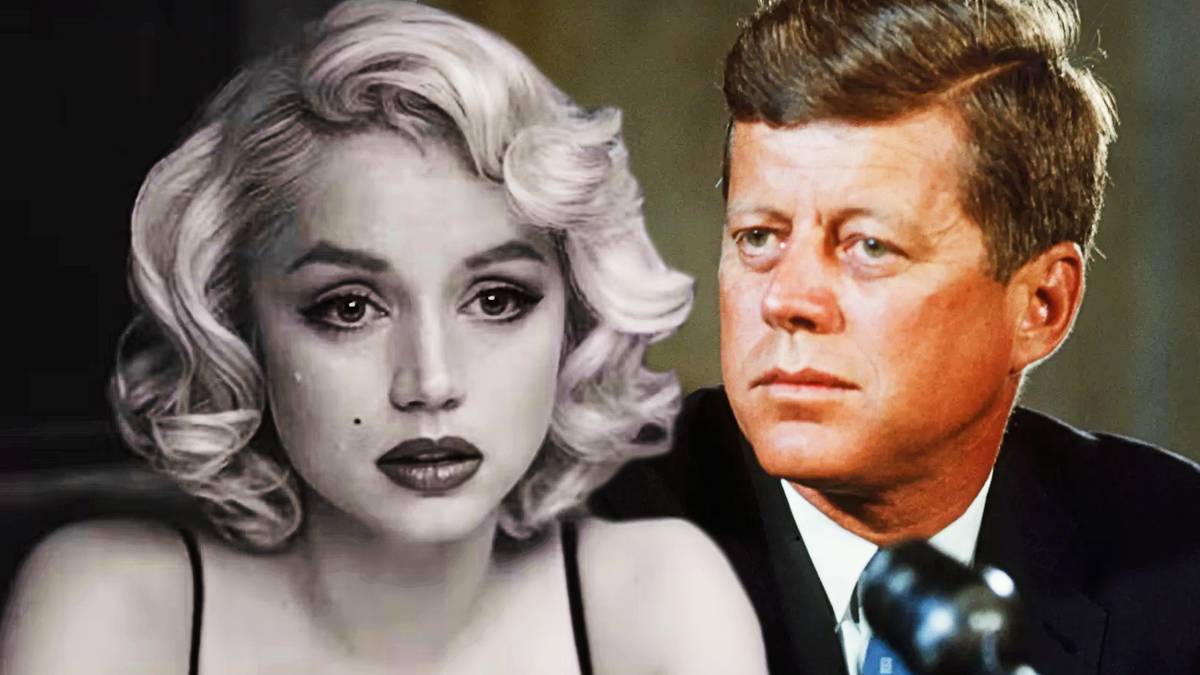
The book further claims that Kennedy panicked at the prospect of being charged with Monroe's murder and implicated as her sexual playmate. It says he directed Peter Lawford and detective Fred Otash to sweep the house before authorities arrived, leaving little of substance that would implicate him.
The book's claims extend to the assassination of President Kennedy. According to "Double Cross," Giancana's influence on the Kennedy family went back to patriarch Joseph Kennedy, a bootlegger in the 1920s with gangster connections whose relationship with the mob continued into the 1950s.
When Joseph Kennedy tried to sever his mob ties because of his son John's rising political career, the book claims, a contract was put out on his life after he refused to deal with New York mob boss Frank Costello. Giancana's nephew says that since Giancana was the recognized power in the country outside of New York, he was the only figure of stature who could get the contract removed.
Giancana agreed to remove the contract, and Joseph Kennedy promised that Giancana would have the ear of the next president of the United States. The book claims Giancana met with John Kennedy in 1959 and extracted a promise that government pressure on organized crime would ease, pressure that was being spearheaded by Robert Kennedy and a Senate committee investigating the mob.
In return, Giancana said he used labor unions, ballot box stuffing, and mob muscle to help get Kennedy elected in 1960. The election was incredibly close nationally, with Kennedy winning by one tenth of one percent, and Illinois was critical, won by just 9,000 votes.
Giancana sent out his soldiers to rustle up votes for Kennedy, telling them to get Italian, Irish, and Polish voters and to tell them what the Kennedys could do for them. One associate recalled being told to push for votes without letting people know it would help organized crime, only that it would be good for them.
Giancana believed the victory belonged to him. Whether he actually tipped the election is one of the imponderables of history, but the point, according to the account, is that he thought he did.

Once Kennedy won, the book claims, the president and his attorney general brother reneged on the deal. The Giancanas call this "the ultimate double cross."
Kennedy was also making enemies elsewhere. As a result of the Bay of Pigs fiasco, he had alienated members of the CIA and had threatened to splinter the organization into a thousand pieces. According to the book, several groups of people had reason to want Kennedy out of the way in the early 1960s.
Giancana claims the CIA came to him for help in the assassination of Kennedy, as it had previously in trying to kill Castro. Mob expert and writer David Schimel found much of the account credible, particularly the claim that the mafia and the CIA worked closely together, something he said had come out of other Chicago sources.
Professor G. Robert Blakey, another expert on the mob and on the assassination, said he was not sure Giancana was involved but knew that many organized crime figures wanted Kennedy killed. They hated Robert Kennedy and Jack Kennedy, expressed disdain for them, and even discussed in a general way that "he ought to be whacked out," Blakey said.
Director Oliver Stone, whose film points to CIA involvement in the assassination, said the mob was probably there too. "We always took the mafia into account and always considered it sort of a junior member of the CIA," Stone said.
Giancana told his brother Chuck that he brought in two men from Chicago to be the actual gunmen in the killing. Lee Harvey Oswald, however, was described as a CIA man, and Jack Ruby, who later killed Oswald, had been Giancana's man in Dallas for years, running a mob-owned nightclub since the late 1940s.
When Jack Ruby entered the police building that morning and shot Lee Harvey Oswald, the book argues, that put Chicago right in the middle of the conspiracy because Ruby reported to Chicago.
The most startling accusation in the book is that both Vice President Lyndon Johnson and future president Richard Nixon knew about the assassination in advance. Giancana specifically mentioned that he had seen them, met with them, and that they were aware of it. The book notes that Johnson had something to gain by Kennedy's removal and that Nixon's affiliations with mob organizations had been no secret for many years.
The book does not elaborate on Nixon's involvement, and the former president had no comment. Chuck Giancana says in the book that he wishes his brother had never told him about the assassination. He realized he hated Giancana for telling the truth and felt he would now live forever in the shadow of fear, even wondering how Giancana could have shared it knowing it might jeopardize his life.
An Entertainment Tonight/US Magazine poll found that 16 percent of those asked believed both Lyndon Johnson and Richard Nixon knew about the Giancana-CIA conspiracy as claimed in the book. Just over 45 percent said Johnson and Nixon could have known. In answer to another question, over 53 percent believed there was some sort of conspiracy involved in the assassination of President Kennedy.