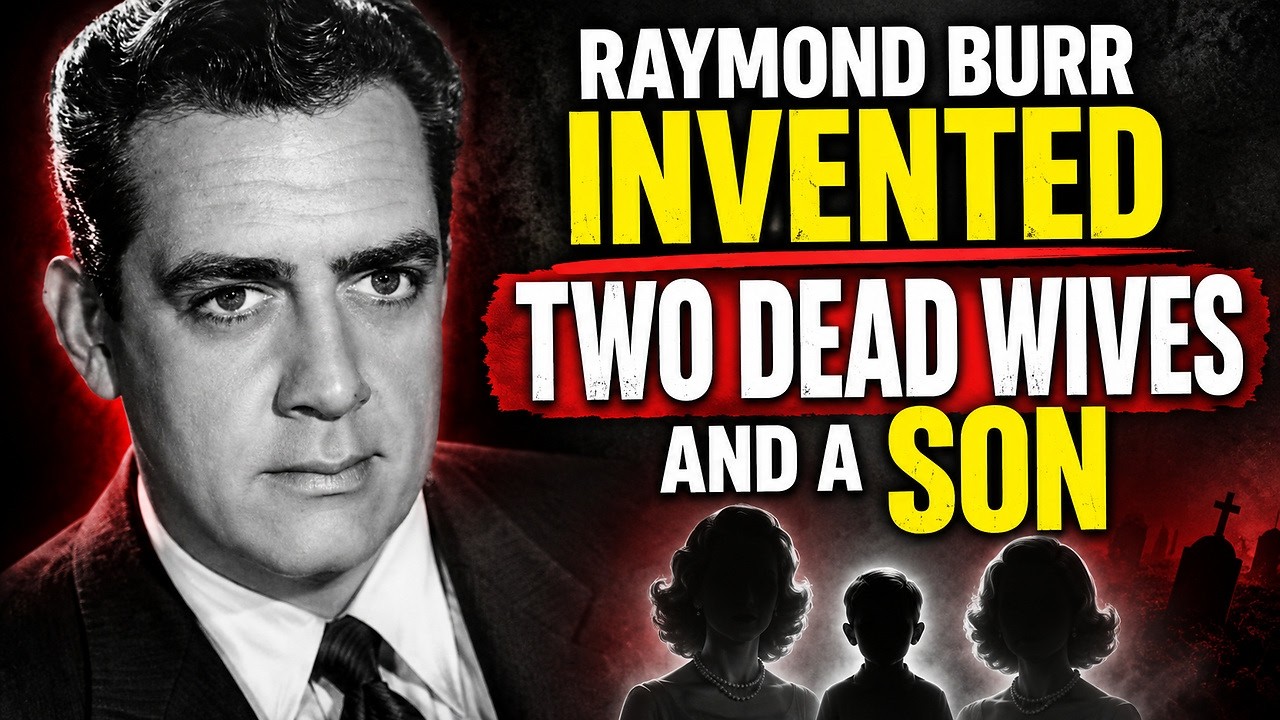
Raymond Burr became one of the most recognized figures in American television history, yet the public story of his life contains a complex mixture of documented fact and persistent mythology. The actor who portrayed Perry Mason and later Chief Robert Ironside carefully constructed a public narrative that included false claims about multiple marriages and the tragic loss of a son to leukemia. Later biographical research demonstrated that these emotionally powerful stories were not supported by the documentary record. The actor’s early life began in New Westminster, British Columbia, and his career eventually became thoroughly American in its trajectory.
Before television made him a star, Burr established himself as a character actor in film, often playing villains. His physical presence and his understanding of how a face could communicate before a character spoke made him effective in these roles. Weight would become a public issue throughout his life, affecting both his casting and his public image. The role of Perry Mason transformed Burr’s career.
Based on the defense lawyer created by writer and attorney Erle Stanley Gardner, the television series presented theatrical legal procedures designed for drama rather than realism. The show’s famous last-minute reversals were a staple of its formula. Production schedules were demanding, with accounts describing long days, early calls, and periods when Burr slept at the studio because going home would have consumed too much time. Despite this punishing pace, Mason entered courtrooms looking as if he had all the time in the world.
The private life that existed behind this public success involved a long partnership with Robert Benevides. This relationship did not appear in fan magazines in the ordinary language of partnership, but it existed behind the public narrative. Burr built a life that included shared work, including a vineyard and land projects that required the same kind of commitment he gave to his craft. These projects were a form of public memorial emerging from a private partnership.
The professional friendship between Burr and Barbara Hale, who played Della Street, became an important element of the Mason world. When the series was revived years later with television movies, the return of both actors mattered because the audience understood the history between the characters. The timing between two actors who had worked together across decades created a rhythm that existed in the room, not just on the page. Hale remained important not because a publicity department declared her important, but because Burr kept wanting to work with her and she kept choosing to return.
The portrayal of Ironside presented another kind of professional achievement. A wheelchair-using character occupied a position of professional authority at the center of a major network drama. Burr proved he could build another durable character, then return to Mason on terms he could live with. The result was continuity rather than surrender.
His physical presence remained powerful because he understood that power on camera does not require physical motion. The mythology surrounding Burr’s private life deserves careful examination. He lost two wives to early death and buried a child according to his public story, but these claims were not supported by the evidence. That does not mean every generous story told about Burr should be accepted uncritically, nor should his charitable activities be dismissed merely because other parts of the mythology proved unreliable.
Each claim must stand on its own evidence. Historical context matters in evaluating why Burr might have constructed false stories. As a public figure in an era when homosexuality was far less accepted, he faced genuine social pressures. A public figure has a right to refuse access to intimate life, and keeping home life out of interviews does not require lying.
Holding those two truths at once is necessary for fairness. The false stories were the problem, not the desire for privacy. The relationship between Burr and Benevides should not be reduced to a secret that explains something else. A real partnership does not become unimportant because it ended, and it should not be reduced to a symbol.
Robert Benevides was not important merely because later biographers needed an answer to a mystery. The private life and the public work illuminate each other rather than compete. Burr’s work ethic should not be turned into saintliness, but his colleagues remembered preparation, long hours, an appetite for story, and the demands he placed on production. Late in his life, the same scrutiny he had directed at characters through Perry Mason turned toward him.
The result was not destruction but a more complicated portrait that acknowledged the reality of a man who had spent decades controlling how much of his private life the public could see. The deeper drama was never that Raymond Burr needed a secret large enough to explain him. The truth is both less tragic and more complicated than the story he offered. He did build a long partnership that could not be publicly acknowledged in the ordinary language of its time, and he did become one of the most recognizable men in American television while maintaining an extraordinary wall around the intimate structure of his life.
When Burr returned to the role of Perry Mason in the 1980s television movies, the stories used television mechanics, but age had changed the character’s tempo. The familiar face and voice carried the weight of time, and the audience accepted a Mason who had aged. The revival worked because it asked viewers to recognize two people who had worked together before and still knew the rhythm. The return of Ironside in a 1993 film shot in Denver with members of the original ensemble marked another attempt to revisit a signature role.
The pressure of that legacy was significant. Producers may not want a performer without the character, and Burr had two iconic roles. He proved he could build another durable character, then return to Mason on terms he could live with. The response to the revival was immediate, and the movies continued for years because they worked.
The public tragedy narrative could not be supported by the documentary record. The false stories should be named as false, and the historical pressures should be named as pressures, not excuses. The real marriage Burr had earlier in life should remain real, as should the real partnership with Benevides. The real friendship with Barbara Hale should not be reduced to a symbol.
Neither memory is complete. Contemporary interviews preserve Burr’s own voice, including the stories that later proved unreliable. Later reporting and biographical research compare those stories with records that the original profiles did not test. No single source can carry the whole portrait.
A human life is not divided cleanly into public fiction and private truth. The public work can contain something deeply real, and private life can contain performance. Exposure is not the same thing as understanding. Finding a false story does not mean every public memory is false, and correcting an obituary does not require rewriting a career as fraud.
The truth about Burr is more complicated than the story he offered, but it is also more real. He built fictional tragedies and real loyalties at the same time, and both belong to him.