Hanna Reitsch was born on March 29, 1912, in Hirschberg, then part of the German Empire. She grew up in an upper-middle-class family, with her father a doctor and her mother a member of the Austrian nobility. She had a brother, Kurt, and a sister, Heidi.
From the age of four, Reitsch thought of little but airplanes. She would stand on the balcony of the family house with her arms outstretched, ready to jump as if she were flying, until her horrified parents pulled her back.
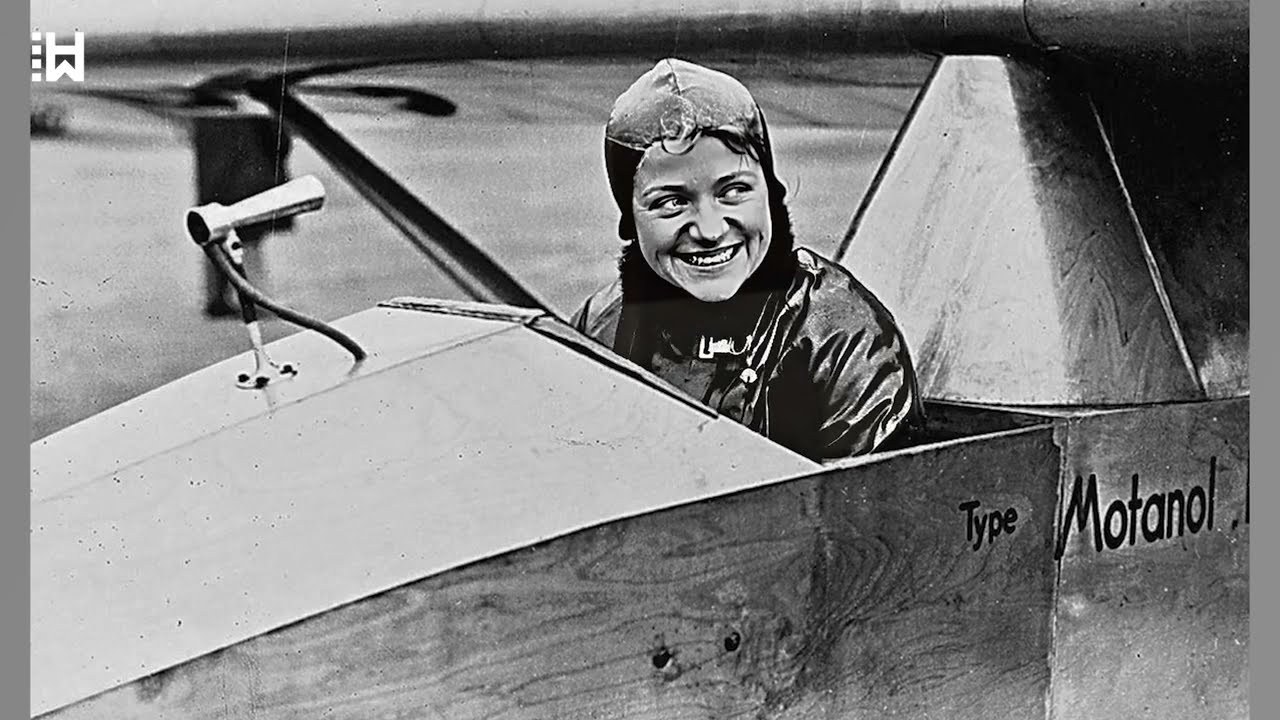
As a teenager she dreamed of becoming a flying missionary doctor and began studying medicine in 1932. While pursuing her studies, she earned her glider and motor pilot licenses and set her first of many records by flying a glider non-stop for five and a half hours.
On January 30, 1933, Adolf Hitler was appointed chancellor of Germany by President Paul von Hindenburg. That same year, Reitsch dropped out of medical school to become a full-time glider pilot and instructor.
In July 1933, she flew her glider through a cloud formation without being able to see. Her instrument stopped working after 15 minutes, but she kept flying blind for another 45 minutes. When she finally emerged from the clouds, she realized she was flying upside down. She managed to turn the aircraft right side up and land safely, at a landing site 600 meters higher than where she had started.
In 1934, Reitsch traveled to Brazil and Argentina as part of a German research expedition to test-fly gliders in extreme thermal conditions. In 1936, she became the first woman to cross the Alps in a glider and began testing new airplanes for performance and safety, a life-threatening job for which she was appointed the world's first female flight captain in 1937.
That same year, her childhood dream of serving her country came true when she started her career as a research and test pilot for the new German air force. Although the Treaty of Versailles had banned Germany from building up its military after World War I, Hitler had been pushing to expand the armed forces since taking power.
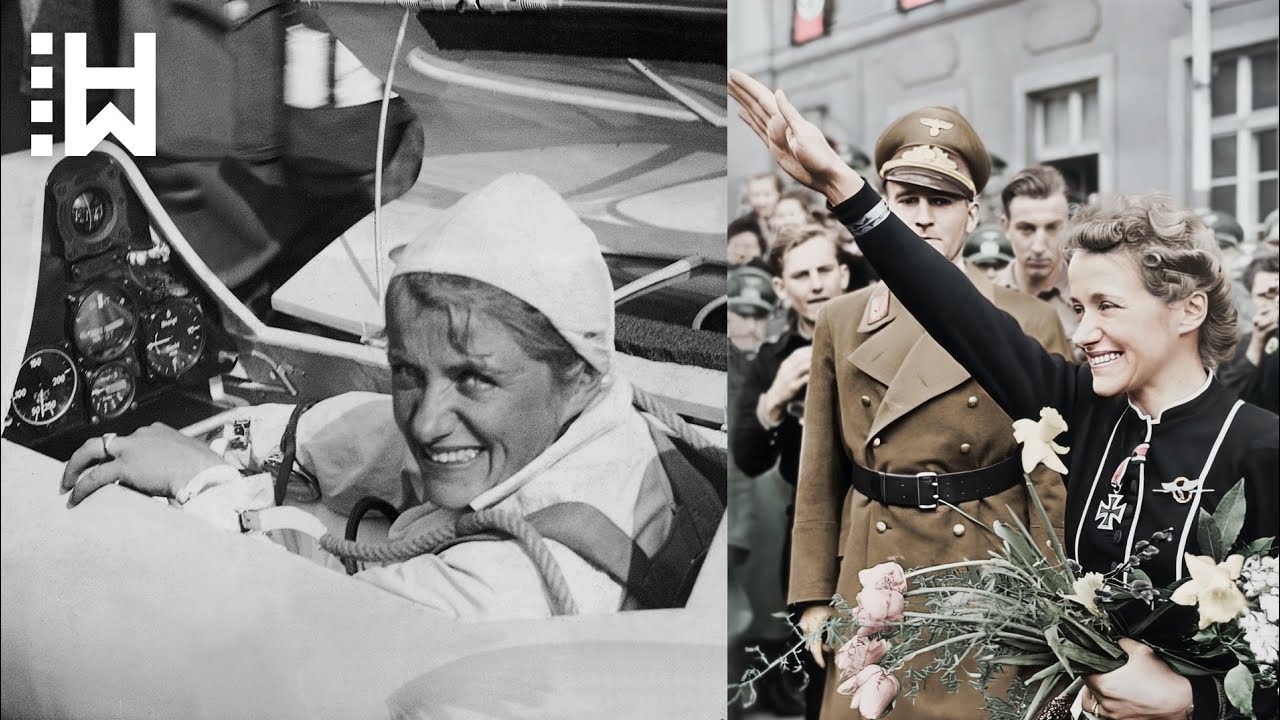
Reitsch's exceptional flying skills, combined with her desire for publicity and her photogenic qualities, quickly made her a star of Nazi propaganda. Petite and slender, with blonde hair, blue eyes, and a ready smile, she became a prominent figure in Nazi propaganda throughout the late 1930s and early 1940s.
Reitsch was the first female helicopter pilot and one of the few pilots to fly the Focke-Wulf Fw 61, the first fully controllable helicopter, for which she received the military flying medal. In 1938, during the three weeks of the International Automobile Exhibition in Berlin, she made daily flights of the Fw 61 helicopter inside the Deutschlandhalle, an arena in the West End neighborhood of Berlin.
Reitsch also tested dive brakes and, after the war began on September 1, 1939, made dangerous attempts to cut British barrage balloons with a device attached to her aircraft's nose. When she nearly broke her neck doing this, Hitler awarded her the Iron Cross Second Class, usually reserved only for men.
In March 1941, during the award ceremony, Reitsch had a chance to speak with Hitler, who made a striking impression on her. According to Reitsch, Hitler's relaxed and straightforward manner exuded a confidence that everyone around him could feel. The SS leader Heinrich Himmler, whom the pilot met in July 1943, also made a strong impression on her; she described him as someone whose presence she found pleasant from the start.
Reitsch grew up in a nationalistic German environment common among many Germans after World War I. The Reitsch family turned to the National Socialists early on, and Hanna herself was an enthusiastic personal supporter of Hitler, to whom she remained loyal until the end. Her political beliefs, however, were based more on ambiguous concepts like loyalty and patriotism.
Reitsch was neither a member of the Nazi Party nor any other Nazi organization. She also did not accept an honorary membership in the League of German Girls and explicitly rejected Nazi racial policies. She condemned the anti-Semitic violence of the November 1938 pogroms and the stigmatization of Jews with a yellow star.
When rumors started spreading about Nazi extermination camps, Reitsch did not hesitate to confront Himmler and ask for his explanation. As a staunch Nazi supporter, she believed the reports to be enemy propaganda. Himmler denied the atrocities in the gas chambers, and when he asked Reitsch whether she believed it, she replied, "No, of course not."
In the fall of 1942, Reitsch started testing the Messerschmitt Me 163 Komet, the only operational rocket-powered fighter aircraft during World War II, which was able to reach a maximum speed of approximately 1,130 kilometers per hour. In this most dangerous aircraft of the Luftwaffe, Reitsch had a severe crash on her third flight.
She survived but suffered multiple skull fractures, a damaged vertebra, devastating nose injuries, and other wounds. She underwent several plastic surgeries and lost her sense of balance. According to doctors, she was not supposed to fly anymore, but she did not accept that and practiced balance on the roof of the hospital. She received the Iron Cross First Class personally from Hitler, and 10 months after the crash she was back in the cockpit of a plane.

Toward the end of World War II, Reitsch became more fanatical in her support for a final victory of Nazi Germany. In February 1944, she presented Hitler with the idea of Operation Suicide, a plan to use manned V1 flying bombs. The idea was for pilots to steer these bombs into Allied targets, sacrificing themselves to make sure the bombs hit their targets.
Although Hitler did not consider the war situation sufficiently serious, he gave his approval. Reitsch was involved in testing and promoting this idea and believed that such desperate measures were needed to turn the war in Germany's favor. However, despite her efforts, these suicide missions were never fully carried out on a large scale, because, as she later claimed, the decisive moment had been missed. Another reason might have been considerable resistance from the Luftwaffe leadership.
Reitsch's suicidal actions were far from over. On April 26, 1945, just a few days before the German capitulation, she embarked on her most dangerous mission: a flight into Berlin, which had already been encircled by the Red Army.
Colonel General Robert Ritter von Greim, who had been appointed to replace Hermann Göring as head of the Luftwaffe, had been summoned by Hitler to the Führerbunker. Reitsch was asked to accompany him on the suicidal mission, and she accepted without complaint.
Just before reaching Berlin, the two had to dive to escape the Russian forces attacking them. After a bullet shattered Greim's right foot, Reitsch took over the controls and guided the plane through the Russian anti-aircraft fire.
With the words "You brave woman, there is still loyalty and courage in the world," Hitler greeted Reitsch in the Führerbunker. But the man who once craved world domination was now a broken figure. She recalled that his posture was bent forward, both arms trembled constantly, and his eyes had a distant, glassy look.
On April 27, 1945, Hitler gave Reitsch two poison capsules, for herself and von Greim, which she accepted. Shortly after midnight on April 29, Hitler ordered Reitsch and von Greim to fly out of Berlin. He wanted them to get the Luftwaffe to attack the Soviet forces that had just reached the Brandenburg Gate and to ensure Himmler was punished for secretly contacting the Western Allies about surrender.
Soviet troops tried to shoot the plane down, thinking Hitler might be on board, but it took off successfully. Reitsch and von Greim were soon captured and interrogated by US Military Intelligence officers. Von Greim's initial statement to his captors was reportedly, "I am head of the Luftwaffe, but I have no Luftwaffe." Von Greim, who was allegedly Reitsch's lover, committed suicide shortly after their capture by swallowing the poison capsule Hitler had given him.
During her captivity, Reitsch learned about the fate of her family, which had fled their hometown to escape the advancing Red Army and took refuge in the US-occupied Salzburg. On the night of May 3, 1945, after hearing a rumor that all refugees would be sent back to their original homes in the Soviet occupation zone, Reitsch's father shot and killed her mother, her sister, and her sister's three children before killing himself.
Hanna Reitsch had been very close to her mother, and she came to terms with her death by becoming a Catholic like her. In December 1947, Reitsch was classified as a non-involved person, since she had not belonged to any Nazi organization. Following her release, she settled in Frankfurt am Main.
After the war, German citizens were banned from flying powered aircraft, but within a few years gliding was allowed again, and she took it up once more. In 1952, Reitsch won a bronze medal in the world gliding championships in Spain, and in 1955 she became the German champion.
Because of her association with the Nazi regime, she was denied recognition in post-war Germany but was very popular abroad. In 1961, she was received at the White House by President John F. Kennedy. She also started a gliding center in India and founded the first black African national gliding school in Ghana.
During her work in Ghana, Reitsch's attitudes toward race changed. She admitted that earlier in her life she would never have treated a black person as a friend or partner, and she now experienced guilt at her earlier presumptuousness and arrogance. She became close to Ghana's president Kwame Nkrumah and allegedly had a romantic relationship with him.
Reitsch never clearly distanced herself from the madness of the Third Reich and portrayed herself as a deeply apolitical person who had only ever fulfilled her patriotic duty. She did not understand why she was no longer allowed to wear her Iron Cross with a swastika and avoided taking a political stance against the Nazi regime.
In 1978, in her book, she even went so far as to question historical facts, stating that more than 30 years had passed since the Second World War and that the lies spread about their country seemed to have become reality as history. In the 1970s, when she was interviewed by Jewish American photojournalist Ron Laytner, her closing remark was quoted as saying, "And what have we now in Germany? A country of bankers and car makers. Even our great Army has gone soft. Soldiers wear beards and question orders. I am not ashamed to say I believed in National Socialism. I still wear the Iron Cross with diamonds Hitler gave me. But today in all of Germany you can't find a single person who voted Adolf Hitler into power. Many Germans feel guilty about the war, but they don't explain the real guilt we share: that we lost."
Reitsch never married and had no children. She died of a heart attack in Frankfurt am Main on August 24, 1979. She was 67 years old.