The partnership between General Omar Bradley and General George Patton was one of the most complicated and tension-filled collaborations in American military history. For years, Bradley regarded many of Patton's proposals as the impulsive daydreams of a man chasing headlines. He was frustrated by Patton's theatrical persona and shameless self-promotion, and he believed his own measured, casualty-conscious approach to combat was wiser than Patton's appetite for bold maneuvers and calculated gambles.
Then came a defining moment when Bradley's perception shifted. With shattering clarity, he grasped that Patton had been right about something essential, something his own caution and orthodox thinking had obscured. The realization was both professionally eye-opening and personally crushing. It forced him to reconsider not just one tactical choice but his entire evaluation of Patton's strategic judgment and his own shortcomings as a commander.
Understanding why that awakening mattered requires examining how differently the two men viewed the craft of war. Bradley was the professional military man who prized meticulous planning, systematic execution, and above all the safeguarding of soldiers' lives. His rise through the ranks came through dependability and competence rather than flash. Known as the soldiers' general, his concern for troop welfare was genuine and shaped decisions meant to reduce losses, even when that meant slower progress.
Bradley's philosophy of warfare was conservative in the truest sense. He aimed to preserve resources, avoid needless risks, and accomplish missions through overwhelming force rather than clever positioning or daring wagers. Patton stood in stark contrast. He believed speed and forward motion were weapons in themselves, that pursuing a beaten enemy demanded relentlessness regardless of supply limitations, and that a commander's gravest failure was giving the enemy room to regroup.
Patton accepted the prospect of higher casualties if forceful action could shorten the war and thereby save lives overall. His thinking centered on destroying enemy forces rather than merely pushing them back, on driving breakthroughs to their absolute limit rather than consolidating gains, and on sustaining offensive momentum even when standard doctrine called for halting to reorganize and resupply.
Across the campaigns in North Africa, Sicily, and France, Bradley watched Patton's methods with a mix of respect and criticism. He recognized Patton's tactical genius and his ability to drive troops to remarkable achievements. Yet he also saw Patton as reckless, noting that his advances often pushed dangerously beyond logistical support and questioning whether his attention-grabbing maneuvers sometimes generated more press than meaningful results. Bradley saw himself as the reliable professional focused on the assignment rather than personal glory.
The matter on which Bradley would eventually acknowledge Patton's correctness involved Allied strategic planning in the autumn of 1944. After the breakout from Normandy and the swift drive across France, Allied troops by late August and early September had advanced far faster than projected. German forces in France lay shattered, Paris was liberated, and Allied armies approached Germany's western frontier. The question facing Allied leadership was what to do next, and it sparked one of the war's most consequential strategic arguments.
Patton's position was clear and forcefully argued. He insisted the Third Army should receive priority access to fuel and supplies, that it should press toward the German frontier and beyond at maximum speed, and that conditions allowed a deep drive into Germany before German troops could form coherent defenses. Patton maintained the German military was on the verge of total collapse, that one more surge could end the war before Christmas 1944, and that logistical obstacles could be overcome through improvisation and captured enemy materiel. He demanded that all available resources flow to Third Army for what he envisioned as a finishing strike to the Rhine and possibly farther.
British Field Marshal Bernard Montgomery offered a contrasting proposal. He suggested Operation Market Garden, an ambitious airborne assault paired with an armored thrust through Holland toward the Rhine. Montgomery contended his northern approach offered the best prospects for a decisive penetration and that he deserved priority for supplies and reinforcements. Like Patton, he believed concentrating resources on a single thrust was better than a broad advance along the entire front.
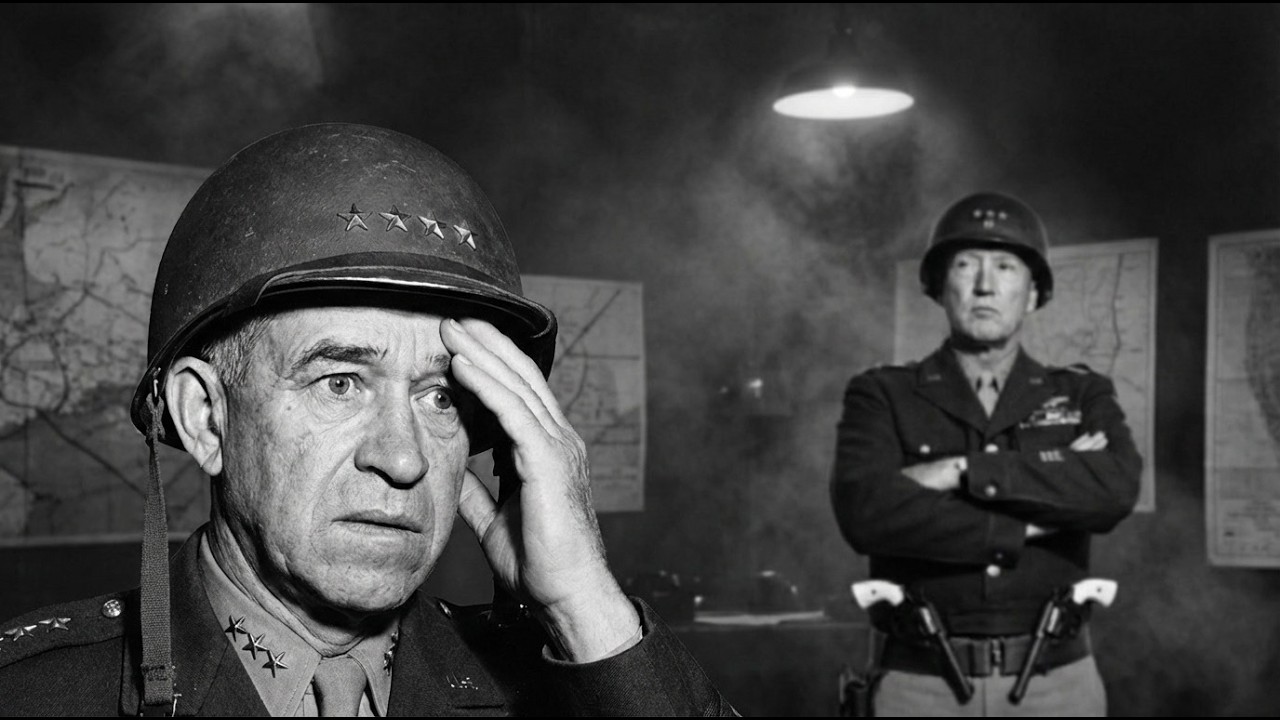
Bradley's view was more complex and ultimately mirrored Eisenhower's. He supported what became known as the broad front strategy, in which all Allied armies would advance together, maintaining a continuous battle line and methodically clearing German forces from conquered territory. Bradley argued this approach was more sustainable logistically, that it prevented dangerous gaps from opening in Allied positions, and that it was more reliable than wagering everything on a single thrust that might collapse. When Eisenhower decided on the broad front, Bradley endorsed it fully as the sensible, professional course.
Patton erupted when his appeal for supply priority was rejected. He argued forcefully with Bradley and Eisenhower, insisting they were prolonging the war through unnecessary caution and squandering a legitimate chance to end hostilities quickly. He aired his views to anyone who would listen, including war correspondents, creating a public dispute over strategy. Bradley found Patton's conduct improper and his reasoning unconvincing. The broad front seemed reasonable and solid, and Bradley believed Patton's proposed dash across Germany was exactly the kind of irresponsible gamble that could trigger catastrophe.
September 1944 saw the broad front strategy implemented. Supply shortages affected all Allied armies as logistics strained to keep up with the rapid advance. Patton's Third Army, despite his scrounging and resourcefulness, eventually halted from fuel depletion. Montgomery's Operation Market Garden, launched in mid-September, failed with heavy losses and missed objectives. The German border was reached, but German forces managed to build defensive positions along the Siegfried Line. The war, which had seemed on the brink of ending in September, would continue for eight more months.
Bradley's awakening did not come instantly. Through the autumn of 1944, he still maintained the broad front had been proper, that supply conditions had made Patton's proposed offensive unworkable regardless of theoretical advantages, and that the setback was temporary. He expected the steady, systematic approach to prove superior to the wild gamble Patton had advocated. Bradley felt satisfied with his choices and confident events would justify them.
The awakening arrived later, not as sudden enlightenment but as gradual comprehension that solidified during the Battle of the Bulge in December 1944. When German forces launched their surprise assault through the Ardennes, Bradley watched Patton execute what many military scholars regard as the most remarkable operational achievement of his career. Responding to Eisenhower's urgent plea for help, Patton withdrew three divisions from active fighting, pivoted his entire army 90 degrees, moved hundreds of thousands of personnel and thousands of vehicles through winter conditions on frozen roads, and launched a coordinated attack against the German flank within 72 hours.
What Bradley observed in those 72 hours transformed his understanding of what Patton had advocated in September. Bradley had considered Patton's plan to drive rapidly toward Germany reckless and logistically impossible. Yet watching Third Army's performance during the Bulge, he grasped that Patton could have done precisely what he had proposed. If Third Army could reach that level of operational capability in winter while disengaging from active combat, it could surely have achieved even more in September, when German forces were in full retreat and before they had established defenses.
The precise moment this understanding crystallized came during a meeting at Eisenhower's headquarters in early January 1945, after the Bulge had been contained though fighting continued. Patton was there with other senior commanders discussing future operations. He remarked almost casually that Third Army's relief of Bastogne had proven the supposed logistical impossibility of his September offensive had merely been an alibi for timidity. If Third Army could cover that distance that quickly in the worst conditions, he noted, imagine what it could have done in September with the Germans retreating and better weather.
Bradley's first reaction was to dismiss this as characteristic Patton boasting, the kind of self-congratulatory hindsight he excelled at. But as Bradley reflected, truly reflected for the first time without the assumptions and prejudices that had colored his earlier assessments, he understood Patton was right. The logistical objections to the September offensive had been genuine, but they had also been justifications. The fuel existed in Allied depots; it simply was not at the front. The transportation capacity existed; it merely would have required prioritizing Third Army over other formations. The operation Patton advocated was difficult and risky, but it was not impossible.
What Bradley grasped in that instant was that the decision to deny Patton the resources for his September offensive had not stemmed primarily from logistical impossibility but from risk avoidance. He and Eisenhower had chosen the safer, more conventional option not because Patton's plan could not succeed, but because they were unwilling to accept the risk that it might fail. They had chosen guaranteed mediocrity over potential brilliance, and that choice had cost months of war and thousands of casualties.
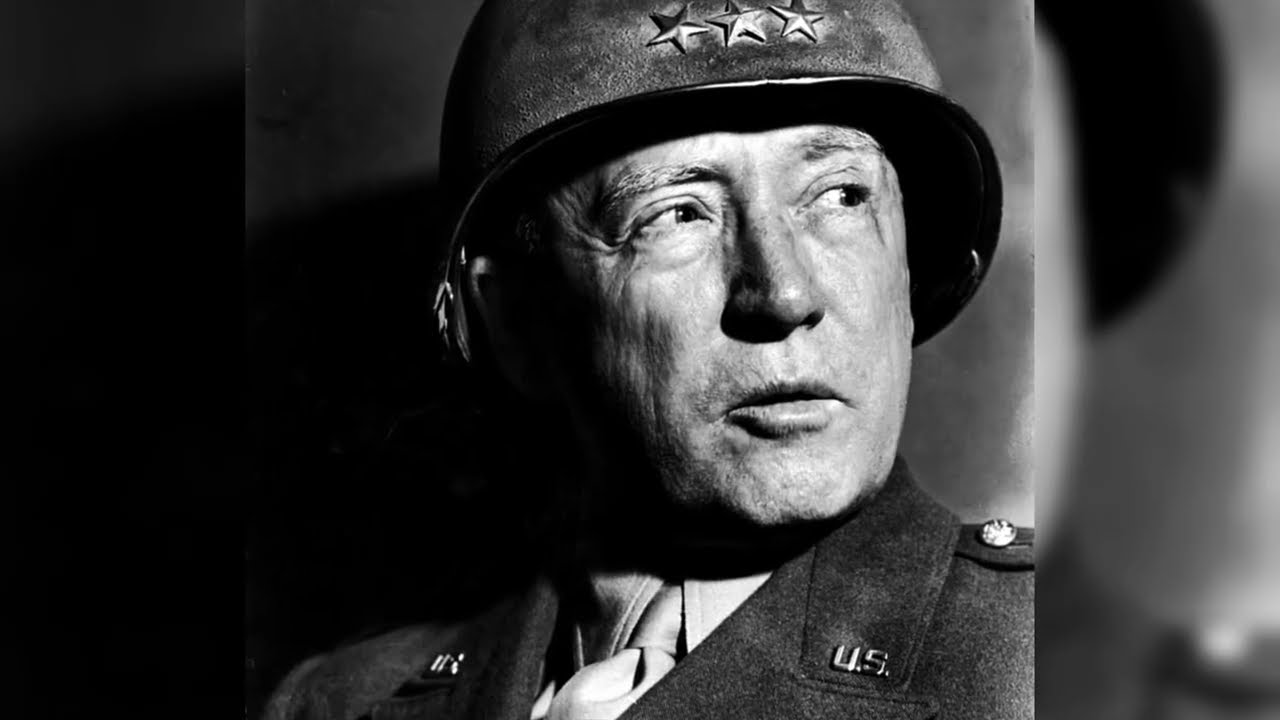
The understanding was devastating on multiple levels. Professionally, it meant accepting that a strategic choice he had backed and championed was wrong, that Patton's assessment had been superior to his own, and that his preference for methodical caution over aggressive risk-taking had lengthened the war. Personally, it meant confronting the uncomfortable reality that his resentment of Patton, his rejection of Patton's ideas as reckless showmanship, had been rooted partly in envy and in his own shortcomings as a commander.
Bradley never openly acknowledged this realization during the war. He continued to support the broad front in official correspondence and to defend the choices made in September 1944. Yet those close to him during this period, his staff and associates, detected a change in his attitude toward Patton and toward operational planning more broadly. Bradley grew less dismissive of Patton's proposals, more open to considering aggressive operations even when they carried substantial risk, and more aware of the costs of excessive caution.
Evidence of the shift appeared in his decision-making during the war's closing months. When Patton proposed aggressive operations in early 1945, Bradley was more accommodating than before. He allocated resources to Third Army more liberally and intervened less in Patton's operational choices. He championed Patton's aggressive methods to Eisenhower rather than joining in criticism of them. This marked a meaningful change from his earlier conduct and reflected his acknowledgment that Patton's instincts for exploitation and pursuit surpassed his own more guarded inclinations.
The awakening also shaped how Bradley thought about the nature of military command and the relationship between risk and reward in war. He had always held that competent commanders minimized risk, that protecting soldiers' lives was the paramount priority, and that methodical approaches beat gambles. What he came to understand was that this philosophy, however admirable in many respects, could itself be a form of recklessness. By exercising excessive caution and declining to accept short-term risks for potential long-term gains, Bradley realized he had actually increased the war's total cost in both casualties and duration.
This is a nuanced but crucial insight about military command. The obvious risks are those tied to aggressive action, to attacks that might fail or advances that might become isolated. These are easy to identify and measure, and risk-averse commanders naturally focus on preventing them. But there are also risks tied to inaction and excessive caution, risks less visible but potentially more expensive. By failing to exploit German vulnerability in September 1944, the Allies gave Germany time to reorganize, build defenses, and launch the Ardennes Offensive. The total casualties from the extended war almost certainly exceeded what would have been lost in an aggressive September offensive, even if that offensive had run into serious trouble.
Bradley's realization forced him to face this reality. Patton had grasped it instinctively and had consistently recognized that sustaining pressure and accepting tactical risks could reduce overall casualties by shortening the war. Bradley had dismissed this as the rationalization of a reckless glory seeker. Yet the Battle of the Bulge had validated its truth. If the war had ended in 1944, as Patton believed possible, the Bulge and its thousands of casualties would never have happened. The long fighting along the Siegfried Line, the harsh winter engagements, and the continued suffering of populations still under Nazi control might all have been prevented.
Bradley's memoirs, published years after the war, contain passages suggesting his changed understanding. Though he never explicitly stated that Patton had been right about the September 1944 argument, he wrote about the challenge of balancing risk against potential reward, about the costs of excessive caution, and about his respect for Patton's operational instincts. Reading between the lines, one can see Bradley grappling with the knowledge that his own judgment had been flawed on one of the war's most critical strategic choices.
The relationship between Bradley and Patton in the war's closing months and afterward was complicated by Bradley's unspoken realization. He could not publicly concede that Patton had been right without damaging his own credibility and standing. He could not admit error without undermining the broad front strategy that had formed the foundation of Allied operations for months. Yet he also could not entirely suppress his recognition that Patton's aggressive instincts had been strategically sound and that his own caution had been excessive.
This created a peculiar dynamic in which Bradley was simultaneously more supportive of Patton's operations and more resentful of Patton personally. Supporting Patton's aggressive operations in early 1945 was an implicit admission that such operations could succeed and should have been pursued earlier. That admission made Bradley more, not less, resentful of Patton, because it confronted him with his own error in judgment. It is a common psychological occurrence: we often resent most those who force us to recognize our own limitations.
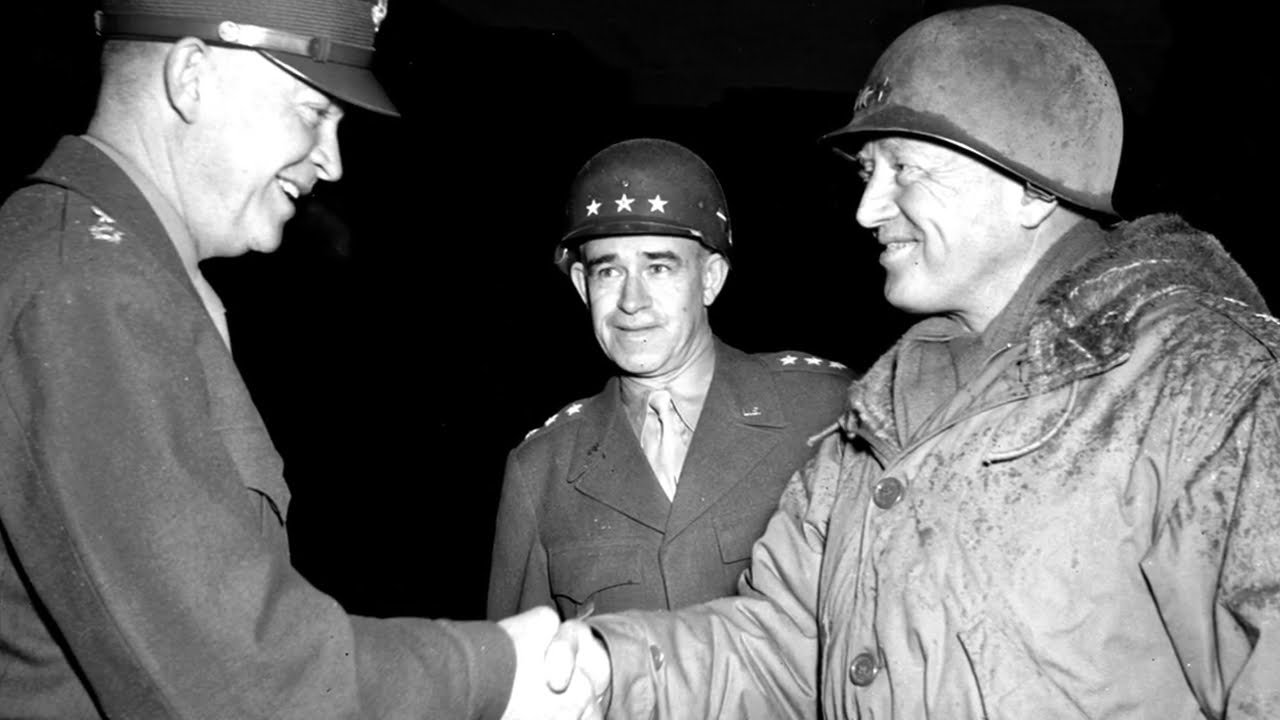
The moment Bradley grasped that Patton was right was not a moment of reconciliation. If anything, it widened the distance between them, because Bradley could neither acknowledge his realization to Patton nor fully ignore its implications. Patton, characteristically, appeared oblivious to Bradley's internal conflict. He continued to complain about resources and limitations, continued to advocate for more aggressive operations, and continued to believe Bradley's caution was restraining more decisive action. He never learned that Bradley had come to share his view about the strategic opportunity lost in September 1944.
The historical importance of Bradley's realization extends beyond the personal relationship between two generals. It touches one of the core arguments in military theory about the proper balance between audacity and caution in operational planning. The German military tradition, as seen in concepts of mobile warfare and the writings of theorists like Clausewitz, stressed seizing opportunities even at considerable risk. The British tradition, shaped by the experience of World War I, stressed thorough preparation and overwhelming force to minimize casualties. The American military in World War II sat somewhere between these traditions, with different commanders occupying different points on the spectrum. Patton represented the emphasis on audacity and exploitation; Bradley represented the emphasis on systematic operations and casualty reduction.
The September 1944 strategic argument was essentially a test of which approach suited the particular circumstances of that moment. Bradley's realization that Patton had been right suggests that, in that case, audacity would have been preferable to caution. Yet it is important not to over-generalize. There were other occasions when Patton's aggressive instincts led him into trouble, when his willingness to accept risk created difficulties rather than opportunities. The slapping incidents in Sicily, his tendency to outrun his supply lines, and his occasional failure to protect his flanks were all consequences of the same aggressive temperament that made him so effective in pursuit operations.
What Bradley came to understand was not that aggression is always better than caution, but that the specific circumstances of September 1944 had called for Patton's approach rather than his own. The German army was retreating and disorganized. Allied forces had momentum. Supply challenges, while real, were not insurmountable. These conditions created a window of opportunity that demanded the kind of aggressive exploitation Patton specialized in. By the time Bradley fully understood this, the window had closed.
The counterfactual question of what would have happened if Patton had been given the resources he requested in September 1944 is one of the great what-ifs of World War II. Would his offensive have reached the Rhine and penetrated into Germany as he predicted? Would it have ended the war in 1944? Or would it have stalled due to logistical problems, creating an exposed position the Germans could have counterattacked? We cannot know for certain, and historians continue to debate it. What we do know is that Bradley came to believe the attempt should have been made, that the potential benefits justified the risks, and that Patton's operational instincts had been superior to his own in this instance.
Bradley's awakening also had implications for his postwar career and his contributions to military thought. As Army Chief of Staff and later as the first chairman of the Joint Chiefs of Staff, he had to make strategic decisions balancing risk against potential reward. His experience with the September 1944 argument, and his recognition that excessive caution could be as dangerous as excessive audacity, informed his approach to those postwar challenges. He became more willing to consider aggressive operations and less dismissive of plans involving substantial risk.
In his later years, Bradley occasionally discussed the difficulty of strategic decision-making and the impossibility of knowing with certainty whether a choice was right until events unfolded. He acknowledged that some of the decisions he had backed during the war had not worked out as well as hoped and that alternative approaches might have been better. While he never explicitly identified the September 1944 argument as one of those problematic choices, those familiar with the history could read the subtext in his remarks.
The personal cost to Bradley of realizing Patton had been right was substantial. Bradley was a proud man who took his responsibilities seriously and wanted to be remembered as a distinguished commander. Admitting even privately that his judgment had been inferior to Patton's on a critical strategic question was painful. It meant accepting that the man he had often dismissed as a showboat and a glory seeker had superior strategic instincts, and that Patton's aggressive confidence was founded on genuine understanding rather than mere ego. This admission complicated Bradley's feelings about Patton in ways that lasted for the rest of his life.
When Patton died in December 1945, Bradley's reaction was complex. He mourned the loss of a colleague and acknowledged Patton's contributions to victory. Yet he also felt a sense of relief that he would never have to publicly confront the question of whether Patton had been right about the September 1944 strategy. With Patton dead, Bradley could maintain the official narrative that the broad front had been proper while privately wrestling with his doubts.
The moment Bradley grasped that Patton was right was not a moment of dramatic revelation or emotional confrontation. It was a quiet acknowledgment that came gradually and was never fully articulated, even to Bradley's closest confidants. Yet it was genuine and meaningful, and it transformed how he thought about command, strategy, and the relationship between risk and caution in warfare. It forced him to confront uncomfortable truths about his own limitations and about the costs of the choices he had backed.
In the broader context of military history, Bradley's realization is a reminder that even the finest commanders make mistakes, that strategic choices made under uncertainty can look very different in retrospect, and that the line between caution and excessive caution is often clearer in hindsight than in the moment. It also reminds us that personal relationships and institutional cultures can bias strategic decision-making in subtle ways, that resentment of a colleague's personality can lead to rejection of that colleague's ideas, and that professional jealousy can disguise itself as strategic disagreement.
The story of the moment Bradley grasped that Patton was right is ultimately a story about humility, about the difficulty of admitting error, and about the costs of decisions made in wartime. Bradley was a capable commander and a decent man who made what he believed was the right choice in September 1944. That the choice may have been wrong, that a different approach might have ended the war sooner and saved lives, is a burden he carried for the rest of his life. His realization that Patton had been right was both a moment of professional insight and a moment of personal reckoning, and it speaks to the enormous weight of responsibility that rests on those who make strategic decisions in war.