Joseph Kennedy is often remembered today only as the father of John F. Kennedy, a footnote in the story of a more famous son. But in his own time he was a financial genius, a political power player, and one of the richest men in the world.
His decisions shaped the man his son became and the world we live in today. He also left behind a record of questionable ethics, in both his professional and private life.
What follows are eight of the most troubling episodes associated with him.
Joseph Kennedy married Rose Fitzgerald in 1914 and almost immediately began cheating on her. Even in the early years of the marriage, a relative described Joe as having a reputation as a ladies' man.
His most famous affair was with Gloria Swanson, the star of "Sunset Boulevard." The pair ran around together for two years, and it was not always behind Rose's back.
At one point he took both Rose and Gloria on a vacation to Europe and made his wife watch while he fooled around with the other woman. Rose kept a stoic face throughout.
"If she suspected me of having relations not quite proper with her husband, or resented me for it, she never once gave any indication of it," Swanson said. Rose knew of the affairs, and even her children knew what was happening.
Rose had been taught that a woman's place was to suffer in silence and spare men the humiliation of being found out. Through it all, her secretary later said, she never showed any pain.
When Prohibition came into effect, rumors that Kennedy was a rum runner spread wildly. The gangsters Frank Costello and Meyer Lansky both accused Kennedy of being a bootlegger.
Another rumor cast him as a partner in crime with Sam Giancana, and a piano tuner working for Al Capone claimed he saw Kennedy sit down with a whiskey baron to talk business. None of these stories has ever been proven.
Some things, however, are known for sure. In 1922 Kennedy kept the liquor flowing at his Harvard 20th reunion, and when Prohibition ended he already had a whole stock of liquor ready to sell across the country.
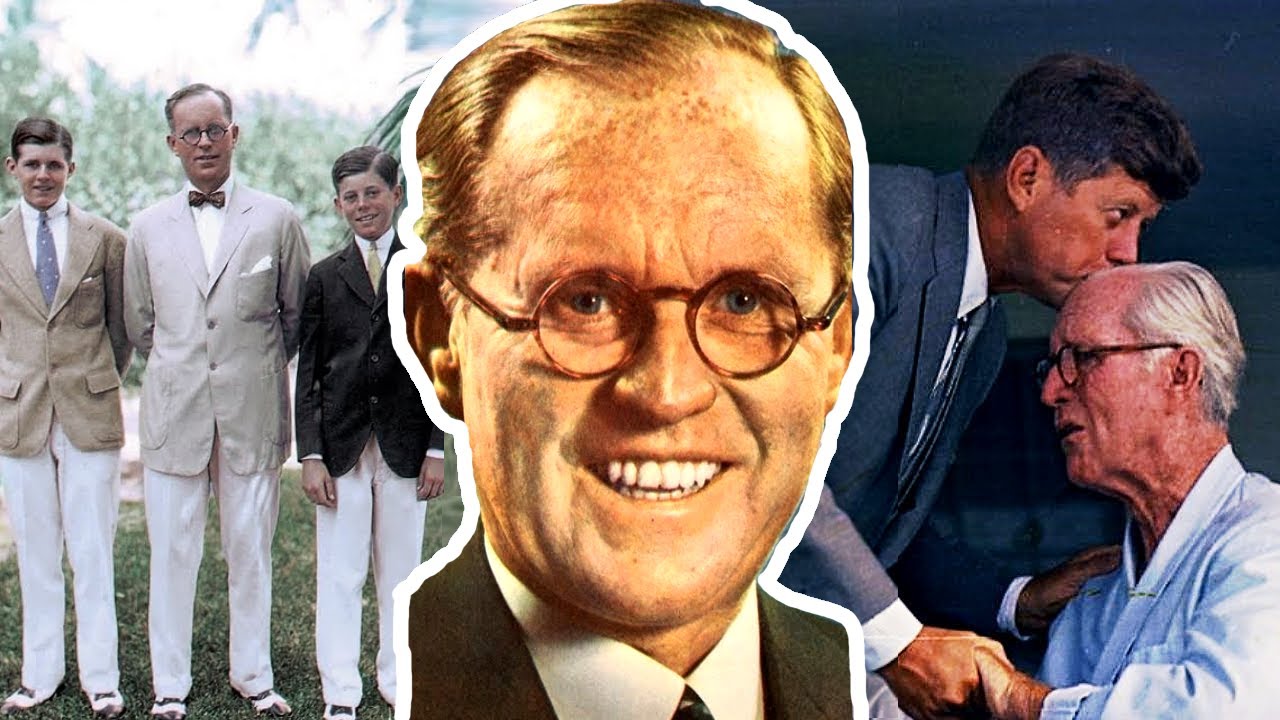
Kennedy claimed all of it was acquired legally, and it is possible the bootlegging rumor was simply a way to run his name through the mud. Either way, he was a businessman who saw an opportunity and capitalized on it.
In 1938 Joseph Kennedy became the American ambassador to the United Kingdom, arriving during the rise of Nazism as Hitler was turning his people against the Jews. Kennedy was not afraid to weigh in.
"They brought it on themselves," Kennedy said when he heard about German Jews being attacked. To a friend he added, "As a race they stink. Look what they did to Hollywood."
He spent a great deal of time talking to the German ambassador, Herbert von Dirksen. Von Dirksen said Kennedy "understood our Jewish policy completely."
Kennedy tried to get the Germans to change their approach, but not because he was worried about the Jews. He was worried that too much violence would turn public opinion against Hitler.
Kennedy had his own plan: a program that would have shipped every Jew in Germany to Africa, or at least to a British or American colony. Roosevelt shut the plan down, but it did not silence Kennedy.
He agreed with Hitler "all the way," he wrote in a letter, adding that Jewish pundits were going to "set a match to the fuse of the world."
Kennedy's eldest son, Joseph Jr., saw Hitler speak in 1934 and was impressed. Hitler, Joseph Jr. said, saw Germany's need for a common enemy, someone they could toss out to boost morale.
"It was too bad that it had to be done to the Jews," Joseph Jr. wrote. "The dislike of the Jews, however, was well founded."
Joseph Jr. was often described as the most like his father, and Joseph senior shared his views. He called for America to make a peace pact with Hitler.
In England he tried to keep Winston Churchill out of office, hoping Neville Chamberlain would make an alliance with Germany. Twice he tried to get approval to meet with Hitler personally, wanting, he said, to bring about a better understanding between the United States and Germany.

Roosevelt was still in charge and stopped Kennedy both times. He was not going to let a rich ambassador make an alliance with the Nazis.
"Democracy is finished in England. It may be here as well," Joseph Kennedy told a reporter. England, he believed, was only fighting Germany so that it could stay alive.
It was not fighting the encroachment of fascism, he argued, and neither was America. Kennedy told von Dirksen that Roosevelt was a victim of Jewish influence and would soon be disposed of.
He did not hold this view lightly. Kennedy was sure that America was being run by Jews. In an interview with another reporter he said that "the Democratic policy of the United States is a Jewish production."
Roosevelt was furious. Kennedy was supposed to be serving the state; instead he was spreading anti-Semitic conspiracy theories and publicly supporting Hitler. In 1940 Kennedy was forced to resign as ambassador, and his political career was over.
With his own political ambition smashed, Kennedy turned to his sons. He was determined that one of them would become president, and there was only one liability: his daughter Rosemary.
Her behavior was unpredictable, and she would often break into fits of rage. Officially Rosemary had been diagnosed as mentally handicapped, but modern psychiatrists think she was simply depressed.
Either way, she had to calm down. "If someone has mental illness in their family," said psychologist Bertram Brown, "how does he become president?"
Surgeons incised her brain while having her sing "God Bless America." Her surgeon later described the procedure: "We made an estimate on how far to cut based on how she responded." He stopped cutting when she became incoherent.
After that, Rosemary was kept in the shadows. Her name was never mentioned in the house. "I knew she existed because I saw the family photographs in the attic," Joseph Kennedy's secretary said, "but the name was never mentioned."
In 1946 John F. Kennedy ran for Congress and won. According to his opponent, it was not because of a wave of popular support.
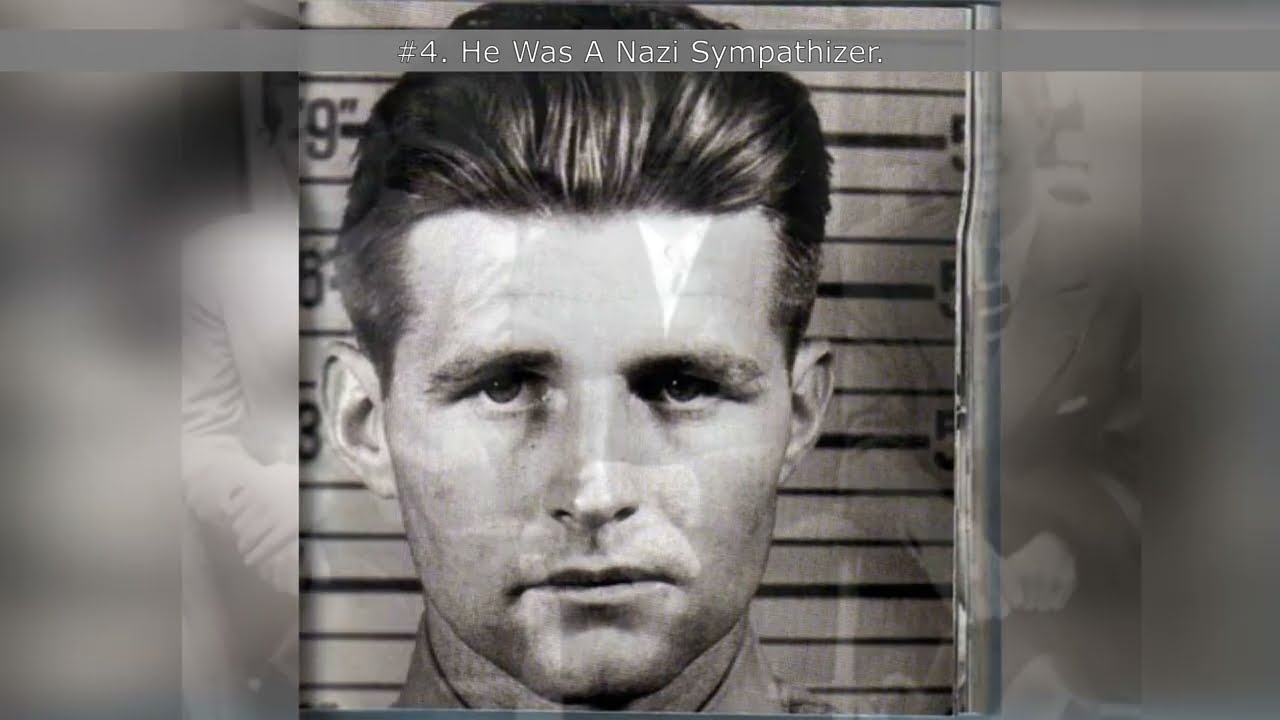
JFK ran against a candidate named Joe Russo, and Russo claimed that Joseph Kennedy deliberately split his votes. Allegedly, Kennedy paid a custodian whose name was also Joe Russo to run in the election.
Kennedy hoped voters would get confused about which Russo was which, splitting the vote in half. Cheating rumors floated up again when JFK ran for president.
Joseph did not support his son's policies. Before his son won the primaries, he visited Richard Nixon and told him, "Dick, if my boy can't make it, I'm for you."
JFK made it, and Joseph stayed loyal to the family. JFK was more than aware of his father's reputation. He joked about receiving a wire from his "generous daddy": "Dear Jack, don't buy a single vote more than is necessary. I'll be damned if I'm going to pay for a landslide."
"Dad told all the boys to get laid as often as possible," John F. Kennedy once said. Those were words, he suggested, that would shape his character.
The younger Kennedy grew up a notorious playboy, once complaining, "I can't get to sleep unless I've had a lay." Joseph encouraged infidelity among his kids, and they were open about it.
In 1940 JFK wrote a letter to his father telling him "an awful lot of people were there, three girls to every man, so I did better than usual." His father's influence came to a head with one woman: Marlene Dietrich.
She had an affair with Joseph in 1938, and he flaunted it in front of his son. Years later, in 1963, JFK called Marlene over to the White House and got her alone in a bedroom.
Marlene was over 60 years old, but he had called her over for an affair. Before she left, JFK asked, "Did you ever get to bed with my old man?"
Dietrich lied. "He tried," she told him, "but I never did." She had wanted to protect him, but his father had openly boasted about the affair.
JFK replied, "I always knew the son of a bitch was lying."