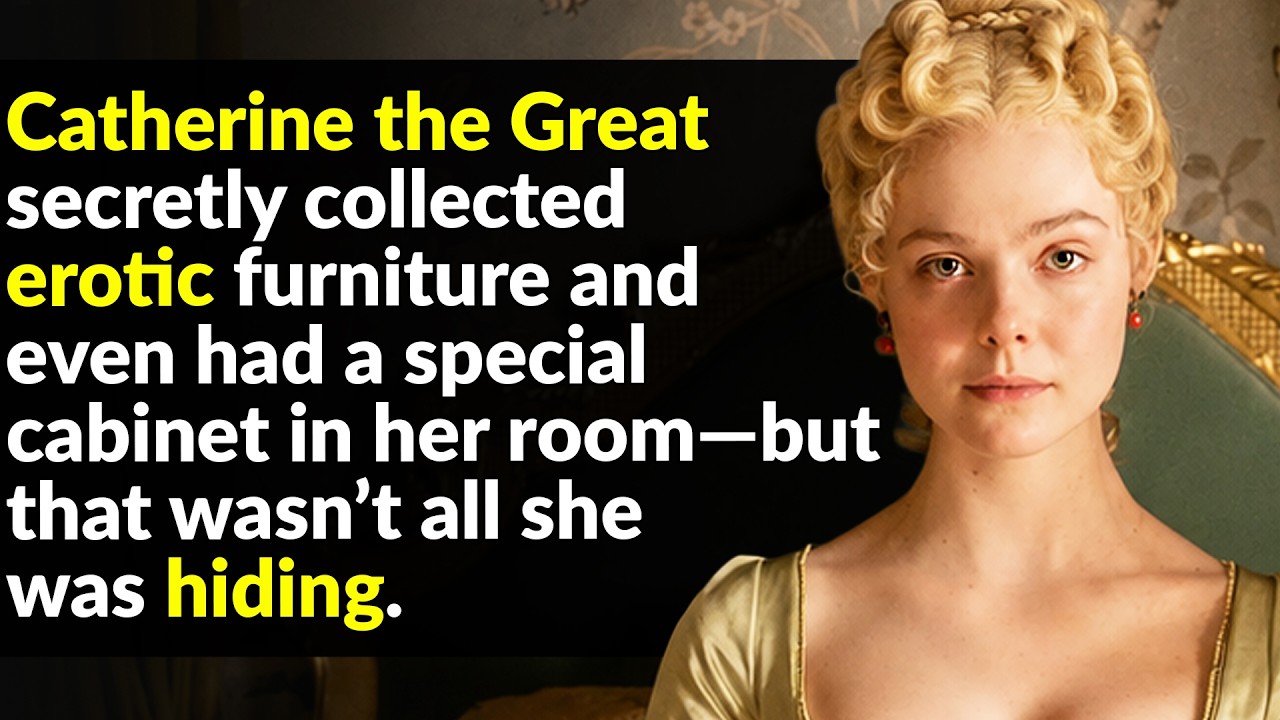
Newly resurfaced historical accounts are reigniting one of the most sensational debates in European history, suggesting that Catherine the Great of Russia, long celebrated as an enlightened monarch, led a covert private life that included secret erotic furniture, a hidden cabinet adjoining her chambers, and a network of lovers so extensive she developed an entire system to manage them. The revelations, drawn from a sweeping new examination of her life and death, paint a portrait of an empress whose public image of chastity and enlightenment stood in stark contrast to the reality behind the palace doors.
Historians and researchers say the contradictions at the heart of Catherine’s reign are more extreme than previously understood. Born in 1729 as Sophie of Anhalt-Zerbst, a German princess with no Russian blood, she rose to become one of the most powerful women in world history through a combination of intellect, ambition, and, according to the accounts, bloodshed and betrayal on a scale that still shocks scholars centuries later.
The future empress arrived in Russia as a teenager betrothed to Peter the Third, her second cousin and heir to the Russian throne. Even at the age of ten, accounts state, Catherine disliked Peter, a pale and sickly boy who played obsessively with toy soldiers and was already nursing a drinking problem. The marriage, solemnized on August 21, 1745, when Catherine was barely sixteen, quickly became a union of convenience rather than affection.
Quick-witted, beautiful, and curious, Catherine soon found she hated her dull husband even more than she had anticipated. She turned to books, devouring the works of Voltaire and studying the Machiavellian power maneuvers of Tacitus. It was during this period, historians say, that she began cultivating the political instincts that would later define her reign.
While Catherine embarked on a series of affairs, most notably with the handsome Sergei Saltykov, Peter pursued his own extramarital adventures, most famously courting the beautiful Elizaveta Vorontsova. Rumors swirled that Peter wanted to divorce Catherine and marry Elizaveta, a prospect that would have stripped Catherine of her position and possibly her life.
The birth of her son Paul in 1754 did little to stabilize the marriage. In the late 1750s, Catherine gave birth to a daughter, Anna, whom Peter refused to acknowledge as his own, declaring, “God knows where my wife gets her pregnancies.” The child lived only fourteen months.
Whether out of cruel flippancy or the depths of grief, Catherine almost never mentioned her again.
In 1762, Catherine’s ambition reached its apex when Peter ascended to the throne as Peter the Third. The royal couple moved into the Winter Palace in St. Petersburg, but within six months they were living in separate palaces.
For years, Catherine had been cultivating allies among the court for a coup d’état, and she now used her solitude to prepare what historians describe as a brutal reckoning for her husband.
On July 9, 1762, Catherine put her plan into motion. After learning that Peter had detained one of her allies, she marched to the Russian regiment and, playing the role of a helpless woman, begged the men to save her from her unhinged husband. She then proceeded to another barracks where clergymen were already waiting to proclaim her sole ruler of the Russian Empire.

Catherine had Peter detained and forced him to officially abdicate. He died on July 17, 1762, at the age of thirty-four. Although his autopsy attributed his death to a stroke, darker rumors have persisted for centuries.
Some historians believe that given the convenient timing, Catherine had a hand in eliminating the emperor to ensure he could never reclaim her throne.
The coup was not without further bloodshed. Another claimant to the throne, Ivan the Sixth, an insane twenty-three-year-old who had been locked up since infancy because his royal blood threatened the crown, was killed on Catherine’s orders. The empress, it seems, was prepared to remove any obstacle to her power.
Catherine’s private life became as legendary as her political machinations. She took such an astounding number of lovers that she developed her own scandalous system to cycle through them. She would seduce them, promote them to high ranks, and when she grew bored, pension them off with a plot of land and servants.
Her lover Grigory Potemkin went even further, happily vetting his replacements and handpicking lovers for their good looks and intelligence.
Although servicing Catherine in the bedroom became a booming cottage industry, the empress probably never married again after removing Peter from the throne. This, like most everything else she did, was a calculated power move. Why give away the crown to a husband when she was already empress of Russia?
Catherine’s relationship with her eldest son, Paul, was fraught with tension. Whether because he resembled his royal father or because Catherine felt threatened by his power, she never offered him a chance to co-rule, which was not uncommon in Russia at the time. When Paul had a son of his own in 1777, the situation worsened.
Catherine, unwilling to show Paul any kindness, eventually planned to make her grandson Alexander her official heir rather than her grown son.
Perhaps driven by insecurity about how she came to power, Catherine set out to prove she could transform backwater Russia into one of the most enlightened powerhouses of its day. She waged conflicts across Europe and beyond to expand the empire and modernized its cities, changing architecture to a classical style. But her ambitions also produced spectacular failures.
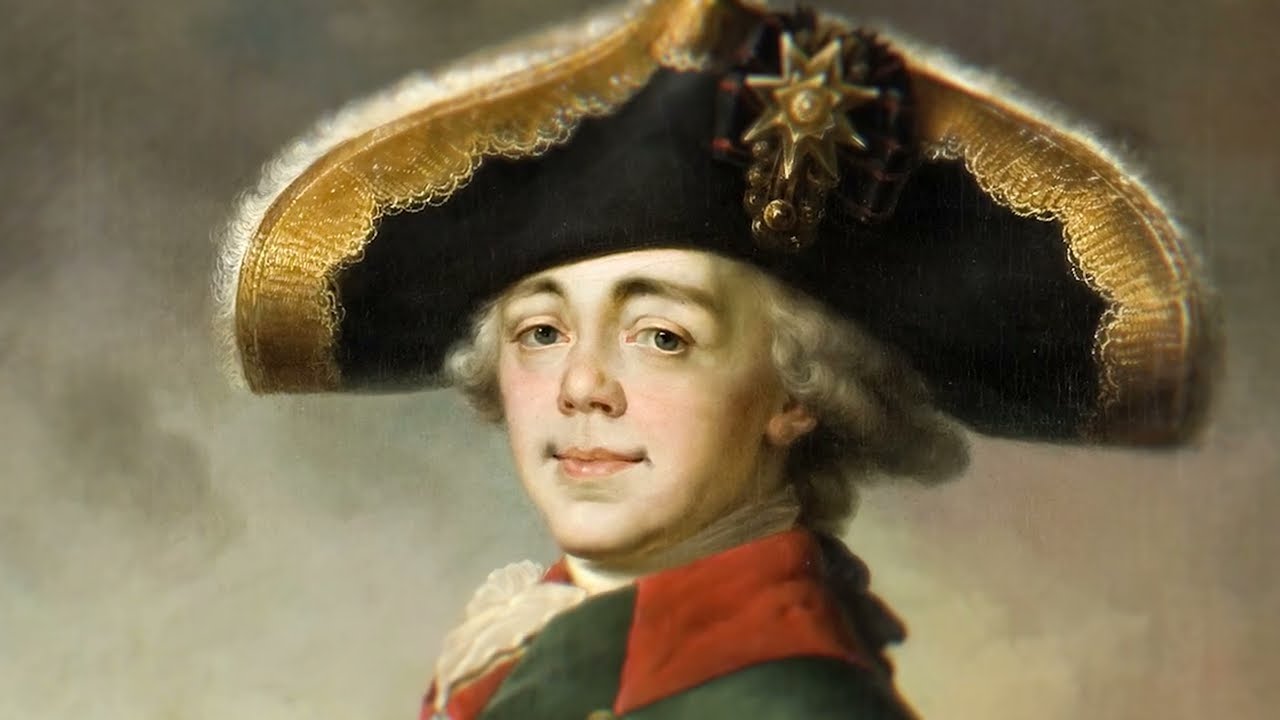
One of her biggest embarrassments came when she pushed for her granddaughter Alexandra to marry King Gustav IV of Sweden, even throwing a lavish engagement ball in their honor. Catherine poured her heart, soul, and rubles into the event, only for the guest of honor to never appear. Worried that Alexandra would not convert religions, Gustav got cold feet and fled back to Sweden, leaving Catherine humiliated.
Some say the embarrassment even contributed to her downfall.
Always hardworking, Catherine mapped out her days in five-minute increments, a schedule she maintained until her death. The only part of the schedule subject to change was her waking hour, which moved from 5:00 a. m.
to 6:00 a. m. as she grew older.
In 1773, one of Catherine’s darkest ghosts returned to haunt her. A group of peasants rebelled, and their leader, Emelian Pugachev, claimed to be her late husband, Peter III, resurrected and seeking vengeance. After a year of rebellion, Catherine assembled an enormous force and crushed the rebels.
She imprisoned Pugachev in a metal cage for public ridicule, then had him decapitated in a Moscow square and drawn and quartered.
Perhaps no one experienced Catherine’s exhilarating heights and frightening lows like her Polish lover, Stanisław Poniatowski. When he was in her favor, Catherine gifted him the kingdom of Poland, installing him as ruler. But when Poniatowski began rallying for Polish independence away from Catherine, she forced him to abdicate as punishment for his disloyalty.
He was lucky to escape with his life.
Catherine was also a modernizing force in public health. In 1762, with smallpox raging through Russia, she promoted the then-radical method of inoculation. Not content to merely patronize the practice, she had herself vaccinated with the help of English doctor Thomas Dimsdale.
To everyone’s shock, it worked.
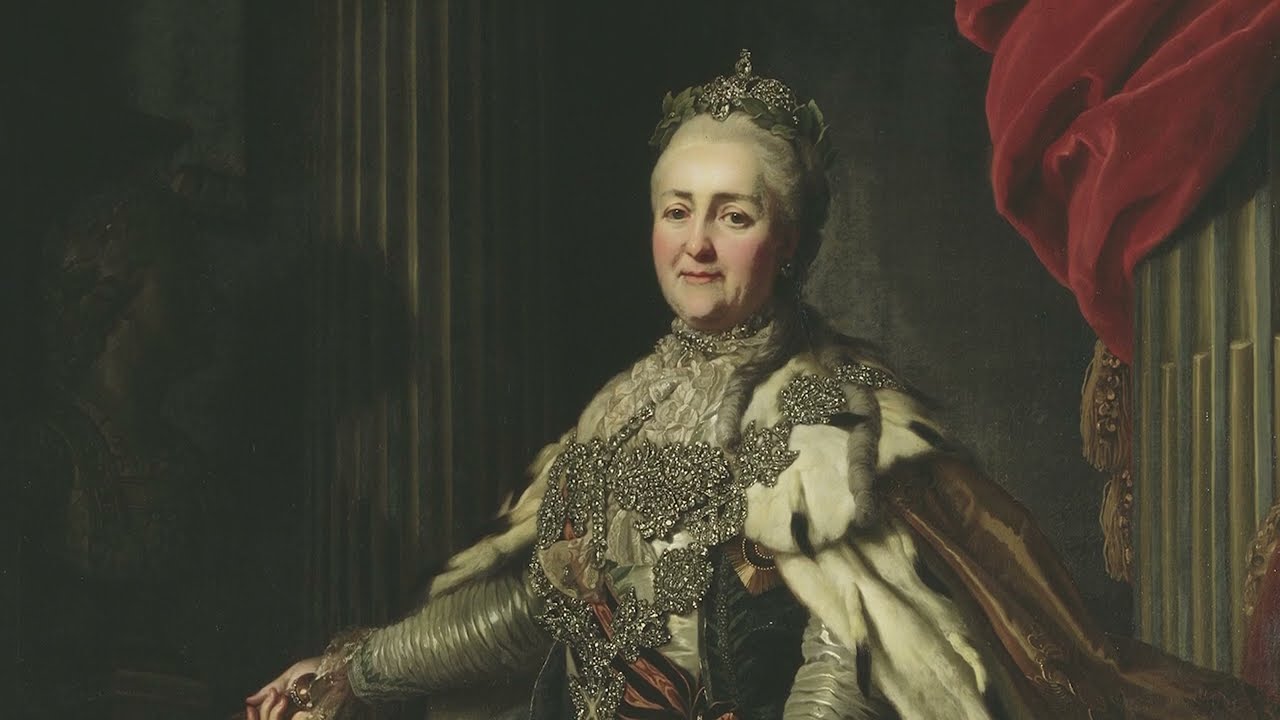 November 16, 1796, began as an ordinary day for the empress. She rose early, sipped her morning coffee, and told her lady’s maid she had enjoyed some of the best sleep in a long time. She then began signing papers.
Just hours later, everything changed. Shortly after 9:00 a. m.
, servants found Catherine lying on the floor, her face a lurid shade of purple. Her pulse was fluttering, her breathing ragged. She quickly fell into a coma and died soon after.
Years before her death, one of Catherine’s aides found an undated will among her belongings. In it, she asked to be dressed in white with a golden crown on her head inscribed with her Christian name. Mourning dress was to be worn for six months and no longer.
The shorter, the better.
In the end, her funeral was even more lavish than she requested. Though she received her golden crown, mourners placed her in a silver brocade dress instead of simple white and decorated her coffin in gold fabric. Rather than burying her immediately, the Russians displayed her body for six weeks in one of the most impressive rooms of her palace.
Visitors came by and kissed the rotting flesh of her hand.
Tragically, Catherine’s son Paul survived his horrific childhood to become emperor after his mother, only to meet the same violent end as his father. Just a few years into an unpopular reign, Paul was killed, making way for the heir Catherine had intended all along, her grandson Alexander.
The most scandalous elements of Catherine’s private life emerged only in the twentieth century. During World War II, German forces raided the Winter Palace and stumbled upon an old boudoir full of sensual furniture. These chairs and other items were decorated with objects, as the accounts describe, that “mother would not approve of.”
Catherine also employed full-time foot ticklers, a tradition among Russian royalty who used sensual foot tickling, accompanied by bawdy ballads, to provide relaxation and arousal.
The manner of Catherine’s death has been the subject of myth for centuries. Almost immediately after her passing, rumors spread that she had died after intimate relations with a horse. That claim is false.
Her autopsy revealed she had succumbed to a stroke, ironically the same ailment that was supposed to have killed her late husband, Peter III. A sad end, but not a bestial one. Even so, the unsavory rumors about the insatiable empress live on, a testament to the enduring power of a woman who, in life and in death, remained an enigma wrapped in a crown.