Few American family sagas blend opulence, ambition, and irony as vividly as that of the Vanderbilts. The dynasty carved its name into the nation's economic history and left an enduring mark on its grandest architecture. Yet even the mightiest trees can be cut from their roots. In the 20th and 21st centuries, an ironic twist of fate saw the Vanderbilts quite literally evicted from one of their most magnificent creations: The Breakers, their Newport, Rhode Island, estate.
The story begins in the mid-1800s with Cornelius Vanderbilt, known to New York's elite and alleyways alike as "the Commodore." He transformed a razor-sharp business instinct into the foundation of a transportation empire. After a sterling tenure with Thomas Gibbons's steamship enterprise, Vanderbilt made a splash by undercutting rivals so aggressively that they practically begged him to sail into calmer waters.
His dominance of the maritime market proved only a prelude. As the 1860s began, the Commodore shifted to the clanking tracks of the railroads. With the cunning of a chess grandmaster, he absorbed the Hudson River Railroad, then the New York Central Railroad, and soon the Lake Shore and Michigan Southern Railway. These were not mere business transactions; they were bold strokes that reshaped the nation's contours. By his final bow, the Vanderbilt fortune was almost unrivaled.
To paint the Vanderbilt legacy as merely a tale of commercial victories would be to ignore its immense importance in American architecture. Consider Biltmore, conceived by George Washington Vanderbilt II in the mountains of Asheville, North Carolina. With its Indiana limestone and sprawling 365-foot facade, it embodies Vanderbilt extravagance.
But the family's architectural exploits did not peak with Biltmore. There was also The Breakers in Newport, Rhode Island, the immaculate stone subject of this story. Built as a summer escape for Cornelius Vanderbilt II and designed by renowned architect Richard Morris Hunt, its construction spanned from 1893 to 1895. Inspired by European palatial elegance, The Breakers was a bold declaration of the family's regal aspirations on American soil.
Clad in brick and Indiana limestone, the mansion stands as a tribute to the American Renaissance Revival, echoing a Roman palazzo and epitomizing Gilded Age splendor. Its Great Hall, a cavernous expanse measuring 50 feet in all directions, is a shrine to the excesses and ambitions of the era. When The Breakers rose from the ashes of a predecessor claimed by fire in 1892, it was not just a building that took shape but a monument to incredible wealth and reach.
With the arrival of the Roaring Twenties, whispers of change grew louder. The Vanderbilt wealth, once perceived as bottomless, ebbed and was segmented among heirs with a fondness for the fanciful. As the Great Depression loomed, the family's grip on railroads loosened, and they found themselves navigating a world set not to the rhythm of steam engines but to the buzz of a new era.
As the 1940s rolled into the 1950s, the United States witnessed the dawn of architectural preservation movements. This newfound reverence had its prologue in the 19th century, when the homes of John Hancock and George Washington teetered on the brink of oblivion. That kindled a national dialogue weighing historical sanctity against economic progress.
Into this fray stepped entities like the Preservation Society of Newport County. Anchored in 1945 by the civic-minded Katherine and George Warren, the society initially took the mantle of the Georgian Society, vowing to shield the venerable Hunter House, a Georgian Colonial gem by the harbor, from the march of development.
Against this backdrop, The Breakers encountered its own existential crossroads. Constructed as a summer haven for Cornelius Vanderbilt II, by 1945 the palatial abode had ripened from a private family sanctum into a public curiosity. The plot thickened when Gladys, Cornelius II's youngest daughter and the estate's custodian after 1934, cast her lot with the Preservation Society.
With an eye for history's worth and a heart for civic duty, she opened The Breakers' doors in 1948, not merely to parade its splendor but to bolster the society's coffers and creed. Thus a private mansion's transformation into a historic public shrine was set in motion. The change was inked in a lease that was essentially a gentleman's agreement: a token $1 per year allowing the society to shepherd The Breakers' legacy into the public eye, while Gladys maintained her private apartment on the third floor.
It was a dance of private grace with public gaze, and The Breakers blossomed into a pilgrimage site for those drawn by the siren song of Gilded Age grandiosity. However, the partnership between the Preservation Society and the Vanderbilt heirs, once formed in the spirit of safeguarding a shared legacy, would soon show signs of strain.
The year 1972 flipped open a crucial chapter when the Preservation Society of Newport County struck a deal like no other. The next generation of Vanderbilt heirs passed the mansion's torch to the society for $366,000, equal to roughly $2.4 million in today's currency. It was an almost criminally affordable sum.
Yet this exchange of deeds was not just a swap of greenbacks. It was laced with the understanding that the Vanderbilt aura would linger within The Breakers' walls. Countess Szapáry, an heir, retained her residence after the sale, and upon her exit, her children Gladys and Paul Szapáry continued to grace the mansion's third floor, a legacy inhabitant within the Gilded cage.

The Vanderbilt descendants eyed this pact with a medley of respect and skepticism. While the society's preservationist zeal was commendable, disputes emerged over the significance of family heirlooms adorning the mansion's halls. Whispers of commercialism encroaching upon historical fidelity echoed, and the society's staff was accused of undervaluing Vanderbilt artifacts.
As the opulent 1980s arrived, they cast a shadow over the Vanderbilt fortune. Once a monolith of American wealth, it was now a dwindling empire facing a pecuniary storm. The Breakers stood as a beautiful if ominous symbol of this shift, its upkeep a lodestone for the Preservation Society as the Vanderbilt heirs navigated financial problems and increasingly leaned on the society's largess.
At the top of 1998, a gentle tranquility appeared draped over The Breakers, much like the sea air caressing its shore. The mansion stood majestic, a silent witness to the then-symbiotic connection between the Preservation Society and the living vestiges of its creators: Paul and Gladys Szapáry, great-grandchildren of the legendary Cornelius Vanderbilt II.
That same year, the board president of the Preservation Society had even written words of mutual benefit and historical continuity, remarking that it would be helpful to tell visitors that the original owner's great-grandchildren continued to live in the house. Paul and Gladys, in their gracious commitment, had not only served on the Board of Trustees but had also given their time and efforts like precious offerings to the mansion's thriving legacy.
Yet beneath this facade of harmonious existence, a looming shadow crept stealthily. It was precipitated by the death of their mother, Countess Anthony Szapáry. Soon thereafter, a turning point was at hand. Though the upper stories of The Breakers continued to cradle the last Vanderbilt descendants, the tides of their rapport with the Preservation Society began to shift.
The Szapáry children quickly found themselves grappling with a sense of diminishing acknowledgement. Their contributions and their profound connection to the mansion seemed slighted. Their discomfort was met with a veiled warning from the board president, chilling in its brevity: their occupancy was as fragile as a house of cards, ready to topple at a whisper.
Then the year 2018 emerged as a watershed. The mansion stood at the vortex of a vehement debate over a proposed Visitor Center poised to punctuate its grounds. The Vanderbilt descendants stood in stout opposition, their dissent rooted in a deep-seated desire to preserve the sanctity of the landmark's historic, architectural, and horticultural style.

Yet the Rhode Island Supreme Court, in its ruling, chose not to halt the society's aspirations to build the modern Visitor Center. The decision resonated with the heavy finality of a gavel, stripping the Vanderbilt family of their lingering influence over the estate.
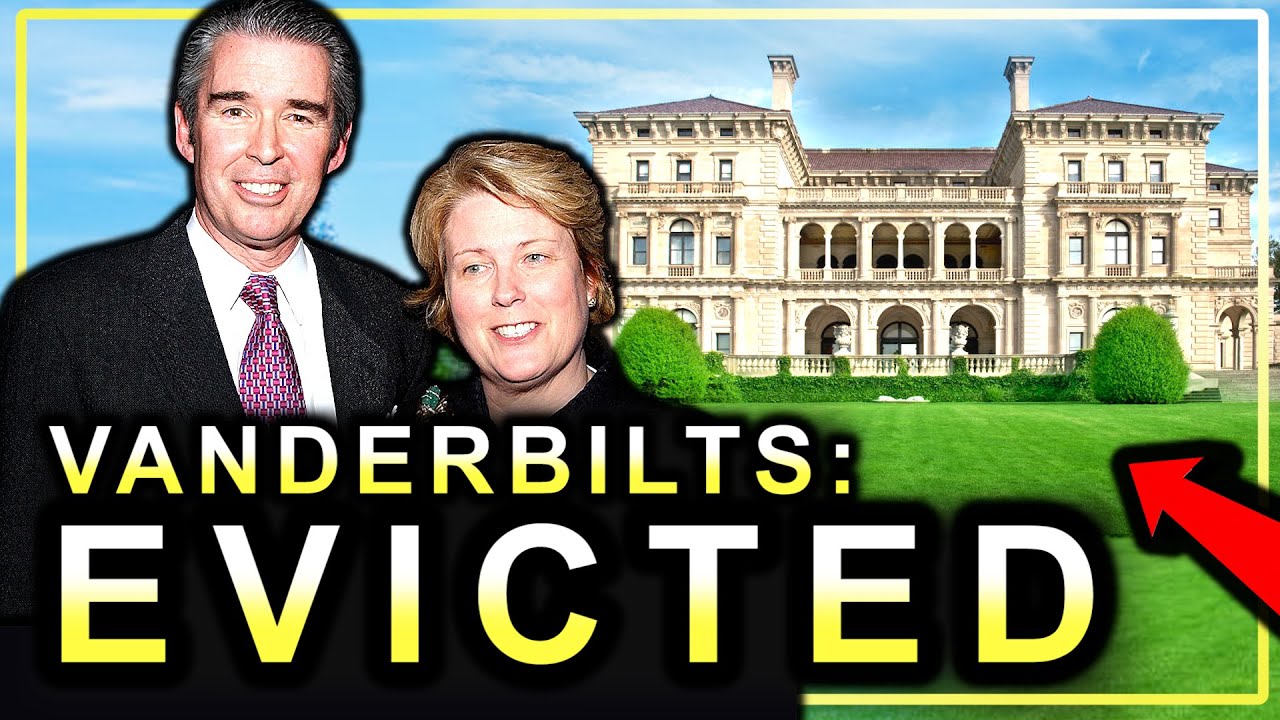
By the 7th of August, 2018, the atmosphere within The Breakers had taken on the weight of a historic dirge. The Vanderbilt descendants Paul and Gladys Szapáry were served an eviction from their own ancestral home. The decision was wrapped in the guise of necessity due to the antiquated and perilous state of the building's interiors.
Despite this ostensibly mutual resolution, whispers of the society's vindictive undercurrents circulated, as if the eviction was veiled retribution for the siblings' defiance against the Visitor Center. Undoubtedly, this chapter in the Vanderbilt saga was as poignant as it was public, with the media's lenses magnifying every contour of the dramatic unfolding.
The Breakers, once a glittering jewel in the crown of American wealth, now witnessed the last of the Vanderbilts stripped from their generational hearth. Thus concluded an era, an elegiac adieu not merely to the presence of a family within walls of grandeur but to the very essence of their living legacy.
By 2019, The Breakers had gracefully transitioned to a new epoch. No longer the secluded domain of the Vanderbilt lineage, its ornate gates had swung open to the public realm. It was transformed into a vibrant museum, an edifice of learning and preservation echoing the Gilded Age lifestyle.
The metamorphosis of The Breakers into a beacon of cultural heritage marked a profound shift in its essence. The grandiose rooms and halls that once resonated with the whispers of private lives now bustled with millions of footsteps. Curious and inspired visitors wandered through the opulent spaces, their senses bathed in the grandeur that was once the privilege of the elite.
Amid a time of great industrial strides and gaping societal divides, audio tours would narrate tales of economic fervor, social stratifications, and political undercurrents that defined the era. The Preservation Society's scholarly series, "The Gilded Age: Years Transforming America," dove deeper into the transformative period that shaped modern America.
Moreover, The Breakers' museum journey became a vital sentinel for Gilded Age architecture, preserving its intricate beauty for the admiration and study of future generations. Peering into the horizon, The Breakers now navigates the dichotomy of preserving a glittering past while engaging a new generation in the historical dialogue.
Yet amid the mansion's renaissance, a disquieting note of discord has been struck. The legal entanglements between the Vanderbilt family and the Preservation Society, a sad waltz of contention, have left a blemish upon The Breakers' dignified facade. This strife, filled with legal battles and public dismay, has cast a shadow over the mansion's illustrious image, introducing a narrative of contemporary conflict to an otherwise harmonious historical recollection.
As The Breakers stands today, it is more than just a mansion. It is a monument that pulsates with life. Its journey, a storied voyage through family legacies, societal evolution, and now legal complexities, continues to captivate and educate in a perpetual dance of historical elegance and modern reality.