Anthony Charles Robert Armstrong-Jones was born on 7 March 1930 at Eaton Terrace in Belgravia, London. He was the only son of Ronald Armstrong-Jones, a Welsh barrister, and Anne Messel, who later became Countess of Rosse through her second marriage to Michael Parsons, the 6th Earl of Rosse.
His parents' marriage collapsed when he was about 3 years old, and the divorce sent him shuttling between hostile households. Neither parent was a steady presence. His uncle, the theater designer Oliver Messel, was one of the rare adults who paid the boy consistent attention.
In 1946, when Tony was 16 and on holiday in Wales, he contracted polio. The illness left his right leg permanently shorter, and he walked with a limp for the rest of his life.
The Guardian, in its January 2017 obituary, judged that the polio and the loveless childhood had left him with a degree of emotional distance and willfulness, often disguised by a coating of charm. His enthusiasms were essentially solitary: gadgets, photography, the making of things with his hands.
He went to Eton, then to Jesus College, Cambridge, intending to study architecture, but failed his exams and left without a degree. Before that, he had coxed the Cambridge crew to victory over Oxford in the 1950 Boat Race.
He apprenticed to the society photographer known as Baron, Sterling Henry Nahum, whose Park Lane studio produced upper-class portraits by the yard. Tony wasn't interested in portraits by the yard.
His theater work was already different. Instead of posed shots, he prowled rehearsals in worn jeans with a small handheld camera, shooting actors mid-movement and blowing the results up to poster-size grainy prints that dominated theater foyers. Tatler published his work in 1951. By October 1958, he appeared in Vogue.
That same year, at a dinner party given by Lady Elizabeth Cavendish, he met Princess Margaret. They didn't connect at first meeting. It took a subsequent commission to photograph her for the romance to begin.
The courtship was conducted in clandestine evenings when Tony would drive her to his studio in Rotherhithe, away from the palace. The press missed it entirely. He proposed in 1959 with a ring of rubies and diamonds in the shape of a rosebud, a reference to Margaret's middle name, Rose.
The engagement was announced on 26 February 1960. Noël Coward, who knew both of them, recorded his verdict in his diary: "He looks quite pretty, but whether or not the marriage is entirely suitable remains to be seen."
The wedding took place at Westminster Abbey on 6 May 1960. It was the first royal wedding broadcast on live television, with approximately 20 million viewers, and the first time a daughter of a British king had married a commoner in 400 years.
Among those not watching from the pews was Camilla Fry, who was at home, very nearly full term, with a pregnancy her husband Jeremy believed to be his own.
The marriage began, as Christopher Warwick has documented, with genuine mutual pleasure. There was a shared sense of humor, joint tastes in ballet and theater, and what one friend told biographer Anne de Courcy was a physical intensity verging on the obsessive in the early years.
Their Kensington Palace apartment became, as de Courcy wrote, a place where the arts and the establishment met and mingled in a way never seen before. Peter Sellers and Britt Ekland came to dinner. Rudolf Nureyev was in the drawing room.
By the time their daughter Sarah was born in May 1964, the cracks were structural. Tony had begun his contract with the Sunday Times magazine in 1962, a relationship that would last until 1990. The work took him away.
When he was home, he would disappear to the workroom in the basement of the Kensington Palace apartment, building a bookcase or a copper hood for the cooker, while Margaret waited upstairs. If she came down, he sent her back.
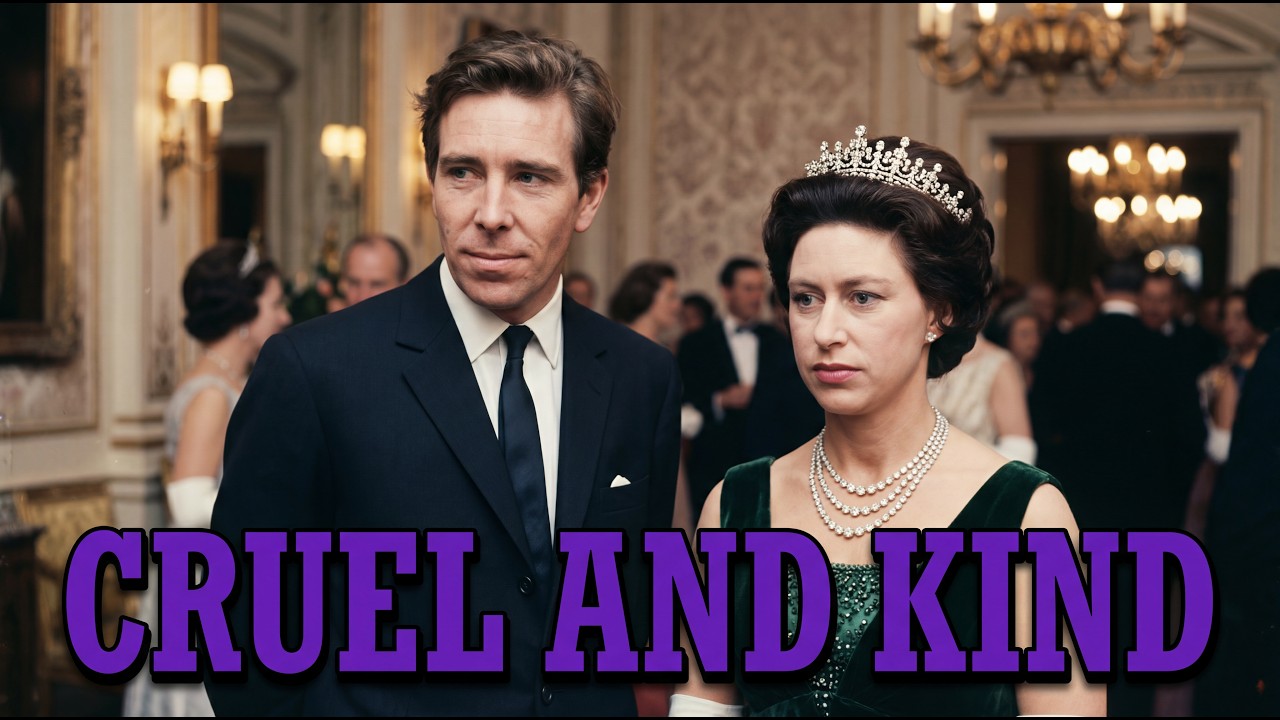
He had told de Courcy plainly, "I believe in serial and simultaneous." The affairs are documented. Lady Jacqueline Rufus Isaacs, the daughter of Lord and Lady Reading, was one.
Margaret discovered it when Tony checked into the London Clinic for an operation, and she arrived to find Lady Jacqueline already at his bedside. "I could nurse him, you know," Margaret told a friend. "When I was a girl guide, I got a badge for nursing."
The humiliation was that specific: a princess displaced from her husband's hospital room by his girlfriend, making a joke about a guide badge.
Biographers report that he left written messages on his wife's desk. The Guardian, drawing on household accounts, records one that reportedly read, "You look like a Jewish manicurist and I hate you."
At parties, he would cut across her in mid-sentence: "Shut up and let someone intelligent talk." One of her ladies-in-waiting described life at Kensington Palace as open warfare.
Anne Glenconner, Margaret's childhood friend and lady-in-waiting, gave her account in her 2019 memoir, Lady in Waiting.
Then there is Polly Fry. She was born on 28 May 1960, three weeks into Tony and Margaret's honeymoon on the Royal Yacht Britannia, cruising the Caribbean.
Her mother was Camilla Fry, wife of Jeremy Fry, Tony's closest friend and the man originally chosen as best man at the Westminster Abbey wedding. Jeremy Fry stood down before the ceremony.
The child grew up believing she was Jeremy's daughter. She was 44 years old in 2004 when a DNA test confirmed that her biological father was Antony Armstrong-Jones. The Times reported the result that year. Tony initially denied having taken the test, then later acknowledged the truth.
Polly, by then Polly Higson, wrote in the Daily Mail in 2008: "Finding out at the age of 45 that the man I had idolized and put on a pedestal higher than Nelson's Column since I was a small child wasn't in fact my father was a hard burden to bear."
The formal separation was announced by Buckingham Palace on 19 March 1976. The statement read that the Princess and the Earl had mutually agreed to live apart, that the Princess would carry out her public duties unaccompanied by Lord Snowdon, and that there were no plans for divorce proceedings.
Tony was in Australia at the time. He issued a statement saying he was "naturally desperately sad in every way that this had to come."
Glenconner's memoir records that Tony subsequently pushed Margaret toward a divorce when his relationship with Lucy Lindsay-Hogg produced a pregnancy. The divorce was finalized on 11 July 1978, the first in the immediate royal family since Henry VIII's annulment of his marriage to Anne of Cleves more than four centuries earlier.
David Armstrong-Jones was born on 3 November 1961 at Clarence House. Sarah followed on 1 May 1964 at Kensington Palace. They grew up in the nursery of apartment 10, raised alongside a nanny called Verona Sumner.
The Wikipedia entry on Lady Sarah Chatto, drawing on Theo Aronson's biography, records that their parents were comparatively hands-on for the time, with their father teaching them to build things and be creative. Both parents are named, but the father is singled out.
In a household where the marriage was deteriorating publicly, the children were getting a different experience of their father. He drove them to school. He took them at weekends to the cottage on Caradon Hill in Cornwall, to the open moorland of Bodmin. He had them in the darkroom.

On a Saturday morning in the late autumn of 1968, in that stone cottage on the south flank of Caradon Hill, a 4-year-old Sarah and her 7-year-old brother David stood at the kitchen sink with their father and rinsed photographic paper under the cold tap. He had brought the prints that morning and wanted to show them how the image forms.
Both children attended Bedales School in Steep, Hampshire, a co-educational independent school, progressive by the standards of the royal circle, which would normally have channeled them toward Eton and Benenden. Bedales was a deliberate departure.
Sarah left with an A-level in art, went on to Camberwell School of Art, and then to the Royal Academy Schools. David left and began building toward what would become Linley, David Linley Furniture Limited, founded in 1985, a bespoke design and furniture company that established itself prominently on Pimlico Road.
Tony had filled the basement at Kensington Palace with tools.
In the early 1980s, when Tony was commissioned as production photographer on the film A Passage to India, he took Sarah with him to India for two years. She worked as an intern on the production, studying wood gilding under her father's cousin, Thomas Messel, and assisting in the costume department.
She met Daniel Chatto during that time. He was working on another British film in India. Tony had brought her to the work, and she found her future there.
On 14 July 1994, Sarah married Daniel Chatto at St. Stephen Walbrook in the City of London, an intimate ceremony of approximately 200 guests, officiated by the Reverend Chad Varah, founder of the Samaritans.
Sarah arrived with her father. She wore the Snowdon Floral Tiara, formerly Tony's gift to Princess Margaret on their own wedding day in 1960. The tiara had moved from the marriage to the daughter of the marriage. Tony walked her up the aisle.
Among the bridesmaids was Lady Frances Armstrong-Jones, born in 1979 from his second marriage to Lucy Lindsay-Hogg. Both households in one church aisle.
The Guardian's obituary identified something useful about how Tony was formed: the childhood between hostile households, the polio with no parents at the bedside, the solitary hobbies. These made a man who kept his own counsel and operated in focused bursts of intense engagement. When he was interested, he was entirely present.
Cecil Beaton, watching the young Armstrong-Jones arrive on the London photography scene in the mid-1950s, felt threatened enough to note in his diary: "I don't think AA Jones' pictures are at all interesting, but his publicity value is terrific. It pays to be new in the field."
Beaton was wrong about the photographs and right about the force of the attention. That attention is the instrument of both verdicts.
De Courcy, who sat with Armstrong-Jones every week during the writing of the authorized biography, published by Weidenfeld and Nicolson in 2008, presents a man who moved between work and people and projects with extraordinary intensity. When something held him, he gave it everything. When it didn't, he gave nothing.
The marriage held his attention in the early years and then stopped holding it. The children held his attention from the beginning and never stopped.
Christopher Warwick's Margaret, A Life of Contrasts, the biography the princess herself cooperated with, describes the marriage as having collapsed into coldness and silence by the early 1970s, the couple living in entirely different worlds.
De Courcy's authorized account does not flatten the contradiction because the contradiction isn't there. It is one man operating in two directions simultaneously. The household staff watched both registers.

His attention, when given, was complete. When withdrawn, it was final. The marriage received one. The children never received the other.
Tony married Lucy Lindsay-Hogg in December 1978, months after the divorce from Margaret was finalized. Their daughter, Frances, was born seven months later in 1979.
The second marriage lasted until 2000, when it emerged that Tony had fathered a son, Jasper Cable Alexander, born in 1998 with Melanie Cable Alexander, a features editor at Country Life who had been assigned to work with him on a guest-edited issue of the magazine.
Lucy moved out. Divorce proceedings were begun and never fully completed. Both remained technically married at Tony's death, a fact he was known to mention.
He continued to photograph. The Sunday Times contract ended in 1990 after nearly 30 years. The National Portrait Gallery held over a hundred of his works in its permanent collection. He photographed baby Prince Harry in 1984 and the Queen's official 80th birthday portrait in 2006.
He was provost of the Royal College of Art from 1995 to 2003. The Snowdon Award Scheme, established in 1980 using proceeds from royal photographs to fund disabled students in further education, was still operating at his death.
He had designed the walk-through aviary at London Zoo in the 1960s, a structure intended to be temporary that outlasted the marriage, the second marriage, and the marriages of his children.
He died on 13 January 2017 at his home in Kensington, aged 86.
The service of Thanksgiving was held on 7 April 2017 at St. Margaret's Church, Westminster. The Queen and the Duke of Edinburgh attended. The Dukes of Cambridge, York, Gloucester, and Kent attended.
Lady Sarah Chatto and Daniel Chatto attended. David Armstrong-Jones, now the second Earl of Snowdon, having inherited the title the day his father died, attended with his family. Frances and her husband Rodolphe von Hofmannsthal attended. Jasper Cable Alexander attended. Both households in one church.
The private burial was at St. Baglan's Church in Clun Foggan, near Caernarfon in northwest Wales, near the Armstrong-Jones family home at Plas Dinas, at the edge of the land his Welsh barrister father had known, beneath the mountain range that gave him his title. The Earl of Snowdon returned to Wales at last.
He was the worst husband Princess Margaret of England could have married, by every staff witness who was inside the Kensington Palace household across 18 years of marriage. And he was the most present father her two children could have hoped for, by their own 40 years of saying so in public.
He left notes on his wife's desk. He walked Sarah up the aisle. He ran documented affairs that produced a daughter he didn't acknowledge for 44 years. He took David into the workrooms and taught him how to make things.
He separated from Margaret when she was 45, leaving her what Lady Anne Glenconner described in her 2019 memoir as a devastation she could do nothing about. He took Sarah to India for two years, and she came home having found her future.
Both halves are documented. Both halves are true. He taught his 4-year-old daughter how to develop a photograph at the kitchen sink of a cottage in Cornwall. He took his small son into the workshops and filled his childhood with making. He walked his daughter up the aisle in the tiara he had given her mother on their own wedding day.
His attention, when given, was complete. When withdrawn, it was final. He took it from the marriage. He never took it from the children. Both verdicts stand on the record, held at the same time, in the same household, for the same 18 years.