Newly resurfaced audio commentary recorded by the late Major Richard D. Winters has revealed that the most tense confrontation depicted in the HBO miniseries Band of Brothers was, in reality, far more dangerous than television audiences were ever shown, with the celebrated Easy Company commander admitting he drew his weapon on one of his own men and released the safety during a prisoner escort in the aftermath of the October 1944 assault near the Dutch dike country.
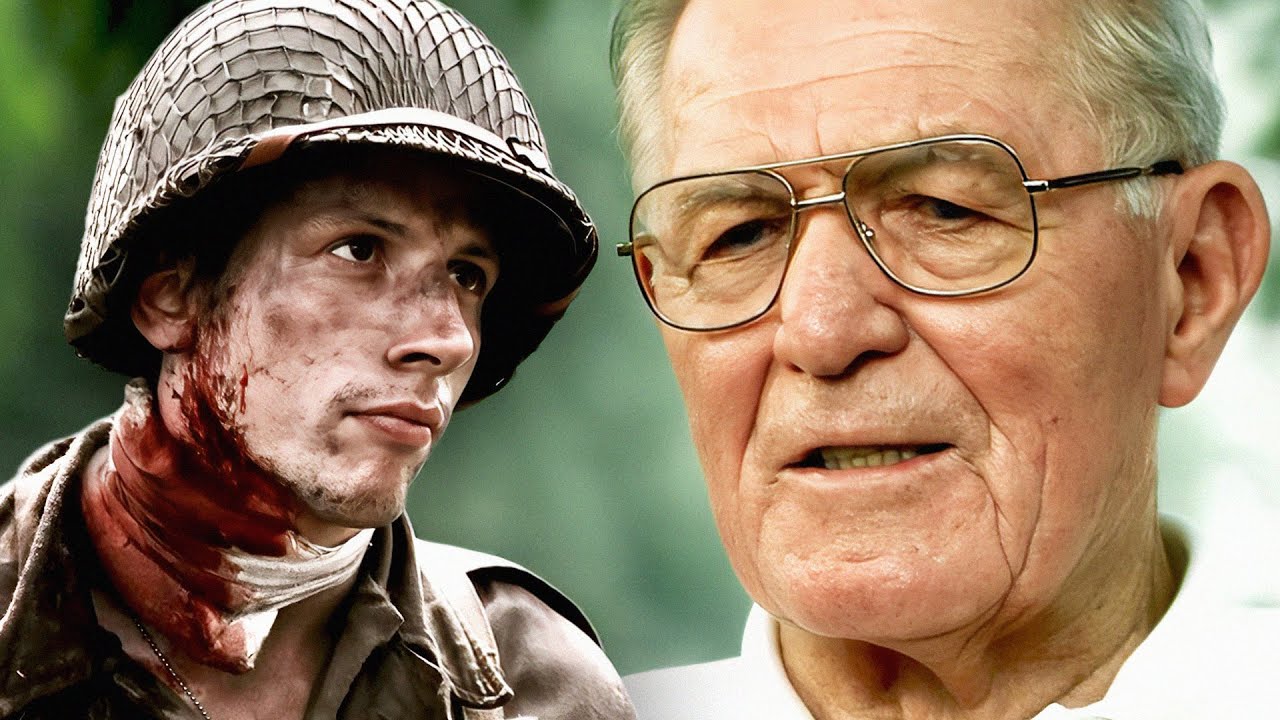
The revelation centers on First Lieutenant Joseph Liebgott, the Easy Company soldier immortalized on screen as a Jewish-American interpreter whose hatred of the German enemy drove him to the edge of atrocity. According to Winters’ own account, preserved in commentary recorded for select scenes and held by the Gettysburg Museum of History, the standoff that followed the celebrated Crossroads battle was not the firm but fatherly exchange viewers witnessed in episode five, but a genuine armed confrontation between a company commander and a combat soldier he described as a killer.
Winters explained that Liebgott, though one of the finest combat soldiers in Easy Company, carried a reputation earned in Normandy for executing prisoners of war without cause. When Winters ordered him to escort eleven captured German soldiers back to battalion headquarters alive, Liebgott’s enthusiasm for the assignment immediately signaled to Winters that the prisoners would never reach their destination.
What followed, according to Winters, was a calculated act of command presence under extreme uncertainty. After ordering Liebgott to empty his rifle and accept a single round, Winters kept his own M1 Garand at his hip, pointed directly at his subordinate, and threw off the safety. He said he had no idea how Liebgott would react because the man was, in his words, just that kind of emotional guy.
Liebgott, Winters recalled, blew his lid and was highly incensed and very upset, yet complied because there was nothing he could do. The scene as broadcast softened both the threat and the defiance, presenting a calm transfer of ammunition rather than the loaded weapon and the flicked safety that underscored how close the moment came to catastrophe.

Perhaps the most striking detail in Winters’ account concerns the German prisoners themselves. Winters remembered that several captured officers understood English and read the body language unfolding on the dike. He watched them exhale in visible relief as they grasped that the American commander was deliberately disarming a man they feared would gun them down, and that their lives had just been spared by the intervention of an officer holding a weapon on his own soldier.
The commentary raises uncomfortable questions about how the miniseries, produced by Steven Spielberg and Tom Hanks and aired in 2001, chose to portray the internal fractures within Easy Company. The program’s title and narrative arc emphasize brotherhood, loyalty and shared sacrifice, and critics of the adaptation have long noted that moments of genuine friction between comrades were smoothed or omitted entirely.
Historians and fans alike are now asking whether the changes were made to protect Liebgott’s image, to shield Winters from appearing to threaten one of his own men, or simply to preserve the unifying tone of a series built around the bonds of a rifle company. The transcript of the commentary suggests the truth may involve all three considerations.
Winters’ memoir offers further corroboration. In his written account, he stated plainly that he brought his M1 to his hip and threw off the safety as he pointed it at Liebgott, and that Liebgott could have turned on him but did not. He emptied his gun, took the single round, and the escort proceeded, with all eleven prisoners delivered alive to battalion headquarters.
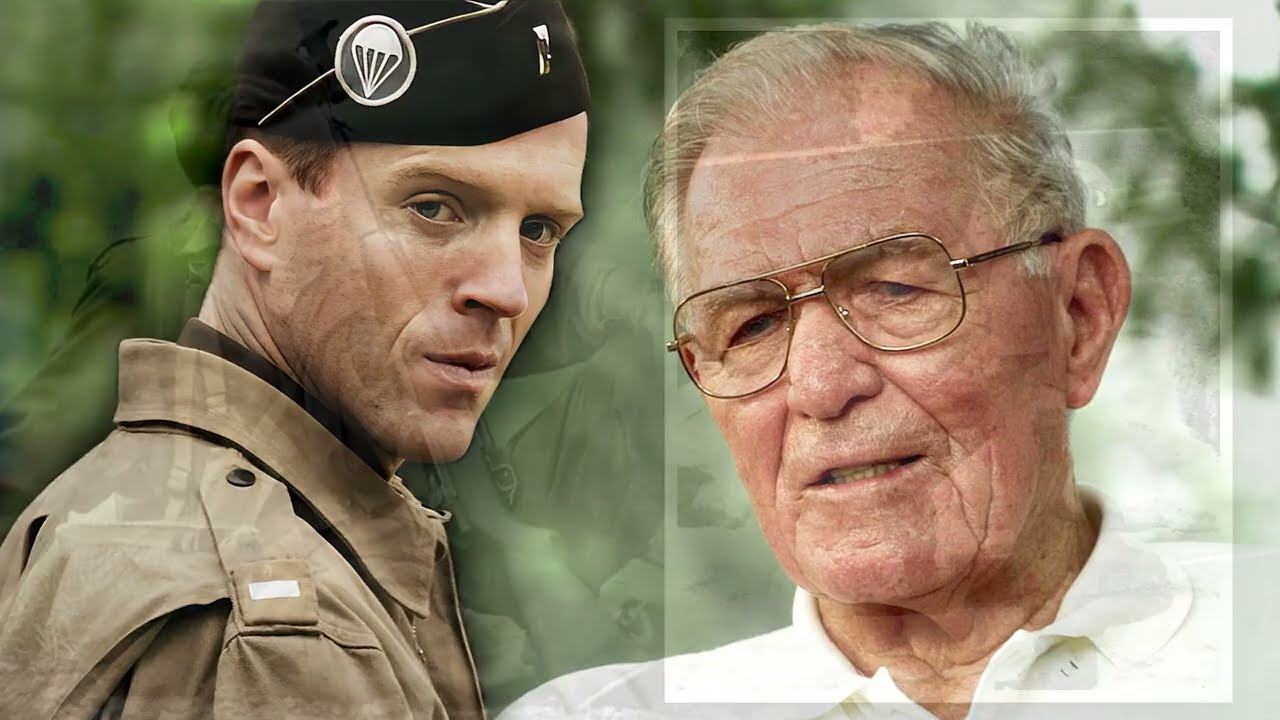
The discrepancies do not end with the prisoner scene. Band of Brothers built much of Liebgott’s emotional arc around his Jewish identity, portraying him as a man driven by the horrors of the Holocaust and eager to confront the architects of genocide. According to Liebgott’s own family, that portrayal is factually wrong.
Joseph Liebgott was not Jewish. He was a German Roman Catholic who attended Catholic schools and served as an altar boy in his youth, and his son has stated that his dog tags identified him as Roman Catholic.
The error appears to trace back to Private David Kenyon Webster’s memoir Parachute Infantry, written shortly after the war, in which Webster mistakenly described Liebgott as Jewish. Speculation has circulated that Liebgott’s mother may have been born Jewish before immigrating to America and raised her children Catholic, but the family has firmly stated that both of his parents were Catholic.
A smaller but telling inaccuracy concerns Liebgott’s postwar life. The final episode of the series states that he returned to San Francisco and drove a cab. In reality, he drove a taxi only briefly before the war, then attended barber college.
He was working as a barber when he enlisted at age twenty-six and returned to that trade after World War II.
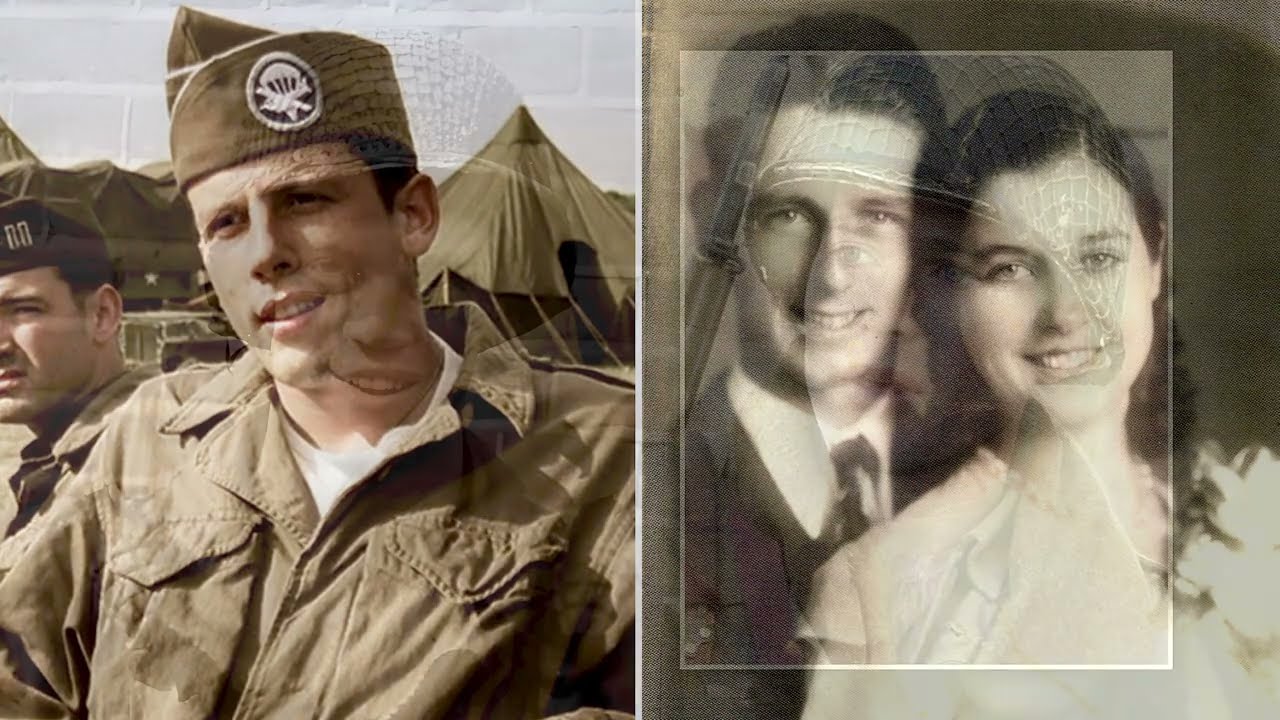 Such errors are frequently attributed to author Stephen Ambrose, whose bestselling book served as the source material for the miniseries, and who has been criticized for insufficient research, including a failure to contact Liebgott’s surviving family members before publication.
The newly circulated commentary adds a darker and more human dimension to a scene that has been viewed by millions as a study in restrained leadership. Winters, who died in 2011 and was widely revered as a model of quiet command, emerges from his own words not as a man calmly issuing orders, but as a commander who recognized in a single instant that the discipline of his unit, the lives of eleven prisoners and the safety of his own soldiers all depended on his willingness to aim a loaded rifle at a man he trusted in battle.
For veterans and military historians, the episode illustrates a truth rarely captured on television, that the cohesion of a combat unit is not maintained by sentiment alone but by commanders prepared to enforce restraint at gunpoint when the moral lines of war begin to blur.
The Gettysburg Museum of History, which obtained the Winters commentary, has become a repository for such firsthand material, and its release has renewed scholarly interest in how popular culture reshapes the historical record. The question of what Band of Brothers owed to accuracy, and what it owed to the families of the men it portrayed, remains open.
What is no longer in dispute is that on a Dutch dike in the autumn of 1944, Richard Winters pointed a loaded rifle at Joseph Liebgott, threw off the safety, and by doing so saved eleven German prisoners from execution and possibly prevented one of his own best soldiers from crossing a line from which there was no return.