Major Richard “Dick” Winters, the celebrated commander of Easy Company, 506th Parachute Infantry Regiment, 101st Airborne Division, described the Battle of Bastogne as “by far the worst” experience of his military service and revealed that he continued to relive the trauma through flashbacks for the remainder of his life, according to newly resurfaced interview footage that offers a harrowing window into the true, lifelong cost of combat.
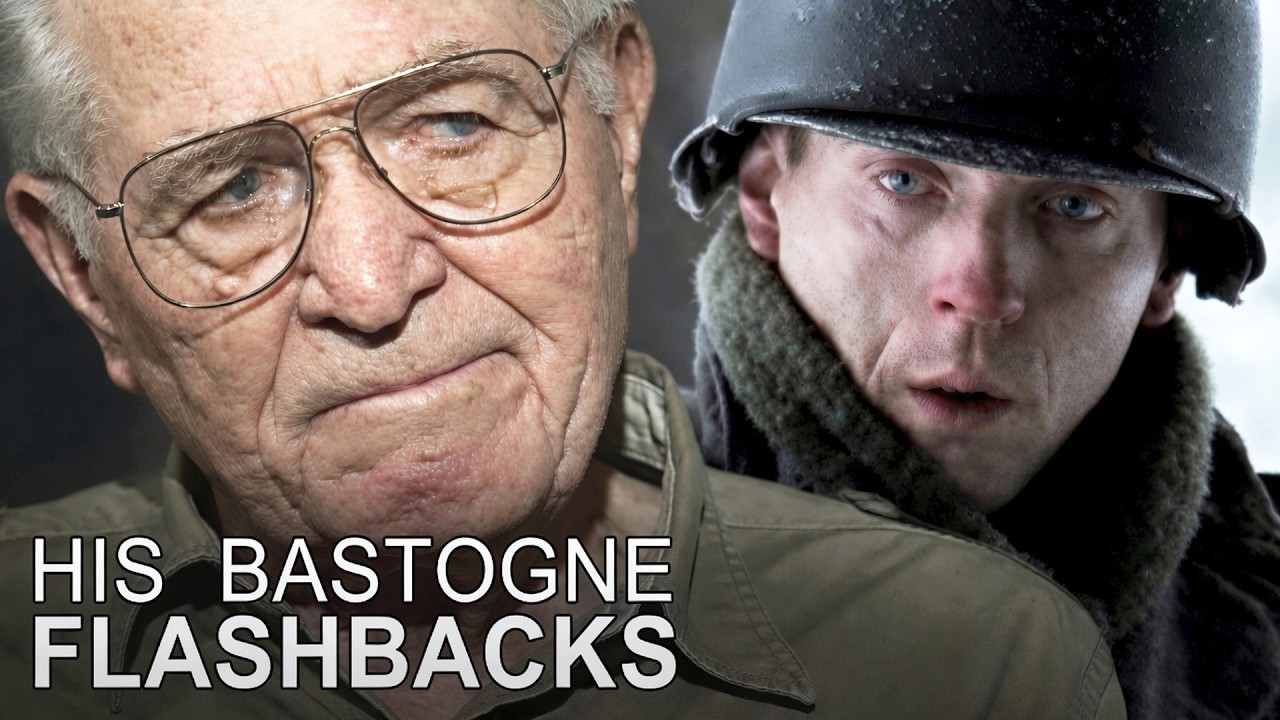
In an interview conducted by Pennsylvania State Representative John Payne in the early 2000s, Winters spoke with unflinching candor about the psychological wounds he carried home from the frozen forests of Belgium, where American forces fought the largest and bloodiest single battle in the history of the United States Army.
“You live this every day,” Winters told Payne, his voice steady but weighted with decades of memory. “You have recall. And you don’t live the whole thing every day, but there are segments that will pop up every day.”
When asked directly how difficult it was to transition from combat conditions back into civilian life, Winters did not soften his answer. “Let me look you straight in the eye,” he said. “Do you think this guy you’re looking at today has adjusted to this day?
It’s a slow process. And as we shared earlier here, you relive this with flashbacks.”
The admission came from a man widely regarded as one of the finest combat leaders of World War II, a soldier whose calm under fire and tactical brilliance were immortalized in the acclaimed 2001 miniseries “Band of Brothers” and in his own memoir, “Beyond Band of Brothers.”
Yet Winters made clear that neither accolades nor the passage of time could erase what happened in the Ardennes. The 101st Airborne arrived at Bastogne in December 1944 ill-equipped for the brutal conditions that awaited them. The men lacked proper winter clothing, ammunition, and supplies.
The region was enduring its coldest winter in thirty years, with nighttime temperatures plunging to between ten and twenty degrees below zero Fahrenheit. Wind chills in 𝓮𝔁𝓹𝓸𝓼𝓮𝓭 positions produced effective temperatures as low as forty degrees below zero.
“You can’t describe it,” Winters recalled.
The human toll of the cold alone was staggering. Roughly twenty percent of American casualties during the Battle of the Bulge, more than fifteen thousand men, were felled not by enemy fire but by trench foot, frostbite, pneumonia, and hypothermia.
Before the battle, the men of Easy Company had been resting at Camp Mourmelon in France, recovering from Operation Market Garden in Holland. They anticipated a quiet Christmas to close out 1944, complete with a morale-boosting football game dubbed the Champagne Bowl, scheduled for Christmas Day between the 101st Airborne’s Screaming Eagles team and the Sky Train team.
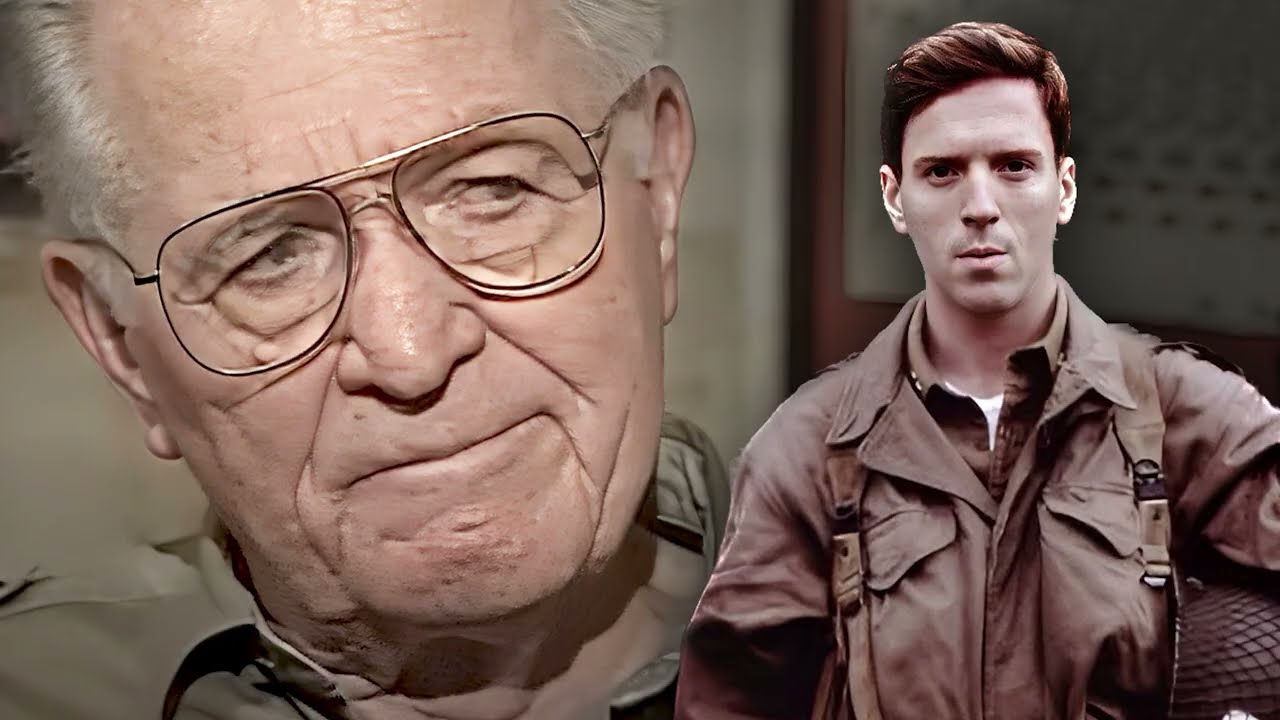 That game never happened. On December 16, 1944, German forces launched their offensive through the densely forested Ardennes region. Easy Company and the rest of the 101st Airborne were rushed to defend the vital crossroads town of Bastogne, Belgium.
“Little did we realize that we were heading straight into the biggest, bloodiest battle in the history of the US Army,” Winters wrote in his memoir.
What followed became known as the Battle of the Bulge, the last major German offensive campaign on the Western Front. Surrounded by enemy forces and subjected to relentless artillery bombardment, the men of the 101st held their ground against overwhelming odds. German commanders demanded their surrender.
Brigadier General Anthony McAuliffe’s legendary one-word reply, “Nuts,” became a defining moment of American defiance.
But the price of that defiance was measured in shattered bodies and broken spirits. Winters described the artillery barrages with clinical precision and visceral horror.
“It is difficult to describe the effects of an artillery bombardment to someone who has not experienced combat,” he wrote. “If you live through it, you will never forget it, nor will you ever be the same. Artillery doesn’t only 𝓀𝒾𝓁𝓁, it maims and tears the body apart sending limbs in every direction.”
The miniseries “Band of Brothers” devoted two episodes to Easy Company’s ordeal in the Bulge. In the second, titled “The Breaking Point,” viewers watched as the men endured not only the killing cold but also the devastating shelling that claimed the right legs of Joe Toye and Bill Guarnere, and a week later, the lives of Skip Muck and Alex Penkala.
In the series, the cumulative horror breaks Sergeant Buck Compton, who is shown being evacuated after witnessing the maiming of his friends. Don Malarkey, another Easy Company veteran, is portrayed as deeply shaken. But the series ends before showing how these experiences reverberated through the decades that followed.
“I am not sure anyone who lived through Bastogne doesn’t carry the scars of that ferocious campaign,” Winters wrote.
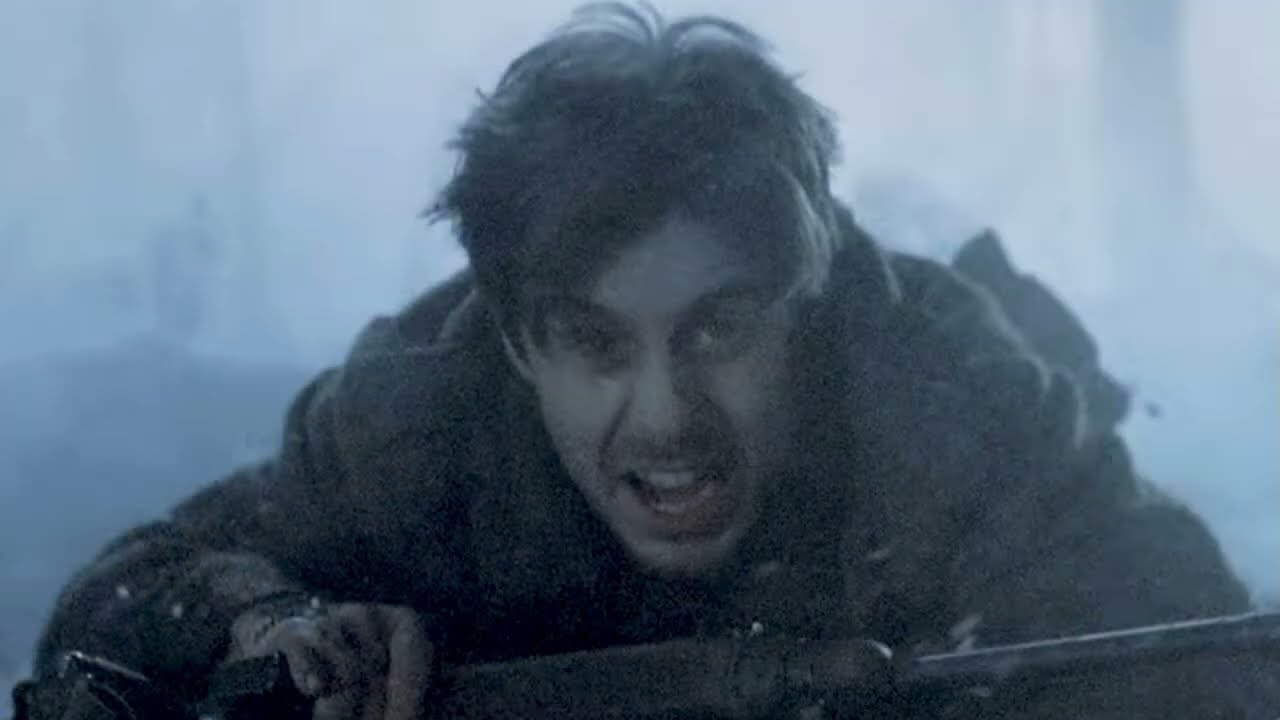 Malarkey, who became a close friend of Winters and a prominent voice for veterans in his later years, described his own struggles in unsparing detail. After returning to college at the University of Oregon, his grades began to slip. “I couldn’t concentrate like before the war,” he said in his memoir.
Flashbacks transported him back to Bastogne without warning. He would thrash in his sleep from nightmares and wake drenched in sweat. “I still shiver because of the Battle of the Bulge,” he noted decades later.
“One more day there and I honestly think I would have gotten hypothermia.”
Throughout his book, Malarkey described Bastogne as a wave constantly building over his shoulder and closing in. Like many of his comrades, he turned to alcohol to dull the memories.
“There wasn’t a glass of scotch I brought to my lips that I wasn’t back in Bastogne, where we were surrounded for eight straight days, every time,” he said.
The numbers behind these personal testimonies are almost incomprehensible. More than five hundred thousand American soldiers participated in the Battle of the Bulge, the largest battle ever fought by the United States Army. There were more than seventy-five thousand American casualties, including approximately nineteen thousand killed and more than twenty-three thousand taken prisoner.
Each survivor carried the weight of those experiences for the rest of his life. They returned home to become mailmen, construction workers, teachers, factory workers, electricians, and bus drivers. They lived among their fellow citizens, often without ever speaking of the battles they had fought or the price they continued to pay.
Winters, who passed away in 2011 at the age of ninety-two, remained active in veterans’ affairs and frequently spoke about his wartime experiences. But even in his final years, the memories remained vivid and painful.
His recollection of the date January 9, 1945, the day of one of the most intense artillery bombardments Easy Company endured, illustrated the precision with which trauma had etched itself into his memory. When Payne noted that Winters had cited the date instantly, without hesitation, Winters confirmed the observation.
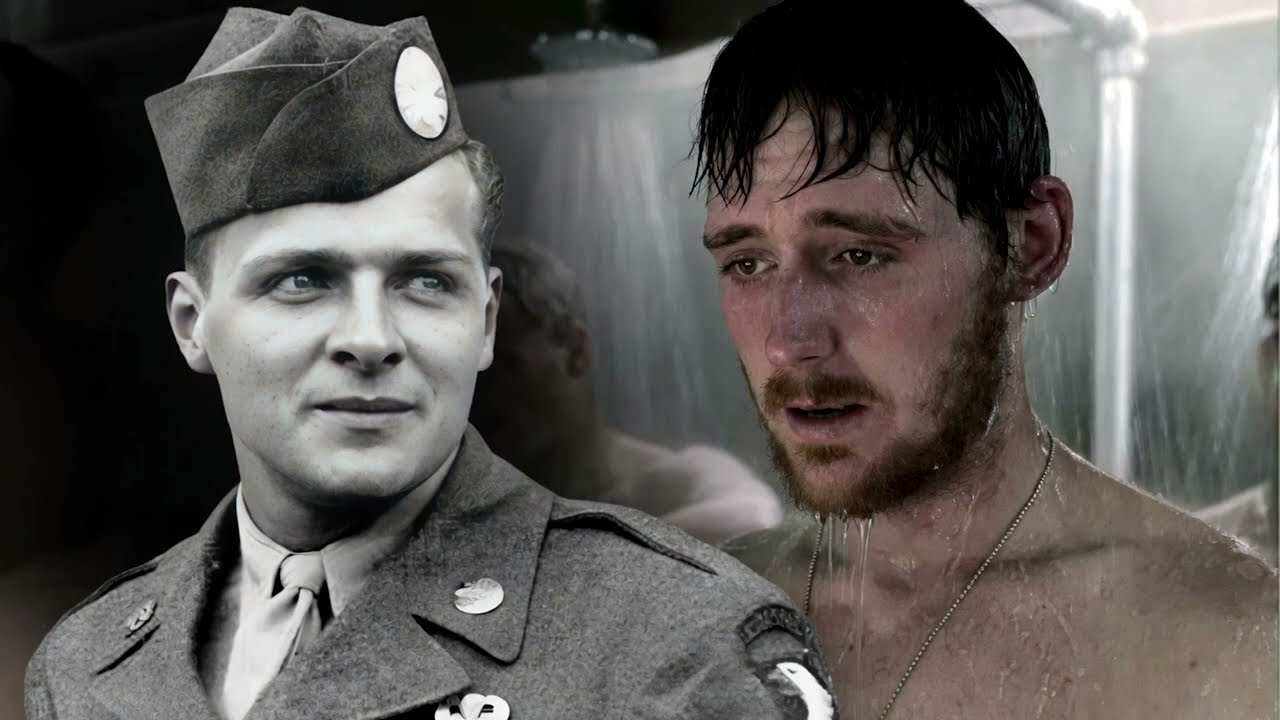 “No question,” he said. “You had it right there that fast.”
Payne observed that most civilians would say “January the ninth,” but military veterans say “the ninth of January.” The distinction reflected a deeper truth: for those who lived it, the experience never faded into the past. It remained present, immediate, and inescapable.
The interview footage serves as a powerful reminder that the wounds of war extend far beyond the battlefield. While the physical injuries of Bastogne were visible and immediate, the psychological injuries remained hidden, often unacknowledged, and carried in silence for decades.
Post-traumatic stress disorder was not formally recognized as a diagnosis until 1980, thirty-five years after the Battle of the Bulge. Veterans like Winters and Malarkey navigated their symptoms without the language or treatment options available to later generations. They coped as best they could, often alone, often without understanding what was happening to them.
The candor with which Winters spoke about his ongoing struggles represents a significant contribution to the public understanding of combat trauma. His willingness to acknowledge that he had not fully adjusted, even sixty years after the war, challenged the notion that veterans simply move on once they return home.
“It’s a slow process,” Winters said. “And you relive this with flashbacks.”
For the families of the more than nineteen thousand Americans killed in the Bulge, and for the tens of thousands more who survived with physical and psychological wounds, those words carry profound weight. They speak to a debt that cannot be fully repaid and a sacrifice that must never be forgotten.
The men of Easy Company and the hundreds of thousands of other soldiers who fought in the Ardennes secured a victory that helped bring an end to the war in Europe. But the cost of that victory continued to be paid long after the guns fell silent, in sleepless nights, in painful memories, and in lives forever altered by what they witnessed in the frozen forests of Bastogne.
As Winters himself acknowledged, the scars of that ferocious campaign never truly healed. They remained, a permanent part of who he was, a reminder of what he and his comrades endured and what they gave so that others might live in freedom.