In March 1901, Mercy Hollow was a working mill settlement tucked into a narrow fold of the Cumberland Plateau in Tennessee. The carding mill stood above the houses beside the road that carried meal sacks, coal carts, and workers in and out of the hollow.
The company store supplied nearly everything, and it also kept the accounts. That winter, the state board of charities sent Clara Bell to inspect food, housing, and relief after the mill asked for a small public grant.
Clara was 32, careful with records, and known for looking past a clean ledger when a family's living conditions told another story. Mercy Hollow's public census listed 143 residents.
On her first evening, Clara visited Mrs. Harbin, a widow living with three children in a two-room house below the mill road. Supper was nearly ready, and there were six places set on the table.
Mrs. Harbin saw Clara notice them. Without speaking, she lifted two small brass plates from the extra settings and slipped them into her apron pocket. Each was stamped with a number.
The widow's household was counted as four. Clara asked whether relatives had arrived. Mrs. Harbin said the extra food was for no one, that she had cooked too much and had been about to put it away.
It was a possible explanation. A poor household could make a mistake, especially after a hard winter. But Clara had seen the table before Mrs. Harbin noticed her at the door.
Six portions had been measured. Six spoons had been laid out. The two hidden settings each had a brass marker beside them.
The next morning, Clara asked the company clerk about the winter food account. He was a young man named Amos Vale, pale from long hours indoors, with flour dust on his sleeves from handling meal sacks.
He produced the federal census schedule quickly. He pointed to the total of 143 and said Mercy Hollow had no uncounted residents. When Clara mentioned Mrs. Harbin's extra settings, Vale smiled too quickly.
Waste, he said. Women make too much, then they blamed the store.
That evening, Clara walked through the lower houses without announcing herself. In one home, she saw a brass plate beside an empty bowl. In another, a woman removed a numbered plate when Clara stepped through the doorway.
At the third house, a child reached toward an extra setting and was sharply told not to touch it. The numbers differed. The silence did not.
By the end of the second day, Clara had copied one number before its owner could hide the plate. It was 17. The brass was worn smooth around the edge, as if it had passed through many hands. There was no family name on it, only the stamped number.
The extra meals were not a widow's mistake. They were a rule.
Clara returned to the company store and asked to see the ration account connected with the numbered plates. Vale denied that such an account existed. He said the plates were old counter markers, useless scraps from before his time, and that some women kept them because children liked to play with them.
Clara did not argue. Instead, she watched the store after closing. The building had one large front room with scales, shelves, and a stove near the rear wall. Behind the counter stood a narrow ledger shelf.
When Vale believed the inspector had left for the boarding house, he locked the front door and went back to the stove. Clara had not gone far. From the dark side of the porch, she saw him feed papers into the fire.
The next morning, after Vale opened the store, Clara found one blackened carbon copy among the cold ash beneath the grate. It had been folded twice and partly burned.
She carried it outside, brushed away the soot, and read what remained. The sheet did not list households by name. It listed numbers: 17, 23, 31. Beside several numbers were initials. Beside others was a small ink cross.
The company's public ledger recorded meal sacks by household total. The burned copy recorded something else: private numbers, partial names, and marks that did not appear in any ordinary account.
Clara placed the sheet beside the brass plate number she had copied. 17 appeared on both. For the first time, Mercy Hollow seemed to have two counts of its people.
Elias Rusk, the mill manager, came to the store before noon. He was a heavy-set man of 48, formal even in the hollow, with a watch chain across his vest and flour dust on his coat sleeves. He had managed the mill since 1897.
To visiting officials, he presented himself as a man who had brought order to an isolated place. Rusk asked Clara how long she intended to remain. Clara told him she had not finished her inspection.
He said the mill was under strain. Orders had fallen. Men had left for other work. The community could not afford rumors caused by an inspector misunderstanding a few store records.
Clara showed him nothing. She simply said that she intended to compare the relief figures with food and coal deliveries. Rusk's expression changed for only a moment.
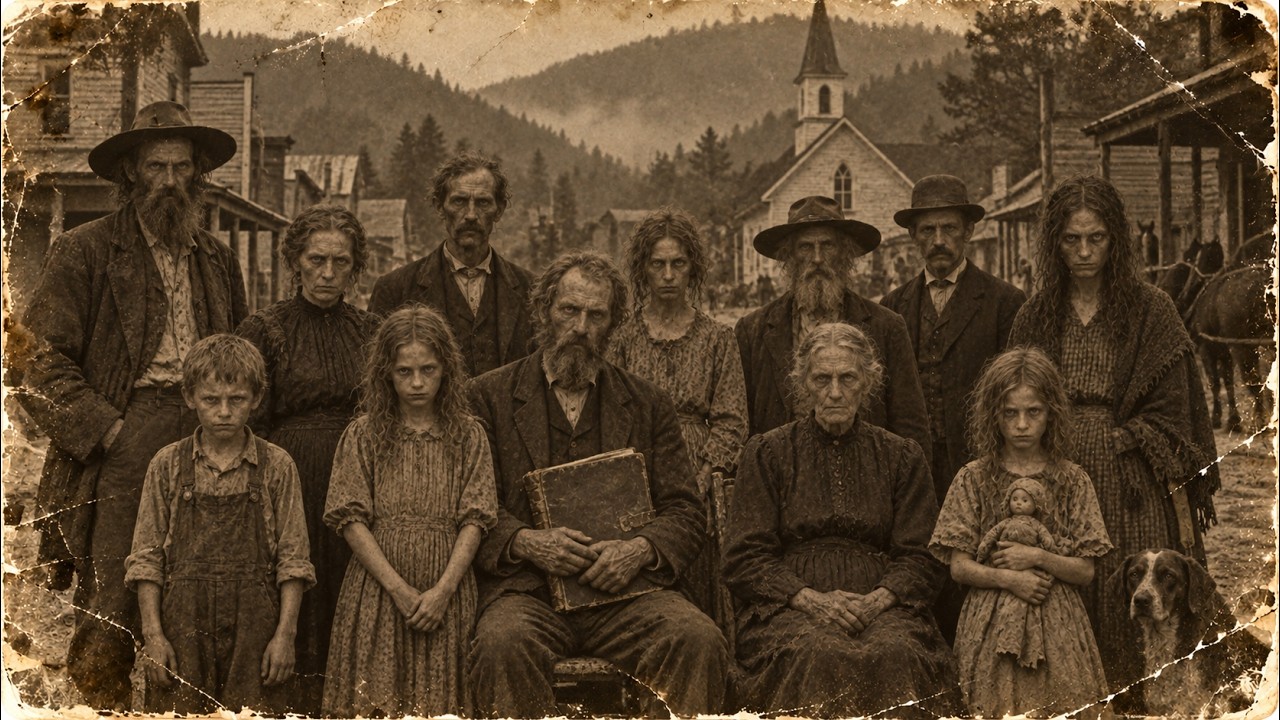
Then he told her that the mill floor would be closed to her after working hours. It was private company property, he said, and contained nothing connected to her charity inspection. Clara replied that food, illness, and housing were all connected to it. Rusk left without shaking her hand.
Over the next two days, Clara worked from the ordinary evidence of a mill settlement. She counted meal invoices. She compared coal yard tickets with the number of occupied homes. She checked deliveries of fever tonic and lamp oil.
The figures were plain enough once they were placed together. Mercy Hollow's population could not account for what the company's store had delivered through the winter. The difference was steady.
It was not a handful of extra meals here and there, not the waste that Vale had claimed. The food, coal, and medicine supported approximately 11 more people. The number appeared too often to be accidental.
There were 11 more portions of meal each week than the public households required. Enough extra coal was delivered to warm several closed rooms. The fever tonic allowance was larger than the settlement's doctor had prescribed for the known population.
Clara had come to Mercy Hollow expecting neglected housing and poor relief. She now believed the town was feeding people who did not exist in its public records. That made Vale's burned copy more serious.
The brass plates were not a small theft device. Each number might represent a living person. But where could 11 people remain unseen in a hollow where the houses stood close together and the road passed every door?
The answer came from a woman named Lahie Keen. Lahie had once cooked for the mill boarding house. She was 54, lean, with burned hands and a faded apron she still wore even after leaving the company kitchen. She had taken work washing clothes at the far end of the hollow.
Clara found her carrying a basket from the creek. At first, Lahie refused to discuss the numbered plates. Then Clara showed her the burned copy. She did not mention the brass plate number. She only pointed to the small crosses.
Lahie stopped walking. "That is not for you to have," she said.
Clara asked what the cross meant. Lahie looked toward the mill. Its brick chimney rose above the carding room. The upper part of the building had no visible windows on the roadside. Rusk had described it as unused storage.
They called them inside names, Lahie said at last. Clara asked what that meant. A name you can use in the book, Lahie said. Not a name you speak where somebody from outside can hear.
She explained the rule in fragments. A person entered under an inside name could receive food only if the right plate was produced. The plate number went into the private count.
Some people worked in the mill before dawn or after dark. Some cleaned, carried coal, mended belts, or sorted waste fiber. Others were dependent: wives, children, sick relatives, and people who had nowhere else to go.
They were fed. They were housed. But they were not to be seen at the road. If a person marked in the book spoke to a visitor, Lahie said, their household could lose a meal portion.
If someone appeared at a church gathering or asked to be entered on an outsider's list, the company could stop work for every person tied to that plate number.
Clara asked whether the people had agreed to this arrangement. Lahie's hands tightened around the laundry basket. Some came owing money, she said. Some came sick. Some came because a man said there was a room and a job. After they got inside, there was always another reason they could not leave.
She had seen a child taken from a kitchen doorway when a traveling preacher came down the road. She had seen curtains nailed over windows. She had been ordered not to serve a portion until a name was entered in a red book.
Clara asked where the book was kept. Lahie shook her head. Not where they let me see it. Then she said something that changed the inquiry again. Look by the chimney, she said. If they still keep anyone, they keep them where the smoke covers the smell.
Until that moment, Clara's strongest suspicion had been ration fraud. Rusk and Vale might have been stealing food or hiding illegal labor from inspectors. Lahie's account suggested something worse, but testimony alone would not get Clara through a locked mill door.
She needed proof of the rule. That proof lay inside the company store.
The next afternoon, while Vale was at the mill, Clara returned to the counter and asked to inspect the scales used for meal portions. The heavy iron scales stood on a wooden base worn smooth by sacks dragged across it.
Beneath the base was a narrow gap where dust and paper scraps had collected. Clara saw the corner of a folded sheet. She knelt, reached under the scale platform, and pulled it free.
The paper was an instruction sheet. It had been written in a plain hand, copied from some earlier form. It told household heads to keep public names and inside names separate. It instructed store staff to issue food only against the numbered plate.
Beside the line for the small ink cross were five words: crossed, not for road or register.
Clara read the line twice. The cross did not mean death. It did not mean a debt paid or a ration cancelled. It meant a person could be counted privately while being forbidden from public view, not for road, not for register.

The federal census of 1900 had become part of the system. It was not merely incomplete. Mercy Hollow's operators had used it as a boundary. One list was shown to outsiders. The other was kept for people who must not exist in the first list at all.
The inquiry was no longer about stolen provisions. It was about people who might be confined, ill, and legally invisible.
Clara brought the sheet to the county sheriff. She showed him the supply totals, the burned store copy, and the instruction that ordered people out of sight and out of record.
The sheriff did not promise an immediate arrest. Rusk still claimed that the mill's upper floor was empty storage, but the sheriff agreed that there was cause to inspect any sealed space connected with housing.
Clara then went to Silas Dunn, a county carpenter who had repaired the mill roof years earlier. Dunn remembered the building well. The lower floor held the carding machines. Above it was a long, low space under the roof line, once used for drying wool and storing sacks.
A service stair had been closed after an accident, according to Rusk. The only other approach, Dunn said, lay beside the brick chimney. A vent was there, Dunn told Clara, for heat and air. If they blocked it, they blocked it from the mill side.
That evening, with the sheriff present, Dunn entered the carding room. The machines had stopped for the day. The lower floor smelled of oil, damp wool, and hot iron. The chimney rose through the room near the rear wall.
At its base, behind stacked waste bales, Dunn found a section of fresh plaster. It did not match the older wall. He tapped it with the handle of his tool. The sound was hollow.
Rusk objected at once. He said the wall covered an old flue. He said removing it could damage the mill and cost the company money. The sheriff told him to stand back.
Dunn chipped away the plaster. Behind it was a vent packed with cloth, then a narrow hatch covered by boards. The cloth was clean on one side and dark with soot on the other. Warm air moved through the crack. Someone had been living beyond that wall.
The hatch was too narrow for easy passage. It opened from the carding room into the low upper floor beside the chimney. Dunn pried loose the first board. The sheriff widened the opening enough for a person to crawl through.
Before Clara entered, she paused at the gap. From above came a faint sound. Not machinery. A cough.
The sheriff went first, carrying a lantern. Clara followed with her document case and the folded instruction sheet. Dunn remained at the hatch to keep the opening clear.
The upper floor was not storage. It was a boarding space made to look empty from below. Hanging cloth divided the long room into narrow sleeping areas. The windows on the roadside had been covered from within by boards and sacking.
Food bins stood against the far wall. There were water pails, chipped bowls, patched blankets, and a small iron stove connected to a pipe near the chimney.
Eleven people were inside. Some were adults. Some were children. One woman lay beneath a blanket, feverish and too weak to rise. Two men stood against the wall as if they expected punishment. A girl of perhaps 10 held a younger child by the hand.
No one moved toward the hatch until Clara said that the sheriff had come with her. Then a thin boy stepped forward. He was barefoot and wore an oversized mill shirt. In his hand was a brass plate.
He looked at Clara's copied note, which she had taken from her document case. 17, he said.
Clara looked down at the number she had copied in Mrs. Harbin's house. The boy held up his plate. It was stamped 17.
That is my mother's, he said. Mrs. Harbin. They said she could bring food if she never told the road people I was here.
His name was Will Harbin. He was 15. The public schedule listed Mrs. Harbin's household as a widow and three younger children. Will's name did not appear.
Behind him, against a partition wall, Clara found a red-bound book. It was wrapped in oil cloth and tied with twine. The cover was stained with meal dust.
Inside, the pages were divided into columns: plate number, public name, inside name, work, illness, food issue, road status. The crossed entries were marked exactly as the instruction sheet had described.
Some people had public names that belonged to visible relatives. Others had no public entry at all. The book recorded when they were transferred between houses, when they worked, when they were sick, and whether they had been permitted below the upper floor.
The 11 people in the room were not a rumor. They were not an error in a store account. They were Mercy Hollow's second census.
The brass plates had seemed like kitchen objects. In the red-bound book, they became keys to identity. Every hidden resident could be tied to a food portion, a work assignment, and a rule of silence.

Clara used the book as the sheriff called the names aloud. Some people answered to the public name. Some answered only after hearing the inside name.
One woman wept when Clara found her entry because it included the name of a daughter who had died months earlier. The child had never been reported to county authorities. Her plate number had simply been crossed through.
The sheriff ordered the upper floor cleared. The sick woman was carried down through the hatch first, then the children, then the adults. They had to move one at a time because the opening beside the chimney was narrow.
Dunn and two deputies waited below to guide them down from the carding room. No one who had been hidden upstairs stepped onto the mill road until they had first been removed from the floor.
At the bottom of the stair, Will clutched his mother's brass plate. Mrs. Harbin had been brought from her house after the sheriff sent for her. When she saw him, she did not speak at first. She simply took the plate from his hand and pressed it against her chest.
Rusk was arrested that night on charges connected with unlawful confinement and false records. Vale fled before dawn, taking the road north toward the rail line. He was later detained at a depot with company papers in his case and several more brass plates in his coat pocket.
The county doctor examined the 11 recovered residents. Two needed immediate treatment for fever and lung illness. The children were underfed but alive. Some adults had injuries from mill work that had never been reported.
Those with relatives were placed with them. Others entered temporary county care. The upper boarding floor was sealed by county order after the rescue. This time the seal was placed on the outside, with the sheriff's mark across the boards.
Clara delivered the red-bound census and the recovered brass plates to the circuit clerk. The clerk made a corrective public list from the names in the book. It did not repair the years Mercy Hollow had taken from those people, but it gave them a record outside the mill.
The practical explanation was clear. Rusk and Vale had used the second census to hide 11 unregistered workers and dependents in the upper boarding floor. The brass plates controlled food. The red book controlled identity. The crossed tally controlled movement.
Covered windows, blocked vents, extra supper settings, excess meal, coal, and medicine all belonged to the same system. The hidden population had been kept alive enough to work while being denied public names, public shelter, and public protection.
For Mercy Hollow, the case had an answer, but Clara had kept the burned store copy and a careful drawing of the crossed tally. The mark troubled her because it was too deliberate. The instruction sheet read less like an improvised fraud than a rule copied from somewhere else.
Months after the arrests, Clara sent a copy of the plate column and the cross to the state charity depot. The depot was a state archive for records from county institutions that had closed, moved, or surrendered their old registers.
A reply came from Cumberland County. It was signed by Martha Orr, who had been matron at the Cumberland County Infirmary in the 1890s. The infirmary had housed poor, sick, elderly, and displaced people. It had no connection to Mercy Hollow.
Its staff had never worked for Rusk or Vale. Its old books had been sent to state custody in 1895, two years before Rusk's documented arrival in the hollow.
Clara traveled to the depot to meet Martha Orr. Orr was 61, small beneath a gray shawl, with wire spectacles and the careful hands of someone used to handling old paper. She brought Clara to a storage room lined with shelves of bound county registers.
There, under the county seal, lay the 1894 Cumberland County Infirmary ration register. Orr opened it to a page already marked with a ribbon. The page carried a sequence Clara knew too well.
A private plate number, a public name, an inside name, a column for food issue, and beside certain entries, the same small cross. The wording was not identical in every line, but the working rule was unmistakable.
A person could be entered under a private food number. The person's public identity could be kept separate from the inside identity. The crossed mark meant that the resident was not to appear on the road or in the public relief register.
Martha Orr then produced a sealed evidence envelope. The envelope had been retained with the infirmary records since 1895. Its custody had never passed through Mercy Hollow. The seal was opened in Clara's presence.
Inside was a brass plate. It was numbered 23. The placement of the stamped number matched the plates recovered from Mercy Hollow. The infirmary register showed that plate 23 had been issued through its kitchen. It also recorded that the person assigned to it had been withheld from the road and omitted from the public relief roll.
This was not merely a similar mark in another book. At both places, a stamped brass food plate identified a private census entry. That entry separated a public name from an inside name. A cross ordered that the counted person be kept from public view. In both records, the number was tied to actual food.
The Mercy Hollow rescue explained the town's own extra settings, numbered plates, food deliveries, covered windows, blocked upper floor, and 11 confined residents. It could not explain Cumberland County.
The infirmary record was older than Rusk's control of Mercy Hollow. Its book had been held by the state charity depot since 1895. Its staff, place, and purpose were separate from the mill town. Neither Rusk nor Vale had any recorded connection to it.
The second census had not been only Rusk's local fraud. Before Mercy Hollow's known operators used the rule to control mill residents, an unrelated county infirmary had already applied the same numbered food and public invisibility system to its own people.
The red-bound book and the brass plates from Mercy Hollow remained in circuit clerk custody. The infirmary register and plate 23 remained at the state charity depot. Two institutions, two sets of records, the same rule.
Who had kept the same rule before Mercy Hollow adopted it?