Milwaukee was a city that liked to pretend. It pretended to be clean, a working man's town of cheese, bratwurst, and beer. It pretended that the men in expensive suits who ate at the same restaurant every Tuesday night were just successful businessmen.
But on a cold night in 1973, a man turned up dead in Milwaukee. That one inconvenient corpse would set in motion a chain of events that took over a decade to fully unravel. In the end, it brought down the most powerful organized crime boss Wisconsin had ever produced.
Every American city with a mob had its own flavor. New York had five families and a power structure so complicated it required a flowchart. Chicago had the Outfit, the most disciplined and corporate criminal organization in the country. Kansas City had its own bosses, New Orleans had Carlos Marcello, and Detroit had the Partnership.
Milwaukee had Frank.
The city's reputation was built on a specific civic mythology. German and Polish immigrants, good union jobs at the brewery, good sausage, good beer, good honest Midwestern values. Organized crime simply did not fit the postcard.
That carefully maintained illusion of cleanliness was exactly what made Milwaukee a perfect place for the mob to operate. An illegal gambling operation wants a city where nobody is looking too hard. Money laundering wants a city where the newspapers are not staffed with reporters chasing organized crime stories.
Collecting street tax from every bookie, loan shark, and numbers runner on the north side required a police department that had learned, over many decades, the fine art of looking the other way. Milwaukee had all of that.
The mob had operated in Milwaukee since the Prohibition era, running bootlegging, gambling, and labor racketeering. By the 1940s, the Milwaukee family was an established affiliate of the Chicago Outfit. It was not independent. It was a satellite.
Milwaukee answered to Chicago. Money flowed upward and orders flowed downward. Whoever ran Milwaukee was powerful, but only within the boundaries Chicago drew for him. For most of the post-war years, those boundaries suited Milwaukee just fine. The city was profitable, the operation was quiet, and the bosses were careful men who understood that the best mob is the invisible mob.
Then came Frank.
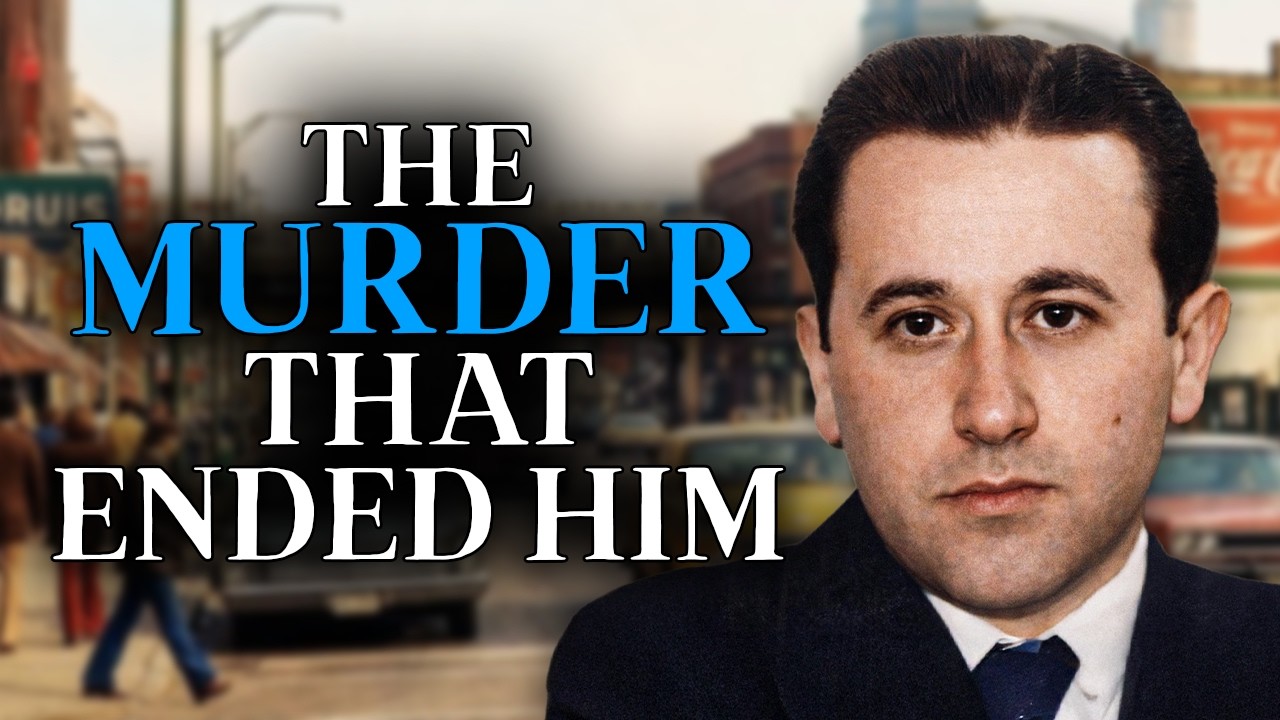
Francesco Mario Balistrieri was born in 1918 in Milwaukee to Sicilian immigrant parents. His father, Giuseppe Balistrieri, was a figure in the local underworld, so Frank did not stumble into this life by accident. He grew up inside it, watching how it worked and absorbing its rules and brutal logic.
By the time he was a young man, Frank Balistrieri was already deeply embedded in Milwaukee's criminal infrastructure. He was not physically imposing and did not fit the stereotype of a mob enforcer. Frank was slight, quiet, and in certain settings almost refined.
He had a law degree from Marquette University. The boss of the Milwaukee Mafia knew exactly how the system he was corrupting was supposed to work, and he used that knowledge with considerable precision.
His associates called him Mr. Big, not because he was physically large, but because of what he represented. He was the man whose permission you needed before you did anything that generated money on the street. He was the man whose phone call you did not ignore, and whose displeasure had consequences.
Frank officially became boss of the Milwaukee family in the early 1960s, after the previous leadership aged out and the succession was settled. The word "settled" is polite. These things were never entirely peaceful, but Frank emerged on top.
Under his leadership, Milwaukee's operation expanded and tightened at the same time. He controlled gambling and loan sharking. He controlled the labor unions, the Teamsters, the restaurant workers, and the bartenders. If you ran a tavern in Milwaukee, there was a very good chance someone connected to Frank Balistrieri had a piece of your operation, or at minimum you were paying to keep the peace.
Frank was also paranoid. Genuinely, clinically, operationally paranoid. He swept his own restaurant, a place called Snugs, for listening devices every single morning. Snugs was his headquarters, his dining room, and his office, all wrapped into one red-checkered tablecloth package.
Every morning, before he sat down and before the espresso was poured, he would walk through that restaurant with a bug detector like a man checking for landmines. His crew thought he was excessive. The FBI thought he was impressive. As it turned out, he was absolutely right to be worried.
To understand Frank Balistrieri, you have to understand his relationship with Chicago. Nobody in Milwaukee operated independently. The Chicago Outfit considered Milwaukee its territory, its tributary, its subsidiary office.
Frank, for all his local power and all the fear he inspired, was ultimately an employee. Chicago's reach into Milwaukee was structural and financial. The Outfit expected a cut of Milwaukee's earnings, a regular tribute. On paper, the arrangement made the mob sound almost like a franchise operation. Milwaukee was the franchise, and Chicago was the corporate office. Except the corporate office could have you killed.
Through the 1970s, that relationship became even more significant because of Las Vegas. By then, the mob's most profitable venture was skimming from the casinos. Chicago, Kansas City, Cleveland, and Milwaukee all had pieces of Las Vegas casino operations, including the Stardust, the Fremont, and the Hacienda.
Money was skimmed off the top before it was ever counted. Cash was taken directly from the counting room and divided among the families that had a stake. Milwaukee's cut came through Frank. Chicago trusted him enough to include him in the skim, and Frank had delivered. He was reliable and discreet. He kept his city quiet and he kept the money moving.
The skim operation depicted in the movie Casino is real. The character Remo Gaggi represents Chicago oversight. The whole machinery of hidden cash moving from Las Vegas counting rooms to Midwestern mob bosses is documented, and Milwaukee was part of that machinery.
Frank Balistrieri was not a flashy man. He did not want his name in the newspapers and did not want federal attention. He had built something that worked and was profitable, and his entire strategy was to keep it running without disruption. He was, in the language of the mob, a good earner and a careful operator.
That makes what happened next all the more revealing. When Frank Balistrieri made mistakes, they were not the mistakes of a reckless man. They were the mistakes of a paranoid man who became convinced that the greatest threats to his operation were the people closest to him. That conviction got people killed.
August Palmisano was not a famous man. He was not the kind of figure who gets a chapter in the history books or a character in a Hollywood film. He was a Milwaukee man, connected loosely or tightly, depending on who you ask, to the edges of Frank Balistrieri's world.
For reasons that were never entirely clear in the public record, Palmisano became a problem. In Frank Balistrieri's Milwaukee, problems had one solution, and it was the permanent kind.
Palmisano was killed in 1973. The details of exactly how it went down, who pulled the trigger, and who gave the order were not immediately known to law enforcement. That was by design. The Milwaukee family had a long tradition of quiet violence, of bodies that turned up without obvious connections, of murders that looked like robberies, accidents, or disappearances.
Frank ran a tight operation, which meant the street-level mechanics of violence were kept insulated from the man at the top. But murder in a mob context never stays quiet forever. It might stay quiet for years, even a decade, but somewhere somebody knows. Somebody was in the room. Somebody drove the car. Somebody disposed of the weapon.
The FBI, when it is patient and methodical and has the right tools, eventually finds that somebody.
The question of why Palmisano died points back to Frank's fundamental worldview. In Frank's universe, disloyalty was the cardinal sin. Not incompetence, not failure, but disloyalty. The idea that someone in or near his organization might be talking to the wrong people, feeding information to law enforcement, or undermining the operation from within was intolerable to Frank.
That idea bypassed due process, bypassed any real investigation, and bypassed everything except the final conclusion that someone had to go. Whether Palmisano was genuinely disloyal, whether he was talking to anybody, and whether the suspicion was founded in reality or in Frank's increasingly siege-like mentality are questions that haunted the subsequent legal proceedings.
What is not in question is the outcome. August Palmisano ended up dead, and the order, according to the evidence that would eventually emerge, came from the top.
The cruel irony is that the very paranoia that drove Frank to order violence to protect his operation was the same paranoia that eventually handed the FBI the opening they needed. Frank could not stop talking about what had happened, not to the public and not to newspapers, but in the one place he believed he was safe: his restaurant. His swept, checked, monitored, allegedly bug-free restaurant.
He was wrong about the bugs.
The FBI's investigation into Frank Balistrieri did not begin with the Palmisano murder. It began, as most serious organized crime investigations do, with money, specifically the Las Vegas skim money flowing through Milwaukee. By the late 1970s, federal agents had identified the major participants in the casino skimming operation and were working to build a case that could stick.
Building a case against a man like Frank Balistrieri through conventional means was nearly impossible. His law degree was not decorative. He understood how the government built prosecutions. He was careful about what he signed, careful about who he met, and careful about the paper trail his financial activities left behind.
He had insulated himself from the street-level operations that generated his money. Bosses do not collect debts personally. Bosses do not stand in the back room of a bookie joint counting cash. Bosses give orders and receive results.
That meant the FBI needed to hear him give those orders. Electronic surveillance, wiretaps, and bugs had revolutionized organized crime investigation since the 1960s. The FBI had used them against Chicago, New York, and Kansas City. Now they turned them on Milwaukee.
Getting a bug into Frank's world was not simple. His morning sweep of Snugs was not paranoia theater. It was a genuine security protocol, and it was effective. His restaurant was his castle, and he defended it accordingly.
But the FBI was patient and had resources. Eventually, federal agents managed to place listening devices that Frank's morning sweep did not catch. The exact operational details of how the surveillance was achieved were not all made public, but the results were unambiguous.
The FBI began to hear things. Conversations, names, references to events that federal agents could now contextualize and corroborate. What they heard was a man who could not entirely contain himself.
Frank Balistrieri, for all his discipline and lawyerly caution, was also a man who needed his inner circle to know who he was and what he had done. That is the mob's eternal contradiction. The code of silence demands that you never speak of what you have done, but the ego of power demands an audience. You cannot be the most feared man in Milwaukee and never let anyone know why they should fear you.
Those conversations, those moments when Frank's discipline cracked slightly and the truth bled through, were what the FBI was waiting for. That is what they got.

The surveillance also captured the financial architecture of the operation. The way money moved, the tribute structure, the names of the people who paid and the people who collected, and the connection between Milwaukee, Chicago, and Las Vegas. The skim was laid out in conversation as clearly as if someone had drawn the FBI a map.
By the early 1980s, federal investigators had something they had never had before in Milwaukee: real, recorded evidence. The kind of evidence that does not depend on a jury deciding whether a cooperating witness is telling the truth. The kind where Frank Balistrieri's own voice and own words do the prosecution's job for them.
The Las Vegas skimming case was already being built by the time the 1980s arrived, and it was not just a Milwaukee problem. Chicago was facing it. Kansas City was facing it. Cleveland was facing it. The entire multi-family casino operation that had been printing money for over a decade was coming apart under the weight of federal investigation.
The names, numbers, and methods were being assembled by federal prosecutors into a case of staggering scope. Milwaukee's role in that case put Frank Balistrieri in the crosshairs of a prosecution he could not finesse, lawyer his way around, intimidate, or buy his way out of.
The casino skimming indictments were federal. They were RICO charges, the Racketeer Influenced and Corrupt Organizations Act, which by the 1980s had become the federal government's weapon of choice for dismantling organized crime families.
RICO was beautiful from a prosecutor's standpoint because it treated the entire criminal enterprise as the crime. You did not have to prove Frank personally touched the money. You had to prove he ran the organization that touched the money. The surveillance tapes made that case.
Then the Palmisano murder came back. Cold cases have a metabolism. They move slowly, go quiet for years, and then something changes. A witness surfaces. A piece of evidence is reinterpreted. A cooperator decides the deal on the table is better than the alternative.
By the early 1980s, the Palmisano murder had been cold for nearly a decade. It had not been solved, and it had not publicly even been officially attributed to the Milwaukee family. Then the dominoes started falling.
The pressure generated by the casino skimming investigation created cracks in Frank's organization. When federal indictments start landing and the people around you start calculating their own prison sentences against the potential benefit of cooperation, the wall of silence that protects a mob boss begins to fracture.
Not everyone broke. Most did not. But it only takes one. The convergence of the Las Vegas skim case, the Milwaukee surveillance tapes, and the slow resurrection of the Palmisano murder investigation created a perfect prosecutorial storm around Frank.
He had spent years building walls around himself, layers of insulation and deniability. Now those layers were being stripped away, one federal subpoena at a time.
Frank Balistrieri did not go to trial alone. His two sons, Joseph and John, were indicted right alongside him. Frank had raised them inside the business, given them roles, and made them part of the operation. In his mind, he was probably building a dynasty, passing the torch the way a legitimate businessman hands his sons the keys to the company.
Except the company was the Milwaukee Mafia, and when the federal government came for the company, it came for the whole family.
The trial cracked Milwaukee wide open. The evidence was detailed, documented, and in large portions audible. Frank's own voice on those surveillance tapes, his associates, conversations about money, power, and who answered to whom. Things Frank had spent 30 years making sure could never be spoken in a courtroom. He had not counted on the bug surviving his morning sweeps.
The Las Vegas skim came in. The Chicago tribute came in. The Palmisano murder, cold for over a decade, came back to life in that courtroom.
The defense did what mob lawyers always do. They attacked the witnesses, questioned the surveillance, and argued their client was a successful Milwaukee restaurateur who happened to know some colorful people. It was not enough.
Frank was convicted. His sons were convicted. The Milwaukee family, the organization that had quietly run that city for decades, was decapitated in a single federal proceeding.
These were not innocent men, but a father and his two sons sitting together hearing that verdict, facing the end of everything they had built together, is not nothing. It was a broken, corrupt, violent family, but it was still family.
Frank Balistrieri was sentenced to 13 years in federal prison. He was in his mid-60s by the time sentencing came down. Thirteen years for a man of that age, with the health complications that tend to accompany decades of that kind of stress and that kind of life, is a very long time. In practical terms, it was quite possibly a life sentence.
His sons received sentences of their own. The Balistrieri name, which had meant something on the streets of Milwaukee for decades and had carried the weight of fear, tribute, and respect, was now associated with a courtroom, a conviction, and a prison term.
The Milwaukee family did not survive Frank's removal. This is the pattern seen again and again when the federal government successfully prosecutes a mob boss. The organization does not simply appoint a new leader and carry on. The prosecution itself, the process of getting to conviction, destroys the infrastructure.
Cooperators have talked. Financial networks have been exposed. The silence that holds everything together has been broken in enough places that the whole structure becomes unstable.

Milwaukee's operation contracted sharply after Frank's conviction. The tribute to Chicago became irregular. The gambling and loan sharking operations that had run like clockwork for decades became fragmented, decentralized, and small-time. The city that had pretended it had no mob now had, in functional terms, barely any mob to pretend about.
Frank Balistrieri was released from prison in 1991 after serving a portion of his sentence, his health deteriorating. He died on February 7, 1993, at the age of 74. He died in Milwaukee, not from a bullet or a baseball bat or in a basement in Bensenville, but in his own city at the end of a life that had been, by any reasonable measure, entirely his own.
But he died with the thing that mattered most to him already gone. The organization, the power, and the operation he had built and maintained for three decades were all dismantled by the federal government and by the surveillance tapes recorded in the restaurant he swept every morning.
Milwaukee does not get a lot of credit in the organized crime conversation. When people talk about the mob, they talk about New York, Chicago, and Las Vegas. Milwaukee is the answer to a trivia question, if it comes up at all.
That is a shame, because the Milwaukee story is in many ways a cleaner, starker version of the American mob story than the larger cities provide. In New York, the scale is so massive and the cast of characters so enormous that it can be difficult to see the underlying structure clearly. In Milwaukee, you can see it perfectly.
One boss, one family, one city, a direct line of tribute running to Chicago. A Las Vegas connection that brought in more money than the local operation could have generated on its own. And ultimately, one set of surveillance tapes that captured the truth that all of Frank's paranoia, all of his daily sweeps, and all of his careful insulation could not prevent from being recorded.
The Family Secrets trial in Chicago eventually shed additional light on how Milwaukee fit into the broader Outfit structure. Nick Calabrese's cooperation and his testimony about murders, operations, and the internal workings of organized crime in the Midwest provided context for Milwaukee's place in the hierarchy.
Frank Balistrieri answered to Chicago. That relationship shaped everything about how he operated, what he was allowed to do, and ultimately how the federal government was able to build a case against not just him, but the entire network he was part of.
The Wisconsin Department of Justice has described the Balistrieri era as the most significant organized crime period in the state's history. That is a statement that probably required very little debate to reach consensus on. There has not been anything like it before or since.
After Frank, Milwaukee's mob essentially became a footnote. A few figures carried on and some low-level operations persisted, but the family as a coherent organizational structure, as a functioning criminal enterprise with a clear hierarchy, a reliable revenue stream, and a meaningful relationship with Chicago, was gone.
Frank had been its spine. When the spine went, the body collapsed.
Snugs, where Frank held court, swept for bugs every morning, received tribute, and gave orders while maintaining the fiction that he was just a Milwaukee restaurateur who happened to know a lot of interesting people, is gone too. The building still stands, but the thing that made it significant, the invisible weight of what happened inside it, is gone with Frank.
The Las Vegas connection, the skim operation that tied Milwaukee to the Stardust and the Fremont and the financial machinery of mob-controlled gambling, ended with the prosecutions of the mid-1980s. The casino industry was being corporatized, and the Nevada Gaming Commission was tightening its scrutiny of ownership and operations.
The mob's golden age in Las Vegas was ending for reasons beyond any single prosecution. Frank's removal from the skim was part of a larger unraveling that touched every family with a piece of those counting rooms.
Underneath all the legal proceedings, the surveillance tapes, the Las Vegas money, and the 1970s murder that came back to haunt him, Frank Balistrieri's story is about the limits of control.
He spent his entire adult life trying to control his environment. He controlled his city, his operation, who paid him, who feared him, how the money moved, and where it went. He was good at it. For decades, he was genuinely excellent at it. He built something durable and profitable in a city that had no reason on paper to be a mob city at all.
Then he tried to control something he could not control: the truth of what he had ordered and the conversations he had in the room he swept every morning. The paranoia that made him talk about the things he had done to the people he trusted was stronger than the discipline his law degree and decades of experience should have enforced.
The FBI did not beat Frank Balistrieri with superior force. They did not break down his door with tactical teams. They beat him with patience. They sat outside his world, they listened, and eventually Frank Balistrieri told them everything they needed to know.
There is a version of Frank Balistrieri that almost commands a grudging respect. The quiet boss, the careful operator, the paranoid patriarch who built a criminal organization in a city that was not supposed to have one and ran it for 30 years without becoming nationally famous or generating the kind of heat that brought the FBI's full attention.
Almost. But he ordered a man killed. He brought his sons into a life that ended their freedom. He ran an organization built on fear, violence, and the systematic corruption of the city he lived in. The cheese and the bratwurst and the beer were fine. The mob was not.
Frank Balistrieri is buried in Milwaukee. The city has moved on. The neon of the casinos he helped skim still flickers in Las Vegas under different ownership, corporate management, and the watchful eye of gaming regulators who learned the hard way what happens when you let the wrong people near the counting room.
Somewhere in an FBI evidence archive, the tapes still exist. Frank Balistrieri's voice, his words, the conversations he had in the restaurant he swept every morning, the record of everything he thought he had kept secret. He never stopped the bugs from listening. He just never knew they were there.