On January 27, 1945, the Red Army entered Auschwitz, the largest extermination center in German-occupied Poland. Estimates indicate that at least 1. 3 million people were deported to the camp between 1940 and 1945, and at least 1. 1 million of them were killed.
Soviet soldiers found thousands of surviving prisoners, many starving and suffering from severe disease that had spread through the overcrowded camp. They also uncovered evidence of medical experiments performed on men, women, and children by SS doctors who treated human beings as little more than laboratory animals. For years, Auschwitz was a place where selections determined who would live and who would die. Newly arrived prisoners were either sent to forced labor or directly to the gas chambers, while others were handed over to SS doctors.
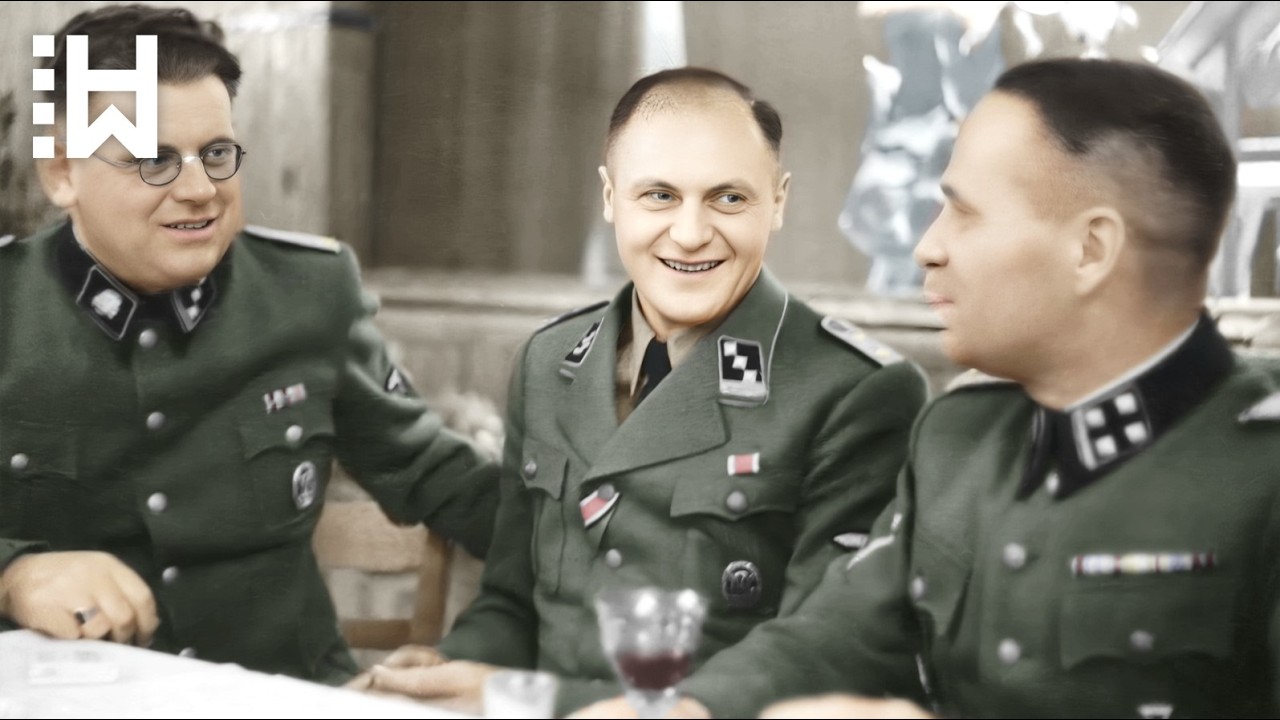
Overseeing this vast medical system was the highest-ranking SS physician in Auschwitz, a man who supervised the camp’s doctors, organized the selections, and bore responsibility for the crimes committed by the medical staff under his command. His name was Eduard Wirths. Born Eduard Irgang Wirths on September 4, 1909, in the village of Geroldshausen near Würzburg in Bavaria, then part of the German Empire, he grew up in a Catholic family whose political views leaned toward social democracy rather than radical nationalism. His father had served as a medical orderly during World War I, and influenced by that experience, encouraged his sons to pursue medicine.
Eduard followed this path from an early age. He had several siblings, including his younger brother Helmuth, who later became a gynecologist, and the brothers remained close throughout their lives. Within the family, Eduard gained a reputation as disciplined, loyal, and dependable. He was known as a quiet, serious young man who avoided smoking and drinking, and who generally treated others with kindness and respect.
Nothing in his upbringing indicated he would one day be connected to one of the most infamous concentration camps in history. The Wirths family had no known history of anti-Semitism and no ties to radical nationalist politics. In 1930, Wirths began studying medicine at the University of Würzburg. He completed his studies five years later and received his doctorate in medicine.
On January 30, 1933, Adolf Hitler was appointed Chancellor of Germany by President Paul von Hindenburg. In June of that same year, Wirths joined the Nazi Party and the SA, the Nazi paramilitary organization known as the Brownshirts due to the color of their uniforms. In October 1934, Wirths left the SA and transferred to the SS, the elite organization that became one of the main instruments of Nazi terror and persecution. In 1936, he married Gertrud Pauly, a fellow medical student, and the couple had four children.
World War II began on September 1, 1939, when Nazi Germany invaded Poland. After the outbreak of war, Wirths joined the Waffen-SS, the military branch of the SS. In the following months, he served as a military doctor and took part in combat in Norway and later on the Eastern Front during Germany’s invasion of the Soviet Union, which began on June 22, 1941. His military career ended suddenly in the spring of 1942 when a health condition made him unfit for frontline service.
Wirths received the Iron Cross Second Class, but instead of returning to civilian medicine, he was assigned to the concentration camp system. After a short stint at Dachau near Munich and then as chief physician at Neuengamme outside Hamburg, he received a far more significant appointment. In September 1942, Wirths was promoted to SS-Hauptsturmführer, equivalent to a captain in the US Army, and became the chief SS physician at Auschwitz, where all camp doctors came under his authority, including Josef Mengele, Horst Fischer, and Horst Schumann. Wirths quickly became one of the key figures in the administration of Auschwitz.
Rudolf Höss, the commandant of the Auschwitz camp complex, was said to hold him in particularly high regard. Speaking of Wirths’ performance, Höss later stated, “During 10 years of service in concentration camp matters, I never met a better doctor. ”
As medical director, Wirths participated in the selection system that determined the fate of countless prisoners. Newly deported people were examined upon arrival, and camp doctors decided who appeared fit enough for forced labor and who would be sent directly to the gas chambers.
Wirths assigned doctors to these selections and also took part in them himself. He was also involved in the killing of elderly, sick, and weak prisoners under Nazi policies that deemed those unable to work as surplus. Beyond the selections, Wirths was deeply involved in the medical experiments conducted at Auschwitz. He was responsible for choosing prisoners who would be used in experiments and supervised the doctors who conducted research on detainees.
Most of this work took place in Block 10, where imprisoned Jewish women were subjected to painful gynecological procedures. Wirths himself participated in research aimed at the early detection of cervical cancer. Women were examined, photographed, and operated on without their consent. Tissue samples were taken and sent to specialists in Germany for further study.
Wirths also showed interest in sterilization research, a subject closely tied to Nazi racial policies. Under his authority, prisoner doctors, including the French physician Adelaide Hautval and the Jewish doctor Maximilian Samuel, were forced to assist in conducting experiments on women. In another case, Wirths deliberately infected four Jewish prisoners with typhus to test a vaccine serum. Two of the victims died as a result.
Among the doctors who served under Wirths was Josef Mengele, later nicknamed the Angel of Death, whose name became synonymous with the atrocities of Auschwitz. Rather than objecting to Mengele’s activities, Wirths held him in the highest regard. In a promotion recommendation written in August 1944, Wirths described Mengele as open, honest, determined, and completely dependable. He praised Mengele’s intelligence, energy, perseverance, and dedication to duty.
Wirths also commended what he called Mengele’s valuable contribution to anthropological science through his use of the scientific material available to him at Auschwitz, and praised Mengele’s ideological commitment, calling him an ideal SS officer. On the other hand, unlike many other SS doctors, Wirths took measures that improved conditions within parts of the camp. He worked to limit the spread of typhus and typhoid fever and introduced improvements in hygiene in the prisoner hospitals. These measures contributed to a significant decrease in the death rate caused by disease.
He also prevented SS medical orderlies from carrying out unauthorized phenol injections against seriously ill prisoners. Previously, some prisoners had been killed by injections directly into the heart without any formal procedure. Wirths ordered that such procedures follow official channels instead. He sometimes used his authority to prevent the condemnation of certain prisoners and employed competent prisoner doctors in medical positions.
Some prisoners later recalled that he tried to prevent certain abuses when they fell within his sphere of authority. One prisoner who knew him well was Hermann Langbein, an Austrian political prisoner who worked as a clerk for Wirths. Over time, the two developed an unusual relationship. Langbein, who was secretly involved in the Auschwitz resistance movement, gradually gained Wirths’ trust through intermediaries.
The resistance even passed word to Wirths that the Allies held him responsible for the crimes committed at Auschwitz but had refrained from targeting his family. This gave the resistance a degree of influence over him. None of these actions, however, changed Wirths’ essential role within the camp. He continued to supervise selections, oversee doctors involved in human experiments, and remained responsible for medical administration at Auschwitz during some of its bloodiest years.
In September 1944, Wirths was promoted to SS-Sturmbannführer, equivalent to a major in the US Army, and received the War Merit Cross Second Class with Swords. After the evacuation of Auschwitz in January 1945, Wirths was transferred to the Mittelbau camp in central Germany, where he again served as chief physician. He later worked at Neuengamme and Bergen-Belsen in the north as Nazi Germany approached its final collapse. World War II in Europe ended on May 8, 1945, with Nazi Germany’s unconditional surrender.
Following Germany’s defeat, Wirths went into hiding with his brother Helmuth in Hamburg. Despite the collapse of the regime he had served, Wirths appeared unwilling to accept responsibility for his actions. In a letter to his wife dated May 24, 1945, he wrote, “We can answer with a clear conscience before our God and before men. ” In the same letter, he added, “What crime have I committed?
I truly do not know. ”
In July 1945, British forces arrested Wirths and imprisoned him in the Neuengamme internment camp. He was later transferred to the Staumühle camp, where he was awaiting interrogation about his role at Auschwitz. Before the interrogation began, a British army officer named Colonel Draper reportedly greeted Wirths with a handshake and then gave a blunt assessment of his responsibility.
Draper told him, “I have shaken the hand of the man who, as chief physician at Auschwitz, bears responsibility for the deaths of 4 million people. Tomorrow, I will interrogate you about this. Think about your responsibility all night. Look at your hands.
”
That night, Wirths attempted to end his life by hanging himself in his cell. Guards discovered him and brought him down while he was still alive, but the damage had already been done. Shortly before his death, Wirths left a written justification for his conduct, claiming, “I strove according to my Christian and medical conscience to help sick prisoners. ”
On September 20, 1945, Eduard Wirths died from his injuries as a result of his suicide attempt.
He was 36 years old.