In the autumn of 1887, a Kentucky surveyor named Vernon Caldwell emerged from the Appalachian wilderness carrying a journal that would rewrite the history of a remote mountain region—and then quietly destroy the evidence of what he had found. Caldwell, then 43, had been contracted to map a potential railroad route through the high valleys of eastern Kentucky. On October 3, he set out from the settlement of Greystone Hollow with two weeks of supplies, expecting routine work in terrain he knew as well as any man alive. On the fourth day, he came across an abandoned cabin in a clearing that was not on any of his maps.
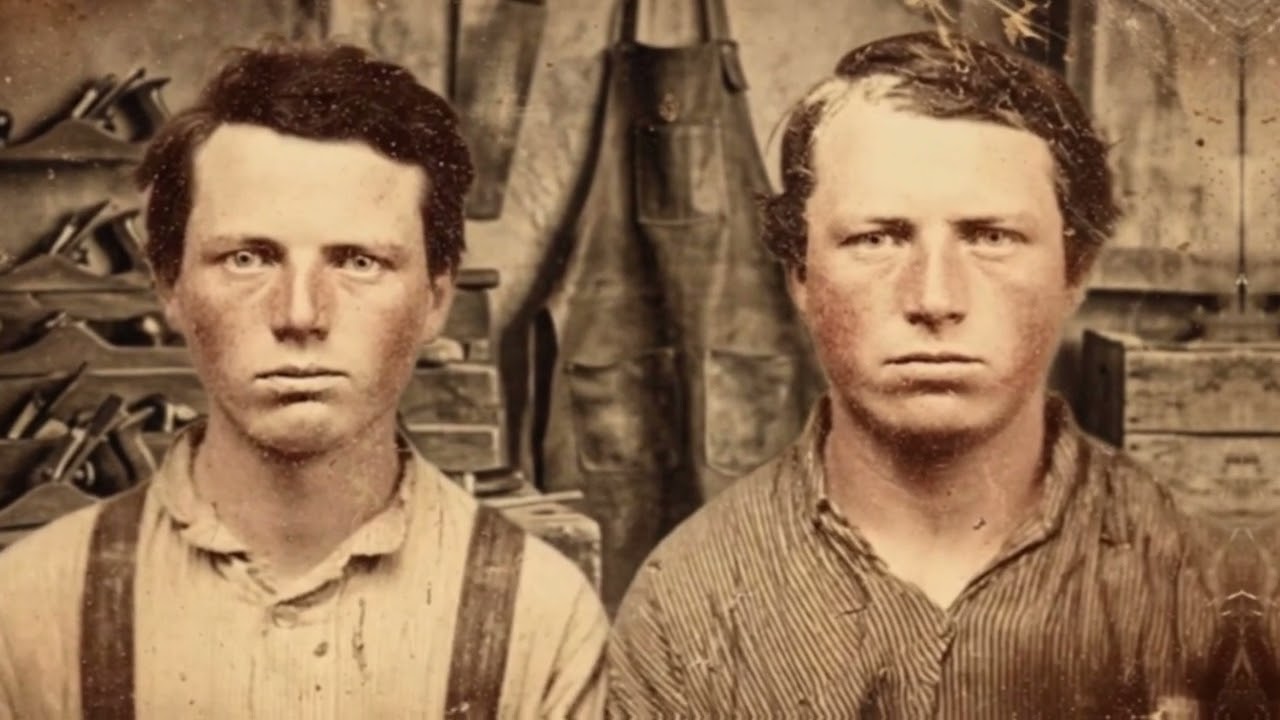
The structure, built from massive chestnut logs, dated to the 1830s or 1840s, but its condition defied its age. Personal belongings were still visible through broken windows. A rusted cook stove sat tilted on the porch. Inside, furniture appeared almost pristine, as if the occupants had left hurriedly and never returned.
The ground around the cabin was covered with bare, packed earth where vegetation abruptly stopped within about ten feet of the structure. In the cabin, Caldwell found an inscription carved above the fireplace. It read: “Here dwelt Elias and Jonah Merik, born in the year of our Lord 1819, departed this place October 17, 1843. May God have mercy on what they became.
”
A Bible on a shelf recorded the family line, but a final entry dated October 16, 1843, read: “They are coming for us. God forgive what we must do. ”
Caldwell also discovered dozens of papers wedged between the cabin’s double walls. They were journal entries written by one of the brothers, Elias Merik.
The earliest entries, dating from the 1830s, described a peaceful life of farming and hunting on an isolated mountain homestead. But in the spring of 1840, the tone began to change. Elias wrote of strange occurrences in the forest: deer standing motionless for hours, bears walking in circles until collapsing, and the spring running red each morning before returning to normal by noon. Both brothers shared identical nightmares of something that walked on two legs but moved with impossible joint movements.
The entries described the brothers finding themselves standing outside the cabin at night with no memory of leaving their beds. They began tying themselves down at night but would wake to find the knots carefully undone. They heard a strange whistling—three notes repeated in a hypnotic pattern—and reported seeing motionless figures watching from the forest edge. The final entries, from October 1843, stated that the brothers had found something in a cave system about three miles from the cabin—something that changed them and gave them “understanding and power and purpose.
” Elias wrote that they had accepted what they were becoming. The last entry, dated October 17, 1843, read: “We go into the deep places now, and we will not return unless called. ”
Caldwell gathered as many pages as he could carry and left the cabin. As he stepped outside, he heard the same three-note whistling coming from deeper in the forest.
On the eighth day of his survey, Caldwell found a cave entrance partially hidden by brush along a ridgeline. The opening led downward into a smooth-walled passage covered with carved symbols—the same style of warning marks he had seen on trees near the cabin, but far more elaborate. He described them as forming a kind of structured language. After descending roughly a quarter of a mile, he entered a large circular chamber.
The walls were covered in spiral arrangements of symbols, and carved into the stone floor was an intricate design of concentric circles radiating from a central point. Around the design, grooves worn into the limestone indicated that people had walked in circles there for years. Scattered around the chamber were objects placed with deliberate care: rusted farming tools, neatly folded clothing including two sets of what Caldwell identified as Sunday-best suits from the 1840s, Bibles, journals, a cracked pocket watch stopped at exactly 3:17, spectacles, a woman’s brooch, a carved wooden pipe, and two dented tin cups. Caldwell sensed that the passages continued deeper, and that something below was trying to push into his mind.
He retreated to the surface and did not return to the cave. He did not even mark its location on his survey maps. He finished his work quickly, barely sleeping until he walked out of the mountains on October 20. When he returned to Greystone Hollow, Caldwell was visibly changed—haggard, with a tremor in his hands.
After two days in his room, he went to the local magistrate, Hosea Fentress, and told him everything. He showed him the journal pages and sketches of the symbols. Fentress listened without interruption, then opened a worn folder from his desk. It contained documents dating back to the winter of 1843, when a search party had gone looking for the Merik brothers after they failed to appear for their autumn trading trip.
The party found the cabin exactly as Caldwell did—perfectly preserved, with the inscription above the fireplace. According to Fentress, the searchers also found evidence of terrible acts they did not describe to Caldwell. They attempted to seal the cabin and carved protective symbols on the surrounding trees. Fentress recounted a series of incidents over the decades.
A trapper named Silas Grounding camped near the cabin in 1859 and disappeared completely. A timber cruiser named Herbert Mace explored the cave system in 1872 and emerged three days later with his mind shattered, speaking only of “things waiting in the deep places. ” Mace spent the rest of his life in an asylum and died in 1879, with his last words reportedly being, “Don’t let them come back. ”
Fentress told Caldwell that the brothers were believed not to have died in 1843 but to have transformed into something else—waiting to be called back.
He claimed that attempts to seal or collapse the cave had failed in ways that suggested something was working against human efforts: explosives failing to detonate, barriers found scattered the next day, workers refusing to continue out of overwhelming dread. Fentress also said that marking the cave on maps had failed. People carrying maps could not find it, the landmarks seeming to shift, while those not looking for it stumbled across the entrance easily. When Fentress asked what Caldwell planned to do with the journal pages, Caldwell said he intended to burn them all.
Fentress requested copies for his own records first, which he made by lamplight. Caldwell then burned the originals, along with his sketches and notes, in the magistrate’s fireplace. Caldwell left Greystone Hollow the next morning and never returned to eastern Kentucky. He restricted his surveying work to settled areas for the rest of his career.
Privately, he began researching the brothers. He learned they were identical twins born in 1819 in western Virginia and raised in isolation by their father, Isaac Merik, a fire-and-brimstone preacher who died in 1834 after being crushed by a falling tree. Traders who dealt with the brothers reported that after their father’s death they became avid buyers of books on philosophy, geology, and mining, and asked specific questions about cave systems and mountain legends. One trader, Gideon Sharp, said he sold the Merik brothers a strange eighteenth-century volume in 1839 that dealt with “natural philosophy,” a mix of early science and mysticism.
Sharp recalled their excitement and their willingness to pay double its value. A woman named Temperance Willoughby, who ran a dry goods store, described her last encounter with one of the brothers in the summer of 1843. She said he had looked exhausted but told her he was “becoming something new. ”
In the spring of 1888, Caldwell received a letter from Fentress reporting another incident.
A group of hunters near the old Merik cabin had heard the same three-note whistling. One of them, 25-year-old Curtis Hamrich, wandered toward the sound and was found the next morning standing motionless at the edge of the clearing, unresponsive. He never fully recovered and began drawing the same symbols from the cave, page after page. Fentress confiscated the drawings and added them to his collection.
Fentress asked Caldwell for advice on how to end the cycle of incidents. Caldwell replied that some things could not be stopped or contained, only avoided. Vernon Caldwell died in 1921 at the age of 77. His will left a sealed letter with a Lexington law firm, to be made available to researchers upon request but never published.
Those who have read it say it contained a complete account of his experience, including details he had never shared with anyone. The letter supposedly ends with a plea to seal the cave permanently, burn the cabin, and erase every trace of the Merik brothers. As of the last available report, dating from the 1960s, the cave was still there and the cabin still standing.