Elsa Ehrich was born on March 8, 1914, in a part of the German Empire. Her parents were a skipper named Albert and his wife Anna. She was baptized as a Protestant on June 1, 1914. After finishing school, she worked in a slaughterhouse.
The Nazi Party was founded in 1919 and led by Adolf Hitler. It gave political expression to theories of racism in Germany. In part, the party gained popularity by spreading anti-Jewish propaganda. Millions bought Hitler's book Mein Kampf, which called for the removal of Jews from Germany.
With the Nazi rise to power in 1933, the party ordered anti-Jewish economic boycotts, staged book burnings, and enacted discriminatory anti-Jewish legislation. In 1935, the Nuremberg Laws racially defined Jews by blood and ordered the total separation of so-called Aryans and non-Aryans, legalizing a racist hierarchy.
On the night of November 9, 1938, the Nazis destroyed synagogues and the shop windows of Jewish-owned stores throughout Germany and Austria. This event became known as Kristallnacht, or the Night of Broken Glass. It marked a transition to an era of destruction in which genocide would become the singular focus of Nazi anti-Semitism.
The Nazis murdered Jewish people in mass killings by shooting, by administering poison gas, through exhaustion and overwork, and in specifically constructed killing centers that were part of the Nazi camp system. That system began as a means of repression directed against political opponents of the Nazi state in the early years of the Third Reich.
The Nazis imprisoned primarily Communists and socialists. Around 1935, the regime also began to imprison those it designated as racially or biologically inferior, especially the Jews. During World War II, the organization and scale of the Nazi camp system expanded rapidly, and the purpose of the camps evolved beyond imprisonment toward forced labor and outright murder.
Throughout German-occupied Europe, the Germans arrested those who resisted their domination and those they judged to be racially inferior or politically unacceptable. People arrested for resisting German rule were mostly sent to forced labor or concentration camps. World War II began on September 1, 1939, bringing unprecedented growth in both the number of camps and the number of prisoners.
Within three years, the number of prisoners quadrupled from about 25,000 before the war to about 100,000 in March 1942. The camp population came to include prisoners from almost every European nation. Prisoners in all the concentration camps were literally worked to death. According to SS reports, there were more than 700,000 prisoners registered in the concentration camps in January 1945.
The Germans deported Jews from all over occupied Europe to extermination camps in Poland, where they were systematically killed, and also to concentration camps where they were drafted for forced labor, which was extermination through work. Several hundred thousand Romani people and Soviet prisoners of war were also systematically murdered.
Elsa Ehrich became part of the Nazi camp system. On August 15, 1940, she volunteered for service in the concentration camp Ravensbrück as an SS guard. Ravensbrück opened in May 1939 and was the only major women's camp established by the Nazis. In total, some 132,000 women from all over Europe passed through the camp, including Poles, Russians, Jews, Roma, and others. Of that number, over 92,000 women perished.
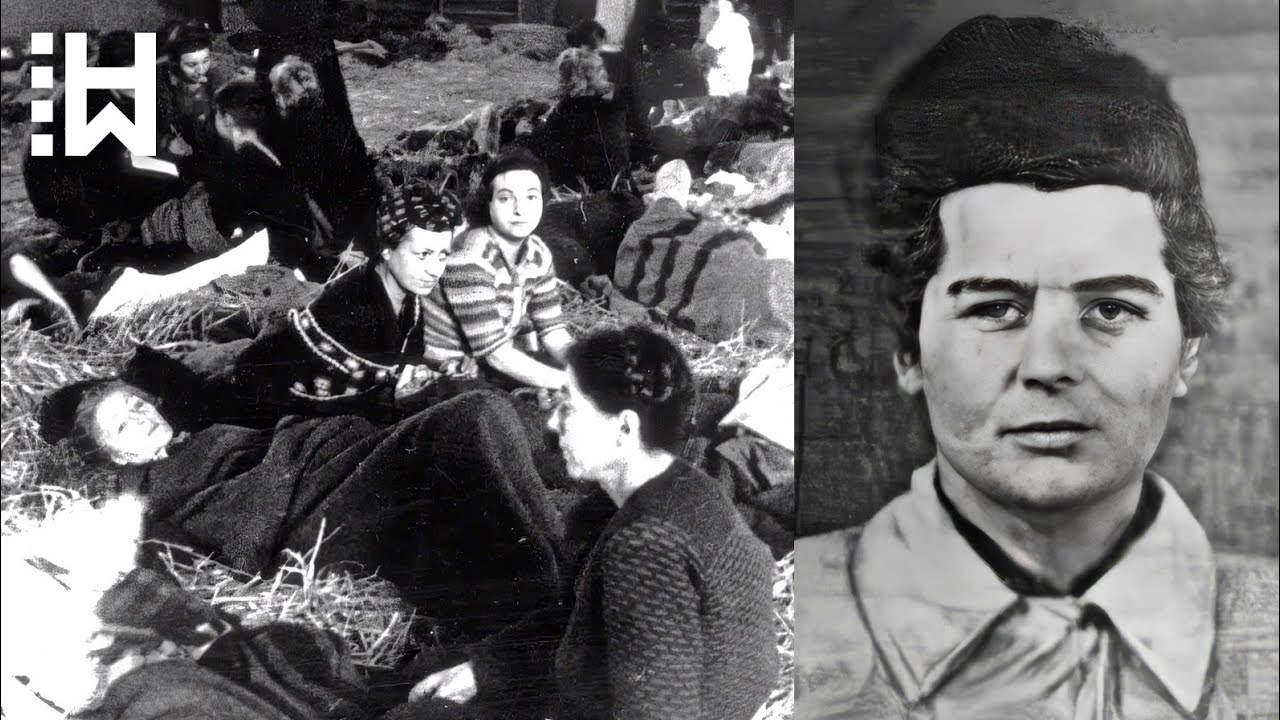
Ravensbrück was staffed both by SS men who served as guards and administrators and by 150 women who served as supervisors. These female supervisors were either SS volunteers or women who had taken the job for the good pay and working conditions. Ravensbrück also housed a training camp for female SS guards, who were trained here how to handle the prisoners they were going to supervise.
These prisoners would have to work until they died. The task of their supervisors, such as Elsa Ehrich, was to get the maximum amount of work out of them while they were still alive. Ravensbrück also became a training center, or school of violence, for about 3,500 female guards who went on to serve either there or at other concentration camps.
At Ravensbrück, Ehrich initially worked as a supervisor of Block 13. Through the eager performance of her responsibilities, she rose rapidly in the overseer hierarchy. From 1941, she worked as an SS reporter, a Rapport Leader. The primary duty of a Rapport Leader was to conduct daily and evening camp roll call, usually a long and grueling process involving prisoners sometimes standing for hours on end in all types of weather conditions.
The Rapport Leader also oversaw camp discipline of prisoners as well as training for junior SS personnel. Most Rapport Leaders in the SS were known for their brutality, and Elsa Ehrich was no exception. In October 1942, she was transferred to Majdanek near Lublin.
During the entire period of its existence, the Majdanek camp was under construction. Between April 29, 1942, and November 3, 1943, Jewish prisoners were the overwhelming majority of prisoners registered at Majdanek. Majdanek also contained storage facilities for clothing and personal items stolen from the Jews before their deaths in Belzec, Sobibor, and Treblinka, two of them killing centers.
In such storage facilities, Majdanek female prisoners sorted and repaired clothes. In the winter of 1941 to 1942, camp authorities began to use Zyklon B gas to murder prisoners too weak to work in a makeshift gas chamber. Mass murder operations using poison gas began at Majdanek in October 1942 and continued until the end of 1943.
There appear to have been three gas chambers at Majdanek. At least two were shower rooms reconfigured for use of Zyklon B gas. At least one of these two was used to kill human beings. The SS killed tens of thousands of Jews at Majdanek. The majority of them arrived in the camp as forced laborers and either died as a result of the brutally inhumane living conditions or were killed in the gas chambers after the Germans determined that they could no longer work.
Ehrich served first as a guard but after some time was promoted to SS Oberaufseherin, or chief senior overseer. She was not only involved in selections of the women and children to be sent to the gas chambers, but she was almost always present when the gas executions were taking place. Majdanek's gas chambers were also used to kill prisoners from the other camps in Lublin who were no longer able to work.
Some Jewish victims were killed in the gas chambers upon arrival. Many, however, were killed in shooting operations, and many others died of disease, starvation, exposure, and overwork. Though it served primarily as a vast forced labor camp for Polish Jews, Majdanek also served as a detention center for real and suspected members of the Polish underground resistance in German-occupied Poland and for Poles suspected of violating the harsh provisions issued by the German occupational authorities that governed labor discipline.
Next to the Jews, Poles represented the largest minority in the camp. Other prisoners at Majdanek included Germans, Austrians, Czechs, Ukrainians, Soviet prisoners of war and Soviet civilians, and a handful of others. At Majdanek, Elsa Ehrich had other SS female guards under her command.

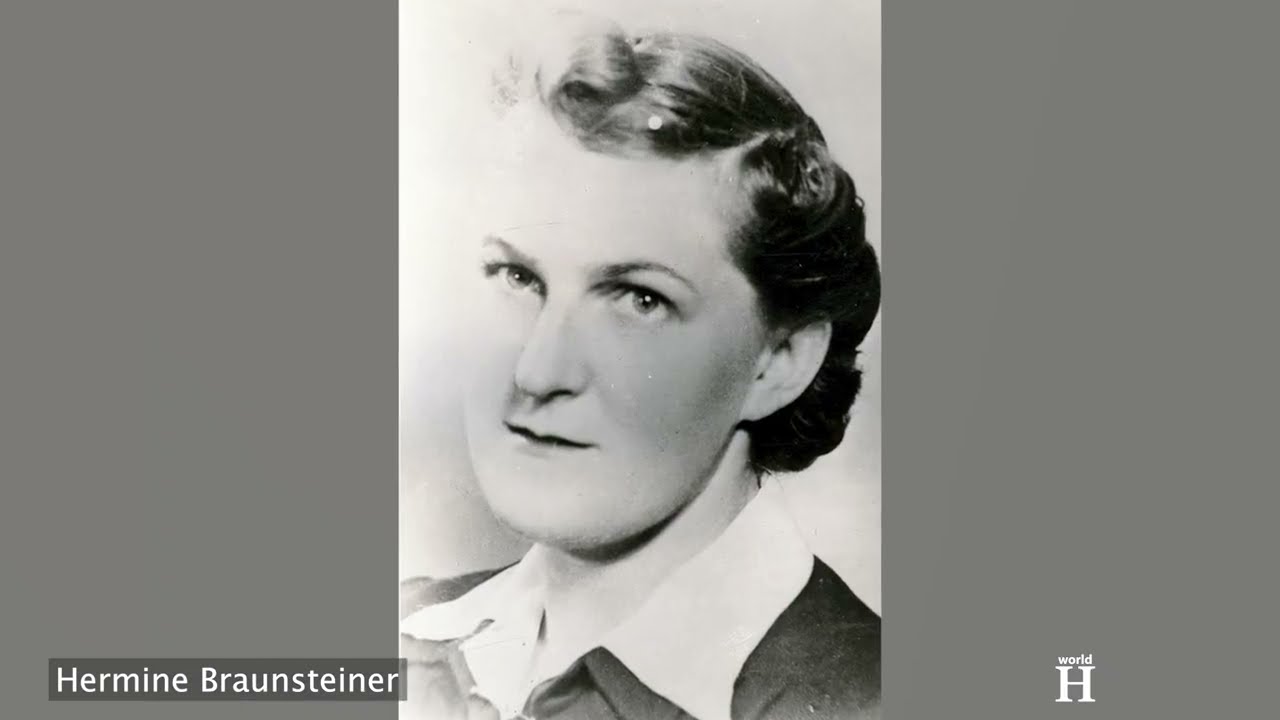
One such guard was Hermine Braunsteiner, Ehrich's assistant, who became infamous for her wild rages and tantrums. The women at the camp described Braunsteiner as inhuman, cruel, brutal, and sadistic, and as causing frantic fear. Not only did she beat them, but she also killed them by stomping on them with her steel-studded jackboots, which earned her the nickname "The Stomping Mare."
Another Braunsteiner specialty at Majdanek was whipping. She would whip several women, including those who were pregnant, to death. She was particularly notable for her cruel treatment of children, whom she saw as useless eaters. She would whip the children, and on a few occasions she was seen grabbing the children by their hair and throwing them on trucks heading to the gas chambers. She would pull the children's hair so hard that whole tufts would remain in her hands.
She punished the children with beatings and lashes even if they rushed toward the food bucket or if they did not sew on their inmate number correctly. With her revolver and whip always at the ready, Ehrich made sure that her deputy would not overshadow her in terms of cruelty.
Ehrich, once a butcher shop assistant, was depicted as primitive by her former female inmates. However, at Majdanek she had the power to decide matters of life and death in the camp. Ehrich would become infamous for slapping and kicking the prisoners for no reason and enjoyed brutally harassing as well as beating up especially weak, emaciated, and old women, without sparing the children.
On one occasion, when Dr. Pashanovska asked Elsa Ehrich for an allowance of milk for her patients' babies, Ehrich slapped her face, yelling, "This is not a sanatorium but a death camp." In our position, she was responsible for the death of tens of thousands of women and children who died in gas chambers and by shootings.
In 1943, Ehrich made an attempt to launch a Nazi brothel in the camp, but the project was abandoned before fruition after one of her slave sex workers was diagnosed with typhus. Ehrich herself became ill due to typhoid in February 1943.
After the suppression of the Warsaw Ghetto Uprising, which started on April 19, 1943, a large part of the surviving Jews were transported to the concentration camp at Majdanek. SS female supervisors, including Ehrich, Braunsteiner, and other SS personnel, prevented the children from escaping, beat them, and hit them with a whip, and then captured them again.
During the spring of 1944, the SS evacuated most of the prisoners to the concentration camps in the West. In late July 1944, as Soviet forces approached Lublin, the remaining camp staff hastily abandoned Majdanek. However, in their urgency to flee the camp, they neglected to destroy most of the prisoners' barracks and the gas chambers.
When the Soviet Army liberated the camp on July 24, 1944, it was virtually intact, and only a few hundred Jewish prisoners remained alive. Soviet officials invited journalists to inspect the camp and see evidence of the horrors that had occurred there. Between 80,000 and 120,000 people perished in Majdanek between October 1941 and July 1944, when the camp was operational.
When the Soviet Army liberated Majdanek, Ehrich was the Oberaufseherin, chief senior overseer, in Płaszów concentration camp, where she had been sent on April 5, 1944. The Płaszów camp was established in 1942 under the authority of the SS and police leaders in Kraków. It was initially a forced labor camp for Jews. The original site of the camp included two Jewish cemeteries.
From time to time, the SS enlarged the camp, and it reached its maximum size in 1944, the same year that it became a concentration camp. Until that time, most of the camp guards were Ukrainian police auxiliaries chosen from among the Soviet soldiers in German prisoner-of-war camps and trained at the Trawniki training camp in Lublin.
Płaszów camp was surrounded by an electrified barbed wire fence and was divided into several sections. The camp had barracks for German personnel, factories, warehouses, a men's camp and women's camp, and a labor education camp for Polish workers who violated labor discipline. Poles and Jews were segregated within the camp, and the largest number of people confined in Płaszów at any one time was over 20,000. Thousands were killed there, mostly by shooting.
The German industrialist Oskar Schindler established an enamel factory in Kraków adjacent to Płaszów. He attempted to protect his Jewish workers, some 900 people, from abuse in Płaszów and from deportation to killing centers. When he moved his factory and his Jewish workforce to Brněnec, located in the Protectorate of Bohemia and Moravia, in 1944, he prevented the deportation of more than 1,000 Jews, thus saving their lives.
As the Soviet Army approached in the summer of 1944, the Germans prepared to dismantle the Płaszów camp. The SS transferred prisoners to the other concentration camps in Germany and Austria. Others were deported to the Auschwitz-Birkenau killing center and murdered there. The Germans also attempted to remove all traces of the crimes that had been committed in the camp. The mass graves of Płaszów were reopened and the bodies exhumed and burned. In January 1945, the last prisoners from Płaszów were sent to Auschwitz for evacuation further west.
In June 1944, Elsa Ehrich was deployed in the Neuengamme concentration camp. At the end of 1944, approximately 10,000 to 12,000 prisoners remained incarcerated in Neuengamme concentration camp, with another 37,000 to 39,000 in the subcamps. This figure included almost 10,000 women.
The demand for prisoner labor from both within and outside induced the camp authorities at Neuengamme to establish approximately 80 subcamps at various locations in Northern and Central Germany between 1942 and 1945, with more than 20 camps in Hamburg alone. The Neuengamme concentration camp was run under the SS practice of extermination through labor.
Prisoners worked for 10 to 12 hours per day and were killed both due to the inhumane conditions in the camp as well as active violence from the guards. Thousands of prisoners died from difficult slave labor combined with insufficient nutrition, extremely unhygienic conditions contributing to widespread disease, and arbitrary brutal punishments from the guards. Especially toward the end of the war, the Neuengamme prisoners were also exposed to constant air raids.
Almost every night there were two or three air raids, and the prisoners had to descend into the cellars, which were full of rats. The prisoners had to get up at five in the morning, stand in formation for roll call, and then walk to their assigned places to perform demanding work in various locations outside the camp. This could be collecting bricks from the bombed houses and stacking them to be reused, digging trenches, or shoveling snow from the streets. Sometimes the local German people, who themselves were suffering from bombings, left the starving prisoners some food to eat.
Toward the end of the war, the death rate among the prisoners in the Neuengamme system, which had been steadily climbing, reached catastrophic proportions. In the winter of 1944 to 1945, 1,700 prisoners died each month. In February 1945 alone, nearly 2,500 prisoners died.
The death register at Neuengamme indicates that about 40,000 prisoners died in the camp by April 10, 1945. Perhaps as many as 15,000 more died in the camp in the following week, and during the course of the evacuation more than 50,000 prisoners, almost half of all those imprisoned in the camp during its existence, died in Neuengamme concentration camp.
In May 1945, shortly after the end of the war, Elsa Ehrich was arrested by the British occupational authorities in Hamburg and transferred to U.S. custody in the camp for war criminals in Dachau before being transferred to Poland. Ehrich hid herself in how with Maria Mandl, a former sadistic Nazi comrade from Ravensbrück concentration camp.
In 1948, justice finally caught up with Elsa Ehrich when she stood before the District Court of Lublin at the second Majdanek trial. She was accused of committing war crimes and crimes against humanity. She was found guilty of all charges, and on June 10, 1948, was sentenced to death by hanging.
After the announcement of the judgment, she asked Polish president Bolesław Bierut for clemency on the grounds that she had a small son and wanted to atone for her guilt. However, President Bierut rejected the request. She was 34 years old when she was executed in the Lublin prison on October 26, 1948. There were no tears shed for Elsa Ehrich.