Elvis Presley was pronounced dead at Baptist Memorial Hospital in Memphis on August 16, 1977, at 3:30 in the afternoon. He was 42 years old. The official cause of death was listed as cardiac arrhythmia, a heart attack. But that explanation, delivered by Shelby County Coroner Dr.
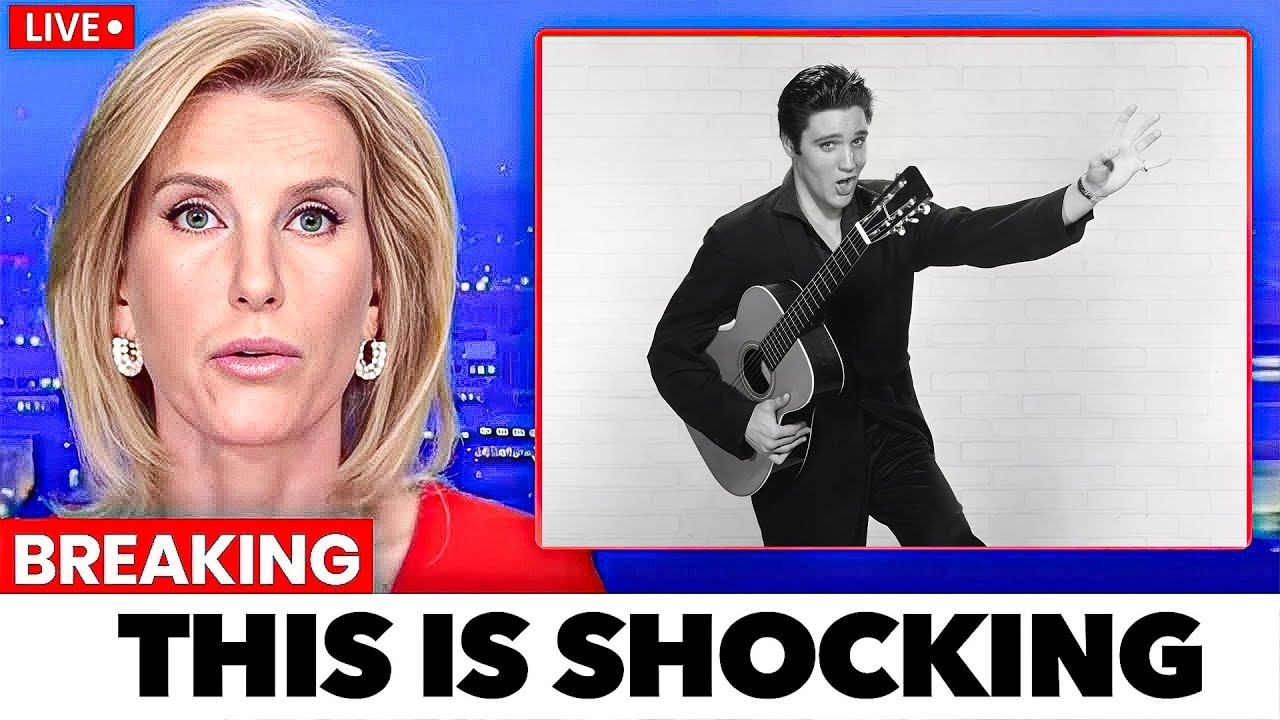
Jerry Francisco within hours of the king’s death, has been contested by medical experts, leaked documents, and decades of insider testimony. In the years since, the full picture of Elvis’s final years has emerged through autopsy findings, toxicology reports, and accounts from those closest to him. They reveal a man whose body had been deteriorating for years, long before he collapsed on the bathroom floor of Graceland. On the morning of August 16, 1977, Elvis was found unresponsive by his fiancée, Ginger Alden.
She later said she had drifted in and out of sleep through the night, expecting him to return from the bathroom where he had gone to read. When she finally checked on him, she found him face down on the floor, a book still in his hand. The household erupted in chaos. Staff attempted CPR and paramedics rushed him to the hospital, but efforts to revive him failed.
According to those present, Elvis had spent the day playing racquetball with friends, singing a few lines at the piano, and talking about marriage and getting healthy. But by evening, he was complaining of sleeplessness and retreated to the bathroom. Those were the last moments anyone saw him alive. When pathologists examined his body, they found damage that went far beyond a sudden heart problem.
His heart was nearly twice the normal size, showing signs of long-term strain. His liver was scarred and damaged. His colon was impacted and stretched to nearly twice its size, a condition linked to years of prescription drug use and poor diet. Toxicology results later revealed high levels of codeine, Demerol, Quaaludes, Placidyl, and Valium in his system.
Experts who reviewed the findings argued that this combination of drugs depressed his central nervous system and triggered respiratory failure, which in turn caused his heart to stop. Dr. Francisco continued to insist that drugs played no role in Elvis’s death. Other medical professionals disagreed publicly, and some accused officials of protecting Elvis’s legacy rather than telling the truth.
The Presley family, led by his father Vernon, requested that portions of the autopsy file be sealed from public view for 50 years, until 2027. That decision fueled speculation for decades about what the records contained. For years, the official narrative held firm. But the comparisons to the 2027 seal date, combined with leaked details and the testimonies of former staff and pathologists, have kept the question alive: was Elvis’s death a simple heart attack, or the result of years of drug dependency and neglect?
Among those who drew scrutiny was Elvis’s longtime physician, Dr. George Nichopoulos, known as Dr. Nick. Records showed that in one nine-month span alone, Elvis was prescribed more than 10,000 doses of amphetamines, barbiturates, and narcotics.
Dr. Nick insisted he was trying to manage Elvis’s many health issues, but critics described the prescribing as enabling a lethal addiction. The story of Elvis’s final years cannot be separated from the influence of Priscilla Presley, the woman he met when she was just 14 years old in West Germany in 1959. Priscilla was born in Brooklyn in 1945.
Her biological father, a Navy pilot, died in a plane crash when she was an infant. Her mother remarried a military officer, and the family moved frequently before settling at a base in Wiesbaden, West Germany. It was there that Priscilla, then attending school and living under her strict stepfather’s roof, was invited to a party where she met Elvis Presley. He was 24 and already the most famous entertainer in the world.
She was a teenager. Elvis charmed her parents and convinced them of his intentions. Their relationship developed in secret, with late-night meetings and promises that blurred the lines between romance and control. In 1963, Priscilla moved into Graceland.
To the public, she had entered a fairy tale. Behind the gates, her life was managed in detail. Elvis dictated what she wore, how she did her hair, and which makeup she used. His entourage watched her movements and reported back to him.
She later described her life in those years as one of isolation and rigid expectations. The couple married in Las Vegas in 1967. Their daughter, Lisa Marie, was born in 1968. Publicly, the marriage appeared strong.
Privately, it was marked by Elvis’s infidelities and absences. Priscilla eventually began a relationship with her karate instructor, Mike Stone. When Elvis discovered the affair, he reportedly spoke of having Stone killed, though no such order was carried out. Their divorce was finalized in 1973.
They walked out of the courthouse hand in hand, projecting unity, but the reality was far more complicated. After Elvis’s death in 1977, Graceland was nearly bankrupt. Priscilla took control of Elvis Presley Enterprises and made the decision to open Graceland to the public in 1982. The move was initially criticized, but it turned the estate into one of the most profitable tourist attractions in the United States.
She also built her own career in Hollywood, appearing in films and television shows. Her reinvention transformed her public image from Elvis’s teenage bride into an independent businesswoman and guardian of his legacy. Questions have followed her for decades. Some former insiders accused her of reshaping Elvis’s story to her advantage.
Others defended her as the person who saved the Presley legacy from financial ruin. For years, it was believed that the basement of Graceland held only storage. Rumors had circulated, but nothing was confirmed. When the space was finally opened and its contents examined, the discoveries added a new layer to Elvis’s story.
Among the items found were reels of audio tape labeled with Elvis’s handwriting. Some were recordings of him singing songs the public never heard. Others were spoken-word recordings in which he confided his fears, his loneliness, and the weight of being Elvis Presley. Notebooks and letters were also found.
Some were addressed to Priscilla and Lisa Marie and were never sent. They revealed a man struggling with regret, fame, and the feeling of being trapped by his own success. According to accounts of the discovery, the basement also contained newspaper clippings about musicians who died young, police reports, and personal writings expressing distrust of those around him. Disguises, maps, and handwritten notes suggested Elvis may have fantasized about leaving Graceland without being recognized.
The exact contents of the sealed autopsy files remain unknown to the public. The 2027 seal date has kept that question open for half a century. What is now widely acknowledged by medical professionals who reviewed the evidence is that Elvis Presley’s death was not a sudden event. His body had been failing under the strain of years of prescription drug use, poor health, and relentless pressure to perform.
The king of rock and roll left behind a legacy that remains enormous. But the fuller picture of his final years has forced a reassessment of the man behind the jumpsuits. For Priscilla Presley, the story has always carried contradictions. She was both shaped by Elvis and a shaper of his legend.
She surrendered her youth to him, and she also built the empire that preserved his name. In interviews over the years, she has acknowledged the complexity of their relationship. She has spoken about the control he exerted over her appearance and daily life, and about the difficulty of rebuilding her identity after years in his shadow. The truth of Elvis’s final days, and of the marriage that defined so much of his public life, has emerged gradually.
With the 2027 seal date approaching, many fans and historians are waiting to see whether the sealed records will produce final answers. Until then, the picture that has emerged is clear: Elvis Presley was a man who carried enormous burdens, and the damage to his body and spirit was accumulating long before he collapsed in Graceland. Priscilla Presley was a young woman who entered his world as a teenager and spent decades navigating the consequences of that meeting. Neither story is the simple fairy tale once presented to the public.
Both are marked by love, control, loss, and survival. The full record of what happened in that bathroom and in the years leading up to it remains the subject of intense interest, and the decisions made to seal the records continue to raise questions about what the public has not been told.