The German officer’s pistol that Major Dick Winters accepted at the end of World War II was never fired — not before it was handed to him in surrender, and not in the decades he kept it afterward, a detail that transformed a routine act of capitulation into one of the most enduring symbols of how the war in Europe came to a close.
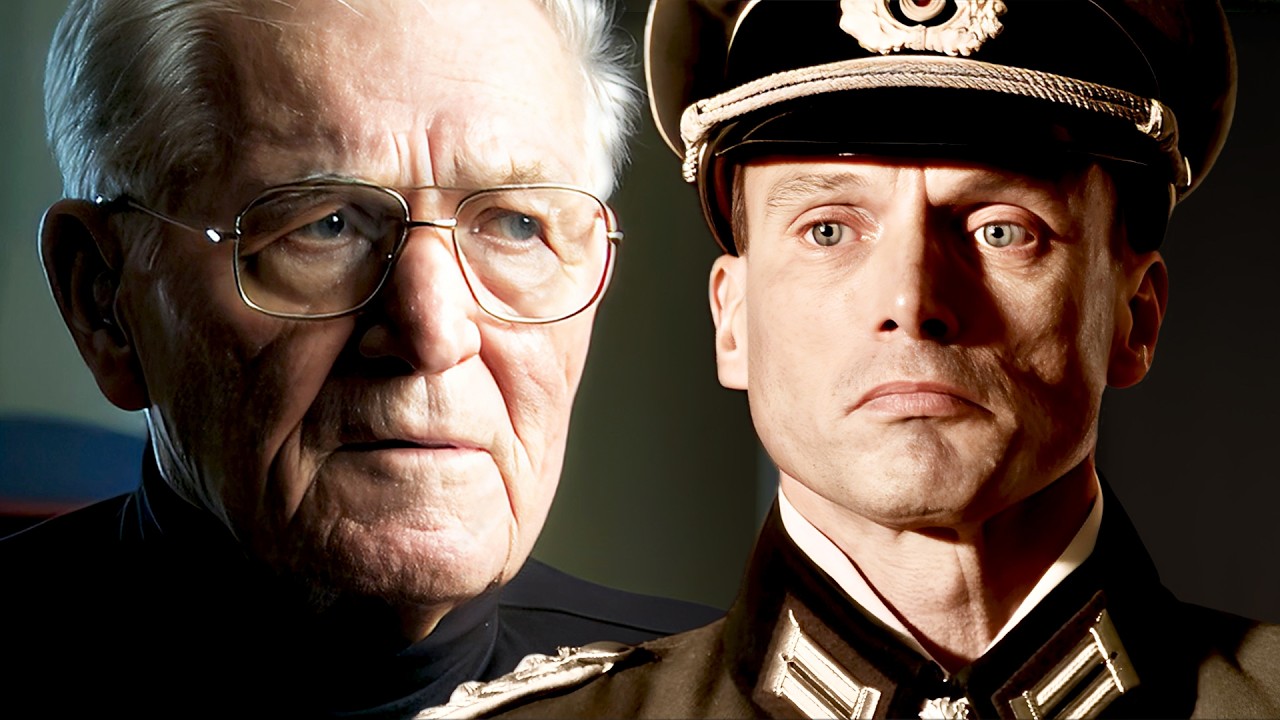
The weapon, a Walther PP rather than the Luger P08 depicted in the acclaimed HBO miniseries “Band of Brothers,” remains on public display at the Gettysburg Museum of History, preserved as one of the few wartime mementos Winters kept for the rest of his life.
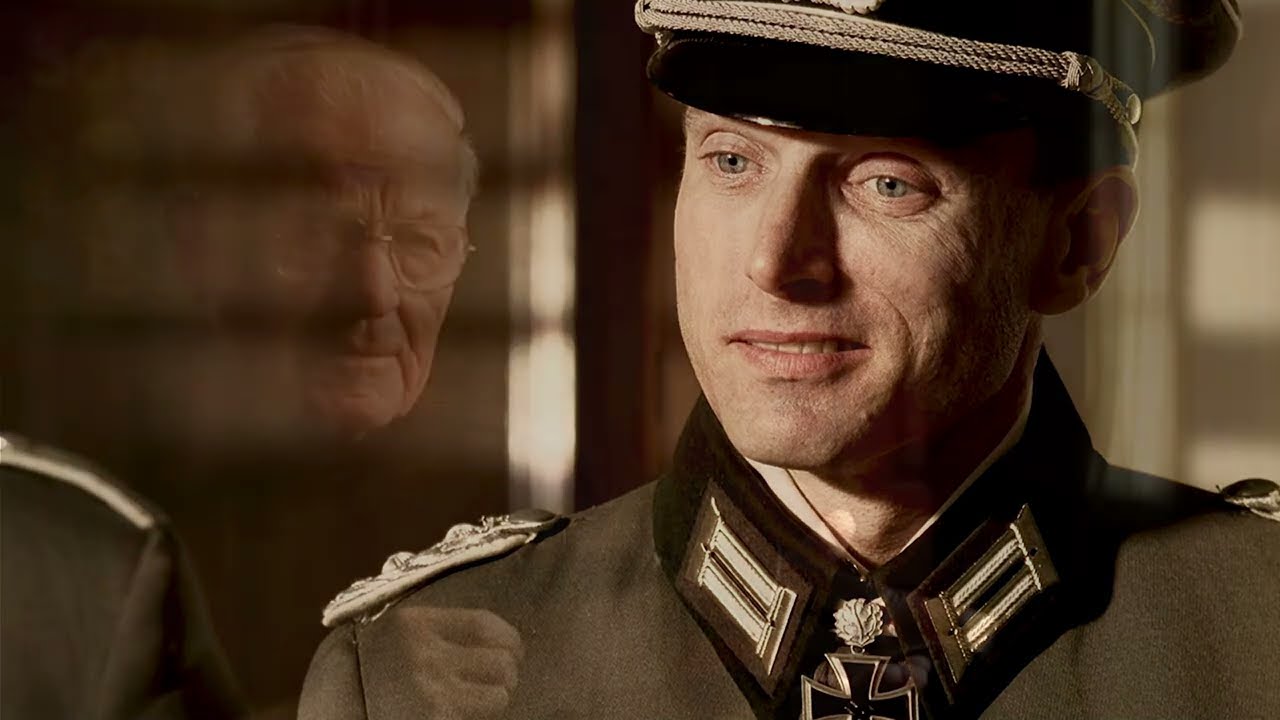
The scene as dramatized in the tenth episode of the series, titled “Points,” shows Winters seated at a desk in Austria as a German colonel offers his sidearm grip-first and says, “Please accept this as my formal surrender, Major.” Winters stands, looks the officer in the eye, and replies, “You may keep your sidearm, Colonel.” The colonel salutes and departs.
That exchange never happened. According to Winters’ own account, the real encounter involved a German major from a panzer unit, not a colonel, and Winters accepted the pistol rather than declining it.
The two men had met the day before the formal surrender, when Winters spent time talking with the German officer about tactics and soldiering. During that conversation they discovered they had fought against each other at Bastogne. Winters also learned the major had been wounded six times during the war but was never completely removed from the fight.
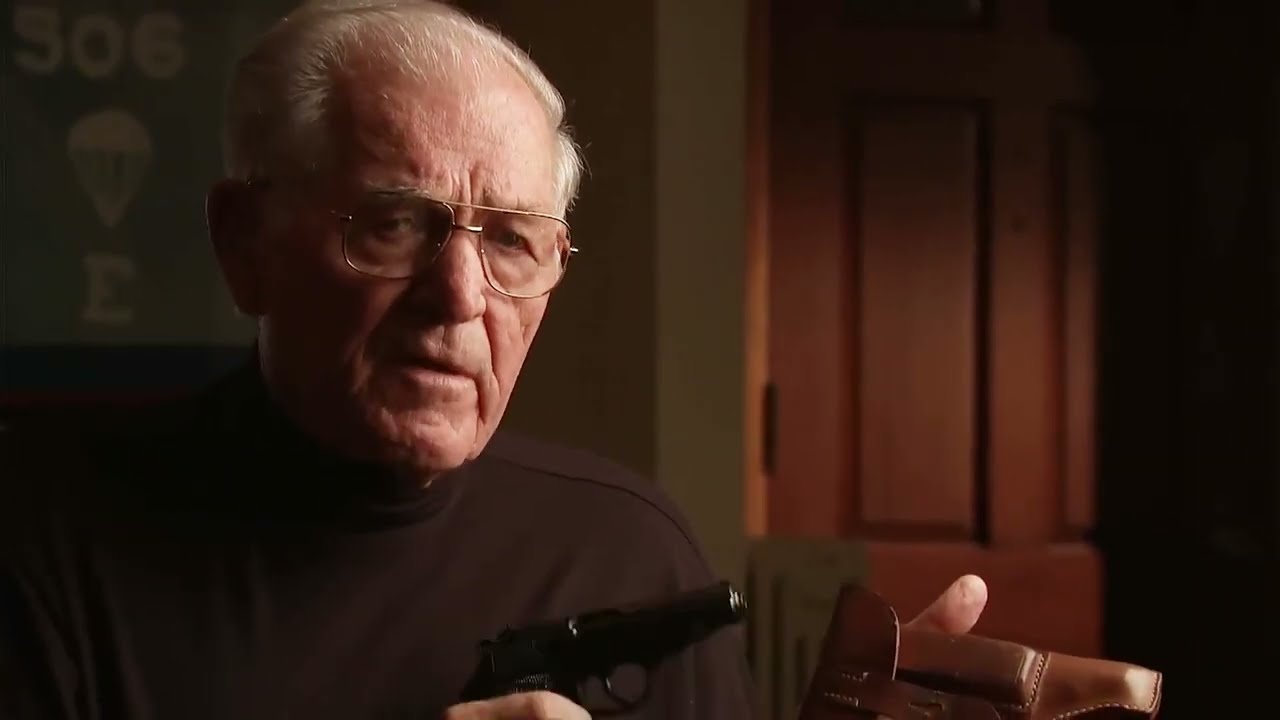
“I have a great deal of respect for them as soldiers. They are very good soldiers, but they’re still enemy. So, they must be controlled as prisoners,” Winters explained in a recorded interview.
“When it reached the level of surrender for company and smaller units, I was assigned this major. And when he walked in, he presented me this pistol and offered his personal surrender, which naturally I accepted gratefully.”
Winters framed the moment as the closing bookend on the war for both commands. “So that would be the end of the war for his men and this is basically the end of the war for my men,” he said.

It was only later, after the major had left and Winters had a chance to examine the weapon closely, that he realized its significance. The pistol had never been fired. There was no blood on it.
“That’s the way all wars should end with an agreement with no blood on it,” Winters said. “And I assure you, this pistol has never never been fired since I’ve had it, and it will not be fired.”
In his memoir, “Beyond Band of Brothers,” Winters wrote that the German officer presented the pistol as both a token of friendship and a formal surrender to his captor. He did so on his own volition, Winters wrote, rather than leaving his pistol on a desk in some office. In real life, refusing the weapon would have been an insult to the German officer.
The miniseries altered the encounter in part to heighten the 𝒹𝓇𝒶𝓂𝒶 and in part because the production did not include the backstory of Winters getting to know the German officer the day before. The substitution of a Luger for the Walther PP was likewise a dramatic choice; the Luger was the more iconic German sidearm in the popular imagination.
Historians and veterans alike have noted that the fictionalized version, in which Winters grants the German colonel the dignity of keeping his weapon, reflects a sentiment many American officers felt at the war’s end even if the specific gesture did not occur. The real Winters expressed respect for German soldiers as professionals while emphasizing that they remained enemies who had to be controlled as prisoners.
The pistol’s provenance has made it one of the most requested artifacts at the Gettysburg Museum of History, where it is displayed alongside other items from Winters’ service. Visitors routinely ask about the weapon after watching the miniseries, and museum staff use it to explain the gap between dramatized history and the documentary record.
Winters rose from first lieutenant to major during the war, serving as executive officer and later commander of Easy Company, 2nd Battalion, 506th Parachute Infantry Regiment, 101st Airborne Division. He led the company through the Normandy invasion, Operation Market Garden, the defense of Bastogne, and the push into Germany and Austria.
He was awarded the Distinguished Service Cross, the Bronze Star, and the Purple Heart, among other decorations. After the war he returned to Pennsylvania, worked in the feed and livestock business, and lived quietly until his death in 2011 at age 92.
The surrender scene in “Points” has become one of the most discussed moments of the ten-part series, which first aired in 2001 and was produced by Steven Spielberg and Tom Hanks. The episode depicts the end of the war in Europe and the occupation of Austria, including the discovery of concentration camps and the disarmament of German forces.
Winters’ decision to keep the unfired pistol rather than turn it over as captured equipment was unusual. Most weapons taken from surrendering German troops were collected and disposed of. The Walther PP remained in his possession for nearly seven decades, a physical reminder of what he described as the ideal conclusion to a war: an agreement reached without further bloodshed.
The pistol’s unfired status has been independently verified by museum curators who examined the weapon after Winters’ death. Its bore shows no signs of having discharged a round, and its internal components remain in the condition in which it left the Walther factory.
For Winters, the weapon’s meaning was inseparable from the manner in which it was given. The German major could have left the pistol behind, as many officers did, but chose instead to present it personally to the man who had defeated him. That act, Winters wrote, made it a token of friendship as much as a surrender.
The museum display includes documentation of the pistol’s history and Winters’ own written account of the surrender. Curators say the weapon draws a steady stream of visitors, many of them veterans of later conflicts who come to see an object that represents the end of a war rather than its conduct.
Winters’ memoir and recorded interviews have become primary sources for historians studying Easy Company, and his account of the surrender has been cited in several works on the 101st Airborne. The discrepancy between his account and the miniseries has also become a standard example of how television dramatizations compress and reshape historical events.
In the years after the war, Winters rarely spoke publicly about his service until the publication of Stephen Ambrose’s book “Band of Brothers” in 1992 and the subsequent miniseries brought him and his comrades to national attention. He used that attention to emphasize the contributions of the enlisted men he commanded rather than his own role.
The pistol he accepted in Austria in 1945 now sits in a glass case in Gettysburg, a short distance from the battlefield where another American army, nearly a century earlier, had fought to preserve the Union. Museum officials say it will remain on display indefinitely as part of their permanent collection of World War II artifacts.
For those who followed Winters’ story through the book and the series, the pistol serves as a final chapter. It is a weapon that never drew blood, given freely by an enemy who had been wounded six times, accepted gratefully by a man who had fought him at Bastogne, and kept for a lifetime as a reminder that wars can end with an agreement rather than a shot.
Winters’ own words, recorded years after the fact, remain the definitive account of what happened in that room in Austria. “That’s the way all wars should end with an agreement with no blood on it,” he said. The pistol, unfired and unbloodied, stands as the evidence.