Caroline Kennedy was five years old when her father was assassinated in Dallas. She was learning in a classroom at the White House while her mother, Jackie, made her way back to Washington in a blood-stained pink suit. By the time the nanny Maud Shaw sat down beside her that evening, the most powerful man in the world was already gone. The little girl asked whether her father would come down from heaven to visit.
The answer was no, and the ordinary childhood she had known ended in that moment. That night became the first of many losses that would define her life. Over the next six decades, she buried her father, her baby brother Patrick, who died two days after his premature birth in 1963, and then her uncle Robert F. Kennedy, shot in Los Angeles in 1968 when Caroline was ten.
Her mother died of cancer in 1994 at 64. Her brother John F. Kennedy Jr. died in a plane crash in 1999 at 38.
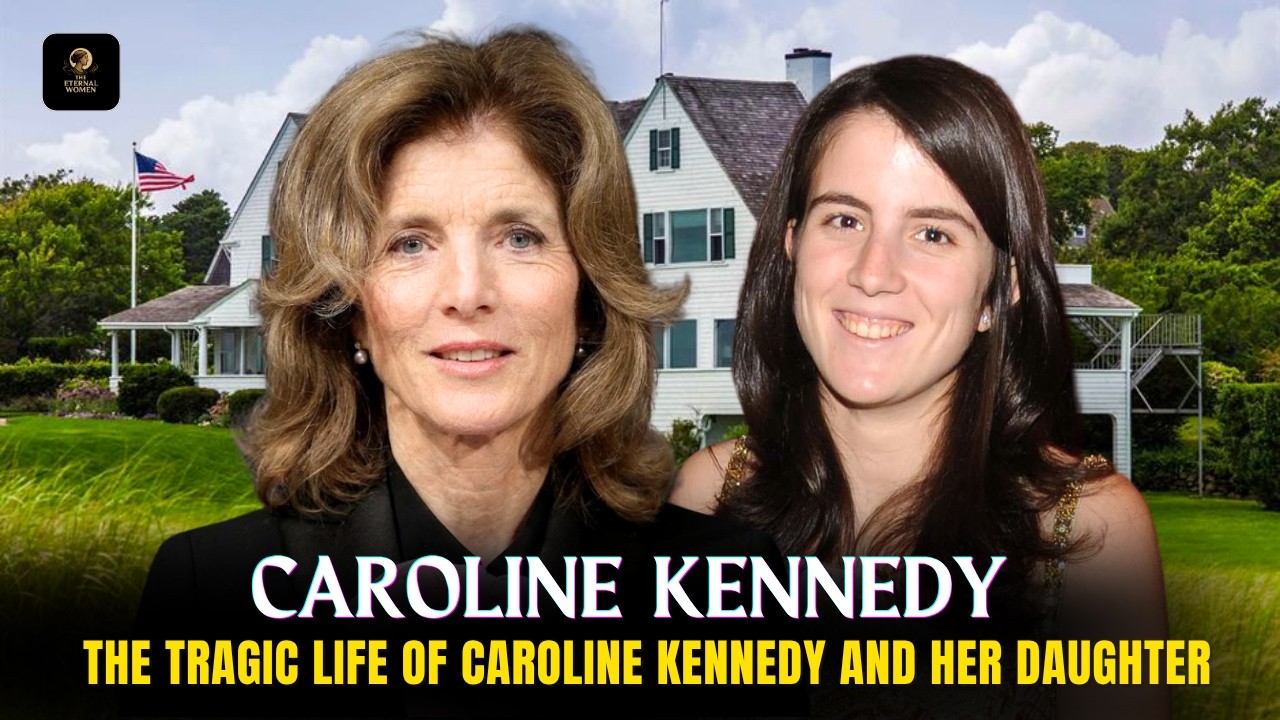
And in 2025, her own daughter Tatiana died of leukemia at 35. Caroline, now 68, is the last surviving member of her immediate family. Born November 27, 1957, in New York City, Caroline arrived after her mother had endured a miscarriage and the stillbirth of a daughter named Arabella. Her birth brought relief to Jack and Jackie Kennedy, and for the first years of her life she enjoyed a relatively private childhood in Georgetown.
That changed after her father was elected president in November 1960. Two weeks later, her brother John arrived, and two days after that, Caroline turned three. The most photographed child in America had no idea what that meant yet. Jackie Kennedy created a kindergarten classroom in the White House solarium and invited a small group of children to attend with Caroline.
The idea was to give her daughter some measure of normalcy, but there was no escaping the Secret Service agents, the cameras, or the public’s affection. Caroline rode her pony Macaroni across the South Lawn, and the country adopted her as a symbol of the promise of the Kennedy era. She wandered into her father’s office, hid under his desk, and grew up alongside John Jr. , two children trying to be kids inside the most scrutinized building in the country.
The summer of 1963 brought the family’s first public grief. Jackie gave birth to Patrick Bouvier Kennedy five weeks early, and the baby’s lungs were not fully developed. He lived only 39 hours. John Kennedy sat by his son’s incubator, holding his finger and weeping.
Caroline was five and did not fully understand, but she understood that her father cried, something she had never seen before. In late fall 1963, Jack flew to Texas on a political trip meant to shore up support for the 1964 election, and Jackie went with him. Caroline stayed behind in Washington. On November 22, the presidential motorcade was passing through Dealey Plaza when shots rang out at 12:30 p.
m. Central Time. JFK was pronounced dead at Parkland Memorial Hospital at 1:00 p. m.
He was 46 years old. Word reached the White House in stages, and Caroline remained in her classroom, unaware. That evening Maud Shaw told her that her father had been hurt in Dallas, that the doctors had tried to save him, and that he had gone to heaven and would not be coming home. Caroline asked if he would come down to visit.
She was told no. Jackie Kennedy, 34, planned her husband’s funeral with extraordinary deliberation. She studied Lincoln’s funeral, insisted on the flag-draped caisson and the riderless horse, and wore the same pink suit, still stained with her husband’s blood. Caroline was dressed in a pale blue coat with white gloves and walked part of the funeral route holding her mother’s hand.
John Jr. , three days from his third birthday, saluted his father’s coffin as it passed St. Matthew’s Cathedral, an image that became one of the most devastating photographs in American history. The day after the funeral, Jackie helped Caroline write a letter to her father, and they placed it in the coffin.
Caroline was five years old and the entire country was watching her grieve. The family left the White House within two weeks and moved back to Georgetown, but the house quickly became a tourist attraction. Cameras recorded Caroline’s every trip to the park. Within months they moved to a penthouse apartment on Fifth Avenue in Manhattan, where Caroline was enrolled at the Convent of the Sacred Heart.
Secret Service agents sat outside her classroom, and her name appeared in the papers simply because she existed. Those who studied her childhood describe a girl who became increasingly shy and private, retreating from a spotlight that was essentially her permanent address. Robert F. Kennedy became a second father to Caroline and John.
He took them on outings, camping trips and ski vacations, talked to them about Jack, and kept his memory alive in the room. By 1968 he was running for president, and the country responded with something close to messianic fervor. On the night of June 4, he won the California primary and gave an optimistic victory speech at the Ambassador Hotel in Los Angeles. Moments later, in the hotel kitchen, he was shot three times by Sirhan Sirhan.
He died on June 6, 1968. Caroline was ten years old. Four months later, Jackie married Aristotle Onassis. Many Americans were outraged.
Onassis was 62, Greek and a shipping magnate, nothing like the president who had come before. Jackie’s reasoning was practical: she had watched her husband and brother-in-law murdered, and she wanted safety, security and distance for her children. For Caroline, the marriage meant a stepfather who was generous with gifts and took them sailing on his yacht through the Greek Islands. She was polite but reserved.
In 1975, at 17, Caroline went to London for a year-long art history course at Sotheby’s. She stayed with Conservative MP Sir Hugh Fraser and his wife Antonia, and one October morning she was running slightly behind schedule. The car was waiting outside, and Sir Hugh was ready, but Caroline had not come down yet. An IRA bomb detonated under the car.
Professor Gordon Hamilton Fairley, a neighbor walking his dog, was killed instantly. Caroline had narrowly avoided being in that vehicle. She did not speak publicly about the incident for years. She went to Radcliffe College, graduated in 1980, and then worked at the Metropolitan Museum of Art, where she met Edwin Schlossberg, an artist and designer 13 years her senior.
After Columbia Law School she married him on July 19, 1986, at Our Lady of Victory Church in Centerville, Massachusetts. Her uncle Ted walked her down the aisle. She kept her name. Her three children arrived in quick succession: Rose in 1988, Tatiana in 1990, and Jack in 1993.
Caroline raised them in Manhattan with a level of privacy she had never enjoyed herself. She declined most interviews, kept them out of the public eye, took them to school and the park without photographers. She wanted them to know who they were, she wanted them to understand the Kennedy legacy, but she did not want them consumed by it. In 1994, Jackie Kennedy Onassis was diagnosed with non-Hodgkin’s lymphoma at 64.
She died on May 19, at her Fifth Avenue apartment, barely four months after the diagnosis. Caroline and John Jr. , now 36 and 33, stood together at her funeral at the Church of St. Ignatius Loyola, the same way they had stood at their father’s funeral three decades earlier.
With Jackie gone, Caroline and John were the last two people alive who remembered being a family in the White House. John Jr. had become a public figure in his own right. He founded George magazine, married Carolyn Bessette in 1996, and had taken up flying, which Caroline quietly worried about.
She had seen enough of her family’s history to know that aircraft were not kind to Kennedys. On the evening of July 16, 1999, John flew from Essex County Airport in New Jersey toward Martha’s Vineyard, carrying his wife Carolyn and sister-in-law Lauren Bessette. The weather was hazy. He was not certified for instrument flight and took off at 8:38 p.
m. The plane went down over the waters south of Martha’s Vineyard in conditions consistent with spatial disorientation. All three were killed instantly. The Coast Guard and Navy searched for five days.
Navy divers found the wreckage on July 20, 120 feet below the surface. John was still strapped into the pilot seat. Caroline, 41, was now the sole survivor of her family. The ashes of John Jr.
and the two Carolines were scattered at sea from the USS Briscoe. Caroline insisted on privacy, and asked for no public spectacle. She had earned that much. Grief, she decided, would become the engine of her work.
She had helped create the Profile in Courage Award in 1989 and worked with the JFK Presidential Library and Museum in Boston. She wrote books on constitutional law, the Bill of Rights, and her mother’s love of poetry. Her book The Best Loved Poems of Jacqueline Kennedy Onassis became a bestseller. In 2008, she publicly endorsed Barack Obama for president, writing in The New York Times that he reminded her of her father.
The comparison carried enormous symbolic weight. In 2013, Obama appointed her US Ambassador to Japan, a consequential posting she served until 2017. In 2022, President Biden appointed her Ambassador to Australia. Then came a second blow that broke the pattern of a quiet, productive life.
Tatiana Schlossberg married George Moran, whom she met at Yale, and had two small children. She was a journalist and author working on environmental issues. In May 2024, shortly after the birth of her second child, she was diagnosed with acute myeloid leukemia, an aggressive blood cancer. She endured chemotherapy, bone marrow transplants and clinical trials, spending weeks isolated from her children and family.
On November 22, 2024, exactly 61 years after the assassination of her grandfather, Tatiana published an essay in The New Yorker titled “A Battle With My Blood. ” In it she wrote about trying to be a good daughter, about spending her whole life trying to protect her mother from more pain, and about the unbearable irony of now being the source of that pain. The choice of the date was felt by readers as an acknowledgement of the family’s long relationship with that day. Tatiana died on December 30, 2025, at 35.
The JFK Library Foundation announced her death and said she would always be in their hearts. Caroline, 68, had buried her child. Parents are not supposed to outlive their children, and Caroline had already stood at more gravesides than anyone should have to. This was different.
This was her daughter. Caroline remains surrounded by those still here. She has her husband Ed after nearly 40 years of marriage, her daughter Rose, her son Jack, and her grandchildren. In recent months she has spoken publicly against her cousin Robert F.
Kennedy Jr. , the anti-vaccine activist nominated for Secretary of Health and Human Services, writing to senators to urge them not to confirm him and accusing him of exploiting their shared family history for political purposes she considers dangerous. The public feud has served as a reminder that the Kennedy family is not a monolith. She has never written the memoir the world seems to want from her, never given the interview that would hand over her grief, never allowed the public consumption of her family’s tragedy to turn her into a symbol rather than a person.
She was five years old the first time she held her mother’s hand at a funeral. She has been holding someone’s hand at a funeral ever since. The losses have taken almost everything from her, but they have not taken her.
She is still standing, the keeper of the stories of everyone who is no longer here.