Princess Margaret could no longer bring herself to open her own chest of drawers. Inside Apartment 1A at Kensington Palace, she would stand back and let her maid reach in among the books and handkerchiefs instead.
The reason was fear of what might be waiting there. According to her friend and lady-in-waiting Lady Anne Glenconner, and to the biographer Anne de Courcy, her husband, the Earl of Snowden, had developed a habit of writing cruel notes and hiding them for her to find alone.
A line slipped inside a book she was reading. A folded note left among her handkerchiefs. Lists, reportedly, of the things he hated about her, written out neatly and left where only she would turn the page.
These accounts come from people close to her, set down years later in memoirs and biographies rather than proven in court papers. They should be held as reported testimony. But they form the clearest single picture of what her marriage had become.
The home that was meant to be her refuge from a life lived in public had become the place where she was most exposed. To understand how a princess ends up flinching at her own furniture, it is necessary to know who she was long before the marriage, and what she had already been made to give up.
She was born Margaret Rose on August 21, 1930, at Glamis Castle in Scotland, the younger daughter of the Duke of York. For the first years of her life she was a minor figure at the edge of the royal family, a child almost no one expected to matter to the throne.
Then, in December 1936, everything changed. Her uncle, King Edward VIII, gave up the crown to marry the twice-divorced American Wallis Simpson. Her shy, stammering father became King George VI, her elder sister Elizabeth became heir, and Margaret, at six years old, became the spare.
That word shaped her whole life. She was raised inside the machinery of the crown, photographed and funded and schooled in duty, yet handed almost nothing of her own to do with any of it. Her sister had a purpose with a name attached. Margaret had nearness to that purpose and no purpose of her own.
She grew into the quicker and more theatrical of the two sisters, sharp of tongue, musical, with vivid blue eyes and a tiny waist the fashion writers adored. By the 1950s she was one of the most photographed young women alive, seen at nightclubs and first nights with a fast artistic set the palace eyed with suspicion.
She had glamour without purpose, visibility without power. She was needed for nothing and watched by everyone, and that gap ached for the rest of her life. It also made her, in the end, a woman superbly built to endure an unhappy marriage in silence.
Before the marriage that would wound her, there was the man the church would not let her keep. His name was Peter Townsend, a decorated Royal Air Force group captain who had flown in the Battle of Britain, handsome and calm and sixteen years older than she was.
He had come into the royal household as an equerry to her father. In the early 1950s, the king's younger daughter and the war hero on the king's staff fell quietly in love. The country first sensed it at the coronation of her sister in 1953, when Margaret was seen to brush a fleck of fluff from Townsend's uniform.
Within days the story had leapt from the foreign press to the British. Townsend was divorced, and the king's daughter could not marry a divorced man and keep her place, because the sovereign was head of the Church of England.
Her own uncle had walked away from the throne over precisely this question less than twenty years before, and the wound of the abdication was still raw. Under the Royal Marriages Act of 1772, she needed the sovereign's consent to marry, and the government made plain no such consent would be given.
She was told she might wait until she was 25 and then go to Parliament instead. She waited. When the moment came, the choice was not really a choice. She could marry Townsend only by giving up her royal rights, her income, her place in the family, and very likely her country. Or she could give up Townsend and keep the only life she had ever known.
On the last day of October 1955, she gave up Townsend, and she did it in public, in words chosen with terrible care. She said she was mindful of the church's teaching that Christian marriage is indissoluble and conscious of her duty to the Commonwealth, and that she had resolved to put these considerations before others.
She was 25 years old. In one short statement she told a watching world that duty stood before her own heart. In choosing it, she learned the lesson that would sit at the bottom of everything to come: when it came to a contest between what Margaret wanted and what the crown needed, Margaret would always be the one asked to give way.
The marriage she made a few years later would be sold to the country, and quietly to herself, as the reward for exactly this sacrifice. She turned from the war hero the establishment had approved of and then destroyed, and walked toward a man who was everything he was not.
His name was Anthony Armstrong-Jones. When Margaret came fully into his life, he was a society and fashion photographer making a bright name for himself in late 1950s London, a world of studios and magazines and late parties that had almost nothing to do with the stiff old court she had grown up inside.
He was clever and fast and physically magnetic, small and lean and restless, with a charm that seemed to work on nearly everyone. He photographed actresses and debutantes and dancers, catching a new, looser glamour as the buttoned 1950s gave way to the decade that followed.
He belonged to no regiment and no ancient family, and no government office could veto him. He looked at her, by every account, as a woman rather than a constitutional difficulty, and photographed her as though she were beautiful rather than merely important.
He kept a small studio and hideaway down by the river in a shabby corner of Dockland, where he entertained his own crowd of artists and models far from the eyes of society. Margaret came to it not as the sister of the queen, but as an ordinary guest among clever people.
The courtship was carried on in near secrecy. The same press that had hounded the Townsend romance almost to death did not so much as suspect this one until it was nearly done. For once, the most photographed woman in Britain had a secret the cameras had missed.
There was a darker and more tangled man beneath the bright surface. Before the marriage he had been involved with a number of women, among them the actress and dancer Jackie Chan. His biographer Anne de Courcy would later describe him as a relentless playboy and an unashamed womanizer, a man who could be genuinely cruel.
When at last he asked her to marry him, she said yes. By one persistent account, she said it on the very day she learned that Peter Townsend meant finally to marry a young woman of his own. The engagement was made public in February 1960.
On May 6, 1960, the fairy tale was broadcast to the world. They were married in Westminster Abbey, with more than 2,000 guests filling the nave. The bride wore a gown of stark modern simplicity made by Norman Hartnell.
For the first time in the long history of the monarchy, the cameras were let inside. It was the first royal wedding ever televised, carried live to something close to 20 million people in Britain alone, and by the estimates of the day, as many as 300 million more watching around the world.
A country still climbing out of postwar rationing was handed a glamorous young couple as living proof that the future would be brighter. A princess who had publicly sacrificed her heart to duty was now publicly rewarded with love in the most sacred building in the land.
Crowds lined the route to the abbey, packed deep along the pavements, waving and cheering a young woman many of them felt they had watched grow up. For one day she was not the spare, not the difficult sister, not the cautionary tale, but the heroine of a love story with a happy ending.
The danger of being loved as a symbol rather than known as a person is that a symbol is not allowed to change its mind. The country had fallen for an image of her, and when the real woman turned out to be more complicated than the picture, the disappointment would curdle into something like betrayal.
For a while the story held, because for a while it was even true. The first years of the marriage were by most accounts genuinely happy. Here were two people who quickened each other, who shared a taste for wit and art and long nights and clever company.
He photographed her endlessly, and the photographs were lovely. For a few short years they were the most glamorous couple in Britain, at the center of a London about to become the most fashionable city on earth.
But a wedding watched by 300 million people is a very hard thing ever to walk back. The larger the fairy tale, the more unthinkable its failure becomes. The size of the wedding would in time become the size of the cage.
In October 1961, the commoner with the camera became an earl. The queen created her new brother-in-law the Earl of Snowden and Viscount Linley. Margaret was now a countess as well as a princess, and her husband had a title, a rank, and a place inside the old order he had once stood so charmingly outside.
Their son, David Armstrong-Jones, who would carry the courtesy title Viscount Linley, was born in November 1961. Their daughter, Lady Sarah Armstrong-Jones, followed in May 1964. For a few years the Snowdens were photographed as the very model of a modern royal family.
That home was Apartment 1A inside Kensington Palace, renovated at public expense and run with a full staff of servants. It became a kind of court of its own, bright and artistic and modern, with a fashion designer at dinner one evening and a film star the next.
Snowden's own career was rising fast, and it was real. He was a working photographer of genuine gift whose pictures appeared in the great magazines. In 1965 he helped to design a soaring new aviary at London Zoo, a bold structure of aluminum and mesh that still stands today and still carries his name.
The cruelty that was coming was not the flailing of a small man overshadowed by a grand wife. It was the private habit of a talented, celebrated, self-assured one. The charm the public saw was not a mask over emptiness. It was a mask over something colder.
Snowden kept a studio down in the basement, his own private domain, a whole floor below the grand rooms where the family lived and entertained. He would vanish into it for hours, for his work and for his own company and for the visitors who were his rather than theirs.
Slowly the geography of the home began to mirror the geography of the marriage. The wife and the public life above, the husband and his private world beneath. The distance between them was already being set into the very walls of the place.
By the middle of the decade, beneath the glamour and the titles and the two beautiful children, something in the rooms above that basement studio had already begun to rot. The rivalry that would poison them was stirring, and the wit that had delighted them both was sharpening into a weapon.
There were, in a real sense, two Anthony Armstrong-Joneses, and almost nobody outside the walls of the apartment ever met the second. The first was the man the public knew: the gifted photographer, the amusing companion, the modern earl who seemed to adore his wife.
The second, the one who came out when the guests had gone home and the cameras were packed away, was cold in a way the first would have found vulgar. The wit that charmed a room could turn in private into something with an edge honed onto it, aimed with unhurried care at the one person who could not simply get up and walk away.
The biographers who studied him most closely did not soften this. They described a husband who could be corrosive, who knew exactly where his wife was tender and returned to those places on purpose again and again, the way a tongue returns to a broken tooth.
The strangest part is how ordinary he seemed to everyone else. Friends found him delightful, colleagues admired him, the public adored him to the end of his life. No one looks for cruelty behind a warm smile, which is exactly why the warm smile is where the cruelty is safest.
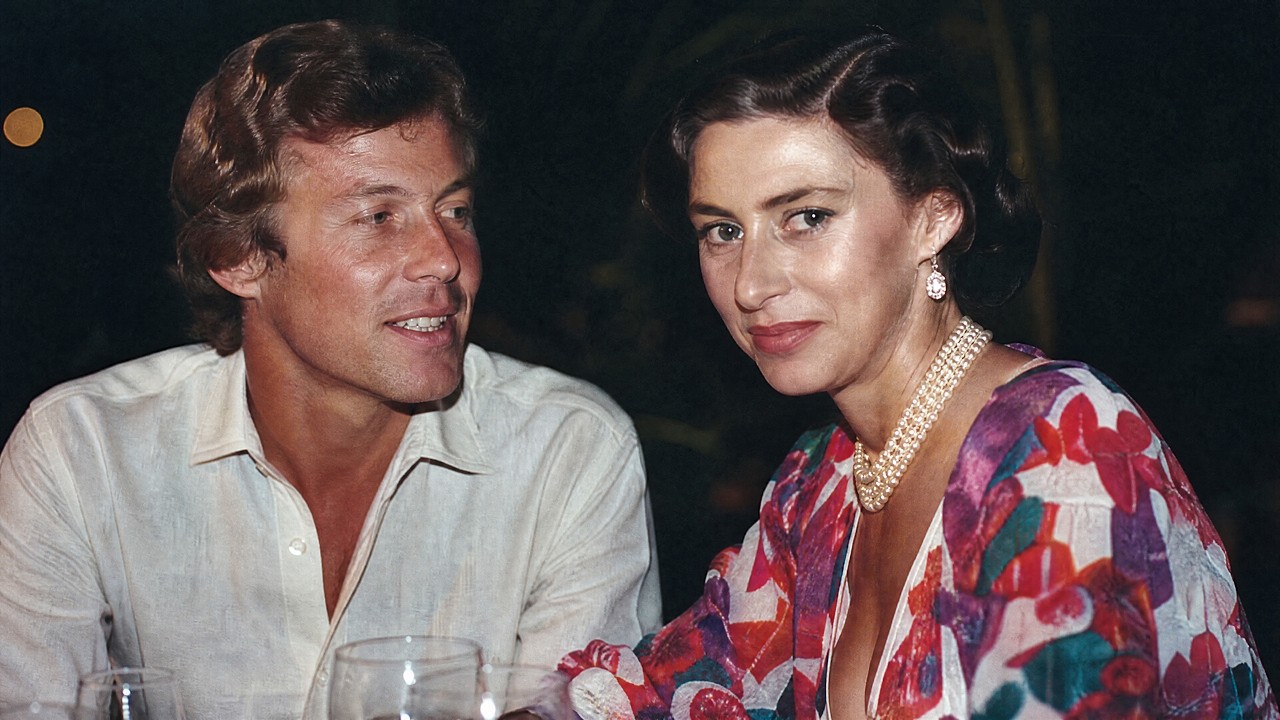
There is a particular loneliness in being disbelieved before you have even spoken. The kinder the world thought her husband, the more absurd her private truth would have sounded aloud. So she did not say it aloud. She kept the charming man's secret for him, because no one would have taken her word over his.
A cruelty that hides behind charm is almost perfectly protected. The victim becomes its unwilling guard. In public she had to play the adored wife of a charming man. In private she absorbed the contempt of that same charming man with no one she could safely tell.
By the middle of the 1960s, the excitement that had first drawn the two of them together was curdling into rivalry. Two proud, quick, competitive people, each long accustomed to being the most interesting person in any room, had discovered that a marriage has room for only so much of that.
The banter grew barbs, the teasing grew teeth. What had once been the shared private language of a clever couple became the weaponry of a private war, and Snowden, by every serious account, was the more ruthless combatant.
He began to withdraw as well as to wound, and the withdrawal was its own kind of cruelty. That basement studio became more and more his own separate country, a place she did not enter, where he kept his work and his friends and increasingly a life that ran parallel to the marriage under the same expensive roof.
A wife can fight a husband who is there in front of her. It is much harder to fight one who has simply gone down a flight of stairs and taken the warmth of the house with him. Inside the apartment, the temperature had dropped hard, and the servants felt it.
He did not only say cruel things in the heat of a quarrel. He began in cold blood to write them down. According to the people closest to Margaret, above all Lady Anne Glenconner, he would write cruel notes and hide them for her to find.
Not hand them to her, not say the words to her face in the heat of an argument, but hide them tucked between the pages of a book she was reading, folded in among her handkerchiefs, left on her writing desk, so that the blow would land when she was entirely by herself.
One note, said to have been left in her drawer, told her that she looked like a certain low sort of tradeswoman, a line calculated to wound a woman raised to believe her beauty was one of the very few things truly and inarguably hers.
Others took the form of lists, a tally reportedly of the things he hated about her, or the reasons she bored him, written out neatly and hidden where she would turn a page and find it waiting. The cruelty of the method matters as much as the cruelty of the words.
He did not lose his temper and shout, which any unhappy husband might do. He sat down in a calm, private hour and composed. He chose the words with a writer's care. He chose the hiding place. He imagined in advance the moment she would find it and what it would do to her.
A single cruel note can be survived. A thousand of them hidden through the rooms of a home month after month changes what a home is. It teaches a person that no drawer is safe, no book is neutral, no quiet hour is truly her own.
By the account of her friend, Margaret eventually stopped opening her own chest of drawers. She could not bear the small daily dread of reaching in among her own things and finding another blade left there for her. So she had her maid open the drawers instead.
The most photographed woman in Britain, a princess of the blood, in her own home inside a royal palace, was made afraid of her own furniture. Everywhere else in her life she was watched, and therefore, in a strange way, protected, too public to be touched. At home she was alone, and being alone was exactly where he could reach her.
It would be false, though, to tell this as a story of pure victimhood. Margaret was not a saint locked in a tower. She was a proud, difficult, formidable woman, with a sharp tongue and a hot temper and weapons of her own. The marriage was poisoned by two people rather than one.
Both of them took lovers. Both of them could be cold and cutting and unkind. Both of them, by the accounts of the people who watched the marriage fail at close range, gave as well as received.
Margaret's temper was famous within her circle long before the marriage soured. She could freeze a room with a single look, could deploy her rank like a blade when it suited her, could be imperious and demanding with the people around her, including the people who loved her most.
What separates the two of them is not that one was pure and the other was not. It is the nature of the cruelty each was capable of. His was cold and designed, the note in the drawer, the list in the book. Hers was hotter and more open, the flash of a famous temper, the wounding remark thrown across a dinner.
The cage they were both locked inside, they had helped between them to build. Two proud people denied honest exits turned their unhappiness on each other for years. The right response is not to acquit one and convict the other, but to ask why two people were kept locked together long after there was anything left to save.
This matters because the flat story the country would later tell, the wronged wife and the cruel husband, does Margaret a strange and quiet disservice. It turns a formidable woman into a passive one, and makes her eventual escape look like a rescue rather than a thing she chose and seized and paid for.
Inside Apartment 1A through the late 1960s and into the 1970s, the household came to know all the signs. When the Earl and the Princess were at war, and they were often at war, the air of the place changed, and the people who cooked and cleaned and served learned to keep their heads down.
The geography of the place made the war easy to wage and almost impossible to end. Snowden retreated into his basement studio more and more. Margaret kept the grand rooms above, the public life, the engagements, the children, the salon.
When they did meet, it often went badly, and it went badly in front of other people. Guests at Kensington Palace, and later visitors to the Caribbean island where the couple sometimes still traveled together, witnessed rows that neither partner troubled to hide any longer.
And yet to the country beyond the palace gates, almost none of this was visible. The public engagements went on exactly as scheduled. The official photographs were taken and released. The machinery of royal life ground forward as though the marriage at its center were perfectly sound.
This is one of the cruelest features of her particular prison. She was required to keep up the appearance of the marriage precisely because it had been such a public triumph in the first place. The bigger the fairy tale had been, the more important it now was that its failure not be seen.
Behind the human misery stood the machinery, and the machinery is the real villain of this part of the story. The monarchy could not easily permit a senior royal to divorce or even to be seen to be unhappy. There had been no such thing in living memory.
The last time a member of the family had put private love ahead of the institution, a king had lost his throne. Everything since had been rebuilt with one purpose, to make sure such a thing never happened again. So the entire pressure of the institution ran toward endurance and the keeping up of appearances.
Margaret had already made that sacrifice once at 25 with Peter Townsend. Now the same logic held her fast inside a marriage that was hollow, because an empty marriage that could be hidden was worth more to the firm than an honest woman who could not keep pretending.
Britain in the 1970s was a country falling into real economic trouble, anxious about money, industrial strife everywhere, and increasingly willing to ask hard questions about what its monarchy cost and what it was for. A glamorous, unhappy, publicly funded princess was becoming an obvious target.
She had spent her whole life as the spare, the royal with enormous visibility and no defined job to do. In the confident years that had been merely sad, a private ache. In the hard years it curdled into something worse in the public eye.
Britain in those years was wrestling with soaring prices, industrial unrest, power cuts, and a general sense that the good times were finished. In that cold climate, a public appetite grew to ask exactly what the monarchy cost and whether it earned its keep.
The most prominent and relentless of her critics was a member of Parliament named Willie Hamilton, a fierce and witty opponent of the monarchy who had made a whole career out of attacking royal spending. He found in Margaret an almost perfect target for his contempt.
His exact words have been repeated so often and in so many varying forms that they are best paraphrased rather than quoted as gospel. But the force of his hostility is not in any doubt. To a growing part of the country she had stopped being a wronged and glamorous princess and become a symbol of a monarchy that took a great deal and gave little back.
What that public pressure did was close another exit on her. A woman being slowly ground down inside a failing marriage might in an ordinary life simply leave. Margaret could not. To leave would be to set off a scandal in the very middle of a decade when the monarchy was already being loudly questioned.
She drank heavily. She smoked heavily, the habit that would in the end kill her. She suffered from depression in an age that had few kind words for the condition and fewer good treatments for it. The bright, quick, formidable princess was quietly coming apart at the seams.
By the middle of the 1970s, the marriage had worn her down to something close to breaking. Around this time, she suffered what can only honestly be called a breakdown. It is reported that during this period she took an overdose of sleeping pills, a drug called Mogadon widely prescribed in those years.
That episode is well attested by the people who were near her. What is not supported, and what the more responsible accounts reject, is the lurid tabloid version of a woman making repeated determined attempts on her own life. What appears to have happened is a serious crisis.
She was an exhausted, unhappy, middle-aged woman who had been asked to carry too much for too long, and who had finally set it down in the only way that seemed left to her. It should be held as exactly that, a documented breakdown in a very hard season.
What the country did with her suffering is its own small indictment. Her supposed despair became a kind of entertainment. The papers traded in rumors of her collapse, half pitying, half hungry, feeding a public appetite for the spectacle of a princess coming apart.
She had reached the bottom. The great capacity to absorb that had been trained into her since the age of six had a limit, after all, and she had finally found it. She was almost completely alone inside it, and that isolation was the cruelest part of all.
And yet this is the floor of the story, not its end. Somewhere in the wreckage of the middle 1970s, worn thin and half-broken, she was about to do the very last thing the machinery expected of a woman raised from birth to endure. She was about to stop enduring.
In September 1973 in Scotland, a woman of 43 met a man of 25. She had gone north for a house party, one of the country weekends that filled the calendar of her set. Among the other guests was a young man she had never met, gentle and quiet and strikingly handsome, seventeen years her junior.
His name was Roddy Llewellyn. By the end of that Scottish visit, something had shifted in her that had not shifted in a very long time, and the last act of her marriage had quietly begun.
The exact place where they met is one of the small things the accounts cannot quite agree on. Some place the introduction at a house party in Aberdeenshire, others in Edinburgh at the old Cafe Royal. Every account agrees on the shape of it: it was Scotland, it was the autumn of 1973, and it happened through the Tennant set.
He was not, whatever the newspapers would later shout, a nobody plucked from nowhere. He was the youngest son of Sir Harry Llewellyn, one of the most famous horsemen in Britain, an Olympic gold medalist who had won for his country in 1952 riding a horse named Foxhunter.

Roddy was a landscape gardener, a student of plants and of the making of gardens, young and unestablished and dependent in those years on very little money of his own. The word gardener, which the tabloids would later use as a sneer, was simply the plain truth.
And he was, above everything else, kind. That is the quality that seems to have reached her, the thing that had been missing from her life for far longer than she cared to count. He was not competitive with her. He did not fence with her the way her husband did.
He was soft where Snowden was hard, admiring where Snowden was contemptuous, present where Snowden had long since withdrawn to the basement. To a woman who had spent a decade being wounded in her own home, a gentle young man who simply seemed glad to be near her must have felt like the first clean air in years.
At 43, she had buried her father, watched her sister become queen, raised two children, and survived a marriage that had nearly destroyed her. She had no illusions left about romance or rescue. What she recognized in Roddy was something quieter and more grown up.
She had given up Peter Townsend to duty, and duty had rewarded her with a marriage that hid notes among her handkerchiefs. She had spent eighteen years being the good girl, absorbing, enduring, performing a happiness she did not feel, and she had very nearly died of it.
Somewhere in that wreckage, a decision had formed. She had done everything the institution had ever asked of her, and it had very nearly killed her. She would, for once in her life, take something she wanted.
There was, of course, the matter of the seventeen years between them, and the world would make a very great deal of it. But there was in the whole world one single spot where the rules that governed every other hour of her life did not reach.
The island was called Mustique, a small green dot in the Grenadines that had been, not long before, almost nothing at all, until Colin Tennant bought it and set about turning it into a private paradise for himself and his friends.
Tennant was one of Margaret's closest friends, a rich, eccentric, theatrical aristocrat with a genius for glamour. Mustique was his great life's project, a place where the beautiful and the titled and the famous could gather far from the eyes of the ordinary world.
Years before, as a wedding present in 1960, Tennant had given Margaret a plot of some ten acres. There, over the years that followed, she built the one home she would ever truly own outright. She called it Les Jolies Eaux, the beautiful waters, and it was completed in the early 1970s.
Everywhere else in the world Margaret lived at the pleasure of the institution, in apartments and palaces that belonged to the crown and could in the end be taken away. Les Jolies Eaux was hers. It was the single place on earth where she was not the spare, not the difficult sister, not the resented ornament of a struggling monarchy.
It was there, from 1974, that Roddy came to her again and again across the following years. On the island the affair could finally breathe. They could swim and sun themselves and entertain and be, for a few weeks at a stretch, an ordinary couple in an extraordinary place.
Roddy was a gardener by trade, and he brought his real gift to her real house. He designed and planted the gardens at Les Jolies Eaux, so that the very profession the tabloids would later mock became on the island the thing that rooted him to the place and to her.
For a woman who had scarcely spent an unobserved hour in her entire life, that privacy was not a luxury or an indulgence. It was oxygen, and she had been slowly suffocating without it. The island was the one place the tax of fame did not reach.
The circle knew, of course. The whole glamorous world of the Tennant set understood perfectly well what Les Jolies Eaux meant and who came to visit it, and they said nothing to the outside world, because discretion was the currency of that world, and because they genuinely loved her.
For the better part of two years, from 1974 into 1976, the affair lived in a strange and privileged state. It was within her circle common knowledge, spoken of easily among friends, and it was to the wider British public completely invisible.
The circle that guarded the secret was not a small one. It ran through the whole glamorous ecosystem of the Tennant set, the aristocrats and artists and famous faces who orbited Colin Tennant and his island. They saw the princess and her young gardener and folded the knowledge quietly away.
They did it out of affection, which is the thing that matters most, because it stands in such sharp contrast to what was coming. The people who knew Margaret's secret and kept it were the people who loved her, who could see how deeply unhappy the marriage had made her.
Every friend who knew and said nothing was carrying a secret worth a fortune, and each of them chose over and over not to sell it. That is the measure of how much they loved her, and of how starved she was for exactly that.
But privacy of that kind for a person of that fame was always a borrowed thing, and the loan was about to be called in. Out beyond the Tennant set and the island and the loyal friends lay the British popular press, larger and hungrier and more ruthless than it had ever been.
Somewhere, someone who knew where Margaret would be passed the word to a newspaper, and the News of the World, one of the great mass-circulation Sunday papers of the age, sent a photographer named Ross Waby across the Atlantic to get the picture.
He flew to the private island that had been her one true refuge, the very place that had been chosen precisely because the press could not reach it. And he proved simply by stepping off the plane that the refuge had never really been safe at all.
What he actually photographed was almost nothing, and that was the whole genius and the whole cruelty of it. He caught Margaret and Roddy on the beach in swimwear, sitting together at ease, sharing the ordinary quiet intimacy of two people relaxed in the sun.
There was nothing explicit in the images, nothing scandalous in the crude sense. There was only proof that the Queen's sister, still legally the wife of the Earl of Snowden, was on a private Caribbean island with a man half a generation younger, comfortable, unguarded, together, alone.
The long lens reaching across a private beach to capture a royal at rest was a genuinely modern weapon, and this was among the first times it was fired at full force at the British monarchy. Until now, the private lives of royals had been protected by a kind of unspoken gentleman's agreement.
Waby's flight to Mustique announced the end of that agreement loudly. It said that no wall was high enough and no island remote enough, that a royal at play was now fair game to be hunted, and that there was serious money in the chase.
The methods used on Margaret on that beach are the direct ancestors of the pursuit that would, roughly two decades later, hound another princess through the underpasses of Paris. A single picture of the right royal in the wrong moment could be worth more than a photographer earned in a year.
On Sunday, February 22, 1976, the picture was everywhere. The News of the World ran the Mustique photographs across its front page, and the effect was instant and enormous. On that day it handed the whole nation the same image at once.
By the time the country had finished its tea, the secret that a loving circle had guarded for two years belonged to everybody, and the marriage that had begun with a wedding watched by 300 million people was ending on a front page read by millions more.
The press knew exactly how to frame the thing, and the framing was cruel. Roddy was cast as the beach boy, the plaything in the sun, a caricature that erased the real gentle gardener. Margaret was cast as the wanton, extravagant, publicly funded princess caught misbehaving on a Caribbean island.
Every resentment that had been quietly building around her, the cost, the idleness, the glamour, now had a single photograph to hang itself upon. The image did not create the anger. It gave the anger a face and a beach and a younger man, and the anger fell on her gratefully.
The same public that had wept over her lost love for Townsend now jeered at her for finding a new one. The same country that had cheered a fairy tale wedding now punished the woman for wanting the ending it had promised her. There was real hypocrisy in the fury.
But look closely at what that photograph actually was. For years, Margaret's life had been ruled by things hidden. Her husband's cruelty had always come to her concealed, folded into drawers and slipped inside books, so relentless that she had stopped opening her own furniture.
And now, on this front page, the exact opposite happened. Nothing was hidden any longer. The photograph showed everything in the open, in the plain Caribbean daylight, for the whole watching world to see. And what it showed was not a woman being wounded in private. It was a woman in the sun choosing her own happiness in full public view.
The hidden note had been the symbol of her cage, cruelty done in secret to a woman who could tell no one and prove nothing. The public photograph was the symbol of her escape, a private happiness dragged out into the light, and once a thing is in the light, it can no longer be quietly hidden away again.
The very exposure that was designed to shame her was also her liberation. The secret was out. The long performance was over. She could no longer be made to costume a dead marriage and walk it out before the cameras, because the cameras had just seen the truth of it.
None of this is to pretend the exposure did not hurt her. It did, badly and for years. But two things can be true at once. The photograph was a violation and it was also a release. It stripped away her privacy and it stripped away her prison in the same stroke.
The scale of what followed came fast and hard. The picture appeared on February 22, 1976. Within three and a half weeks, the machinery that had held her marriage together for the sake of appearances had simply run out of appearances left to protect.
On March 19, 1976, the palace announced that the marriage was over. The statement was formal and brief, a few careful official lines confirming that Princess Margaret and the Earl of Snowden had agreed to live apart, and that their marriage had irretrievably broken down.
But the weight sitting behind those flat, colorless words was enormous. This was the first time in living memory that the palace had publicly acknowledged the collapse of a senior royal marriage. Forty years on from the abdication, the machinery had been forced to say the unsayable.
The photograph did not cause the collapse. The marriage had been dead for years already, hollowed out from the inside by the hidden notes and the cold war and the mutual betrayals, kept standing upright only by the institution's desperate need to avoid a scandal.
What the photograph did was remove the last possibility of pretending. And once the performance could not continue, there was nothing left holding the empty marriage in place. The picture broke nothing that was not already broken.
And here is the part that belongs entirely to Margaret. She let it end. She did not fight to keep the appearance alive. She did not crawl back behind the facade for the good of the firm, as she had been trained since the age of six to do.
After sixteen years of absorbing, of performing, of setting the institution's need before her own life at every turn, she reached the moment of choice. And this time she chose the truth over the performance. She chose to let the dead thing be honestly buried.
It is easy to underestimate how frightening that must have been. Everything she had ever known told her that leaving was the one unforgivable thing. The family had broken her heart at 25 rather than allow it. The press was already sharpening its knives. And still she did not reach for the old safety of the lie.
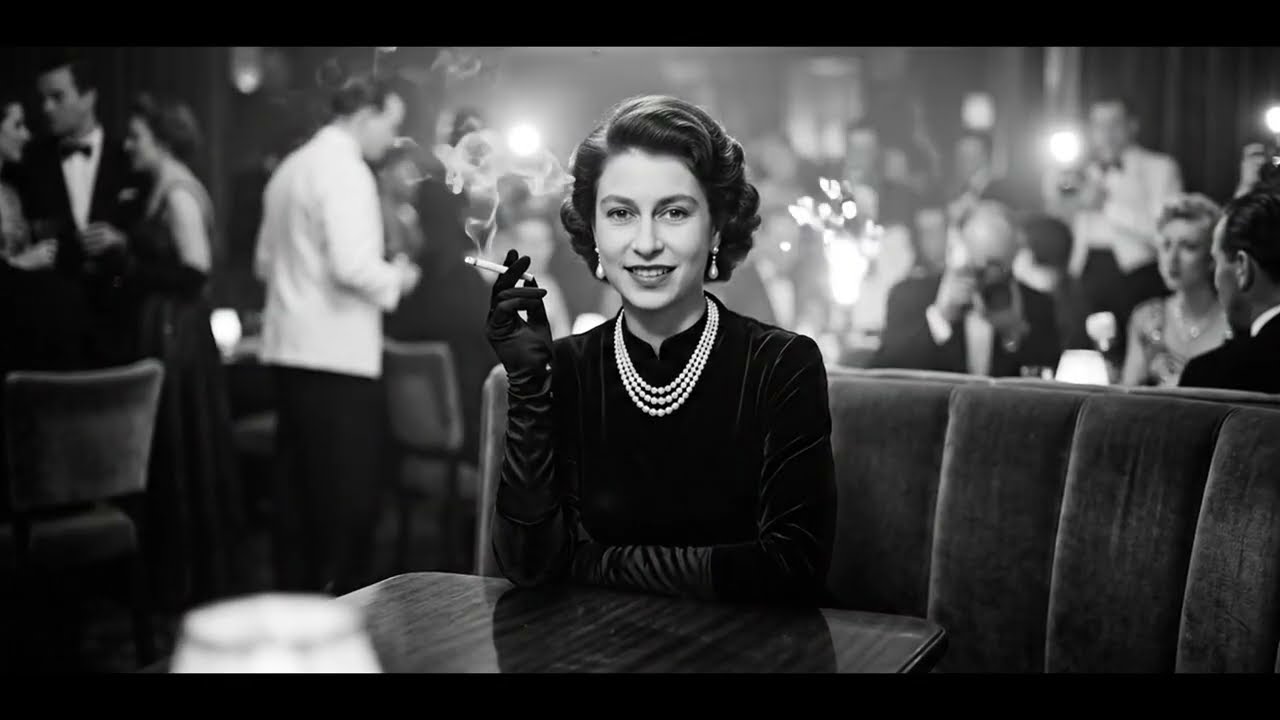
She let it end because she had finally reached the limit of what she was willing to give. The woman raised from the age of six to absorb, who had surrendered her first love to duty, and then very nearly died inside the marriage that was meant to be her reward, had run clean out of endurance.
The country did not at first read the separation as a woman's liberation. It read it as a scandal, and it punished her for it in the press and in Parliament and in the hard, unforgiving court of public opinion, in ways it never once thought to punish the husband.
For the better part of two decades, Snowden had conducted affairs, had wounded his wife in private, had lived a whole parallel life beneath the family floor. None of it had cost him his standing in the country. He remained the charming, gifted Earl, welcome everywhere.
Margaret conducted one serious relationship in secret on a private island, after years of a marriage that was slowly destroying her, and a single photograph of her sitting on a beach nearly ended her public life outright. The same act weighed on the same national scales was fatal for the woman and all but weightless for the man.
The political attack sharpened all of it into a point. Willie Hamilton seized upon her as the very symbol of royal excess, a publicly funded princess sunning herself on a private island with a young lover, while ordinary families queued and shivered through the worst economy in a generation.
The double standard was not new, and it was not only hers. Royal women had always been judged by a harsher measure than royal men. A king could keep mistresses and be called a character. A queen or a princess who strayed was called a disgrace.
What her grandmothers had suffered in whispers, she suffered in headlines. The rule was old. The cameras were new. Together they made a cage that no royal man of her time would ever have recognized.
And still, having counted the cost as it landed, she did not go back. This is the true measure of how far she had traveled from the frightened, obedient girl who gave up Townsend to duty in 1955. Faced with public fury, she did not retreat into the old safety of the performance.
The separation stood. The marriage did not quietly reassemble itself for the cameras a few months later, as so many wounded royal arrangements had before. Whatever it cost her in reputation, and it cost her a great deal, she had made her choice, and she kept to it.
In the summer of 1978, Princess Margaret was going to break a taboo that had held since the age of the Tudors. The decree nisi, the provisional judgment, was granted on May 24, 1978. The decree absolute followed on July 11.
With that second document quietly issued by a court, Princess Margaret became the first senior member of the royal family in the direct line to divorce since the sixteenth century, since the days of Henry VIII.
The tidy phrase, the first royal divorce in 400 years, smooths over one or two smaller earlier cases at the outer edges of the family. But for a senior royal, for the sister of the reigning queen, it was true enough, and its weight was very nearly beyond measuring.
Snowden, for his part, moved on with striking speed. Within months of the divorce he married again, a woman named Lucy Lindsay-Hogg, and resumed a life that the whole scandal had barely scratched. Margaret did not remarry.
The relationship with Roddy would continue for a while yet and then gently fade without bitterness into the past. She would live out the rest of her life unmarried on her own terms, having paid in full the public price for a freedom the man on the other side of the divorce had enjoyed all along at no cost whatever.
Margaret had broken the spell. For decades, the monarchy had held as an article of near-religious faith that its senior members simply did not divorce, that the unbroken appearance of the indissoluble family was worth almost any amount of private human misery.
That faith was the very thing that had cost Margaret her first love, Townsend, back in 1955. And now Margaret herself, of all people, had shattered it. Once she had shown that a senior royal could divorce and the sky would not fall, the unthinkable became merely difficult, and then merely sad, and then very nearly ordinary.
In the 1990s, the dam she had cracked in 1978 gave way completely. The Princess Royal divorced. The Duke of York divorced. The Prince of Wales, the future king himself, divorced in the middle of the most damaging royal scandal of the entire modern age.
Three of the Queen's four children saw their marriages end in a cascade that would have been simply unimaginable back in 1955, when the family had been willing to break Margaret's young heart rather than permit a marriage to a divorced man.
She was the first crack in the dam, the one who went first and paid the most. And every royal divorce that followed walked through the very door she had been so cruelly punished for opening.
She had been sacrificed to a rule, and then she had been the one to break the rule, and then the rule had crumbled away entirely for everyone who came after her. Someone had to be the first to break the old rule and absorb the punishment for breaking it. Margaret was that someone.
Had she been young in the 1990s rather than the 1950s, she could have married Townsend and kept her place. Could have divorced Snowden without disgrace. The rules that broke her were dismantled one by one just after they had finished doing their work on her.
The young man cast as the scandalous nobody at the very center of it all did not end in ruin either. His story ran the other way entirely, into a quiet and respectable success that stands to this day as its own gentle rebuke to every jeering headline of 1976.
The relationship with Margaret continued for a few years after the divorce, into roughly the start of the 1980s, and then it eased gently and without bitterness on either side into the past. Roddy, far from being destroyed by his brush with royal scandal, simply got on with becoming the man he had always been.
In 1981 he married a woman named Tatiana Soskin, and the marriage lasted and gave him a family of three daughters. He built a real and lasting career out of the very thing the newspapers had used to belittle him. The gardener became a distinguished garden designer, a respected writer on horticulture, a broadcaster.
And then in a final turn that reads almost like a joke told at the expense of the old headlines, the beach boy became a baronet. In 2009, on the death of his elder brother, Roddy Llewellyn succeeded to the family baronetcy and became Sir Roddy Llewellyn.
He never sold her. In a lifetime of people who might have profited from knowing her, Roddy Llewellyn stayed quiet, married, and lived his life with dignity. He did not write the bitter book. He did not give the wounded interview.
The sharp contrast between his fate and hers says a great deal about who really carried the cost of the scandal of 1976. The younger, less powerful, publicly ruined figure ended in comfort and honor. The princess, who had been the injured party throughout, ended worn out and ill.
Meanwhile, Margaret's own life was already sliding into its long twilight. The decades of heavy smoking and heavy drinking and constant strain were coming due all at once. In January 1985, she had part of a lung removed, a grave operation and a plain warning of what the cigarettes had been doing.
She did not truly stop. The decline that followed was gradual to begin with, a matter of diminishing health and slowly shrinking horizons. The island that had once been the very symbol of her freedom became, in a cruel final turn, a place of injury and loss.
In February 1998, she suffered a stroke while at Mustique. In 1999, in the bathroom of that same island world, she scalded her feet very badly in water that was far too hot, an accident that damaged her mobility and hastened the general decline.
Further strokes came. The woman who had once swum and sunned and entertained on that beach, who had planted a garden there and taken a lover there and defied a whole country there, was reduced in the end to a frail figure in a wheelchair.
She gave up the Mustique house in those years, the one and only home she had ever truly owned, and Les Jolies Eaux passed at last out of her hands. She had spent her whole life performing for an audience. At the end, she let the audience go.
She died on February 9, 2002, at King Edward VII's Hospital in London after a final severe stroke. She was 71 years old. The most photographed woman of her whole generation slipped away in a hospital bed in the gray of a London winter.
Margaret was cremated at Slough, a highly unusual choice for a senior royal, who are almost always buried whole and entire. The reason was tender and exact. She wished her ashes to rest beside her father, King George VI, in the memorial chapel at Windsor that bears his name.
The space there was small, too small for a coffin, large enough only for an urn. So she was cremated in order to fit at the very last into the space beside the father whose sudden, dreaded, unwanted accession back in 1936 had turned a second daughter of a second son into the spare.
Seven weeks after Margaret died, her mother, Queen Elizabeth the Queen Mother, died too, in the early spring of that same year. Mother and daughter gone within weeks of each other, and the daughter's ashes waiting quietly through those weeks to be settled into the chapel beside the king.
Lord Snowden lived on until January 2017, his reputation intact. He died on January 13, 2017, at the age of 86, and the obituaries remembered him for the most part as exactly what the public had always been allowed to see: a brilliant photographer, a gifted designer, a charming and creative man.
For the man who had spent eighteen years wounding his wife in private, the public verdict, even in death, was warm and forgiving, because the public had only ever been introduced to the charming half of him. The other half surfaced slowly, and mostly after both of them were beyond the reach of any consequence.
It was in the years after his death that the fuller account of the marriage finally reached the wider world, above all when Lady Anne Glenconner published her memoir in 2019 and set down at last the story of the hidden notes.
The truth about Apartment 1A, the truth of what had really happened in the grand rooms above the basement studio, became public property only when the woman who had suffered it and the man who had inflicted it were both gone.
She could have told the story herself at any time, in an interview or a memoir, and been believed and pitied and avenged. She never did. Whether from pride or discretion, or a lifetime's training in keeping the family's secrets, she carried the truth of that marriage to her grave.
This returns us at the very last to the image where we began, the drawer she stopped opening. Hold it in your mind one more time, the maid's hand reaching in first, so that if there was a note lying in wait among the folded handkerchiefs, it would not be Margaret's own fingers that found it.
Now set that first picture hard against the other one: the photograph on the beach, the woman in the sun with nothing hidden at all, choosing her own happiness in the open for the whole world to see and judge.
Her entire life ran in the space between those two images. It began as a marriage with cruelty concealed, with things hidden in secret to wound her in private, in the one place she should have been safe. It turned and it freed her only when the concealment finally ended.
The hidden note was her cage. The public photograph was her key. The real scandal of her life was never the young gardener or the beach or the front page. The real scandal was how long a proud and formidable woman was expected to be humiliated in private before anyone would allow her to be free in public.
She had said the words herself long before any of it, in the statement that gave up Peter Townsend in 1955. Mindful of the church's teachings that Christian marriage is indissoluble and conscious of her duty to the Commonwealth, she had resolved to put these considerations before others.
That was the creed of the good girl, the whole religion of duty over desire that had governed her entire young life. Her story in the end is simply the account of the day she finally stopped putting these considerations before others, and put herself first instead, and paid the full price for it, and did not once go back.