In February 2002, a British Sunday tabloid published a front-page story about a plot to steal Prince Harry's DNA. He was 18 years old at the time. The story described an alleged scheme to obtain a sample of his genetic material so that someone, somewhere, could quietly verify whether the man who raised him was really his father.
It was not a whisper in palace corridors. It was a published story in a print edition sold at newsstands across Britain. Harry had lost his mother five years earlier, on August 31, 1997, when Diana died in a car crash in a Paris tunnel as her driver tried to escape a group of photographers on motorcycles. French investigators ultimately attributed the crash mainly to the driver's condition, but the image of photographers surrounding the wreckage before emergency crews could properly reach it never left either of her sons.
Harry was 12 when that happened. Six years later, at 18, he was reading a headline suggesting his genetic material was for sale to the same industry that had chased his mother's car into that tunnel.
Twenty-three years later, in a London courtroom, the company responsible for a sister paper to that tabloid admitted something entirely different. Not that the DNA story was true, and not that it was false. They admitted that journalists and private investigators working for them had, for years, hacked his phone, tracked his movements, and dug into the private lives of people close to him, including his mother.
A full and unequivocal apology was read into the court record by Harry's lawyer in the same city, on the same ground where the original DNA story had been published more than two decades earlier. Two admissions, separated by decades, from the same Fleet Street corner. One says they published a story questioning his parentage. The other says they broke the law to obtain information about him and everyone around him.
Put them side by side and the question stops being who Harry's father is. The question becomes closer to what these publishers were actually willing to do, and to print, to keep a 1984 royal birth sensational enough to sell newspapers four decades later.
This is the real story behind the DNA file. It is not a secret Lady Colin Campbell warned him about. It is not a document the palace buried twice. Those claims do not hold up against any documented record. What actually exists is stranger and better documented, and in some ways more damning than the fabricated version, because every part of it comes from a courtroom, a statement, a criminal conviction, a judicial inquiry, or an author putting their name explicitly behind a claim.
Start with the timeline, because this is where the rumor should have died decades ago, and somehow did not.
Harry was born on June 21, 1984, at St Mary's Hospital in Paddington, the second son of Charles and Diana. Red hair, like many in the Spencer family before him, a detail later treated as evidence of something suspicious rather than as simple genetics running down his mother's side of the family.
Diana did not meet James Hewitt until 1986. Hewitt was a captain in the Life Guards, an army officer who gave riding lessons, and through those lessons he and Diana grew close. Biographer Sally Bedell Smith, who spent years researching Diana's life for a book published in 1999, traced the relationship carefully through conversations with people around the princess at the time. Her conclusion was blunt. The relationship began in 1986 and lasted until roughly 1991, two full years after Harry was born.
It is not ambiguous. No one with direct access to the timeline has disputed it. A documented two-year gap between the birth and the first meeting. That gap should have ended the paternity question the moment anyone checked a calendar. It did not, because Hewitt became a fixture in both boys' lives once the relationship developed. He taught William and Harry to ride. He took them swimming. He made them replica versions of his own cavalry uniform, and by most accounts from royal staff during those years, he became something like a father figure in a period when Charles was often absent and the marriage was already unraveling.
Diana herself, in her 1995 Panorama interview with Martin Bashir, spoke openly about the relationship, describing real affection and real disappointment when it ended. That candor fed the rumor. The public knew there had been a relationship. What the public did not retain, or chose not to remember, was when that relationship began compared to when Harry was born.
The prince, who was noticeably close to his mother's former riding instructor and who resembled him in complexion and in certain features as he aged, became an irresistible story for a press that had already turned Diana's marriage into a national drama. Red hair on one side, nothing on the other. For a remarkable number of tabloid writers, that was considered sufficient evidence on its own. It did not matter that many Spencers before Harry carried exactly the same coloring with no riding instructor anywhere in the family tree. Timing stopped mattering once the resemblance narrative took hold. It rarely matters in tabloid economics. A good story with a small hole still sells better than a boring story with no hole at all.
By the early 2000s, the rumor was no longer marginal. It had become mainstream enough that a national Sunday newspaper published an actual investigative-style claim about it, in news format.
The Sunday People ran its DNA plot story in 2002. According to Harry's own account of the article, given years later under oath, it described a scheme involving a high-level royal source and claimed a sample of his DNA could be sold abroad to test his parentage. Read that again. A British tabloid published a story alleging that people inside or connected to the royal family were involved in a plan to smuggle a prince's genetic material out of the country to be sold.
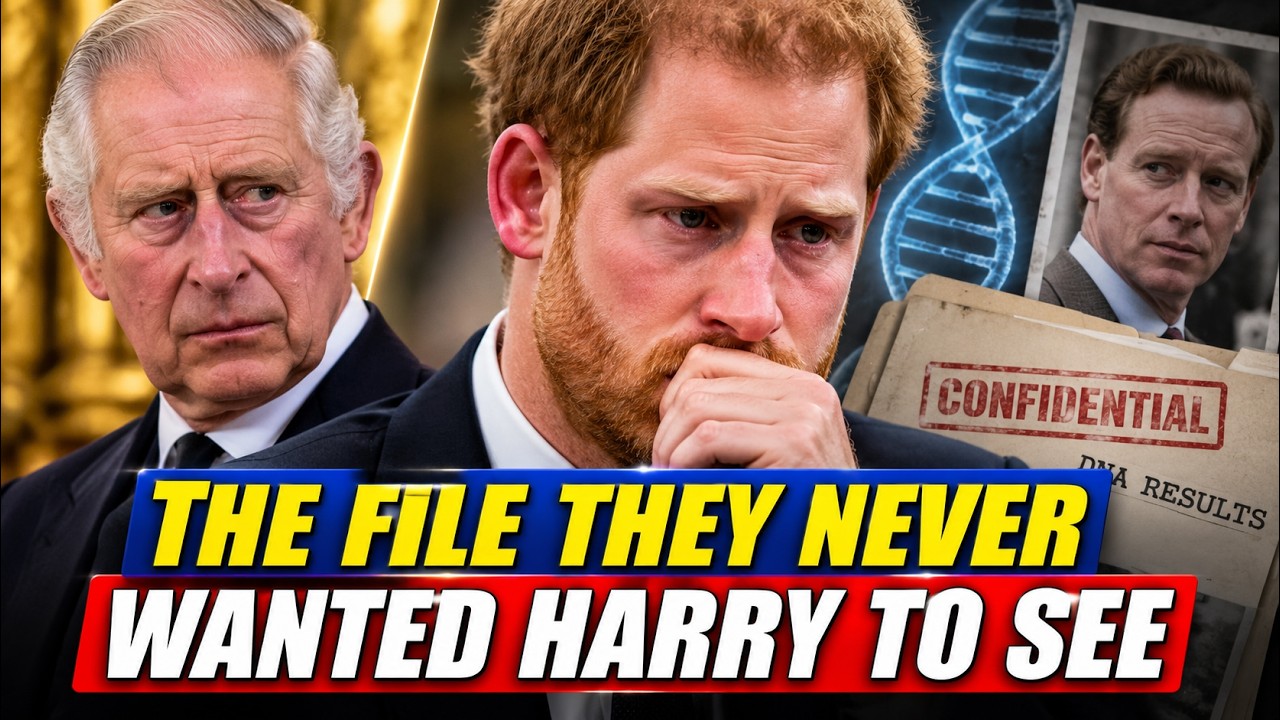
It was not a vague item. It was not a gossip column. It was an organized plot attributed to a source, printed as a legitimate news story about a teenager who had buried his mother five years earlier.
James Hewitt was asked about the rumor directly that same year by the Sunday Mirror and gave as categorical a denial as anyone could give. He said there was no possibility whatsoever that he was Harry's father, and that he could fully reassure the public on that point because he only met Diana after she had given birth to her second son. It did not matter. The denial was published. The story kept spreading anyway.
A year later, a second and stranger claim entered the record. Penny Junor, a royal biographer, wrote in a later book about Harry that the News of the World, one of Britain's best-selling tabloids at the time, had conducted a DNA test on strands of Harry's hair in February 2003, and that if the results had confirmed Hewitt was his father, the public would certainly have known. It is a claim from a single author, not something established in a court ruling, and it deserves that caveat. But it is also not an anonymous internet rumor. It is a specific claim with a specific date, made by a biographer willing to put her name on it in print, and it concerns the same newspaper that would decades later sit at the center of the biggest press scandal in modern British history.
Paul Burrell, Diana's former butler, was asked about it years later on the Australian version of I'm a Celebrity. He did not confirm anything. He also did not deny it categorically. His answer was a shrug wrapped in the cloak of insight. He hinted that if he were the father in some way, denial would be the kindest thing he could do for Harry. That kind of noncommittal answer is what keeps a rumor alive, because it simply refuses to kill it. And tabloid television knew exactly what it was doing by asking the question in the first place.
None of this happened in a vacuum, with Hewitt staying silent and dignified while newspapers built a myth around him. On the contrary, his own actions in the years that followed damaged the credibility of the whole rumor more than any tabloid ever did.
In January 2003, less than a year after his categorical denial to the Sunday Mirror, Hewitt sat for an hour-long interview with Larry King on CNN and admitted he would sell Diana's love letters if the price was right. He owned 64 letters written during the height of the relationship, and reports at the time indicated the asking price for the 10 most sensitive letters was around 4 million pounds, part of a larger 10 million pound sum he sought for the full collection. King pressed him on what he would do with the money. Hewitt said a lot of good could be done with that money without fully explaining what he meant. Sarah, Duchess of York, said publicly that betrayal is the most disloyal act one person can commit against another, a phrase clearly aimed at him.
The letters themselves had become a small scandal years before Hewitt tried to sell them at auction himself. In 1998, his then-fiancee, an Italian woman named Anna Ferretti, took 62 letters from a safe at his Devon home while he was away and tried to sell them herself for 150,000 pounds before he could. She told journalists his finances were shaky and that she suspected he was secretly planning to sell them anyway. Eventually the letters were handed to Kensington Palace. Hewitt kept trying regardless. By September 2003, he had an offer of 600,000 pounds from a buyer who wanted to return the letters to the royal family on principle, an offer Hewitt reportedly refused, still angling for more.
Years later, in a documentary titled Confessions of a Cad, cameras followed him on a failed trip to America to try to sell the letters again for 10 million pounds, during which he mocked the very paternity rumor that had made his name circulate in the first place. At one point, according to reports from that same period, he even tried to offer two cards from William and Harry's childhood, written by the boys themselves, for 15,000 pounds each.
That detail deserves a pause. The man the tabloids spent two decades treating as a secret royal father was not maintaining a dignified silence about it. He was actively seeking to sell the correspondence that made him famous to the highest bidder, repeatedly, over a decade, denying paternity at the same time he was setting prices for love letters at auction. It is hard to build a credible secret around a man who keeps offering the evidence for sale.
The 2002 DNA plot story had its own strange internal logic once you dig into how it was actually described in the press at the time. Discussing it on CNN, one anchor summarized the alleged scheme as something like a honey trap, a plan for a woman to approach Hewitt specifically and take a strand of his hair, rather than Harry's, so the two samples could be compared secretly. Whether the version involving Harry's hair or the version involving Hewitt's hair is more accurate hardly matters at this point. What matters is that Fleet Street was publishing multiple, slightly contradictory versions of the same secret DNA caper at once, treating a teenager's parentage as open-source material for whatever made the better headline that week.
What is almost never mentioned in any of the tabloid accounts is how far the joke traveled inside the family itself. In his 2023 memoir, Harry wrote that his father raised the subject. He said Charles liked to tell a specific story about meeting a man in a mental hospital who believed he was the real Prince of Wales, and would end it by turning to Harry and joking that his real father might be that man, not Charles himself. Harry described it as one of his father's favorite stories to tell. He also described the timing, coming from the only person who actually knew the real timeline of his mother's relationship with Hewitt, as being in remarkably poor taste.
That detail alone tells you something the tabloid version completely misses. This was not just a press invention hounding a grieving family from the outside. It became, by Harry's own account, dinner-table material inside the family that was supposed to protect him from it.
So this is the shape of the rumor according to its own logic. No one with direct knowledge ever confirmed the paternity theory. Hewitt denied it officially and on the record. Diana's own biographers, who relied on primary sources and direct testimony, ruled out the possibility entirely based on the timeline. And yet the rumor never died, because it never needed to be true to be useful. It only needed to be publishable.
To understand why a story like this kept being printed for another two decades, you have to look at the newspaper allegedly behind the 2003 hair test, because that paper had a documented history with this family dating back before the DNA rumor itself. A history that eventually reached 10 Downing Street.
In January 2007, years before anyone was talking about phone hacking as a national scandal, the News of the World's royal editor, Clive Goodman, was jailed alongside Glenn Mulcaire, a private investigator working for the paper. Their crime was hacking the mobile phones of royal household aides, intercepting voicemail messages left for members of the prince's staff to get advance details of private schedules before they were announced. This is the case that started everything. Before Milly Dowler, before the Leveson Inquiry, Britain's first criminal conviction for phone hacking involved a News of the World journalist illegally intercepting communications tied directly to the royal household, shortly after the DNA plot story was published. It was the same paper Penny Junor later accused of secretly testing Harry's hair.

For years afterward, the paper's parent company insisted publicly that Goodman was a rogue reporter acting alone. That narrative held until 2011, when a Guardian investigation revealed that News of the World journalists had hacked the phone of Milly Dowler, a 13-year-old girl abducted and murdered in 2002, and that investigators working for the paper had accessed her voicemail messages while she was still listed as missing. The intrusion was so grotesque that it briefly gave her parents false hope she might still be alive and checking her messages.
Public reaction was overwhelming. Within a week, after 168 years and more than 8,600 issues, the News of the World published its final edition on July 10, 2011, closing under advertiser boycotts and public fury. Rupert Murdoch personally donated 1 million pounds to charities chosen by the Dowler family as part of a wider compensation settlement. Prime Minister David Cameron announced a full public inquiry into press practices, chaired by Lord Justice Leveson, to examine the culture, ethics, and legality of the British newspaper industry as a whole. It later emerged during those sessions that hacking at the paper had reached beyond celebrities and crime victims to the royal household itself. The same pattern that had already been established and covered up in 2007.
Over the following months, the Leveson Inquiry heard testimony from a long list of people describing similar targeting by the same industry. Actor Hugh Grant testified about being hounded and having private material about his life published without consent. Author J.K. Rowling described a journalist slipping a letter into her young daughter's school bag. Kate and Gerry McCann, whose daughter Madeleine had disappeared years earlier, described tabloid coverage that openly speculated about their involvement in the disappearance. Christopher Jefferies, a retired teacher wrongly suspected in an unrelated murder case, described being vilified in the press for weeks before being fully cleared. None of them were members of the royal family. All of them were describing a version of the same underlying machinery that an 18-year-old prince had already experienced in 2002. An industry willing to publish almost anything about a person's private life if the story would sell enough copies.
The story did not stop when the paper closed. In 2014, a jury at London's Old Bailey delivered its verdicts in the criminal trial that followed the scandal. After nearly eight months of evidence, it was one of the longest and most expensive trials in British legal history. Andy Coulson, the paper's former editor who became Prime Minister David Cameron's communications director in Downing Street, was convicted of conspiring to hack phones between 2000 and 2006. Rebekah Brooks, another former editor who rose to become chief executive of the paper's parent company, was cleared of all charges alongside several others tried with her. Cameron appeared on television that day and apologized personally for hiring Coulson in the first place, calling it the wrong decision.
A tabloid plot that began as a story about a prince's parentage ended, by the time the legal process finished, at the desk of a sitting British prime minister. That is the institution standing behind the rumor you may have seen packaged somewhere as a secret Lady C tried to warn Harry about. Not a fictional insider with privileged access to a hidden file, but a real newspaper with a documented, criminally prosecuted history of illegally accessing royal communications, run at various times by people who ended up convicted, tried, or apologizing on national television, and which a biographer separately alleges conducted a secret genetic test on the same prince whose communications it had already been caught intercepting.
That 1995 Panorama interview, in which Diana discussed the relationship clearly enough to fuel another two decades of tabloid speculation, was not obtained the way the BBC claimed it was for 26 years. In November 2020, following claims from Diana's brother, Earl Spencer, the BBC commissioned an independent investigation led by retired judge Lord Dyson. Spencer said journalist Martin Bashir had shown him forged bank statements designed by a graphic designer, suggesting two of Diana's most trusted aides were secretly being paid by the security services to spy on her. On the strength of believing that, Spencer arranged a meeting with his sister, which ultimately led to the interview.
The Dyson report, published in May 2021, confirmed it. Bashir had commissioned the forged documents and used them to deceive Spencer into arranging the meeting. The BBC's internal investigation in 1996 was, in Dyson's own words, woefully ineffective, and the corporation had covered up what it already knew for a quarter of a century rather than confront it. Bashir apologized to William and Harry directly through a newspaper interview, insisting the forged documents had no bearing on what Diana actually said once filming began. Both princes publicly rejected that characterization. William said the interview and the deception behind it contributed substantially to the breakdown of his parents' marriage and contributed notably to his mother's fear, paranoia, and isolation in her final years. Harry went further, stating that the deceptive practices used to secure the interview played a role in his mother's death.
Consider what that means for the story you came here for. The single most important piece of evidence tabloid writers leaned on for 30 years to justify the Hewitt paternity rumor, Diana's own words about the relationship on camera to the nation, came from an interview obtained through forged financial documents designed to convince her brother that his sister was under secret state surveillance. The BBC later reached a financial settlement with the graphic designer who prepared the forged documents. Tony Hall, the BBC executive who led the weak 1996 internal review, resigned from an unrelated administrative post the day after the Dyson findings were announced.
Bashir's reputation for this kind of behavior did not begin or end with Diana. In 2003, the same year Penny Junor says the alleged hair test on Harry was conducted, Bashir was also the journalist behind the documentary Living with Michael Jackson. Another session built on access and trust, later widely criticized for manipulative editing and for extracting material its subject said he never intended to make public. Two of the biggest and most important interviews of Bashir's career, eight years apart, ended the same way, with the subject or their family accusing him of securing access through deception dressed up as straightforward journalism.
So by the time you reach the 2000s, this family had already lived through a forged-documents scandal that shaped how the entire country understood Diana's private life, a criminal phone-hacking operation that directly targeted the family's aides, and both were tied to institutions that would, years later, keep publishing or allegedly conducting genetic tests on a grieving teenager without his knowledge or consent.
The DNA plot story does not read like the fever dream of one isolated tabloid once you place it inside that pattern. It reads as a data point in a much longer and much better documented campaign of deception aimed at this specific family, carried out by people who were later held accountable, in several cases legally and publicly, for exactly this kind of behavior.
That brings the story to 2023, and the only time Harry was actually able to answer all of it under oath, in person. He sued Mirror Group Newspapers, publisher of the Daily Mirror, Sunday Mirror, and Sunday People, alleging widespread unlawful information gathering spanning 1991 to 2011. He was one of more than 100 claimants against the company, selected alongside three other representative claimants, actor Michael Le Vell, actress Nikki Sanderson, and Fiona Wightman, to go to trial as test cases for the rest.
On June 6, in Court 15 of the High Court, the same courtroom where singer Ed Sheeran and actress Eva Green had recently testified in unrelated cases, Harry took the witness stand, swore on the Bible, and confirmed he should be addressed first as "Your Royal Highness" and afterward simply as "Prince Harry." That made him the first member of the British royal family to testify in court in more than a century, and by some estimates the first since the future King Edward VII testified in a libel trial involving a card game in 1891.
He was confronted by Andrew Green KC, a barrister with 35 years at the bar and a reputation, among those who have watched him work, as a courtroom monster and a feared opponent. Green spent two days questioning Harry about more than 30 articles, pressing him on how he could know details came from hacking without having access to phone records himself, suggesting at one point that his distress stemmed from press coverage generally, not the specific stories at issue. Harry responded that the reporters who wrote those pieces knew exactly what they had done, and at a critical moment, when Green asked whether journalists would really keep risking prison after Clive Goodman and Glenn Mulcaire were jailed in 2007, Harry answered plainly that he believed the risk was worth it to them.
He told the court that describing an anonymous source as simply a "friend" was, in his experience, a classic marker of a story obtained through hacking and dressed up to look like one built on human sourcing. He alleged the papers used a private investigator to track him during his school year in Australia, and separately accused them of accessing his phone while he was still a pupil at Eton. At one point, summarizing how he felt about the editors and journalists involved, he said plainly that their hands were bloody.

In his 50-page written statement, he described being targeted by the press since he was a schoolboy in 1996, and detailed how coverage affected his relationships, partly blaming the press for the breakdown of his relationship with Chelsy Davy and for what he described as bouts of depression and paranoia following years of being labeled, in his words, the thicko, the underachiever, the failure, and the dropout. He also addressed the 2002 DNA article directly. He described it as citing a plot to steal a sample of his DNA to test his parentage. He said the rumor that his biological father was James Hewitt followed him for years, and that at the time he did not truly know his mother had not met Hewitt until after his birth, something he said he only learned around 2014, even though it was supposedly common knowledge among the papers' own journalists long before that. He described the coverage as harmful, mean, and cruel. He said he kept wondering whether the papers wanted to plant enough doubt in the public's mind that he might eventually be pushed out of the royal family entirely.
Mirror Group had already admitted, at the start of the trial, one unlawful act among Harry's claims, hiring a private investigator to look into his movements at a London nightclub in February 2004, while continuing to deny or refuse to admit most of the rest. In December of that year, the judge overseeing the case, Timothy Fancourt, issued his ruling in a 386-page document. He found that phone hacking was widespread and habitual across Mirror Group titles throughout the late 1990s and into the following decade, and that senior executives at the company covered it up rather than addressing it. Of 33 specific articles put before the court, 15 were found to be the product of phone hacking or other unlawful information gathering, with Harry's own phone targeted, in the judge's words, "to a modest extent between 2003 and 2009." The operation was tightly controlled by specific people at each paper, rather than being an unregulated free-for-all.
The ruling did not stop at damages. It concluded that Piers Morgan, editor of the Daily Mirror through most of that period, clearly knew about or was involved in the unlawful activity, and that the paper's former chief executive, Sly Bailey, turned a blind eye to what was happening under her watch. Harry was awarded 140,000 pounds in damages. It was not a symbolic gesture. It was a formal, documented finding that a British publisher ran an unlawful surveillance operation targeting, in part, a member of the royal family for more than a decade, with individuals at the top of the corporate pyramid found to have known what was happening under their supervision.
In Harry's subsequent statement read outside court, he described it as a great day for truth and accountability, and said the mission would continue. Morgan specifically deserves a pause, because he has spent years since positioning himself as one of Harry's loudest public critics, hosting his own television show and writing columns demanding Harry and Meghan give up their titles. After the ruling named him, he stood outside his London home insisting he had never hacked a phone or asked anyone else to, and that no one had actually produced evidence proving otherwise. Judge Fancourt's written ruling took a different view, finding there was no doubt that editors at the paper, including Morgan during his years running the Daily Mirror, were aware of the practice, even if they did not necessarily inform their board or chief executive about it. Whatever you make of that dispute, it is worth remembering the next time you see Piers Morgan questioning Harry's credibility on television that a High Court judge has already issued a formal ruling on his own.
Two months later, in February 2024, Mirror Group agreed to settle the remaining claims against it entirely, paying Harry's legal costs in full, along with an interim payment of 400,000 pounds, with the final sum to be assessed later. That settlement closed roughly 115 additional articles Harry claimed resulted from hacking or other unlawful intrusions. 115 articles. This is not one bad story about a teenager's parentage. It is a years-long operation touching nearly every aspect of his private life. Over its history of facing hacking claims from various public figures, Mirror Group has paid out more than 100 million pounds.
Then, in January 2025, the other major front in Harry's media campaign was settled as well. News Group Newspapers, the Murdoch company that owns The Sun and formerly owned the defunct News of the World, the paper Penny Junor linked to the alleged 2003 DNA test and the same paper whose royal editor and former editor had already been convicted or tried over hacking-related conduct, settled Harry's lawsuit against it too. This settlement produced something Mirror Group never had, a full, unequivocal, and specific apology read in the High Court by Harry's lawyer David Sherborne, acknowledging phone hacking, surveillance, and misuse of private information carried out by journalists and private investigators working for the company. It went further than the legal claim required, apologizing explicitly for intruding into his late mother's life as well.
Tom Watson, former deputy leader of the Labour Party and a co-claimant in the case, described it as a historic victory confirming the need for further investigation into what these institutions actually did over the years. Harry's lawyers in that case alleged the company's outlets used more than 100 private investigators on roughly 35,000 separate occasions over 16 years, and that criminal newsgathering at The Sun and the former News of the World involved executives reaching, in their words, the top of the corporate tree. By the time Harry and Watson settled, they were the last two remaining of more than 1,300 people who had filed similar claims against the same publisher and settled them. A scale of legal liability that makes the earlier insistence that Clive Goodman was just a rogue reporter acting alone look naive in retrospect. Across those settlements exceeding 1,300 cases, the company had already paid out more than a billion dollars before Harry's case was the last to be closed.
Be precise about what the 2025 apology covered and what it did not. It did not specifically confirm or deny the hair DNA test Penny Junor described. The settlement addressed the broader pattern, hacking, surveillance, and misuse of private information, rather than that specific incident. But it did confirm, in an official legal document read in open session, that the same institution behind the paper Junor named was in fact running exactly the kind of covert operations against Harry that make her claim entirely plausible, not far-fetched. You do not need a line-by-line confirmation of a DNA test when the company alleged to have conducted it has already admitted, by name and under oath, to years of unlawful information gathering targeting the same person, and has a conviction for hacking a royal aide's communications against its former royal editor on record from nearly two decades earlier, followed by the conviction of its former editor at the Old Bailey a decade after that.
That is the actual shape of the DNA file, if you want to call it that. It was never a document the palace hid from the public. It was published, repeatedly, by media outlets that decades later had to stand in a London courtroom and admit the extent of their own fabrication and pursuit of exactly these kinds of stories. Media outlets whose staff have been criminally convicted of hacking this family's communications before. And whose most famous interview with Harry's mother was found by an independent judicial investigation to have been obtained through forged documents. The palace did not bury anything here. The tabloids printed everything, chased a teenager's genetic material as a commercial mystery, and then spent the next 20 years fighting in the Old Bailey and before a judge appointed by the prime minister before finally admitting how they had done it.
Go back to that joke about the man in Broadmoor one more time. It was told by Charles at a family dinner, according to his son, and was reportedly kept in rotation as one of his favorite stories long after Harry was old enough to understand exactly what it meant. Charles was the one person in this entire story who knew with absolute certainty that the timeline made the hypothesis impossible, because he had lived the marriage and its breakdown moment by moment. And yet he told the joke. Maybe it was just dark humor of the kind that gets normalized inside a family that has had strangers writing about it for generations. It is still strange to joke about it with a son who was, during that period, reading headlines accusing unnamed royal sources of plotting to sell his DNA abroad.
None of the people who had the standing to stop this story quickly and cleanly really did. Hewitt denied the paternity claims officially while simultaneously trying to sell the letters that made the rumor commercially exciting in the first place. Diana gave the interview that fueled speculation about the relationship for 30 years without ever knowing it had been obtained through forged bank statements. Charles turned the whole thing into a recurring joke at home, and the papers kept it alive for one simple reason. Keeping it alive helped sell newspapers, right up to the moment two of the country's biggest publishers had to stand before a judge and admit under oath the lengths they went to keep publishing similar stories.
None of this required a fabricated warning from a royal commentator, or a mysterious second burial of evidence, or any of the invented mechanisms usually attached to this story to make it look like a fresh scandal. The real version already has all the drama the fictional version is trying to borrow. A tabloid conspiracy theory about a grieving teenager's parentage published as fact, denied on the record by the only man who could have confirmed it, mocked inside his own family by the only person who knew the real timeline, and tied directly to a documented, criminally prosecuted, judicially investigated pattern of deception and unlawful surveillance carried out against this specific family by two of Britain's largest publishers, who were ultimately forced to admit it under oath in open, recorded session.
The press was not the only institution Harry ended up fighting in a British courtroom during these same years. In February 2020, shortly after he and Meghan stepped back from royal duties, the Executive Committee for the Protection of Royalty and Public Figures, known as RAVEC, downgraded the taxpayer-funded police protection he received during visits to the UK, moving him to a case-by-case assessment system rather than the previous fixed level of security. Harry challenged the decision, arguing RAVEC had not properly assessed the actual risk to him and his family before making the change, and separately tried and failed to be allowed to pay for his own police protection instead. A High Court judge dismissed his main claim in February 2024, the same month Mirror Group was settling with him. He appealed. The Court of Appeal heard the case over two days in April 2025, with Harry sitting several rows behind his lawyer rather than giving evidence himself. On May 2 of that year, three appeal judges dismissed it, ruling that RAVEC was entitled to depart from its usual procedures given the bespoke security arrangements made specifically for him. One judge, despite ruling against him, acknowledged that Harry had made a strong and compelling case, and that he clearly felt mistreated by the system, even if that feeling did not amount to a legal basis for overturning the decision.
That case has no direct connection to DNA tests or paternity rumors. It is worth noting anyway, because it illustrates the shape of the broader pattern. This is a man who has spent much of the past five years in British courtrooms, not chasing headlines, but trying to force British institutions, newspapers, and the Home Office to account for decisions made about him or around him without his meaningful involvement. He won some of those fights outright, with formal apologies read into public records. He lost others, like the security case, where a written ruling laid out the reasons precisely. But in every one of them, there is an actual record you can go and check. Judges issued rulings. Statements were made under oath. Documents were disclosed under binding legal orders.
That is fundamentally different from a video headline claiming a royal commentator issued a final private warning about a file no one involved has ever produced. Sally Bedell Smith, whose research established that Hewitt's relationship began in 1986, has publicly disputed parts of Harry's account, questioning how he remained unaware of that timeline until 2014 when she maintains it was documented long before. That disagreement matters too. It is a reminder that even those who have spent decades fact-checking this family do not always agree on every detail, and that a well-documented story does not need every claim to align perfectly to be true. It needs every claim to be traceable to a name, a date, a court ruling, an official report, or a statement someone made and stood behind, the way courts require when you swear on the Bible, rather than a headline no one is accountable for.
It is worth asking honestly why a story lacking that level of evidence still finds an audience 20 years on. Part of the reason is simply that the true explanation takes longer to tell than the false one. A fabricated headline about a secret warning and a buried file can be summarized in 12 words and a thumbnail. The real explanation needs a court transcript, an inquiry report, a string of criminal convictions, and enough patience to follow all of it. Most platforms reward the 12 words. This is not a grand conspiracy. It is just an incentive structure. The same one that led to a 19-year-old's genetic material being treated as a commercial puzzle in 2002.
The other part is that the real Harry, who spent years fighting these same publishers in courtrooms instead of having a fictional commentator fight them on his behalf, is less useful to a certain kind of video than the invented Harry. The real Harry lost as much as he won. He spent 50 pages of a witness statement describing being labeled the thicko and the dropout by the same press that questioned his parentage when he was a teenager, sat for two days opposite a barrister known in legal circles as a monster while his memory was picked apart over stories written before he was old enough to drink, and walked away from one of his cases, the security fight, having lost. That version of the story does not fit neatly into a headline promising a final warning about a hidden file. It is messier, slower, and in some respects entirely unresolved. It is also the only version anyone can actually defend in a real courtroom, which is the whole point of telling it this way instead of the other way.
That is the difference between what you have just read and the version of this story built entirely on invented headlines. One has a paper trail running through the High Court, the Old Bailey, and an independent judicial inquiry chaired by a retired senior judge. The other has a title and nothing behind it.