On May 31, 1978, Queen Elizabeth II sat through a Privy Council meeting and gave her formal consent for her first cousin to marry. Within hours, photographers had set up outside Thatched House Lodge in Richmond Park, the home of Princess Alexandra, waiting for Prince Michael of Kent and his fiancée to walk out and pose by a sundial.
The pictures that ran the next morning showed a relaxed, sunlit engagement announcement. The couple strolled a garden path. The prince wore a light suit. The baroness laughed at something just out of frame.
Nothing in the image suggested the years of paperwork that had barely cleared in time to make the photograph possible. Three weeks earlier, almost to the day, a tribunal working inside the Catholic Church had reached a ruling that made the announcement possible at all.
The ruling did not end a marriage. It declared that a marriage, in the eyes of the church that had performed it, had never actually existed.
The woman standing beside Prince Michael that afternoon, smiling for Norman Parkinson's camera with a new diamond and sapphire ring on her finger, had married a different man seven years earlier at Chelsea Old Church, in front of a full congregation, with a priest presiding and a register signed.
There are photographs of that wedding too. There was a reception afterward, a bride in white, an uncle standing in for a father too unwell to travel. For two years she lived as Mrs. Thomas Troubridge in a marriage that by every ordinary measure had happened.
Then Rome looked at the facts of it and ruled otherwise. Not ended. Erased, in the specific technical canon law sense of the word, treated from that point forward as though it had never taken place at all.
That is the actual story hiding underneath the sundial photographs and the newspaper headlines about a royal engagement. It is not really about a first fiancée, not the way that phrase usually gets used.
It is about a first marriage real enough to have a wedding album and a signed parish register that had to be formally unmade before a second one could be built on top of it, and about how much quiet, difficult, years-long paperwork that unmaking actually required.
To get an annulment from the Catholic Church, you cannot simply say a marriage did not work out. You have to convince a tribunal that something was wrong with it from the very moment the vows were exchanged, a defect present at the start rather than a problem that developed later.
Marie Christine's case took years to work through that process. By the time it finally concluded, she and Prince Michael had already been quietly central to each other's lives for the better part of six years, most of that time while she was still on paper somebody else's wife.
That overlap is the part of the story the tidy version leaves out. So is the fight over where the wedding could even happen, the pope who turned down a personal request from the couple, the constitutional law that cost Michael his place in the succession the moment he signed the register, and a second, entirely separate act of erasure involving Marie Christine's own father that would not surface until seven years after the wedding.
To understand why any of this had to be so complicated, it helps to start with two children who were both, in very different ways, raised around absence.
Michael George Charles Franklin was born on July 4, 1942, the youngest of three children of Prince George, Duke of Kent, and Princess Marina of Greece and Denmark. He was seven weeks old when his father died.
On August 25 that year, the Duke of Kent's Sunderland flying boat, en route to Iceland on wartime duty, struck a hillside near Dunbeath in Caithness and exploded on impact, killing 14 of the 15 men aboard.
Michael would grow up without a single memory of his father, only the accumulated fact of him: a title he never personally saw exercised, a grave that moved once decades later from Windsor to Frogmore, and a mother who was widowed at 36 with three children and a war still going on around her.
His mother had her own complicated relationship with image and erasure, in a much gentler register. Princess Marina had arrived in Britain in 1934 as a genuine continental princess, a granddaughter of the King of Greece, and quickly became one of the most photographed and imitated women in the country.
She was credited with popularizing the pillbox hat and a particular shade of blue that department stores sold under her name for years afterward. She carried that same instinct for presentation into widowhood, raising three children while maintaining a public composure that gave away almost nothing of what the loss had cost her in private.
Michael grew up watching that example at close range: the idea that whatever happened inside a family, the version that reached the public could be shaped, controlled, and kept largely separate from the truth underneath it.
Princess Marina raised her children largely on her own through the final years of the war and the grim, rationed stretch that followed. Michael was the baby of the family by seven years, watching from a distance as his older brother inherited the Kent dukedom and his sister Alexandra grew into one of the more photographed young royals of the 1950s.
His own role stayed comparatively undefined, the way it often does for the third child in any family that already has its heir and its glamorous daughter accounted for.
He was educated at Sunningdale and then Eton, and from there went straight into the army, commissioned into the 11th Hussars in 1963. Over the next 18 years he served in Germany, Hong Kong, and Cyprus, arriving on the island during the years it was fighting its way toward and then through independence.
Cyprus in that period meant British soldiers policing a three-way standoff between Greek Cypriots pushing for union with Greece, Turkish Cypriots resisting it, and a colonial administration trying to manage both sides on its way out the door. It was a low-grade, grinding conflict that rarely made front pages in London but kept British units rotating through the Mediterranean for the better part of a decade.
He stayed in uniform until 1981, longer than almost any other member of his generation of the family. When he eventually left the army, three years after his own wedding, he moved into a private management consultancy business, advising companies on operations in parts of the world his royal connections opened doors to.
That career kept him financially independent of the civil list for the rest of his working life. Military life gave him a structure his childhood had not offered: postings, ranks, a clear external logic that had nothing to do with how the public felt about him in any given week.
It also kept him out of Britain and largely out of its newspapers for most of his twenties, which is a meaningful part of why so little was publicly known about his private life by the time reporters started asking in the mid-1970s who exactly the baroness was that he had apparently been close to for years.
People who knew him socially in that decade tend to describe someone courteous, a little formal, genuinely knowledgeable about military history and European genealogy, and content to occupy a supporting role in a family that had far more visible members to worry about.
He was not chasing headlines the way some of his cousins occasionally seemed to, and for most of the 1960s and early 1970s the press mostly left him alone to serve out his commission in relative obscurity.
That obscurity is worth keeping in mind, because it means the romance that eventually made him briefly one of the most written-about men in Britain had been building quietly for years before anyone outside his own circle noticed it was happening at all.
Marie Christine's early life offered almost none of that structure and gave her considerably more practice managing what other people got to know.
She was born Baroness Marie Christine Anna Agnes Hedwig Ida von Reibnitz on January 15, 1945, in the town of Carlsbad, in what was then the German-occupied Sudetenland and is today Karlovy Vary in the Czech Republic. The war had five months left to run.
Her mother, Countess Maria Anna Szapáry von Muraszombath, had recently been released after her arrest for taking part in a demonstration against the Nazi party. Her father, Baron Günther von Reibnitz, was being held as a prisoner of war.
As the Red Army advanced that winter, the family fled west into American-occupied Bavaria, an infant among the millions of displaced people crossing that particular stretch of Europe at that particular moment.
On her mother's side the bloodline was genuinely old, tracing back through the House of Windisch-Graetz. Marie Christine would later point out, not entirely joking, that she carried more royal blood in her veins than almost anyone who had married into the British royal family since Prince Philip.
It was the kind of claim that sounded like vanity and was also, strictly speaking, close to accurate, and it gave her a private sense of standing that had nothing to do with whatever title she might or might not eventually acquire by marriage.
Her father had joined the Nazi party in the early 1930s and later served in the Waffen SS, eventually holding the rank of Gruppenleiter, a local party leadership post. After the war, a Bavarian denazification tribunal classified him as a lesser offender, one category above the most serious tier. He appealed, and the classification was reduced further to mere follower.
Marie Christine would not learn any of this with real clarity until she was 40 years old and reading about it in a British newspaper, a separate part of this story worth finishing on.
What she experienced directly as a small child was simply instability. Her parents' own marriage collapsed once it became clear that her father's first marriage to a different woman entirely had never been properly annulled, leaving her devoutly Catholic mother's own marriage sitting on far shakier ground than she had been told.
Her mother took Marie Christine and her older brother Friedrich and rebuilt a life in Sydney, eventually remarrying a Polish nobleman and opening a hair salon to support the family.
Marie Christine was educated by nuns, first at a Sacred Heart prep school, then at a convent in Elizabeth Bay, then at Rose Bay, moving school to school in the way children of newly resettled families often do. Her father, meanwhile, left for Mozambique, where he would go on to marry twice more before he was through.
She did not see him again until she was 16, when her mother sent her to spend two years on his farm in what was then Portuguese East Africa. By the time she left her teens, she had crossed three continents, been educated by two different religious orders on two of them, and absorbed, whether she set out to or not, a fairly thorough education in how a family's official story and a family's actual history could be kept in two entirely different files.
She spent time in Vienna studying art history with relatives, then settled in London in the late 1960s, where she trained in the history of fine and decorative art at the Victoria and Albert Museum before opening her own interior design business, Szapáry Designs, which quickly became a genuine professional success.
Her design work put her in front of exactly the kind of clientele who could later vouch for her in exactly the rooms that would come to matter. She furnished flats and country houses for people with old names and new money in roughly equal measure, developed a reputation for confident, slightly theatrical interiors, and by the end of the decade could count a real cross-section of London society among her clients.
It was a career built almost entirely on her own initiative, unusual for a woman of her background in that period, and it gave her a financial and social footing that owed nothing to either of the two marriages she would eventually make.
People who knew her socially in this period described someone quick, well read to an almost professional level on European royal genealogy, funny in a way that made her memorable in rooms full of people trying to be memorable, and largely unbothered by which parts of her own past she chose to bring up and which she did not.
It was through that London social world, full of design clients and minor European nobility passing through, that she met the man who became her first husband.
Thomas Troubridge was an English banker, the younger brother of a baronet, and the two of them met at a boar hunt on a family estate in Germany, which is either a wonderfully romantic detail or an almost comically appropriate one, depending on how the rest of the story lands for you.
Their engagement was announced on May 25, 1971. Because she was Catholic and he was not, the wedding required a formal church dispensation for what canon law calls a mixed marriage, the same kind of permission that would matter enormously seven years later when it was refused.
The wedding took place on September 14, 1971, at Chelsea Old Church in London, with a priest standing as the required Catholic witness. Her father was too unwell to attend, having recently had a heart attack, and her brother had married the day before on the other side of the world in Australia, so she was given away by her uncle, Count Ladislaus Szapáry.
The wedding drew a modest amount of newspaper coverage at the time, the kind reserved for a well-connected match rather than a headline event, describing a bride in a simple silk gown and a reception attended by a mix of banking families and minor continental nobility.
Nobody covering it that September had any particular reason to think the marriage would not last, and nothing in the coverage hinted at the man she would meet through her new husband's own social circle within the year.
From the outside, for a while, it looked like a good match: two well-connected people in their mid-twenties, a fashionable wedding, an active social calendar.
Then, sometime in 1972, at the home of a mutual friend named Prince William of Gloucester, who happened to be a school friend of Troubridge's, Marie Christine met Prince Michael of Kent.
By her own later account, the meeting did not register as anything romantic at first. She found him funny, easy to talk to, someone she kept laughing with all evening, and she assumed correctly that he had not especially noticed her, since he had arrived that night with a different, prettier woman on his arm.
What stayed with her afterward was not a spark so much as an ease, the sense of having found someone she did not have to perform for.
That kind of ease rarely stays harmless for long once two people keep landing in the same rooms, which they did repeatedly over the years that followed, because the social circle both of them moved in was small enough that avoiding each other would have taken real deliberate effort that neither of them, by any surviving account, made.
People who saw them together in that period describe an easy running rapport rather than anything obviously romantic, the kind of friendship that can sit quietly inside a marriage for years without either party fully naming what it is becoming.
Dinner parties, weekends at other people's country houses, the ordinary overlapping calendar of a small social world where the same 40 or 50 names kept showing up at the same gatherings season after season.
Nobody involved has ever described a single dramatic turning point, a moment where friendship visibly tipped into something else. By most accounts it simply accumulated slowly enough that neither of them could have pointed to the exact week it stopped being nothing.
Her marriage to Troubridge, meanwhile, was already under strain that had nothing directly to do with Prince Michael. Two people who had married quickly, for reasons that made more sense on an engagement announcement than they did in the daily texture of a shared life, found themselves within a year or two living increasingly parallel lives inside the same address.
Whatever role her friendship with Michael eventually played in that unraveling, and her biographers disagree on exactly how much weight to give it, the marriage was already showing real cracks well before 1973, the year she and Troubridge formally separated.
Troubridge himself rarely spoke publicly about any of it, then or later. He went on to build his own career in banking, remarried at some point in the years that followed, and lived until 2015, largely outside the story that had briefly made his first marriage part of royal history.
Whatever the annulment tribunal concluded about the validity of their wedding, the man at the other end of that ruling seems to have simply moved forward with his life without ever contesting it publicly, which is its own quiet kind of footnote to a process that otherwise generated a decade of paperwork.
What followed was five years of a marriage existing in a kind of legal limbo, which is a more common story in Catholic families of that era than most people assume, because getting cleanly out of a marriage in the 1970s rarely meant simply agreeing to stop.
Civil divorce came first, granted in 1977 after four years of separation, and it ended the marriage under British law. It did almost nothing under the law of the church that had performed the wedding, because the Catholic Church has never recognized civil divorce as dissolving a sacramental marriage.
As far as Rome was concerned in 1977, Marie Christine was still a married woman and would remain one until a separate, entirely religious process reached its own conclusion. That process is the annulment.
It is worth being precise about what it actually claims to do, because the popular shorthand for it, a Catholic divorce, gets the mechanics almost exactly backward.
A divorce says this marriage was real and it has now ended. An annulment says something stranger: it says the marriage was never valid to begin with, for reasons that existed the day the vows were exchanged, even if nobody involved recognized those reasons at the time.
It is not a conclusion. It is a retroactive correction, a tribunal ruling that the ceremony everyone believed had taken place at Chelsea Old Church in 1971 had not, under church law, actually produced a valid marriage at all.
The church's tribunal system for these cases typically works in two stages: a first hearing, and then, if the marriage is judged invalid, an automatic review by a second tribunal before the ruling becomes final.
Throughout the process, a church official called the defender of the bond argues for the marriage's validity, an institutional devil's advocate whose entire job is making sure no annulment gets granted too easily.
Grounds have to fall into recognized categories: a lack of genuine consent at the time of the wedding, an incapacity to fulfill the essential obligations of marriage, a concealed intention against permanence or fidelity, among a handful of others. Proving any of them requires testimony, often from the couple themselves and from people who knew them at the time.
None of the surviving reporting on Marie Christine's specific case names which ground her tribunal ultimately accepted. What is documented is only that the process took years, moved through at least the standard two-stage review, and concluded in her favor in May 1978, roughly seven years after the wedding it concerned and about three weeks before her engagement to Prince Michael was made public.
Somewhere in the middle of that long process, in 1976, Lord Mountbatten, a great-uncle by marriage to much of the royal family and one of its more persistent informal matchmakers, told Marie Christine plainly that she should marry Michael.
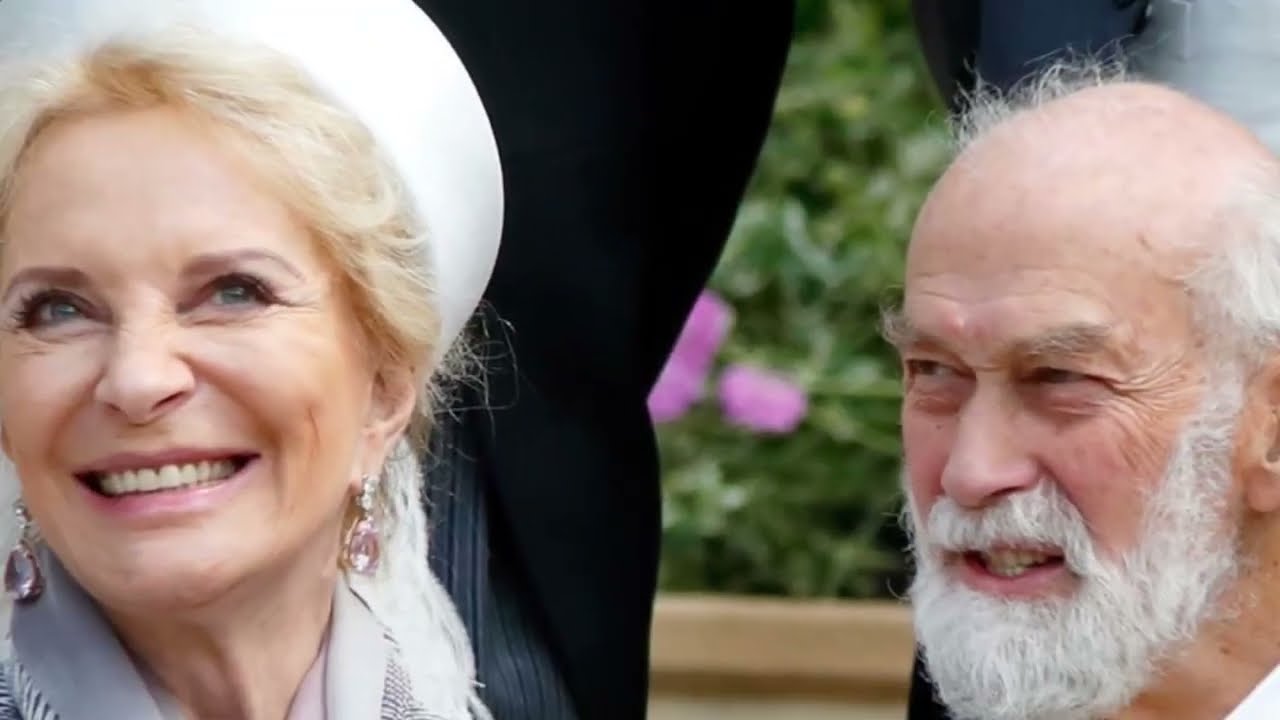
He had made a habit of that kind of intervention for decades by then, having played no small role 20 years earlier in steering his own nephew Philip toward the young Princess Elizabeth, and he approached this match with the same unbothered confidence.
At the time, Marie Christine and Troubridge were still technically husband and wife, the annulment still almost two years from being granted. Mountbatten, who by most accounts liked being early to conclusions everyone else eventually reached anyway, apparently saw no reason to wait for the paperwork to catch up before saying so.
He would not live to see much of what came after. An IRA bomb killed him off the coast of County Sligo in August 1979, a little over a year after the wedding he had pushed for finally took place.
By the time Rome's tribunal issued its ruling in May 1978, Marie Christine was for the first time in years neither legally married nor formally divorced in any meaningful sense. She was, in the church's own language, a woman whose only real marriage had not happened yet.
Three weeks later, on May 31, the Queen gave her consent at the Privy Council, and the engagement became public that same day. The paperwork that had taken years to assemble suddenly compressed into a single overnight headline.
Reporters who had little idea a royal romance was even in progress were working backward through most of a decade at once: the first marriage, the years of friendship that ran alongside it, the separation, the divorce, the annulment, all of it landing on the public in one story that made the whole thing look considerably faster and considerably tidier than it had actually been to live through.
Press coverage in the days that followed leaned hard into the contrast between the two women dominating royal headlines that same season: a princess divorcing after 16 years of marriage, and a baroness about to marry into the family despite a divorce and an annulment of her own.
Margaret and Lord Snowdon's divorce, finalized that May, was itself a genuine first for the modern monarchy, the first divorce of a senior royal since Henry VIII, and it had already consumed most of the family's tolerance for scandal that spring before Michael's engagement landed on top of it.
Commentators at the time could not resist pointing out that the family appeared to be losing one marriage and gaining another built on almost identical grounds that same year, a coincidence nobody in the palace press office had engineered and one none of them seemed especially pleased to be explaining.
The Queen's consent, required under the Royal Marriages Act, came without much public hesitation on her part by most accounts. What her consent could not do was undo the part of the law that had already decided the outcome.
The Act of Settlement of 1701 is one of the stranger pieces of legislation still shaping the modern royal family. Written at a moment when Parliament was determined to permanently lock Catholics out of the line of succession after roughly a century of religious civil war, it did not only disqualify a Catholic monarch. It disqualified anyone in the succession who married a Catholic. Full stop.
Regardless of the person's own faith, their distance from the throne, or their intentions, Michael was and remained Church of England. None of that mattered under the statute. The instant he married a Catholic, he would drop out of the succession entirely, as though he had never held a place in it at all.
He was not the first close relative this had happened to, and he would not be the last before the law finally changed. The same statute had already cost other descendants of George II their place over the preceding two and a half centuries, a quiet recurring feature of the family's history that rarely made headlines because the people it affected were almost by definition never going to be king or queen anyway.
What made Michael's case notable was not the mechanism. It was that for the first time in decades, a member of the family close enough to be photographed at Christmas was losing his place over a marriage the public could actually watch happen in real time.
At the time, that place was somewhere in the mid-teens, 16th by the count used at his engagement announcement, close enough that people occasionally noted it and distant enough that it had never shaped a single real decision in his life.
He gave it up publicly, and when reporters asked him about it he told them plainly that it made no real difference to him, since he was so far removed from the throne in practical terms anyway.
He would spend the next 37 years formally excluded from a list he had shown no interest in climbing, until the Succession to the Crown Act of 2013 finally came into force in 2015 and restored him, along with everyone else who had lost their place the same way, back onto it.
He was 72 by then, reinstated to a line of succession he was never realistically going to reach either way, in a correction that mattered more to the law than to his own life.
The fight that actually determined where and how the wedding would take place was not the constitutional one. It was the religious one.
Marie Christine wanted a full Catholic wedding, properly blessed, the kind of ceremony her first marriage had only partly managed even with its own dispensation. To get one required a papal dispensation for a mixed marriage.
This time she and Michael went further than the standard request, petitioning Pope Paul VI directly and offering as a real concession to raise any children of the marriage in the Church of England rather than as Catholics.
Their letter laid the offer out plainly, framing it as a compromise that had already worked once in Marie Christine's own family, since her mother had made a version of the same arrangement decades earlier. It was, on paper, exactly the kind of offer meant to make a difficult request easier for Rome to grant.
Rome said no. The dispensation was refused.
Vatican officials in that period were notably cautious about high-profile mixed marriage requests, generally wary of setting a visible precedent that could be cited by other divorced Catholics seeking similar accommodations. A case involving a prominent royal family likely to be reported internationally, regardless of how quietly the church tried to handle it, was exactly the kind of request that tended to get the most conservative possible answer.
The couple's own petition offering to raise their children Anglican may even have worked against them in a narrow sense, since it essentially asked Rome to bless a marriage while conceding upfront that the resulting family would not be raised within the church at all.
A Church of England ceremony was never realistically on the table either, since it would have required its own separate set of permissions. Nobody involved had the appetite or the runway to pursue one on that timeline.
That left the option almost nobody in this story had originally wanted: a civil ceremony held outside England, in a country where neither family's church had any say at all.
Marriages like this one, a divorced Catholic marrying into a Protestant royal family, were still rare enough in 1978 that there was no well-worn template for how to handle the paperwork gracefully.
The Church of England had its own long, uneasy history with royal divorce, going back to the abdication crisis of 1936 and running forward through Princess Margaret's own broken engagement to a divorced equerry two decades later.
The Catholic Church, for its part, had spent most of the 20th century treating any request involving a divorced person and a member of a Protestant royal house with extreme caution, wary of being seen to bend its own rules for the sake of royal convenience.
Michael and Marie Christine's case sat directly at the intersection of both institutions' anxieties, which is a large part of why neither one moved quickly and why the couple ended up settling for a solution that satisfied the letter of both without fully pleasing either.
They married on June 30, 1978, at the Rathaus in Vienna, Austria's civil registry office, in a ceremony that would have looked to anyone walking past the building that afternoon like any other municipal wedding taking place in the city that week.
The royal guest list was kept deliberately small. The Duke of Kent came with his daughter, Lady Helen. Princess Alexandra attended with her husband, Angus Ogilvy. Princess Anne was there. So was Lord Mountbatten, the man who had told Marie Christine two years earlier with total confidence that this exact day would eventually happen.
The Queen did not attend. Neither did Prince Philip. Nobody involved ever described the absence as a deliberate snub on the record, and it may well not have been one, but it was noticed the way these things reliably are by exactly the people whose job it was to notice.
For the reception afterward, Marie Christine wore the City of London fringe tiara, on loan for the occasion, along with a dress in the loose, softly draped style fashionable that year.
Photographs from the evening show a small, visibly relaxed gathering rather than anything approaching a state occasion, closer in scale and mood to a well-off private wedding than to the choreographed spectacle royal weddings would become by the following decade.
That informality was, in its own way, the entire point. A grander ceremony would have required exactly the kind of institutional blessing from either church that the previous month had already made clear was not coming, and a low-key registry office in Vienna let the family sidestep the question of which church's absence would be more conspicuous.
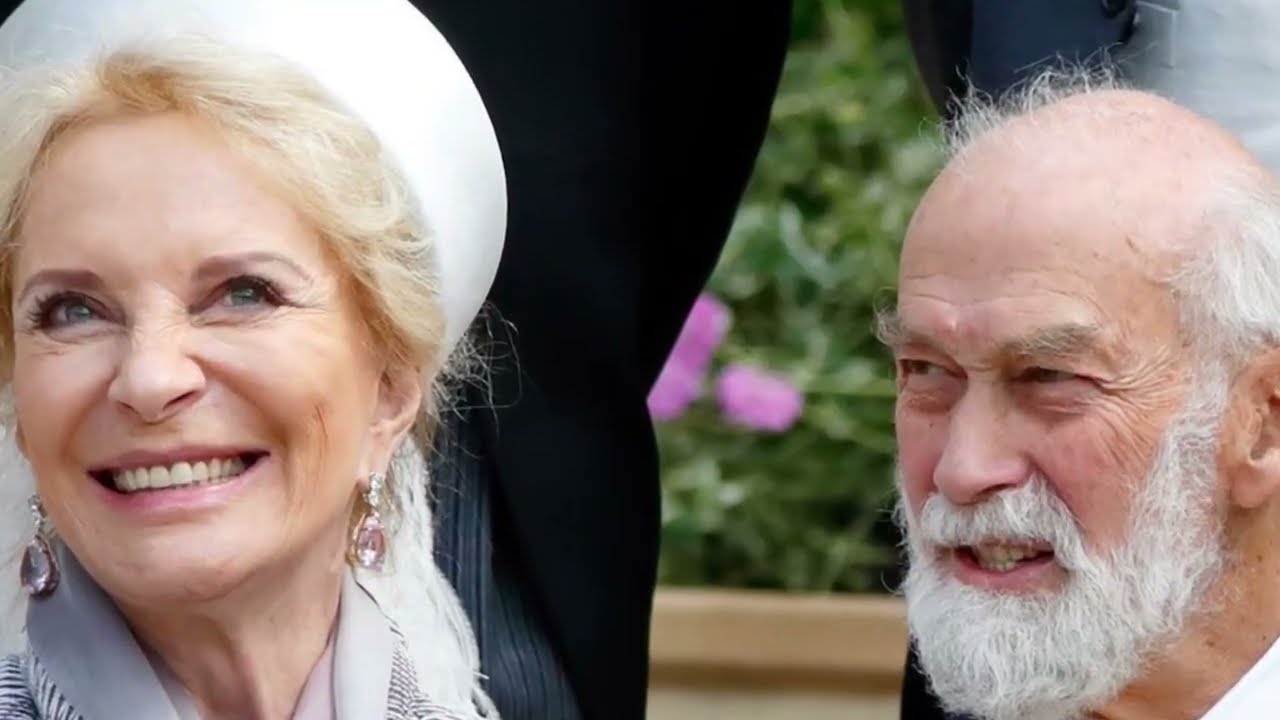
British newspapers covered the Vienna ceremony heavily despite its small scale, running photographs of the couple on the town hall steps alongside detailed explainers on exactly why the wedding had to happen abroad in a civil office without either church's blessing.
Several papers noted the contrast with how differently the same story might have played out a generation earlier, when a royal marrying a divorced Catholic would likely have been simply forbidden outright rather than routed around through a foreign registry office.
The coverage read in places almost like a small vindication for a more permissive decade, proof that the family could bend its own rules under enough pressure, even if it clearly preferred to do the bending as quietly as possible.
Upon marriage, Marie Christine took the style and title of Her Royal Highness Princess Michael of Kent, a title built entirely from her husband's name, since she held none in her own right, the standard convention for women who marry into the family without a title of their own.
It meant that the woman who had spent years carefully managing which version of her own history got told publicly now carried a name that quietly overwrote her maiden identity almost as thoroughly as that tribunal in Rome had already overwritten her first marriage.
Marie Christine von Reibnitz, in the formal sense the public would come to know her, effectively stopped existing on the same day her first marriage officially never had.
It is the same convention that later gave the public Princess Michael of Kent rather than Princess Marie Christine, just as it would later produce the Duchess of York or the Duchess of Sussex rather than a name any of those women had carried before marriage.
The rule is administrative, not personal, applied consistently to every woman who marries into the family without a title of her own. In Marie Christine's case, though, it landed on top of a decade already defined by other people's paperwork deciding what parts of her past officially counted, which gave a routine naming convention a weight it does not usually carry.
For five years, that civil ceremony in an Austrian town hall was the only wedding on the record. By then the couple had two young children: Lord Frederick Windsor, born in 1979, and Lady Gabriella, born in 1981. Both were baptized and raised exactly as promised in that original rejected petition, within the Church of England rather than as Catholics.
Then, on June 29, 1983, almost exactly five years to the day after the Rathaus ceremony, Prince and Princess Michael of Kent received a formal blessing of their marriage in a Catholic ceremony at Archbishop's House in London.
They had finally secured the permission that had been refused five years earlier, this time granted by a different pope. Paul VI, who had turned down their original request, died in August 1978, weeks after their wedding. It was his successor, John Paul II, elected that October, who eventually approved the blessing, by which point the arrangement the family had actually settled into was already exactly the one they had asked the previous pope to bless in the first place.
It was not a wedding in the canonical sense, since the two of them were already legally and by then sacramentally married. But it was the closest the church ever came to fully embracing a union it had spent close to a decade making difficult.
By this point, the couple had also settled into a specific, slightly unusual place within the wider family structure. Because Michael had renounced his succession rights, and because the two of them had never been added to the civil list, they operated for decades as privately funded royals, carrying out engagements and public duties without direct government support, relying instead on his consultancy income and her design and writing careers.
That arrangement gave them a degree of financial independence most working royals did not have, and it also meant the family's usual hold over its more troublesome members, the threat of withdrawn funding, never applied to them in quite the same way it did to relatives whose households ran on civil list money.
Lay the dates next to each other, and the shape of it is genuinely strange. A woman marries in a Catholic ceremony in 1971. That marriage is retroactively ruled never to have validly existed in 1978. She marries again that same year in a civil registry office, because the church still will not fully bless the second attempt either. Five years after that, the church finally grants something close to the blessing she had originally wanted the first time back in 1971, standing at a different altar next to a different man.
The erasure at the center of this story was never a single event. It was a process that ran for the better part of 12 years, moving through a civil divorce, a religious tribunal, a rejected papal request, a foreign registry office, and finally a private blessing before the official record finally caught up with the life the two of them had actually been living together since 1972.
In the years after the wedding, Marie Christine turned the same encyclopedic interest in European royal genealogy that had made her memorable at dinner parties into an actual second career, writing a series of popular history books on royal marriages and dynasties and later lecturing internationally on the subject.
It was, in its own way, the same instinct that had carried her through a childhood spent learning which family stories got told and which stayed filed away, now put to professional use rather than personal necessity. That same body of work would later draw its own share of scrutiny, with several of her books facing accusations of unattributed borrowing from other historians, a separate controversy that belongs to a different story than this one.
There is one more piece of erasure in this story, and it belongs to Marie Christine's side of the family rather than to either wedding, but it lands on exactly the same theme, close enough that the story is not finished without it.
In 1984, a left-wing academic named Philip Hall, researching a book about the royal family, came across records showing that Baron Günther von Reibnitz had joined the Nazi party in the early 1930s and later served in the Waffen SS. The Daily Mirror published the story in April 1985.
Buckingham Palace's press office initially said the newspaper's inquiry was the first the princess had ever heard of any of it. Within the same day, Princess Michael sat for a television interview and gave a rather different account, admitting she had known for years that her father had been a Nazi party member, just not specifically that he had served in the SS.
Speaking to reporters at the time, she said that discovering it at 40 years old was something she would simply have to learn to live with.
Public reaction split in a way that says as much about Britain in 1985 as it does about the story itself. One commentator in The Spectator noted dryly that the family had already survived an actual Nazi relative decades earlier without lasting damage, and suggested the real scandal was less the baron's wartime record than the palace's own fumbling attempt to manage the story once it broke.
Ordinary readers, by most contemporary accounts, seemed considerably less troubled than the newspapers covering them. Vox pop reporting from that week captured a general shrug, the sense that a woman could not reasonably be held responsible for a father she had barely known growing up.
Jewish organizations monitoring Nazi war crimes cases publicly agreed there was no evidence tying the baron to any atrocities, which took some of the edge off the story even as it kept running through Fleet Street for the better part of a week.
Baron von Reibnitz himself had died in Bavaria in 1983, two years before the story broke. So the revelation landed entirely on his daughter, who was left answering for a man she had spent in total barely three years of her childhood actually living near.
Whatever the palace had or had not uncovered when it vetted her ahead of the 1978 wedding, and biographers still disagree about how thoroughly that vetting was actually done, her father's wartime record had not been formally erased the way her first marriage had. It had simply been buried, unmentioned rather than undone, sitting quietly in postwar tribunal records for four decades until a researcher with access to the right archive went looking and found it anyway.
Vetting a prospective royal spouse in the 1970s was a much looser process than the phrase implies. There was no standing intelligence unit combing foreign archives before a wedding was approved. Palace officials relied heavily on what the family themselves disclosed, on the social references available through mutual friends, and on whatever a discreet private inquiry could turn up in the time available, which in Marie Christine's case was limited by the same tight, annulment-driven timeline that compressed everything else about the engagement into a matter of weeks.
A thorough excavation of a Silesian baron's wartime party membership, buried in German administrative archives and cross-referenced against postwar denazification tribunal files, was well beyond what that kind of vetting was ever built to catch. It took a dedicated researcher working with the specific purpose of writing about the family years later to do what the original vetting process never had the time or the tools to attempt.
The marriage that had taken 12 years to legally dismantle and rebuild turned out, in the end, to be the more manageable problem. The family history underneath it had never actually gone anywhere. It had just been waiting.
None of this makes the marriage itself any less real. Prince and Princess Michael raised two children, built a shared life that has now run considerably longer than either of their first attempts at one, and by most accounts remain, whatever else has been written about them since, genuinely fond of each other's company.
What it shows is how much institutional machinery, Roman and British, both had to grind through quietly before that ordinary, durable marriage was ever allowed to exist on paper at all.
Prince and Princess Michael of Kent are still married, longer now than almost any other pairing in their generation of the family.
The first fiancée in this story, in the loosest possible sense of the phrase, was never a person. It was a marriage: real, witnessed, legally documented, lived in for two years, and then formally declared by the very institution that had performed it to have never validly happened at all, cleared out of the way just in time for the one that actually lasted.
It is a pattern that shows up again and again once you start looking for it in this family's history. Not fabricated scandal, but the much quieter, much more common practice of finishing the difficult paperwork first and letting the public see only the announcement at the end.
A tribunal in Rome, a Privy Council meeting, a registry office in a foreign city chosen specifically because it would not force either church to publicly decline the other's ceremony. None of it was hidden exactly. It simply happened in rooms nobody was pointing a camera at, which amounts to almost the same thing.
That is the story most people miss when they hear about this wedding. By the time it reached the public, the complicated part was already finished, filed down into a rushed announcement and a foreign registry office instead of the six years of quiet, careful unmaking it actually took to get there.