On December 13, 1862, Union soldiers launched fourteen separate attacks against a stone wall at the base of Marye’s Heights in Fredericksburg, Virginia. Each time, men lined up shoulder to shoulder and advanced across open, frozen ground toward Confederate troops stacked four ranks deep behind that wall. None of the fourteen assaults got closer than about thirty yards. By the end of the day, more than 12,000 Union soldiers were dead, wounded, or missing for ground that was never captured.
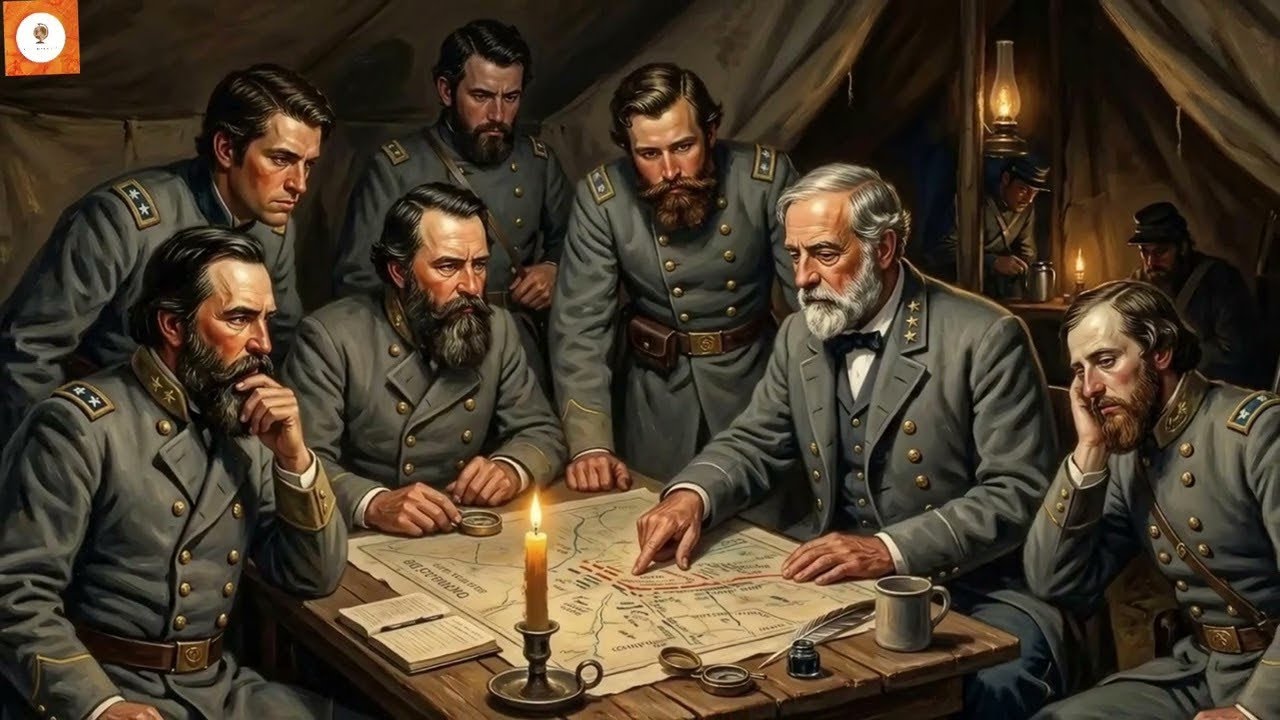
The men who ordered those attacks were not fools, and they were not indifferent to the lives of their soldiers. Many were graduates of the same military academy, trained by the same instructors, and taught the same tactics that had won victories in wars for fifty years. But by the time their men marched onto the battlefield, the weapons on both sides had turned those tactics into a death sentence. The tightly packed battle line was not invented for the American Civil War.
It developed in European warfare, was refined over more than a century, and reached its peak during the Napoleonic Wars of the early nineteenth century. It was a rational response to the weapons of that era, specifically the smoothbore musket. A smoothbore musket had no rifling inside the barrel, so the round lead ball tumbled in flight and became wildly inaccurate at distance. A skilled soldier firing at an individual target beyond roughly eighty yards was more likely to miss than hit.
At one hundred yards, a soldier was essentially firing in the general direction and hoping. Since individual accuracy was hopeless, commanders solved the problem with density—hundreds of men in a line firing coordinated volleys meant enough lead moved through roughly the right space at roughly the right time to hit an enemy line that was, by definition, packed together. There was a second reason for the formation: control. A Napoleonic battlefield was loud, smoky, and chaotic, with no way for a commander to speak to a soldier two hundred yards away in real time.
The available tools were the human voice, the drum, the bugle, and the flag. If thousands of men needed to move, stop, turn, and fire together, they had to be physically close enough and visually organized enough for a shouted order or drumbeat to reach the entire formation at once. The packed line did that. A scattered mass of individual decision-makers could not be directed with nineteenth-century command technology.
There was also a defensive reason: protection against cavalry. A charging horse usually would not ride straight into a solid wall of men with bayonets. Scattered infantrymen were exactly what cavalry sought out, isolated men who could be cut down one by one. The rifled musket solved the accuracy problem, but older rifled weapons came with a practical flaw.
To engage the grooves inside the barrel, the bullet had to fit tightly, which meant soldiers struggled to ram it down a dirty barrel under fire, sometimes using a mallet. That was too slow for the heat of battle. The innovation that changed everything was a French design called the Minie ball. Developed in the 1840s, it was a conical bullet with a hollow base.
When the powder charge ignited, expanding gas forced that hollow base to expand outward, gripping the rifling for accuracy at the moment of firing. Before firing, it loaded almost as quickly and smoothly as the old round ball. The rifled musket became practical for ordinary infantrymen. By the time the Civil War began in 1861, the rifled musket was already the standard infantry weapon on both sides, not a rare or experimental upgrade.
The most common versions, the Springfield and its cousin the Enfield, were accurate to about 300 yards in the hands of a reasonably trained soldier. Compare that to the effective range of the smoothbore musket, roughly 80 to 100 yards, and the range at which infantrymen could accurately hit each other had tripled or quintupled. The logic of the line formation depended on the assumption that you would not face accurate fire until the final 80 yards of your advance. West Point, which trained a vast number of the men who would command armies on both sides of this war, taught tactics still based on Napoleonic principles.
The standard textbooks, most notably the widely used manual by French officer Henri de Jomini adapted by American instructors, were systematic copies of tactics used by Napoleon’s armies decades earlier. Officers on both sides studied the same material, sometimes under the same teachers, because West Point trained future leaders for an army that had not yet split apart. That shared doctrine meant the old tactics were not a relic held onto by a few backward commanders. They were a professional language spoken by nearly all officers, Union and Confederate.
Changing them meant abandoning a doctrine that had been taught, tested, and rewarded throughout an entire professional career. Aggressive frontal attack was tied to concepts of bravery, honor, and the moral character of an army. A commander who avoided direct assaults in favor of caution, fortification, or maneuver risked being seen by his superiors, the press, and his own men as a coward. Some of the most costly decisions of the war were driven at least partly by a command culture that equated boldness with reckless attack and caution with hesitation.
There was also a simple information problem. A failed assault with heavy casualties was often blamed on bad luck, inadequate artillery support, poor coordination, or bad terrain, rather than recognized as evidence that the entire method of attacking a fortified position with rifled muskets had collapsed. It took a series of repeated, undeniable disasters before the lesson could no longer be ignored. Fredericksburg is one of the clearest examples.
Union forces under General Ambrose Burnside launched repeated frontal attacks on a strong Confederate defensive position anchored on that stone wall at the foot of Marye’s Heights. Confederate soldiers behind the wall fired their rifled muskets from well within the expanded effective range, inflicting casualties that shocked even experienced officers on both sides. Union losses were slightly more than 12,000 men against a fraction of that for the Confederates, a lopsided catastrophe that happened precisely because Union commanders sent their men in packed formations across open ground into a defensive position made far deadlier by modern rifles than the plan assumed. Pickett’s Charge at Gettysburg was the same problem on different ground.
Between 12,000 and 14,000 Confederate soldiers advanced across nearly three-quarters of a mile of open ground directly into Union artillery and rifle fire from fortified high ground. Nearly half of the men who made that advance did not return. The distance itself is proof. Three-quarters of a mile is far longer than the 80-yard danger zone the original tactics were designed to endure.
Every one of those extra hundreds of yards was additional time spent inside effective rifle range, time the formation was never designed to absorb. The Battle of Cold Harbor in 1864 is frequently cited by historians as one of the most brutal late-war examples of the pattern. Union attacks on heavily fortified Confederate positions produced enormous casualties in a very short period. Participants and observers then and since described it as a vivid demonstration of tactics failing to keep pace with battlefield reality.
Taken together, the pattern is impossible to ignore. Attacking in dense formations across open ground at a prepared defensive position held by infantry became one of the most effective ways to produce catastrophic casualties for minimal gain. It happened again and again on both sides for years. Change eventually came, not as a sudden revision of military doctrine, but as a gradual practical shift driven largely by soldiers and field commanders who learned through repeated, harsh experience what actually kept men alive.
By mid-war, and especially in 1864 and 1865, both armies began fortifying their positions on a far larger scale than at the start of the conflict. The long siege operations around Petersburg, Virginia, in the final year of the war are the clearest large-scale example. Trenches stretched for miles, with fortified earthworks that look strikingly similar to the trench warfare that would define World War I half a century later. Historians often draw that comparison directly, describing the final stages of the Civil War as an early preview of tactics the rest of the world would not fully adopt or suffer until 1914.
Skirmish lines, more flexible dispersed formations of soldiers operating with greater individual initiative, became more common for probing enemy positions and screening the movement of denser main formations, reducing the number of men exposed in the most vulnerable massed formations. Officers increasingly used available terrain and cover deliberately, rather than treating open-ground advances as the default path to enemy positions. The old tactics were never completely abolished, and massed infantry assaults continued until the end of the war. But the overall balance shifted noticeably toward caution, fortification, and cover as commanders on both sides absorbed years of costly, hard-won lessons about what rifled muskets did to men advancing across open ground.
This shift was uneven and hesitant. It was not a single decision where armies unanimously agreed the old way was over. It was closer to an accumulation of experience by thousands of soldiers and junior officers, all the way up to senior commanders, each independently absorbing the same harsh lesson from his own experience, until the accumulated weight of that lesson changed how the armies fought, even without a formal update to military doctrine. The rifled muskets and Minie balls did not slip into the Civil War as a late-war secret weapon that nobody expected.
These weapons were standard from nearly the beginning of the conflict, understood by ordnance officers, manufactured on a massive scale, and carried by the majority of infantrymen on both sides. The problem was not the technology. It was that an entire generation of officers had been trained, tested, and promoted under a doctrine designed for a different weapon. Abandoning that doctrine in the middle of a real war against an enemy trained in the same doctrine proved far harder than simply issuing better rifles.
The gap between what a weapon can now do and what its users were trained to expect is not unique to the 1860s. It appears in military history again and again. But the American Civil War may be one of the clearest and most measurable examples in American history because the evidence is so direct.
You can point to a specific battle, a specific stone wall, or a specific field, and calculate the cost of a tactic made obsolete by the very weapons the soldiers carrying them out held in their hands.