For decades, Jacqueline Kennedy asked her children never to publish a series of private conversations she recorded after her husband's assassination. She repeated the plea to her daughter Caroline, even on Caroline's wedding day, turning suddenly serious to say the tapes must never be made public.
The recordings captured conversations made shortly after President John F. Kennedy was assassinated in Dallas on November 22, 1963. They dealt with history, with Jackie's own personal history, and with intimate secrets and controversial opinions she had kept hidden.
Years passed, and Jackie built a career as an editor in New York until her death in May 1994. Caroline kept the promise she had made to her mother. Then, in 2011, a television network decided to produce a fictional portrayal of the Kennedy saga, one that would reveal certain family secrets.
To stop the rumor mill and avert controversy, Caroline decided to release the eight hours of interviews Jackie had given barely four months after her husband's death. The young widow was 34 at the time. She recounted the past like a novel about her dream life with John Kennedy, retelling it because she could not change it.
Caroline was seven years old when her father died, and she remembered the weeks that followed the assassination. Her distraught mother walled herself in silence, and the insights she tried to give were interrupted by sighs when the words would not come. Jackie spoke of her solitude and of the small details of her existence, the end of a dream life that had turned into a nightmare.
She could still hear the incessant drumming from Jack's funeral. She always called him Jack in the interviews, never John or JFK, so that their names, Jack and Jackie, seemed united forever.
On the night of the funeral, her only thought was about knowing where she would sleep from then on. Even when everything else crumbles, life must go on, and there have to be reference points, familiar places, and security.
Jackie left her home for the first time on December 3, 1963, ten days after her husband's death. Clint Hill, her bodyguard and the man who jumped onto the hood of the president's vehicle when the first shot rang out, was being decorated with the Medal of Honor. Hill had spent three years at her side, protecting and advising her, and the only day he failed in his duty was in Dallas.
The two of them felt a drift. She had lost her husband, and Hill had not managed to keep him alive. Jackie said Hill would have given his life for us.
Three days later, on Friday, December 6, Jackie left the White House and moved a few blocks away to Georgetown. Sometime before, she had invited the journalist Theodore White to the family estate at Hyannis Port, choosing him as a confidant to deliver her testimony of the assassination.
She trusted White, who had always been sympathetic to the president, and she did not want anyone else to tell her story. She had an immense need to speak, and she talked for four hours.
Jackie relived the presidential trip to Dallas and spoke about her pink suit, a color she loved and that Jack had asked her to wear that day. She wore it all day despite the blood stains that soiled it, to show the world what the killing of the president had done to her.
Just after the fatal shots, she climbed onto the hood of the car. It was neither an act of desertion nor dishonor, but a bid for life, because there was nothing more she could do for Jack.
With Theodore White, she talked about the assassination in a rather delirious manner. She spoke about the beauty of the inside of Jack's skull, which she held in her hands, the concentric circles of its matter with an iridescent layer of red.
She also talked about the death of their son Patrick, who died at birth that very summer, an event that brought her and Jack closer together. That day she took the weeping Jack in her arms and told him the only thing she could not bear would be losing him.
Theodore White's article, carefully edited by Jackie, appeared in Life Magazine on December 6, 1963. It was there that she laid the foundations of the Kennedy myth, starting to build the legend of JFK as a man who died a hero like King Arthur on the battlefield, sword in hand.
The lady in pink was continually driven by a dual purpose, molding her own image while managing that of the president. But loss crushed her, and the lady in pink was no more. In her place, a young woman in black was emerging, wondering what her future would hold.
Bobby assumed Jack's place alongside her, and it was from his offices in the Department of Justice that Jackie thanked the American people for their help and support. She was enveloped, almost kept under surveillance, by her brothers-in-law Bobby and Ted.
In a public statement, she expressed appreciation for the hundreds of thousands of messages she and her children had received over the past weeks. She said the knowledge of the affection in which her husband was held had sustained her, and the warmth of those tributes was something she could not forget.
The Kennedys had embarked on constructing a myth, a shrine to the glory of the assassinated hero. It began with the building of a large library in Boston and a project collecting memories, stories, and accounts, including Jackie's own account, which at her request was not to be divulged until 50 years after her death.
Her desire to confide in someone was endless but not reckless. She and Bobby preferred to manage the Kennedy legend themselves and wanted to move on once and for all.
The renowned historian and adviser to JFK, Arthur Schlesinger, took over responsibility for these conversations with Jackie. Seven times she invited him into the new home she had made in an upscale neighborhood of Washington, but the curious still flocked to her door, and she felt constantly observed and under scrutiny.
The recordings began on Monday, March 2, 1964. Jackie, while remaining discreet and timid, did not hold back. Telling her own story was her route to freedom, a way of evacuating her tensions, expressing her passions, and laying the foundations of the JFK myth.
She turned to the very beginning and contradicted the Kennedy clan's version of the legend that Joe, the eldest brother, had been designated by their father to one day become president. That brother fell as a war hero, but he possessed neither Jack's stature nor his talent or intelligence. Her husband did not become president by default.
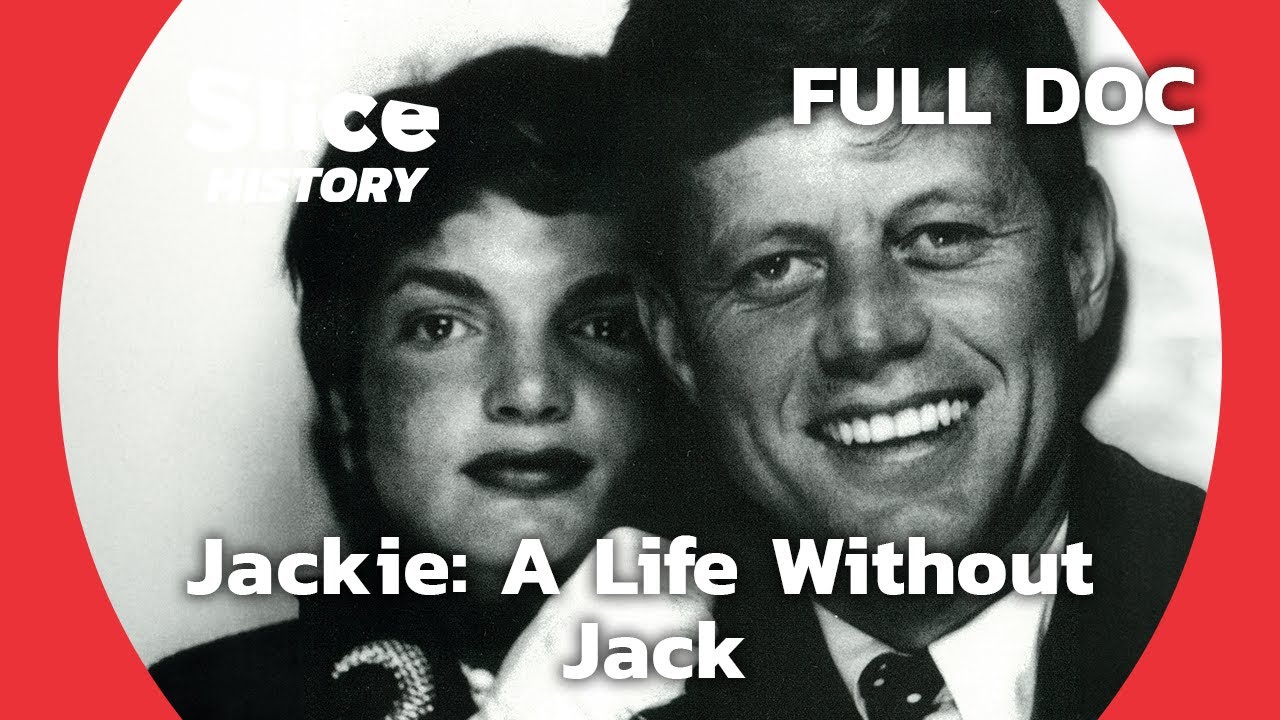
She had been a young, fashionable photo reporter in Washington, and she sacrificed her ambition by choosing to become the perfect wife of the young senator from Massachusetts. For the two years and nine months of JFK's presidency, she kept her mouth shut, limiting herself to smiling. Now she wanted to underline her role in Jack's political career.
She told how she translated books from the French for him about the century's greatest men, and how she organized dinners and receptions. She was no trophy wife and did not like that expression, and he was no narcissistic playboy, although other men were jealous of his youth and good looks.
She claimed for herself the role of confidant and assistant to the future president, though she was neither his muse nor his inspiration. Between them, she said, they talked politics the whole time.
Jack's ambitions crumbled in 1956 after his failed candidacy as vice president of the United States, a candidacy his father Joe thought a waste of time since it was lost from the start. Jack had thrown himself into it, and Jackie stood by his side. John would sleep in his hotel room alone, but she stressed that not a day went by when they did not see each other.
JFK's victory in the 1960 presidential election owed a lot to Jackie. Always at her husband's side, she shook thousands of hands, keeping a calm composure and an eternal smile. She became a true campaign professional.
Kennedy only just won the election against Nixon, his opponent whose wife was too submissive in Jackie's eyes. Her first interview session was rambling, a sort of test run, and Jackie and Arthur Schlesinger arranged to meet the following day.
Jackie recounted her everyday life in the wake of Jack's death, furnishing her new home, paying bills, and arranging Caroline's schooling. Alone at night, she would smoke and drink and no longer answer the phone. Caroline told her school teacher about the sadness that reigned in the household, and the previous night John John had torn a page out of the newspaper showing a picture of his father's assassination in order not to hurt Mommy.
In the second interview, Schlesinger questioned Jackie about the days that followed Jack's victory in the presidential election in November 1960. It was the high point of their lives. Their son John John was born shortly after the election, and it was an immense source of joy. Jack came to see Jackie at the maternity ward three times a day.
This almost made her forget the summer of 1956, when four years earlier she lost her daughter Arabella due to a premature birth. Upon hearing the news, Jack, who had been on vacation in the Mediterranean, reportedly told his brother, the kid's dead, what do you want me to do. Bobby had to convince him to get on the plane.
She recalled the weeks preceding his inauguration as the new president, by far the dearest of the entire presidential episode. First came their vacation in Florida, then the preparations for the festivities. The inauguration ceremony was held on January 20, 1961, and both of them felt like children on Christmas Eve.
Jack wrote his own memorable speech, and she knew this because he had recited excerpts to her in Florida. Yet it was knowledge that the loyal collaborator wrote Kennedy's speeches.
Jackie was sorry she was not able to kiss her husband at the inauguration. She left in the middle of the party. The president's loyal friends were all present, including Frank Sinatra and Peter Lawford, and she knew that neither of them was a model of good behavior. The party promised to be a wild affair. Jack came to see her in the middle of the night, and she was still awake, overwhelmed with joy. They slept in the same bed.
The years of the presidency made up her best memories. Jackie accorded herself much importance, a major historical role that she probably never had. She talked of world events as if she had been there, implicated, consulted, and involved in strategic decisions.
In reality, the president was alone, poorly advised, served by a bad cabinet, and envied by foreign leaders. She even recounted that Jack would have her read diplomatic telegrams. Jackie was not just a witness or accomplice to his power, but a genuine collaborator of the president.
Cuba was Kennedy's nightmare. In April 1961, an attempted landing in the Bay of Pigs led by anti-Castro troops equipped by the CIA failed miserably. The humiliating episode proved critical for the president.
The lady in pink commented that Jack, under immense pressure, found it impossible to keep his calm. Castro's presence in Cuba terrified him. The event shook them, and the newly elected president's credibility had nearly been ruined in the eyes of the world.
She blamed the FBI and the CIA, saying Jack had been given no choice. She condemned Nixon and Eisenhower as responsible for allowing Castro to come to power in Cuba. Cuba was an open wound.
After the Bay of Pigs, she saw Jack cry. A year later, the president negotiated the release of the rebels with Cuba's leader, bringing an end to the episode. He then put brother Bobby in charge of special operations from that point on.
Although John was tough and generally slept well, his one moment of weakness and borderline depression was triggered by Khrushchev, the leader of the Soviet Union. The pair met in June 1961 in Vienna, Austria. Kennedy and Khrushchev talked of the tsars, of Tolstoy, and of Laika, the dog that had just conquered space. Some weeks later, a present from Russia arrived for Jackie at the White House, one of Laika's puppies.
In Vienna, she spent her time with Mrs. Khrushchev, of whom she painted a cruel portrait. Whenever Jackie took out a cigarette, the matronly woman warned her not to smoke so much, saying Russian women do not smoke. She also made it clear she thought Russian women were far superior to their American counterparts, which Jackie took as a slap in the face.
She nonetheless recalled that Mrs. Khrushchev had a delightful face. De Gaulle had warned her to be on her guard, saying she was the most crafty woman in Vienna. Jack found himself confronted with a cynical, warlike Khrushchev with a gloomy sense of humor. Khrushchev deemed Kennedy intelligent but weak, while Jack saw Khrushchev as a gangster through and through.
Jackie described a terrified Kennedy who confided something of the sort that there would perhaps be a war with the USSR. Indeed, the Cuban Missile Crisis in October 1962 came a hair's breadth away from triggering a third global conflict. For ten days and nights, the president worked in an apocalyptic atmosphere, and she remained at his side, loyal as ever.
Jackie cast herself as a witness to these monumental events taking place on the international political stage. The Cuban Missile Crisis ended with an indisputable victory for Kennedy. Jack, enjoying his glory, told her that if anyone had ever wanted to shoot him, that day would have been the perfect moment.
Jackie also appeared to bask in the reflected Kennedy glory, saying she was the best and that Jack was proud of her. Still, the presidency was worrisome. On weekends, the presidential couple would often leave for their residence in Glen Ora, Virginia, where they planned to live. Jackie would ride horseback while he slept, each in their own solitude.

She described how he would devour history books, reading in the car, at the table, even while walking. A fortnight later, she would recognize extracts from the books in his own speeches. It was on board boats that Jack was at his most relaxed. He loved the water, the sun, and the absence of telephones. That was true happiness, and he regretted not having known more happy moments in his lifetime.
Behind his permanently tanned face, Kennedy was sick and had been for a long time. Addison's disease gnawed his bones, and his spine slowly crumbled. The pain was crippling, and his atrophied muscles even prevented him from putting on his shoes. He slept on a horsehair mattress placed on planks. Jack suffered greatly from his back, and he was always suffering all his life.
Jackie spoke of Jack's courage, of Jack the martyr, of that wounded body, of crutches after surgery in 1955. That was when he discovered novocaine, and it was as if he was born again. But what she could not speak about was his addiction to the drugs supplied by the scandalous Dr. Jacobson.
From the early days of his presidency, Jacobson prescribed him shots that made the president euphoric. Bobby had the FBI analyze these drugs: Demerol, cocaine, painkillers. JFK was an addict. That was why, after the assassination in Dallas, Bobby accepted a botched autopsy to prevent anyone from discovering his brother's drug problem.
The third interview with Arthur Schlesinger took place the next day. Jackie by turns revealed herself, hid, and revisited her life. Everything was so tangled. That night she had been thinking about Lyndon B. Johnson, her husband's successor.
After his brother's death, Bobby Kennedy remained the attorney general. In his eyes, Johnson had no mandate and was an usurper. Jackie herself could not forgive the new president for having pounced at the presidency, being sworn in in Dallas barely one hour after Jack's death. And yet those are the rules.
Johnson amused Jack, she said, but he was incompetent, crude, and lazy, the kind of man who could not make a decision, who yielded to everyone's opinions, envious, greedy, and only interested in the superficial symbols of power, plans, protocol, and fame. Jack would say, do you realize what would happen to this country if he became president.
Jack said she was thrown out of the White House, but she was lying. It was she who wanted to leave. Shortly after, Johnson offered her the post of ambassador in Paris, and she did not want to go back there anyway.
Whenever she went anywhere in Washington, Jackie would go out of her way to avoid the place where she spent the best years of her life. She kept everything from those years like so many trophies: the diaries, the menus, the memos. She used to love taking care of the plants there and setting the table for official dinners. Beauty, elegance, distinction. It had been her house.
With the president's blessing, Jackie hired a French interior decorator despite the misgivings of American public opinion, which feared she was too much of a Francophile. Under the Kennedys' rule, the White House was transformed into the court of the Sun King, a setting worthy of Versailles.
She had feared that her marriage might run aground during the presidency, but they had never been so close, a united family and an inseparable couple. She had an office in the White House and saw Jack every day at any moment.
She continued to paint a glowing and tender portrait of him, always attentive, always warm, always kindly, and she the model wife he loved. Putting the kids on his lap, she recalled, though he could not carry them in his arms or lift them into the air because of his back. He would tell them a lot of stories, the one about the white shark and the black shark, or the one about Bobo the Lobo. The perfect husband and an ideal father. Who could believe her.
She was not talking to her interviewer. She was talking to posterity. The legend must live on. Jack was her God.
American presidents have always proclaimed their faith. Jack had decided to believe out of superstition, she said, but added that she thought God is unjust because God did not believe in John Kennedy. She paused, overwhelmed with emotion, took a drink, and hesitated.
He had the most incredible aura, she said. Jack was a living myth, the idol of youth the world over. Knowing that he was loved made Jack feel great, and it was exactly that which distinguished him from the old dinosaurs in the Senate.
A fortnight went by between the third interview and the next. Jackie traveled to New York and went out with Bobby. She spent a lot of time with him. Whether their relationship was platonic or romantic, some today tend to believe he was a source of comfort that went beyond the merely spiritual.
Bobby was more than just her brother-in-law. He was the brother she had never had, her friend. Bobby and Jackie were soulmates. After Bobby's death four years later, she wept and said she hated America for killing the Kennedys.
One weekend in September 1963, two months before Dallas, they were in Newport. Jackie was recovering from the death of Patrick, her third child. In pictures from that trip, Ben Bradlee, a friend from The Washington Post, can be seen accompanied by his wife Tony.
According to Tony, JFK attempted on several occasions to seduce her, if it could be called seduction, so aggressive was his technique. The other woman was Tony's sister, Mary Pinchot Meyer, the president's most loyal mistress. Jackie could not not know, especially when she learned that he had spent the night with Mary Meyer, not to mention the succession of women in her husband's bed, from bathing session to siesta, friends of the family, society women, models, actresses, secretaries, and prostitutes.
Jack compartmentalized his life: his family, his work, his friends, and the part he never revealed, an unbridled sex life. In puritan America, it was perhaps his dark side. There were so many women in Jack's life, but Jackie did not say anything about any of these affairs.
In one moment of defiance, though, she threw down this challenge: she had better be wonderful, that mistress of yours, to justify cheating on a woman like me. Instead, Jackie emphasized how discreet her husband was. He would send her abroad as much as possible so that she could have fun, telling her to go to Italy with her sister, to New York, or to Greece.
While she was vacationing on Capri in June 1962, Mimi, an intern at the White House, became the president's mistress at the tender age of 19. Years later, Mimi recounted that Kennedy repeatedly offered her drugs and would also offer her to his collaborators as a gift.
Jackie said of Jack that he does not ever cheat in anything. Then she fell silent, seemed lost in her memories, took a deep breath, had a drink, and asked, may I say that. Schlesinger encouraged her, telling her she may say whatever she likes. But suddenly she reconsidered, saying no, actually, it is not worth it.
She never mentioned how jealous Jack was. It is said that Kennedy even demanded paternity tests for their two children, Caroline and John John. He was convinced that his wife behaved as immorally as he did. When she took a trip to Greece in 1963, he instructed Clint Hill, Jackie's bodyguard, to make sure that Onassis did not get too close.
During her final remarks of this session, she talked of what she called the poison of the presidency. We were completely cut off from the world in the White House, she said, and we were always the last to hear what everyone was saying about us.
Around that time, Jackie had put the house in Glen Ora up for sale. They never got to live there after all. It was a home just for the two of them, and after the presidency she could not bring herself to settle there without him. She wanted to move to New York, perhaps to follow Bobby, who had decided to run for senator. She wanted to distance her children from the Kennedy clan.
The Warren Commission hearings to investigate the Kennedy assassination had started. The first to be interrogated was the other widow from Dallas, the wife of Oswald, the presumed assassin.
During the fifth interview, Jackie Kennedy touched on a sensitive subject: France. Known for her love of the country, Jackie now painted a harsh and cruel caricature of it.
Throughout his trip to Paris on May 31, 1961, Kennedy was presented as the guy accompanying Jackie Kennedy. The couple won over the French, who found Jackie brilliant and cultivated, and the jubilant crowd welcomed her like a legendary princess.
France was the homeland of the Bouvier, Jackie's paternal side of the family. She felt at home there. She had spent time in Paris during her youth, and she adored French fashion designers, the city's architecture, and the great figures of French history, including Napoleon, Saint-Simon, Lafayette, and Madame de Staël, as well as a certain Charles de Gaulle, France's liberator.
Strangely, three years after this voyage, Jackie seemed to renounce this love. Kennedy's adviser had warned them that de Gaulle was a fascist, an arrogant colonialist, or at best a Don Quixote who was full of himself. Hence the meeting between the two leaders proved difficult, fraught with fundamental disagreements.
Although there was a certain reciprocal admiration, de Gaulle presented himself as Kennedy's friendly yet critical protector, playing the polite yet curious guest. Kennedy questioned the old general, pretended to accept his advice, assured him of his admiration, and even went so far as to cite the opening sentence of his memoirs of war, which he paraphrased as, I have always had a certain idea of the United States.
Overcome with sorrow, Jackie now admitted that her husband felt nothing but contempt for de Gaulle, and that she disliked the French just as much as he did. He fueled his bitterness. His general was vindictive, his pride had compromised relations with the United States, and he was disloyal. Nevertheless, de Gaulle had been an unconditional ally during the Cuban Missile Crisis.
In an act of childish spitefulness, she even had all the Cézanne paintings taken down in her private quarters to remove any French presence in the White House. She did not spare poor Madame de Gaulle either. She had seemed so weary, she seemed to have suffered so much, and she sort of drifted about on her own, staring into space. Sitting next to her, Jack tried to talk about something other than embroidered tablecloths.
Jackie still chuckled. Once again, it was all about the legend. De Gaulle was supposedly so infatuated with Jackie that he could not take his eyes off her throughout the entire stay in Paris. Jackie showed her seductive side, later recalling without the slightest modesty that she knew the general was interested in her. She did, however, acknowledge a certain gallantry and courtesy in the general's manners. But still, she named her poodle de Gaulle.
Choked with sorrow, she closed the interview with this venomous portrait of the old general, who she saw as guilty of having outlived her husband, of still being alive while her husband was not. Today in Arlington, an eternal flame burns on the tomb of the assassinated president. Jackie wanted this flame to be just like the one burning at the Arc de Triomphe, and she got that idea from her trip to Paris.
In Paris, she insisted on meeting with the very romantic French hero, the writer André Malraux, de Gaulle's minister of culture. She overflowed with adulation. Meeting Malraux, she said, was like running an obstacle course in fog at 70 miles an hour. With him, your mind goes back and forth. He is the most fascinating man I have ever spoken with.
She presented Kennedy as a worthy conversation partner for Malraux, saying he had an amazing exchange with my husband. Usually parsimonious with her praise, this time she gave in, suggesting the brilliance of one was reflected in the brilliance of the other. She invited him to the United States on two occasions.
Kennedy had asked his wife to serve as a liaison between de Gaulle and America so as not to lose the connection. Malraux brought the Mona Lisa with him, which was exceptionally borrowed from the Louvre for an exhibition at the National Gallery in Washington. The exhibition had an enormous impact and, in Jackie's eyes, enhanced the splendor of the Kennedy presidency.
But Jackie made another gaffe and tactlessly described Malraux and his wife Madeleine as being like two sinister crows. Malraux's face was pale and bloated with tears, distorted by nervous tics. André Malraux had just lost his two sons in an accident. She was aware of this but could not help herself.
Malraux, she said, worshipped de Gaulle like a spaniel worships its master. De Gaulle would talk down to him like a servant, perhaps out of jealousy because Malraux was too close to her, she added, speaking slowly in a rather childish voice. Jackie was cold-bloodedly candid.
At the end of March 1964, Jackie was faring much better. She took her children to Aspen, taking some time to reflect on history and on her own story. Now she opened up a bit more, allowing the sad and frightened woman hidden under the arrogant lady in pink to emerge.
When Jack was present, she said, she felt like a little girl and thought she would never be afraid again when falling asleep. She admitted that she dreaded the day when he would no longer be president, when he would have become a writer, journalist, or speaker. She had dreamed that Kennedy would be named president of the United States for life. Only he, dazzling and intelligent, could prevent the country from going off the rails. She was no doubt still convinced of this.
On May 29, 1964, Jackie commemorated her husband's birthday. Simply, or simplistically, she concluded that not a single one of Jack's contemporaries could measure up to him. Churchill, Nehru, Adenauer, Martin Luther King, none was the equal of Jack.
Following this last interview, Jackie was to be questioned by the Warren Commission about the assassination in Dallas. The questioning lasted 15 minutes. She did not say anything, or rather she said she did not want to know who assassinated him. They had taken her husband, her hero, away from her, and nothing could bring him back. The important thing now was to write the myth.
These intimate details were supposed to be kept secret, to be unveiled 50 years after her death. The image of the radiant lady in pink gives way to the painful face of a woman in black, in mourning of herself, who seems to be asking whether, despite appearances, her life has passed her by.
Jackie's memories turned sour like bad wine. She awoke from the intoxication of power, and to better sober up, she spewed forth on everything and everyone. Then she looked in the mirror and fixed her face for the face of history.
On June 3, 1964, she told Arthur Schlesinger his task was over. She never wrote her memoirs nor gave any more interviews about her dead husband or life in the White House. These posthumous confessions are her only testimony.
Soon after that, the former first lady left Washington and her memories behind. She settled in New York with her children. She had to reinvent a life for herself, one of her own, a life without Jack.