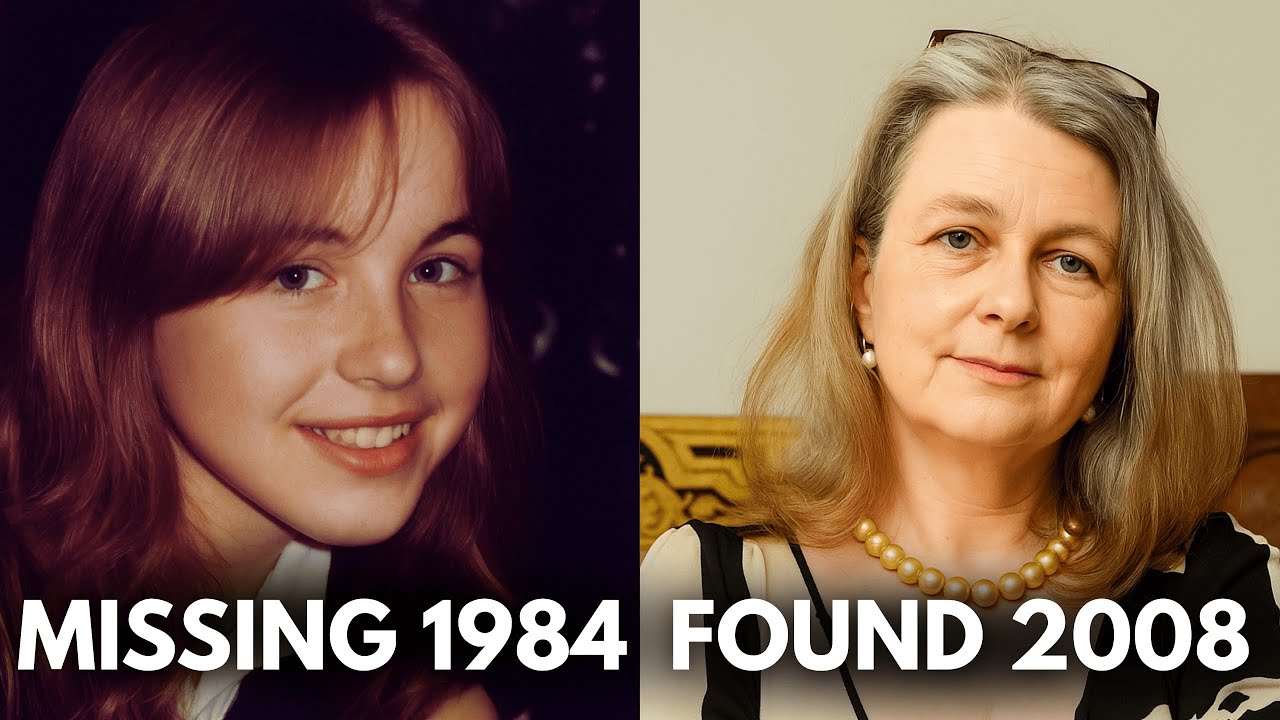
In 1984, Elisabeth Fritzl was an 18-year-old girl living in the quiet Austrian town of Amstetten. She was shy, polite, and a little withdrawn, but by all accounts ordinary. No one could have predicted that her name would one day become synonymous with one of the most disturbing crimes in modern history.
It began on a warm August evening. Elisabeth had just finished a day helping around her family home, a modest multi-story house on Ybbsstrasse, where she lived with her parents, Josef and Rosemarie, and several siblings. Life was simple, routine, even dull.
But inside that house, behind her father's composed, respectable demeanor, something deeply sinister had been building for years. Josef Fritzl was not just a father. He was a man obsessed with control, a master manipulator who thrived on power.
Neighbors saw him as a disciplined engineer, a landlord, a man who always seemed busy. What they did not see was the secret construction happening beneath their feet. A hidden bunker sealed with thick concrete walls and steel doors, the kind used in Cold War fallout shelters.
To everyone else, it was just Josef being eccentric, building a workshop or storage space. But in truth, it was a prison being built for his own daughter.
On August 28, 1984, Josef called Elisabeth into the basement, saying he needed help carrying a door. She followed him down, unsuspecting, trusting, because how could she not trust her father? But once she stepped inside, he turned, lifted the heavy door, and locked it behind her.
The sound of that lock closing was not just metal on metal. It was the sound of her entire world collapsing.
Hours turned into days, days into weeks. Josef told the family that Elisabeth had run away and joined a cult. Maybe it was not unusual, he said, for rebellious teenagers to leave home. To make it more convincing, he produced a handwritten letter allegedly from Elisabeth saying she was safe and not to look for her.
In reality, he had forced her to write it under threat before sealing her away forever. Police searched for a while, but without leads, the case went cold. To the outside world, Elisabeth was gone, another runaway in the 1980s, swallowed by the unknown.
Her mother cried, prayed, and waited for years. Her friends moved on. The house remained the same. But beneath it, Elisabeth was still there in a 380-square-foot underground cell lit by a single bulb. The air was thick and stale, the silence broken only by the hum of the furnace above.
She screamed at first. She begged. She pounded the walls. No one heard her. And so began a nightmare that would stretch across two and a half decades, one that no one on earth could have imagined was happening right below an ordinary suburban home.
For Elisabeth Fritzl, time stopped the moment that basement door slammed shut. What began as confusion and disbelief soon descended into a nightmare beyond comprehension. She was not just locked away, she was erased.
Below the quiet Austrian home on Ybbsstrasse, Josef Fritzl had built something far darker than anyone could imagine. The cellar he had claimed to be constructing as a storm shelter was in fact a labyrinth of hidden rooms, concrete walls nearly two feet thick, ceilings reinforced with steel, and a soundproof system that guaranteed no screams could ever reach the surface.
Inside were a few small windowless chambers, a sleeping area, a rudimentary kitchen, a washroom, and a cramped corridor. The air was stale and damp. The single ventilation pipe barely allowed a trickle of fresh air. It was meant not for comfort, but control.
Every door inside that space required multiple keys, all of which were kept by Josef. Elisabeth's world had shrunk to the size of a basement cell, the kind that no one would ever stumble upon unless he allowed it.
For the first few weeks, she still hoped. She thought maybe this was temporary, some cruel punishment that would end if she just begged enough. But soon she realized the horrifying truth. She was never meant to leave.
Josef Fritzl did not just imprison his daughter physically. He shattered her psychologically. He would descend the narrow steps each day, bringing her meager food, water, and supplies, then staying for hours at a time. The abuse began almost immediately. He controlled every aspect of her existence: when she could sleep, eat, speak.
Over time, Elisabeth's sense of days and nights blurred into one endless gray haze. Meanwhile, upstairs, Josef lived a double life. To his wife, Rosemarie, and their other children, he was a stern but ordinary patriarch. He told them Elisabeth had joined a cult and wanted no contact.
To make the story convincing, he even left letters at the doorstep written by Elisabeth under duress, mailed from cities hundreds of miles away to maintain the illusion that she was alive and free. In truth, she was just meters below them, listening to the muffled footsteps of her own family above, unable to scream loud enough for anyone to hear.
As months became years, something unthinkable happened. Elisabeth became pregnant. The first time, Josef brought her painkillers and a towel and left her to give birth alone in that concrete prison. Her son Kerstin was born in 1988. Two years later came Stefan, and over the years, five more children followed.
Seven in total, three of whom were raised underground with her, while the others were taken upstairs by Josef, placed at the family's doorstep, and claimed as abandoned babies from Elisabeth, who was allegedly living in that faraway cult. The twisted charade continued seamlessly.
Social services believed the story, even praising Josef and Rosemarie for caring for the abandoned grandchildren. No one questioned how a supposedly runaway woman could keep leaving infants at her father's doorstep without ever being seen.
Down in the dungeon, life became mechanical. Elisabeth taught her children how to read and write using old books Josef brought down. She made them draw, play, and dream, even though they had never seen the sky. The fluorescent light above them was the only sun they knew.
The faint noises of life upstairs, the hum of the television, the creak of floorboards, were their only proof that another world existed. Elisabeth tried to shield them from the horror of their captivity, from the truth about who their father really was. She taught them compassion and patience in a place that had none.
Yet deep down, she knew that every passing day made escape less likely. And Josef kept the secret with terrifying precision. He would lock the steel doors, cover the entrance with shelves and storage, and carry on with his life as if nothing unusual existed below.
The man attended neighborhood gatherings, went shopping, took vacations, all while a second life unfolded beneath his feet. For 24 years, no one knew. No one suspected. The house became both a home and a tomb. It was a prison built not by chains or walls, but by fear, the kind of fear that silences, isolates, and consumes everything it touches.
Elisabeth Fritzl had disappeared from the world above, but below it, a hidden existence, one of unimaginable endurance, pain, and strength, had taken root in the dark.
By 2008, Elisabeth Fritzl had spent 24 years underground. A quarter of a century, gone in silence, lost beneath concrete and deception. But even the most carefully constructed lies eventually begin to crumble, and Josef Fritzl's monstrous double life was no exception.
Above ground, neighbors saw nothing strange. The family seemed normal, even quiet. Josef, now in his 70s, was known as strict and private, the type of man who did not invite curiosity. But behind that aging facade, his world was beginning to fray at the edges.
The first crack came from below. Elisabeth's eldest daughter, Kerstin, who had lived her entire life in the cellar, suddenly became gravely ill. She was 19 years old, a young woman who had never seen daylight, never felt wind, never met anyone other than her mother, siblings, and the man who called himself both father and grandfather.
Her body began to shut down. She fell unconscious, and no matter what Elisabeth did, she could not revive her. The dim basement lights flickered as Elisabeth realized her daughter might die there, in the same darkness she had been born into.
Desperation forced her to do something unthinkable. She begged Josef for help. Josef, terrified that losing the girl could expose everything, finally made a move that would unravel his secret.
On April 19, 2008, he carried Kerstin upstairs through the layers of his hidden labyrinth and brought her to a hospital in Amstetten, claiming she had been dropped off by Elisabeth, who was allegedly living elsewhere. Doctors were immediately alarmed.
The girl was pale, malnourished, and her blood results did not make sense. Her condition reflected a lifetime of deprivation, not a sudden illness. When police asked to contact the girl's mother, Josef said he did not know where Elisabeth was, that she was part of a religious group, and refused to be found.
But something did not fit. Kerstin's medical state was impossible for someone living freely. Her DNA told another story, one that whispered incest, captivity, and darkness.
Meanwhile, back in the cellar, Elisabeth knew the truth was coming. She begged Josef to let her see Kerstin, fearing her daughter would die alone in that sterile hospital bed. Josef hesitated, then agreed. But under one condition: Elisabeth had to help him keep up the story.
He told her to prepare another letter explaining why she had sent her daughter for treatment. But the world outside had already started to question him. The police publicly appealed for Elisabeth to come forward. They did not believe the cult story anymore.
Doctors could not diagnose the girl without knowing her medical history. And the inconsistencies in Josef's answers were piling up. For the first time in decades, the power balance shifted. Josef could feel it.
Days later, on April 26, 2008, he took Elisabeth and her two remaining children upstairs for the first time in their lives to visit Kerstin in the hospital. That decision shattered everything.
Hospital staff immediately alerted authorities. Elisabeth's terrified demeanor, her gaunt frame, and her hesitance to speak all screamed that something was wrong. Police quietly separated her from Josef, taking her to an interview room.

At first, she refused to talk. She did not believe she was safe. She thought this was another one of Josef's tricks, that if she said the wrong thing, she would be dragged back underground forever. Then investigators made a promise. You are safe now. He cannot hurt you anymore.
For the first time in 24 years, Elisabeth believed them. What followed was a confession that chilled even the most seasoned detectives. Over two hours, Elisabeth poured out the story of her imprisonment, the years of abuse, the births, the lies, and the world beneath their feet.
When police searched the Fritzl home that night, they found it exactly as she described: the hidden entrance behind a shelf, the descending passage, the narrow tunnels, the metal doors that led to hell. Inside were children's drawings, toys, worn bedding, a refrigerator humming weakly, and notes written by Elisabeth trying to keep her sanity.
Everything matched her words. By morning, the story was global. The house of horror in Amstetten was no longer a secret. It was the most disturbing revelation in modern Austrian history.
Josef Fritzl was arrested on the spot. He said little during questioning, though at times he appeared proud of his system, insisting he had provided a good life for those below. The investigators, horrified, saw no remorse, only control even in defeat.
Elisabeth, meanwhile, saw sunlight for the first time in two and a half decades. Her eyes burned. Her skin was pale and fragile. Her children, some of whom had never seen the sky, had to be carried outdoors, shielding their faces against the brightness they did not understand.
The lie was finally over. But the damage, physical, emotional, and spiritual, would take years to comprehend. For Austria, this was not just a crime. It was a nightmare turned real, one that asked how such horror could hide in plain sight behind the walls of an ordinary home.
And for Elisabeth, the revelation was only the beginning. Because after surviving the unimaginable, she would now have to face the hardest question of all: how do you live again after 24 years in darkness?
When the basement door finally opened to the world, Austria and soon the entire globe stood frozen. What had been hidden beneath the quiet town of Amstetten was no longer just a family tragedy. It was a revelation of pure horror.
For Elisabeth Fritzl, stepping into daylight after 24 years underground was like being born again into a world she no longer recognized. The last time she had seen the sun, Ronald Reagan was the US president. When she resurfaced, people carried smartphones. History had passed her by, but now the world could not stop looking at her.
Elisabeth and her six surviving children were immediately taken into medical and psychological care. The hospital became their sanctuary. Doctors said their bodies and minds bore the marks of prolonged captivity: vitamin deficiencies, sunlight sensitivity, and trauma that ran deeper than any wound.
The children who had grown up underground could not speak properly, could not handle bright light, and were terrified of open spaces. Elisabeth stayed close to them, refusing to be separated. After all, they were the only pieces of her life she could still protect.
In the hospital garden, she would walk barefoot on the grass, helping her children take their first steps under real sunlight. They laughed and cried in confusion, tasting freedom for the first time in their lives.
Meanwhile, Josef Fritzl was behind bars, and the mask he had worn for decades finally cracked. In custody, he alternated between arrogance and self-pity. He insisted that he had kept his family alive, claiming he built a world for them where they would be safe.
But the evidence painted a different picture, one of domination, manipulation, and cruelty that defied comprehension. Investigators mapped out the cellar, the tight corridors, the hidden doors, the systems he had engineered to ensure no one could ever escape. Journalists called it the dungeon of Amstetten. It was a symbol of human evil, hidden behind ordinary walls.
By March 2009, the world waited for justice. The trial of Josef Fritzl began at the regional court of St. Pölten, Austria. Security was tight, the media relentless. Elisabeth refused to appear in person, but her recorded testimony was played in the courtroom.
For the first time, her voice echoed through a space filled with people who were finally listening. She described her abduction at 18, the endless years underground, the births, the screams, the lies, the fear. No fiction could capture the raw pain of those words. The courtroom was silent. Even the judge turned pale.
Josef stared blankly ahead, expressionless, as if his own daughter's words were just noise. But to the world, they were proof. Proof that one woman's endurance had exposed one of the darkest crimes of the 21st century.
He was charged with murder, rape, incest, enslavement, and false imprisonment. Prosecutors argued that one of Elisabeth's newborn babies, a twin named Michael, had died shortly after birth, and Josef refused to seek medical help, effectively condemning the infant to die. That single act elevated his crimes beyond cruelty. It showed calculated evil.
The trial lasted just four days. On March 19, 2009, Josef Fritzl was found guilty on all counts. The judge sentenced him to life imprisonment at Austria's most secure psychiatric facility, Garsten Abbey Prison, where he would remain under constant supervision for the rest of his life.

Justice, in legal terms, had been served. But for Elisabeth, true justice was not about a verdict. It was about reclaiming the life that had been stolen from her minute by minute, day by day.
In the aftermath, Elisabeth changed her name, relocated with her children, and cut all contact with her past. The Austrian government provided her a new home in a secret location with round-the-clock protection. Psychologists worked with her and her children to rebuild trust, social connection, and basic human freedom.
It took years for them to feel safe sleeping in rooms with unlocked doors. For some of her children, open spaces triggered panic attacks. Freedom itself had become frightening. But slowly, under therapy and love, the family began to heal.
And Josef Fritzl? He aged rapidly behind bars. His delusions of control faded into isolation. The man who once ruled an entire world underground was now locked away, this time by others.
Elisabeth, however, refused to be defined by him. She told therapists that she wanted to live normally, that she was done being his prisoner. Her greatest strength was not surviving. It was choosing to live again.
The world moved on, but the name Elisabeth Fritzl became a symbol of both the darkness humanity is capable of and the unbreakable resilience of one woman who refused to surrender her soul even when her freedom was stolen. After 24 years in captivity, the light had finally found her.
After 24 years of captivity and unimaginable torment, the world expected her to remain a symbol of tragedy. But what Elisabeth became instead was a symbol of resilience, a quiet defiance that told every survivor of trauma: you can still rebuild.
In the years following her rescue, Elisabeth and her children retreated into anonymity. The Austrian government granted them new identities, a secure home, and lifelong protection. Their house, described by those few allowed to see it, was surrounded by gardens and sunlight, the very things they had once been denied.
Each window was a portal to the open world, a daily reminder that freedom is real, that the sky belongs to them again. Psychologists and trauma experts who worked with the family said that healing was not a straight path. It was a long winding road through fear, confusion, and rediscovery.
For the children born underground, the concept of a horizon was alien. They had grown up in a world where ceilings pressed close, where the air was recycled, and hope was just a whispered story. The first time one of Elisabeth's sons stood in a wide open field, he reportedly covered his eyes and cried. The vastness was too much, too bright, too endless.
It took months before the family could walk freely in public without panic. But slowly, through therapy, love, and the human need to survive, they began to live again.
Elisabeth herself became a quiet force. Despite the unimaginable cruelty she endured, she did not crumble. She found ways to nurture her children, to teach them trust and tenderness, even when the only example of authority they had ever seen was their abuser.
In interviews with those close to her, it is said that she carries herself with a quiet dignity, never speaking publicly, but always protecting her children fiercely. And perhaps that is the most profound act of defiance. Silence, not from fear, but from choice. Refusing to let the world's fascination turn her pain into spectacle. Refusing to let Josef Fritzl have the final word.
Meanwhile, Austria itself was forced to confront deep questions. How could such horror exist undetected for nearly a quarter century? How could a man maintain such a facade, a respectable engineer, a husband, a father, while his daughter suffered just meters away?
Laws were strengthened, community awareness expanded, and social services restructured. The Fritzl case became a chilling reminder that evil can hide behind normality, and that vigilance begins not with suspicion but with compassion.
Years later, when Josef's health began to decline, reports surfaced that he had started showing remorse, that he had begun speaking Elisabeth's name in his sleep. But remorse at that stage was meaningless. The world had long moved on, and the man who once controlled every second of another's life now counted his own remaining days in a concrete cell.
Elisabeth, on the other hand, was no longer a prisoner. She was a mother, a survivor, a woman who had rewritten her fate. She found small joys: cooking with her children, walking her dog, tending to plants. The media, after years of chasing her, finally stopped. The family's wish for privacy was respected.
And somewhere in Austria, away from the noise, Elisabeth built a life on her own terms. One that Josef could never touch, never define, never destroy.
Her story became the foundation for documentaries, films, and discussions about trauma and survival. But the truth behind those retellings is something quieter, more sacred: a reminder that survival is not just about escaping captivity, but about choosing to live freely every single day after.
Today, Elisabeth is believed to live under a new name. The children who once lived in darkness are now adults, each finding their own way in a world that once forgot them. They laugh, they cry, they dream like anyone else. And that, ultimately, is the victory.
Not a headline, not a trial, but the simple act of being alive. Because for 24 years, the world forgot Elisabeth Fritzl. But she never forgot herself. She never forgot who she was: a daughter, a mother, a human being.
Her story reminds us that even in the deepest darkness, there is something within the human spirit that refuses to die. Something that waits quietly, stubbornly, for the light. And when that light finally came, Elisabeth did not just step into it. She owned it.