The version of the Old West that most people know came from movies, not archives. The documented record is messier, dirtier, and far more brutal than any script ever allowed.
What follows are twenty-five episodes drawn from that record. They include betrayals for money, towns that emptied into cemeteries, and outlaws who died at the hands of their own partners.
In 1877, Sam Bass and his gang stopped a Union Pacific train in Nebraska and rode off with $60,000 in gold coins. That haul was enough to buy an entire ranch at the time, and it drew exactly the kind of attention Bass could not afford.
The Texas Rangers wanted him at any cost, and they got him through one of his own men. A gang member named Jim Murphy made a secret deal with the law and gave up the plan for the next robbery in Round Rock, Texas.
When Bass arrived in town, the Rangers were already waiting. The shootout was brief. Bass was shot in the back and died two days later, on his own birthday. He was 27.
In the early 1880s, wealthy ranchers began fencing off millions of acres of Texas with barbed wire, cutting off roads, water sources, and land that cowboys had used for decades. Small ranchers did not simply accept it.
Nighttime gangs known as fence cutters destroyed more than half the state's fences in just two years. The response was savage: ambushes, homes burned with families inside, and bodies left on the roads.
The violence grew so severe that the governor sent the Texas Rangers to restore order. An invention that cost pennies per yard ended up costing hundreds of lives.
Soapy Smith began his criminal career on the streets of Denver in the 1880s with a simple trick. He sold bars of soap, promising that some contained money bills inside, while partners pretended to buy and win in front of the crowd.
The scam sounded foolish, but it worked well enough for Smith to control gambling halls and bribe politicians in Colorado. When the Klondike Gold Rush erupted, he moved to Alaska to run the same setup on desperate miners.
His reign ended in July 1898 during a turf dispute in Skagway, when a local vigilante shot him dead. Smith was 38.
The Pleasant Valley War began in 1880s Arizona over missing cattle and a torn-down fence. The Tewksburys and the Grahams were neighbors who became deadly enemies.
What nobody expected was that a ranch fight would leave a trail of blood for nearly a decade. Men were hunted like animals, ambushed on their own land, and whole families were destroyed.
When the dust settled, almost all the adult men in both clans were dead. The few survivors spent the rest of their lives looking over their shoulders. Historians still argue over how many really died, because many bodies were never found.
In 1866, Cathay Williams became the only documented woman to serve in the U.S. Army disguised as a man during the 19th century. Born enslaved in Missouri, she had few options after the Civil War.
She enlisted as William Cathay in the 38th Infantry Regiment, a unit of Black soldiers. For two years she marched hundreds of miles across New Mexico and Arizona and endured the same brutal training as any other recruit.
Doctors examined her at enlistment and noticed nothing. Only when she fell seriously ill did a closer examination reveal the truth. The army discharged her immediately, with no honors, no pension, and no recognition.
In 1877, Americans and Mexicans killed each other over salt near El Paso. For generations, poor families from Texas and Mexico had collected salt freely from the dry lakes, a tradition that was both livelihood and survival.
Then a group of Anglo politicians and businessmen decided to fence the salt flats off and charge for access. The Mexican community refused to accept it, and the result was ambushes, executions, and lynchings on both sides.
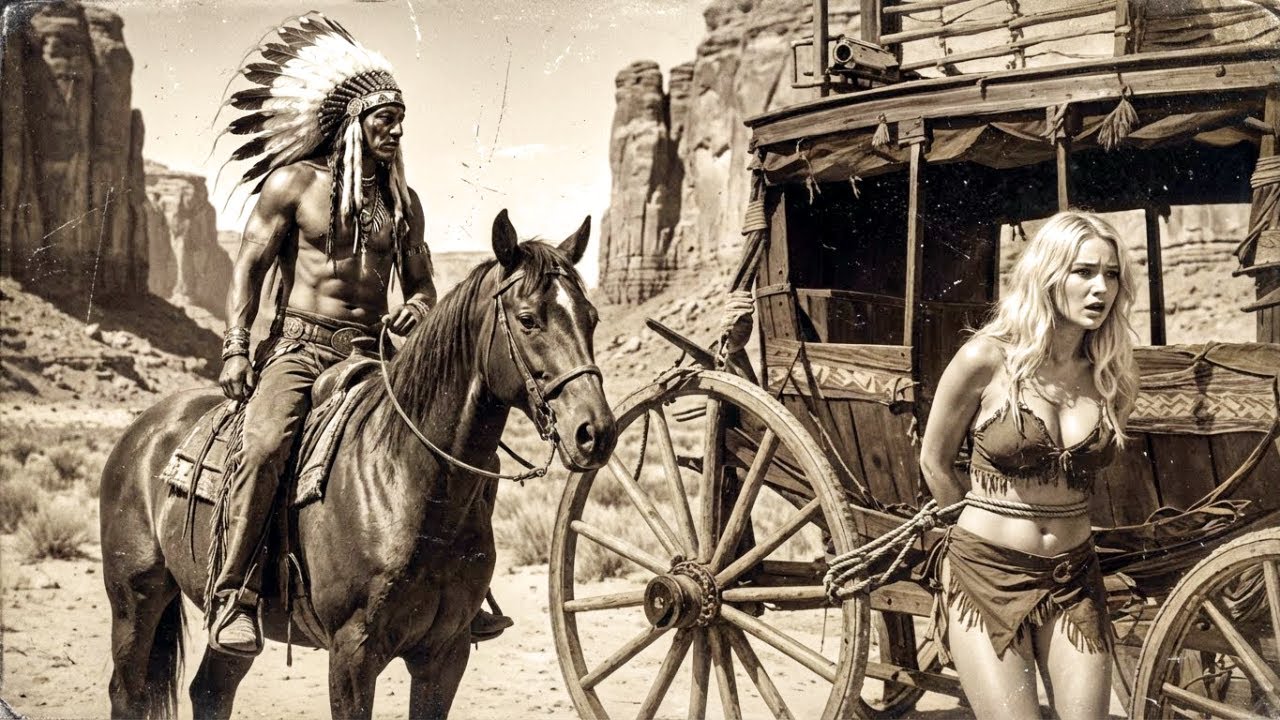
The Texas Rangers were called in, and some of them ended up dead. Washington sent federal troops to restore order in Texas for the first time since the Civil War. All of it over salt.
Billy the Kid was 21 when he died, and the law had already lost track of how many people he had killed. His real name was William Henry McCarty, and he was orphaned from his mother at 14 before slipping into a life of crime.
Many people in New Mexico saw him as a kind of Old West Robin Hood, defending poor families against powerful ranchers during the Lincoln County War. The reality was messier. Billy killed without hesitation, and some estimates put the total at 21 deaths, one for each year of his life.
Sheriff Pat Garrett finally caught him in 1881. To this day, nobody can say where the outlaw ends and the legend begins.
The gunfight at the O.K. Corral took place on October 26, 1881, in Tombstone, Arizona. Wyatt Earp, his brothers, and Doc Holliday faced the Clanton and McLaury brothers in a clash that lasted only about 30 seconds. Three men died on the spot.
The familiar story casts Wyatt as a lawman hero, but documents from the time tell a different story. Witnesses said the Clantons were unarmed when the shooting started, and Wyatt himself later went on trial for murder.
He avoided conviction, but doubt lingered. The Earps had old grievances with that group, and some historians today believe it was a planned execution rather than a fair duel.
In March 1882, Wyatt Earp crossed a line few people return from. After his brothers Morgan and Virgil were ambushed, one killed and the other mutilated, he abandoned his marshal's badge and assembled his own revenge squad.
For weeks, Wyatt and his men hunted the suspects across Arizona with no warrant, no judge, and no jury. They executed at least four men in confrontations that some call justice and others call cold-blooded murder.
The federal government even issued an arrest warrant for him. Wyatt fled to Colorado and was never put on trial. Hero or outlaw, or perhaps both at once, remains an open question.
Laura Bullion learned early that life went easy on no one. The daughter of an outlaw, she grew up in Texas around bandits and eventually joined the Wild Bunch, Butch Cassidy's crew.
She was not just another face in the gang. Laura was the crew's specialist in forging checks and documents, handling the dirty money while the men robbed trains.
In 1901, the law caught her in St. Louis with stolen bills in her purse. She served her time and then disappeared, spending decades as a seamstress in Memphis until her death in 1961. The woman who helped steal thousands became an ordinary lady nobody recognized on the street.
Clay Allison was the kind of man you did not want to meet on a bad day, and for him every day seemed like a bad day. This Texan earned a reputation not only for the shootouts he won but for what he did afterward.
They say he cut off parts of the men he killed and displayed them as trophies, a ritual that spread fear wherever he went. He survived duels, ambushes, and saloon brawls, and no bullet seemed able to take him down.
Then came the part nobody expected. In 1887, Clay fell off his own wagon and the wheel rolled over his neck. He died there on the road, not at the hands of a rival but by a dumb accident.
Ned Christie was a blacksmith and a Cherokee politician respected in Indian Territory. In 1887, a federal deputy turned up dead, and someone pointed the finger at Christie, even though he was not at the crime scene.
Christie refused to surrender to a white man's court that had already decided he was guilty. For five years he held out on his property, building a fortified house with thick wooden walls while marshals tried shootouts, sieges, and ambushes.
Nothing worked until 1892, when they brought in an improvised cannon and 40 pounds of dynamite and blew the fortress apart. Christie died fighting. Years later, another man confessed to the original murder. Christie had been innocent the whole time.

Lottie Deno would sit down at poker tables in Texas in the 1870s and walk away with her pockets full. Men thought they were getting an easy win against an elegant lady, and that was a big mistake.
She owned the cards like few professionals of the era could, and Doc Holliday played against her and walked away impressed. Nobody really knows where she learned it. Some say her father taught her, others mention a mysterious gambler in New Orleans.
After building a fortune, she vanished from the saloon world, married, changed her name, and became a respected citizen in New Mexico. The same woman who cleaned out ranchers and gunmen ended up running charity groups.
Canyon Diablo appeared in Arizona in 1881 when the Atlantic and Pacific Railroad stopped there, blocked by a 75-meter canyon that would take two years to bridge. During that time, workers and opportunists turned the place into a nightmare.
The town had 14 saloons, gambling houses, and no law. The first sheriff lasted only hours on the job before he was murdered, and the men who followed fared no better. The cemetery grew so fast it earned the nickname Boot Hill.
When the bridge was finished in 1882, the railroad moved on. Within weeks, Canyon Diablo emptied out completely. Today only ruins remain in the desert, a reminder that quick fortune usually carries too high a price.
In 1890, a religious dance frightened the U.S. government so much that troops massacred nearly 300 unarmed Lakota at Wounded Knee. The Ghost Dance was born out of hunger and desperation on the reservations.
A Paiute prophet named Wovoka promised that dancing would bring back the vanished buffalo and the dead ancestors. Washington interpreted it as an armed uprising. The army surrounded camps, confiscated weapons, and in a tense moment opened fire with Hotchkiss machine guns.
Women, children, and the elderly were not spared. Soldiers later received medals of honor. A peaceful prayer ended as one of the most brutal episodes of the Indian Wars, burying with it the last dreams of resistance from the Plains peoples.
Quanah Parker was the last Comanche chief to surrender to the U.S. Army, but his story goes far beyond that. Born to a white woman captured in a raid and a Comanche warrior, he spent his whole life between two worlds.
After years of fighting white expansion, Quanah realized the war was lost and changed strategies. He began negotiating directly in Washington, traveling by train, staying in hotels, and sitting at tables with politicians and businessmen.
He appeared in a tuxedo, what white men wore to formal meetings, without giving up parts of his Comanche identity. The man who once hunted buffalo on the plains now played the winner's political game to ensure his people survived.
In 1856, Richard Barter pulled off California's biggest gold robbery. His gang attacked a mule carrying $80,000 in gold bars, but the plan went wrong when half the crew was arrested in the mountains.
Barter buried part of the gold somewhere in the Sierra Nevada and intended to retrieve it later. He never managed to. In 1859, he died in a shootout with the law, taking the secret to his grave.
Since then, hundreds have searched those mountains, and some never came back. Nobody knows how much gold was buried or whether it is still there, but that has never stopped anyone. Every year, new people arrive digging holes, swearing they found clues everyone else missed.
Harvey Logan, known as Kid Curry, was considered by the Pinkerton agency itself to be the most dangerous man in the Old West. That was not an exaggeration.
While Butch Cassidy became a romantic legend, Curry did the Wild Bunch's dirty work. A specialist in eliminating anyone who got in his way, he was responsible for at least nine lawmen kills.
In 1904, after a train robbery in Colorado, he was cornered by a posse near Glenwood Springs. Wounded and with no way out, he made a choice that still puzzles historians: he pointed his revolver at his own head and pulled the trigger. Some say pride, others say fear of the gallows. The truth died with him in that ravine.
For decades, runaway slaves found refuge among the Seminoles in Florida. It was not merely a hiding place. They married, raised families, and took up arms side by side.

The U.S. government spent more than $40 million and lost around 1,500 soldiers trying to break that bond. Three wars were fought between 1816 and 1858. Washington's generals did not expect to face Black and Native warriors fighting like brothers.
That coalition held out longer than any other slave revolt on the continent. It rarely appears in schoolbooks, perhaps because it shows something many would rather erase from the nation's memory.
Bill Pickett was not just any cowboy. Born in 1870 in Texas, the son of former slaves watched how ranch dogs controlled cattle and decided the method could work for him too.
Pickett would grab a steer by the horns, twist its neck, and bite the animal's lower lip until it dropped to the ground. The brutal technique became what is now known as bulldogging in rodeos.
In a country where Black people could not drink from the same water fountain as white people, Pickett became the first African American star in Western entertainment, traveling the world with the famous Miller Brothers show.
After the Dalton brothers were wiped out in Coffeyville, Kansas, in 1892, everyone assumed that story was over. But Bill Doolin, a former Dalton partner, decided to assemble his own gang.
He gathered the survivors and formed what people called the Oklahoma gang. For three years, they terrorized banks and trains across Oklahoma Territory, until U.S. marshals moved against them.
One by one, each member was taken out in ambushes or shootouts. Doolin himself took a shotgun blast in 1896. In the end, nobody got away. It was as if the Daltons' fate had simply been passed on.
Curly Bill Brocius led a gang that stole cattle along the Mexican border. In March 1882, Wyatt Earp swore he killed him in a shootout near Iron Springs, Arizona. The problem was that nobody ever found the body.
Some witnesses claimed to have seen Curly Bill alive years later in Texas. Others swore Wyatt invented the whole story to look like a hero. Back then, the line between lawman and outlaw was thin.
Wyatt had deputies who stole, and Curly Bill had friends in local government. Who the real bandit was in that story remains unknown. To this day, nobody knows whether the man died that day or simply disappeared.
In 1864, a man named Adams swore he had found a canyon in New Mexico packed with gold, with nuggets the size of walnuts scattered on the ground like ordinary rocks. He escaped an Apache attack but never found the way back.
He spent the rest of his life searching, and he was not alone. Over the following decades, dozens of men headed into that merciless desert chasing the so-called mine. Many never returned, dying of thirst, exhaustion, or simply vanishing.
The strange part is that Adams had no reason to invent it. He spent every cent he had on the search. To this day, nobody has found anything. The question remains whether the gold exists or the desert created its own legend to lure in victims.
The Overland Trail was not for the weak. The route crossed hostile territory where stagecoaches were easy targets. Passengers knew they might not reach their destination, but the promise of gold and land out west mattered more.
Bandits waited at key spots, and Native tribes defended their land fiercely. The craziest part is that transport companies kept operating despite the staggering loss of human life. It was business, plain and simple.
Anyone who climbed into those wagons was betting their life in a rolling game of Russian roulette. Even so, thousands made the trip.
In 1879, Bodie, California, had 10,000 people living through a frantic gold rush. Saloons ran day and night, fights ended in gunfire, and fires wiped out whole blocks.
Then the gold ran out. Within a few years, everybody left and abandoned everything: houses, furniture, clothes. Today Bodie still stands, frozen in time as an official ghost town.
The weird part is that park rangers receive packages every week from tourists returning rocks, nails, anything they took from the place. The letters always say the same thing: after they took something, everything in their life went wrong. Coincidence, perhaps.