Hermann Fegelein was born on October 30, 1906, in Ansbach, then part of the German Empire. He grew up in Munich, where his father, Hans Fegelein, a retired German army officer, ran a riding school. His early life was shaped by horses, discipline, and the social world of the German middle class.
As a young man, Fegelein became a skilled rider and took part in competitions, developing both confidence and ambition. But the Germany in which he came of age was deeply unstable. After the First World War ended in 1918 with the defeat of the German Empire, the country faced economic collapse, political violence, and widespread resentment.
The Weimar Republic, Germany's democratic government, struggled to maintain order. Many young men turned toward radical ideologies that promised strength and national revival. In this atmosphere, Fegelein gravitated toward nationalism and the rising Nazi movement.
His early career showed both ambition and dishonesty. After joining a cavalry regiment in 1925, he entered the Bavarian State Police, but his career ended abruptly in 1929 when he was caught stealing examination answers from a teaching superior's office.
The official communication at the time was that he resigned for family reasons. Fegelein later stated that he had left the police on his own account to better serve the Nazi party, with whom he came into contact during his life in Munich.
In 1930, he joined the Nazi Party and the SA, the Nazi paramilitary organization that used violence to intimidate political opponents. Adolf Hitler and his Nazi Party came into power on January 30, 1933. In April of that year, Fegelein transferred to the SS, an elite Nazi organization responsible for security, repression, and later the organization of mass murders.
Within the SS, Fegelein found exactly what he needed. The organization rewarded loyalty, ambition, and brutality. Supported by Heinrich Himmler, the head of the SS, Fegelein advanced quickly.
He took control of his father's riding institute and turned it into a center for SS equestrian training. In the mid-1930s, he became responsible for preparing facilities for the equestrian events of the 1936 Olympic Games in Berlin. These years allowed him to build connections and present himself as both a sportsman and a capable organizer.
At the same time, he developed a reputation as a man who flattered superiors and adapted himself to whatever situation would benefit his career. Himmler saw in him a loyal subordinate and protected him, even when his behavior raised suspicion among Nazis.
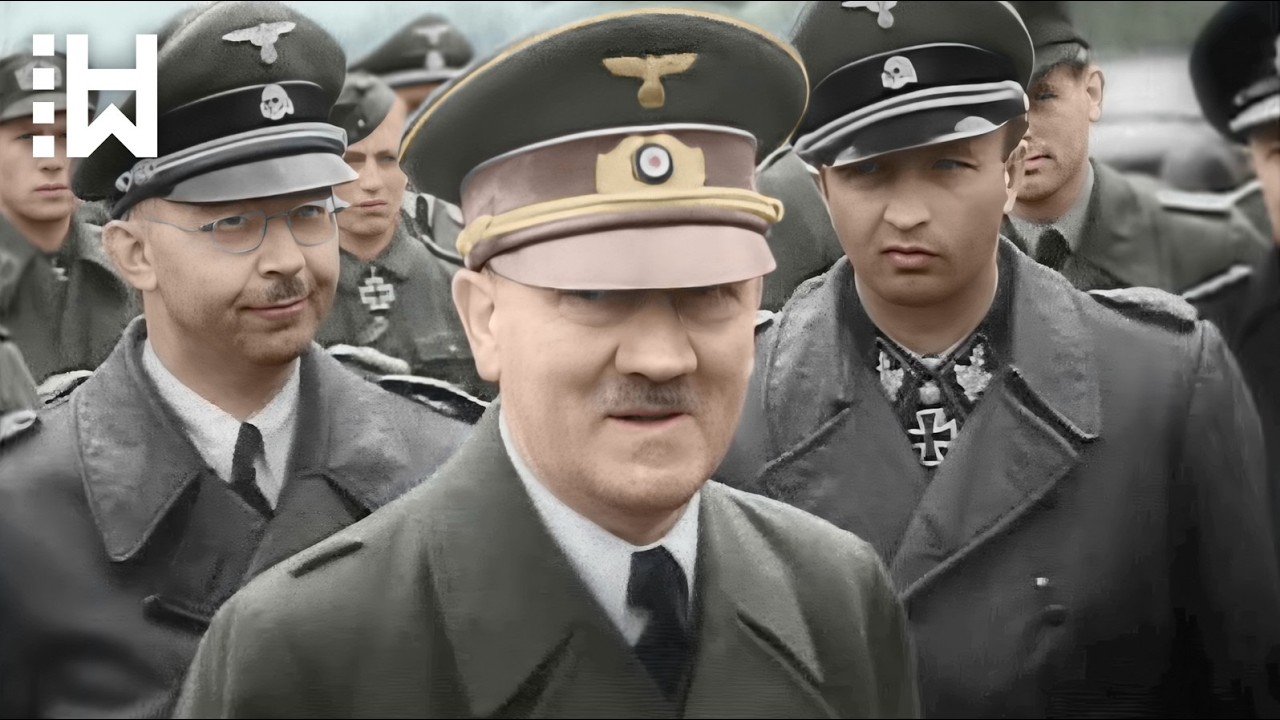
The Second World War started on September 1, 1939, when Nazi Germany invaded Poland. German forces crossed the border and began a war that quickly turned into a campaign of destruction not only against armies, but also against the entire civilian population.
As cities were bombed and the Polish state collapsed, special SS units followed behind the front lines carrying out mass shootings of civilians. They targeted teachers, priests, and community leaders in an effort to destroy the nation itself.
Shortly after the campaign, Fegelein was given command of the SS Totenkopf Reiterstandarte, a mounted SS unit. Officially, his unit was assigned to maintain order and fight resistance in occupied Poland. In reality, it became part of a system of terror aimed at destroying entire sections of society.
Under his command, the regiment participated in the mass murder of civilians, especially members of the Polish intelligentsia, such as teachers, priests, doctors, and community leaders. These killings were part of a broader operation designed to eliminate any potential resistance to German rule.
On December 7, 1939, Fegelein's unit took part in the execution of around 1,700 people in the Kampinos Forest in occupied Poland. Victims were transported to the site, forced to stand at the edge of prepared pits, and shot in groups.
Fegelein's unit also took part in anti-partisan fighting against a group of about 100 former Polish soldiers in the area of Kamienna Chojnicka Kielce in March and April 1940. They killed about half the partisans, and the remainder escaped. On April 8, Fegelein's unit also killed 250 Polish men in villages in the area.
While in his report he described the behavior of his troops as clean and decent, there were many incidents in this period where his men behaved in an undisciplined way, killing and robbing civilians without being ordered to do so. Investigations revealed that looted property was sent back to Germany and used for personal enrichment.
Fegelein and members of his staff were accused of stealing money, valuables, and goods taken from victims. He was also accused of ordering executions motivated by greed, abusing his power for personal benefit, and having an unlawful sexual relationship with a Polish woman who became pregnant, and Fegelein forced her to have an abortion.
Despite serious charges, including those raised by Reinhard Heydrich, the head of the Reich Security Main Office, all proceedings were stopped by Heinrich Himmler. Protection from one of the most powerful Nazis ensured that Fegelein remained untouched.
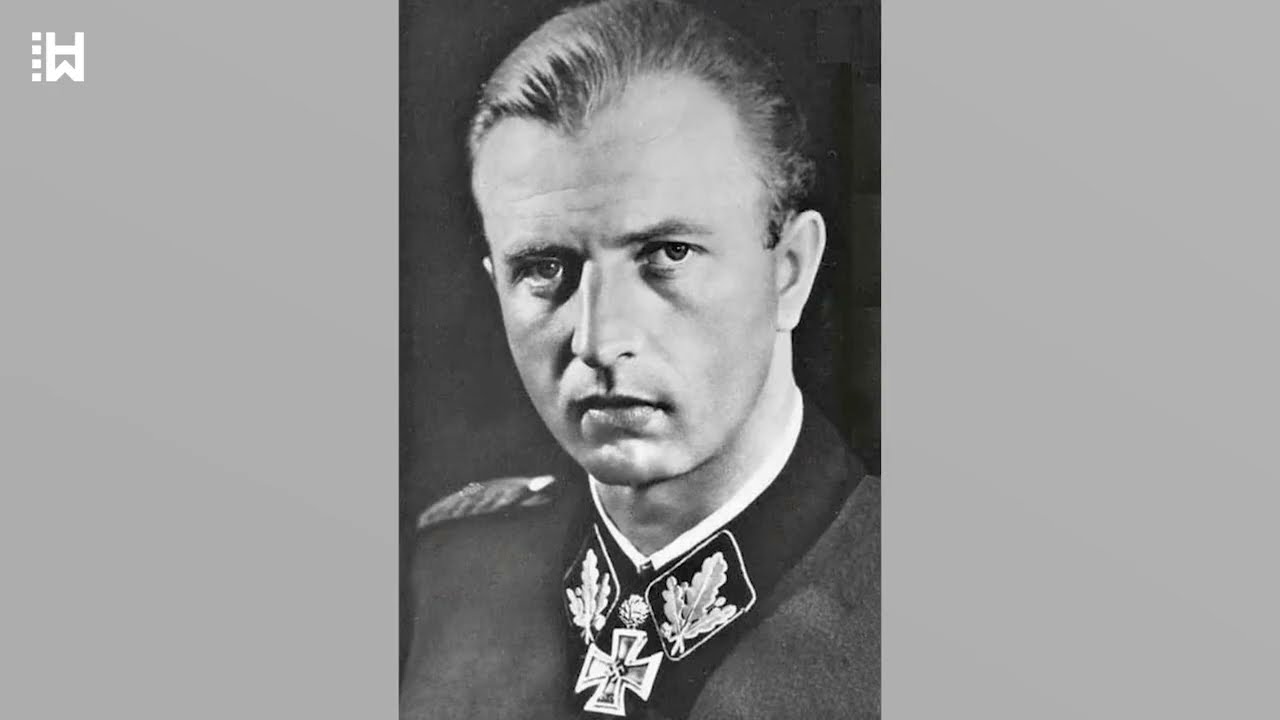
In 1940, Fegelein took part in the German campaigns in Belgium and France and was awarded the Iron Cross for his service. Yet his most significant actions came after June 1941, when Nazi Germany launched the invasion of the Soviet Union.
On the Eastern Front, the war became one of annihilation and mass murder. Military operations were combined with ideological goals aimed at destroying entire populations. Fegelein's cavalry units were deployed in occupied territories of Belarus and Ukraine, where they carried out so-called anti-partisan operations.
In the Pripyat Marshes, Fegelein's forces were ordered to carry out a cleansing of the region. In practice, this meant the systematic killing of Jews and civilians. Orders from Himmler specified that Jewish men were to be shot, while women and children were initially to be driven into the swamps and drowned.
When this proved impossible because water in the swamps was too shallow, and in some places there were no swamps at all, they were also shot. The killing of Jews and other local civilians was often disguised as fighting partisans. Hermann Fegelein's final report on the operation stated that his unit killed some 16,000 people.
The losses of Fegelein's unit were 17 dead, 36 wounded, and three missing soldiers. From these numbers, it is evident that they were not fighting partisans, but killing civilians. Fegelein continued his murderous campaign, killing thousands of people until the autumn of 1943.
In September 1943, at the age of 36, he was seriously wounded and removed from frontline service. He was soon awarded the German Cross in Gold for his actions on the Eastern Front and for repeated acts of bravery and military leadership.
After his recovery, Himmler assigned him to Adolf Hitler's headquarters as a liaison officer between the SS and Hitler. This position brought him into the inner circle of power, where decisions about war and policy were made.
Fegelein adapted quickly to this new environment, and he cultivated relationships, especially with Martin Bormann, Hitler's private secretary. Fegelein consistently attended Bormann's drinking parties, and said to Traudl Junge, Hitler's last private secretary, that the only things that mattered were his career and a life full of fun.
His marriage in June 1944 to Gretl Braun, the sister of Eva Braun, strengthened Fegelein's position even further. The wedding symbolized his integration into the highest levels of the Nazi regime.
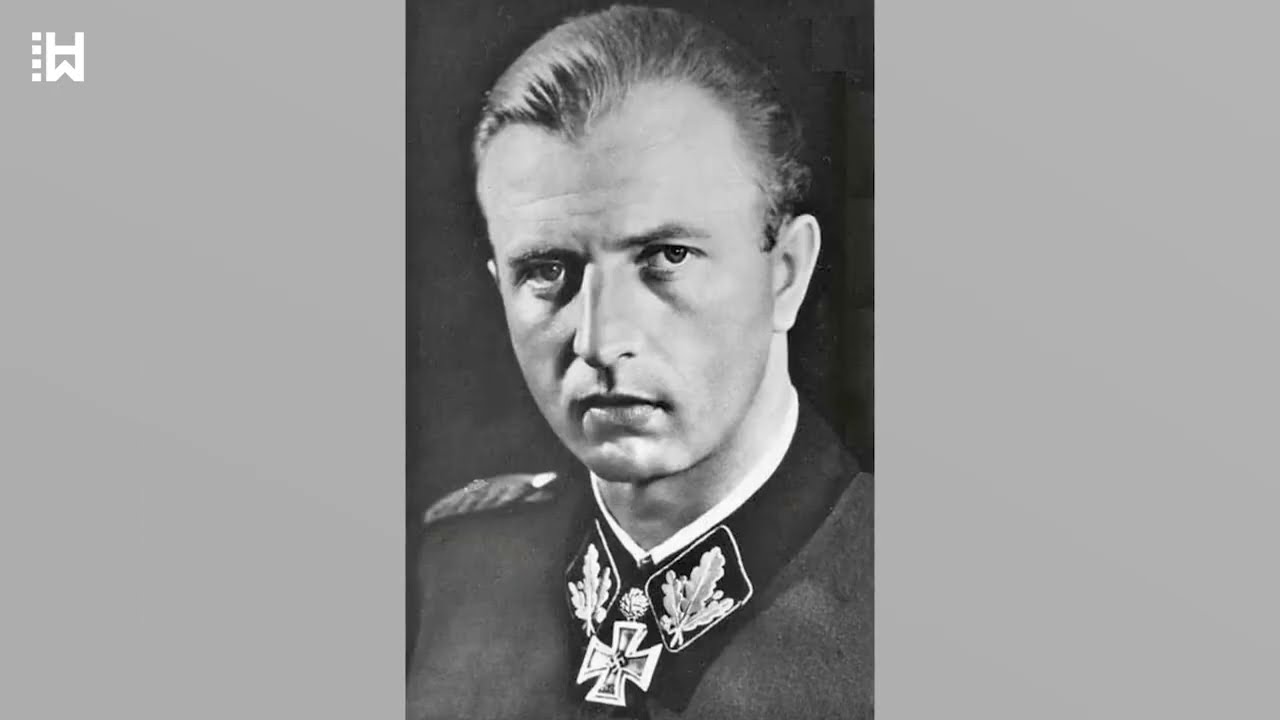
Even though Fegelein was known as a playboy, flirting with women and engaging in numerous extramarital affairs, Eva Braun appreciated having someone from Hitler's inner circle with whom she could dance and flirt, as Hitler was often distant and avoided showing affection in public. There were even rumors that Fegelein might have had an affair with Eva Braun.
Yet behind this facade of privilege, Fegelein was deeply distrusted by many within the Nazi leadership. Albert Speer, Minister of Armaments and War Production in Nazi Germany, later described him as one of the most disgusting people in Hitler's circle, a man driven entirely by ambition and self-interest.
On July 20, 1944, Fegelein was present at the failed attempt on Hitler's life at the Wolf's Lair headquarters in Rastenburg in East Prussia. He received a minor wound to his left thigh from the bomb blast. Later, after the wave of arrests and executions, Fegelein often showed around photographs of the hanged men who had been executed as a result of the failed assassination attempt.
Despite the fact that Hitler survived the July 20 plot, it was evident that Nazi Germany was losing the war. By early 1945, the situation of the Third Reich had become truly hopeless. Allied forces advanced from all sides, and the Red Army soon encircled Berlin.
Adolf Hitler retreated to the Führerbunker, where he remained as the final battle of the war unfolded. Fegelein was present during these last weeks, witnessing the collapse of the system that had elevated him.
On April 27, 1945, as Soviet troops surrounded Berlin, Fegelein abandoned his post in Hitler's bunker after deciding he did not want to join a suicide pact deep beneath the Reich Chancellery Garden. He was later found in his apartment dressed in civilian clothes and preparing to flee to neutral countries such as Sweden or Switzerland.
He had prepared money, jewelry, some of which belonged to his sister-in-law Eva Braun, and documents that allegedly included evidence of secret negotiations between Himmler and the Western allies. He was arrested and brought back to the bunker.
At the same time, Hitler learned of Himmler's actions regarding the attempted peace negotiations with the allies, which he saw as betrayal. Fegelein became associated with this betrayal, and Hitler ordered that Fegelein be stripped of all his military ranks. After some hesitation, he commanded a court-martial.
Hitler ordered Wilhelm Mohnke, one of his last remaining generals, to set up a tribunal. Mohnke later recalled, "Roaring drunk, with wild rolling eyes, Fegelein first brazenly challenged the competence of the court. He kept blubbering that he was responsible to Himmler and Himmler alone, not Hitler. He refused to defend himself. The man was in wretched shape, bawling, whining, vomiting, shaking like an aspen leaf."
Mohnke added that Hermann Fegelein even urinated on the floor during the court-martial proceedings. Eva Braun pleaded with Hitler to spare Fegelein, trying to justify his actions. She argued that her sister, Gretl Braun, Fegelein's wife, was in the late stages of pregnancy and would need him to provide for them.
However, Hitler was unwavering. To him, Fegelein's actions represented nothing but deceit and treachery. The 38-year-old Hermann Fegelein was executed on April 28, 1945, in the garden of the Reich Chancellery. According to Traudl Junge, Hitler's last private secretary, he was shot like a dog.
One day later, Hitler finally married Eva Braun. The following day, on April 30, 1945, they both committed suicide.