Jenny Churchill entered London society in the 1870s as the daughter of a reckless Wall Street speculator, and within a decade she had become one of the most influential women in British politics. Her rise began in Brooklyn, where her father, Leonard Jerome, earned the nickname “the King of Wall Street” through a series of spectacular fortunes built and lost. He funded a six-story marble mansion on Madison Avenue, complete with a ballroom where fountains sprayed champagne and a private theater seating 600. By 1867, Leonard’s wife Clara had endured enough of his gambling and open affairs.
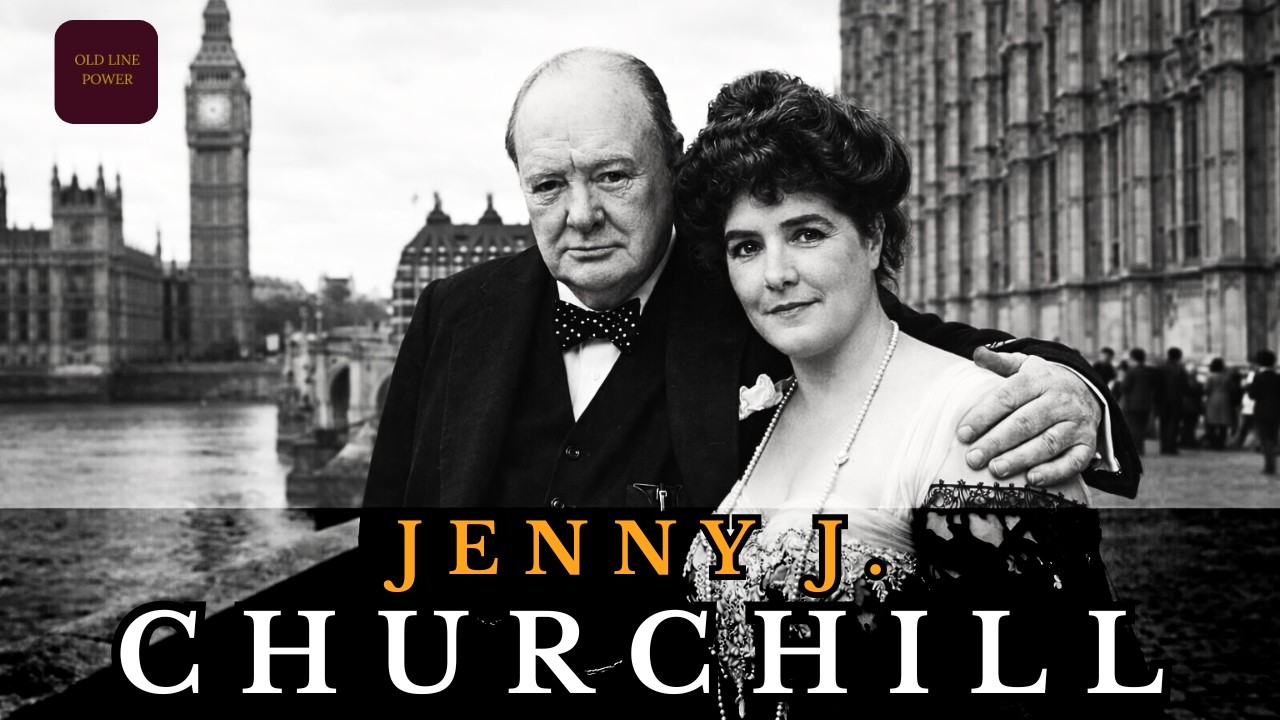
She took her three daughters to Paris, settling far from Manhattan. The youngest of the three, dark-haired Jenny, absorbed lessons in European society that would define her future. When Prussia’s invasion of France ended the imperial court in 1870, Clara moved the family to London. Jenny met the Prince of Wales within months of arriving.
The connection opened every door in fashionable London. In August 1873, at a ball during Cowes Week, the prince introduced her to Lord Randolph Churchill, the third son of the Duke of Marlborough. Within three days of meeting, the two were engaged. The Marlborough family initially objected to the match, viewing an American without title or pedigree as unsuitable.
Leonard Jerome’s marriage settlement, built around a capital sum of £50,000, helped ease those objections. The couple married at the British embassy in Paris on April 15, 1874. Seven and a half months later, on November 30, their first son was born at Blenheim Palace. The family insisted the birth was premature following a fall Jenny suffered on the estate, though the timing was quietly noted.
The child was named Winston Leonard Spencer Churchill. Disaster struck the family in 1876. Randolph’s elder brother had become entangled with a married woman, and Randolph threatened the Prince of Wales with compromising letters to protect him. The prince was furious, and the palace responded by sending the Duke of Marlborough to Ireland as Lord Lieutenant.
Randolph and Jenny were expected to follow into what amounted to exile from London society. In Dublin, Jenny surprised everyone by throwing herself into the actual politics of Ireland rather than the social calendar. She sat through debates about land reform and home rule, educating herself in how coalitions formed and votes were won. It was a skill she would refine throughout her life.
Meanwhile, her sons Winston and Jack were raised almost entirely by their nanny, Elizabeth Everest. Winston adored his mother from a distance, a dynamic that would define their relationship for decades. The family returned to London in 1880, and Jenny began visiting the ladies’ gallery of the House of Commons regularly. While Randolph built his reputation through a rebel faction of Conservatives, Jenny studied the chamber from above, learning which arguments shifted votes and which alliances held under pressure.
Their London home became the engine room of his career. In 1883, the Primrose League was founded to extend Conservative support into the working classes, and Jenny became one of its earliest and most effective organizers. She built local branches and addressed meetings, becoming the template for women’s participation in British electoral politics without the right to vote. By 1886, Randolph had risen to Chancellor of the Exchequer and Leader of the House of Commons at age 37.
In December of that year, he made a catastrophic miscalculation. He threatened to resign over military spending cuts, expecting Prime Minister Lord Salisbury to side with him. Salisbury accepted the resignation without hesitation. Jenny learned of the decision by opening The Times at breakfast.
Her husband had not consulted her on the most consequential decision of their shared life. Years later, the wound was still visible in her writing. She kept the chancellor’s robes, saying she was saving them for Winston. The resignation destroyed more than a career.
It exposed what could no longer be hidden. Multiple biographers have concluded that Randolph had contracted syphilis as a young man, and by the mid-1880s the disease was affecting his behavior. His speeches became erratic, and he lost the ability to read situations that had once been effortless. The resignation itself may have been an early symptom of cognitive decline rather than simple arrogance.
Victorian society demanded silence on such matters, and everyone maintained it. Jenny conducted her private life with equal discretion. Her affair with the Prince of Wales, which had begun in the early 1870s, was widely known among those who mattered and carefully ignored by everyone else. When Albert Edward was crowned King Edward VII in 1902, three of his former mistresses were seated in a specially designated box at Westminster Abbey.
Jenny was among them. The press called it “the king’s loose box. ”
The emotional center of Jenny’s life was Count Charles Kinsky, an Austrian diplomat four years her junior. Their affair continued for years, and several biographers consider him the great love of her life.
She also had relationships with the son of the German chancellor and King Milan I of Serbia. A figure of 200 lovers circulated over the decades, though Churchill biographer Roy Jenkins noted it was “a suspiciously round number. ”
By 1892, Randolph’s decline was unmistakable. His hands trembled, his speech slurred, and he lost the thread of conversations.
Jenny did not leave him. In the summer of 1894, she took him on a world tour on medical advice, but the journey became a prolonged ordeal. They returned after seven months. Randolph died on January 24, 1895, at age 45.
Winston, then 20, stood at the graveside. Jenny was 40, a widow with debts larger than anyone suspected. Widowhood freed her to work on two fronts at once. In October 1899, Britain went to war in South Africa against the Boer republics.
Jenny chaired a fundraising committee that raised $150,000 in weeks to charter a hospital ship. The Maine was rebuilt with an operating theater, an isolation ward, and an X-ray machine. Jenny sailed aboard it as head of the American contingent, settling disputes between the British crew and American surgical staff. The ship treated more than 300 patients during two months at Durban, caring for British and Boer wounded side by side.
Among those brought aboard was Jenny’s own son Jack, wounded during the push toward Ladysmith. Simultaneously, Jenny was launching a literary magazine. The Anglo-Saxon Review was a quarterly journal bound in reproductions of antique covers, priced at one guinea per copy. Contributors included Henry James, George Bernard Shaw, and Stephen Crane.
Despite strong writing and extraordinary production, almost no one bought it. The journal folded after ten issues. Jenny then married George Cornwallis West, a captain in the Scots Guards 20 years her junior, on July 28, 1900. George had no money and very little ability to make it.
They separated in 1912, and the divorce came in April 1914. Shortly afterward, George married the actress Mrs. Patrick Campbell, who had starred in Jenny’s unsuccessful play the previous decade. Jenny responded by legally resuming the name Lady Randolph Churchill.
Throughout these years, Jenny remained her son’s most effective advocate. She wrote to editors on Winston’s behalf, lobbied ministers to secure his postings, and opened drawing rooms he could not have entered alone. When the Gallipoli campaign failed in 1915 and Winston’s reputation was destroyed, Jenny refused to treat him as finished. She wrote him letters telling him to hold steady, reminding him that his father had been destroyed by one resignation and that he must not allow the same thing to happen twice.
In June 1918, at age 64, Jenny married for the third time. Montague Porch was a Colonial Office administrator 23 years her junior, three years younger than Winston. The marriage was quiet and by most accounts happy. In May 1921, Jenny was visiting a friend when she fell down a staircase wearing new Italian shoes with high heels.
The left ankle broke. The wound turned gangrenous, and doctors amputated the leg above the knee. On the morning of June 29, a blood vessel in the stump hemorrhaged. She died within hours at age 67.
Jenny was buried at Bladon churchyard in Oxfordshire, within sight of Blenheim Palace, beside Lord Randolph. Winston, who would go on to lead Britain through its darkest war, never stopped speaking of her. She had not been a gentle mother, and she had not been a faithful wife. What she had been was a woman who understood power, refused to be diminished by the men who held it, and turned the constraints of her century into a life entirely her own.
The Italian shoes were beautiful. She had not yet worn them.