An 18-year-old woman named Debbie Miller was found dead in her Mansfield, Ohio, apartment on April 29, 1981. She was a high school senior with plans for college and worked at a coffee shop within walking distance of her first-floor home on West Third Street. The apartment showed clear signs of a struggle, and an autopsy determined she died from blunt force injuries to her head and neck. Officials said the injuries came from a burner grate removed from her own gas stove, and later prosecutors noted that pots and pans from her kitchen were also involved.
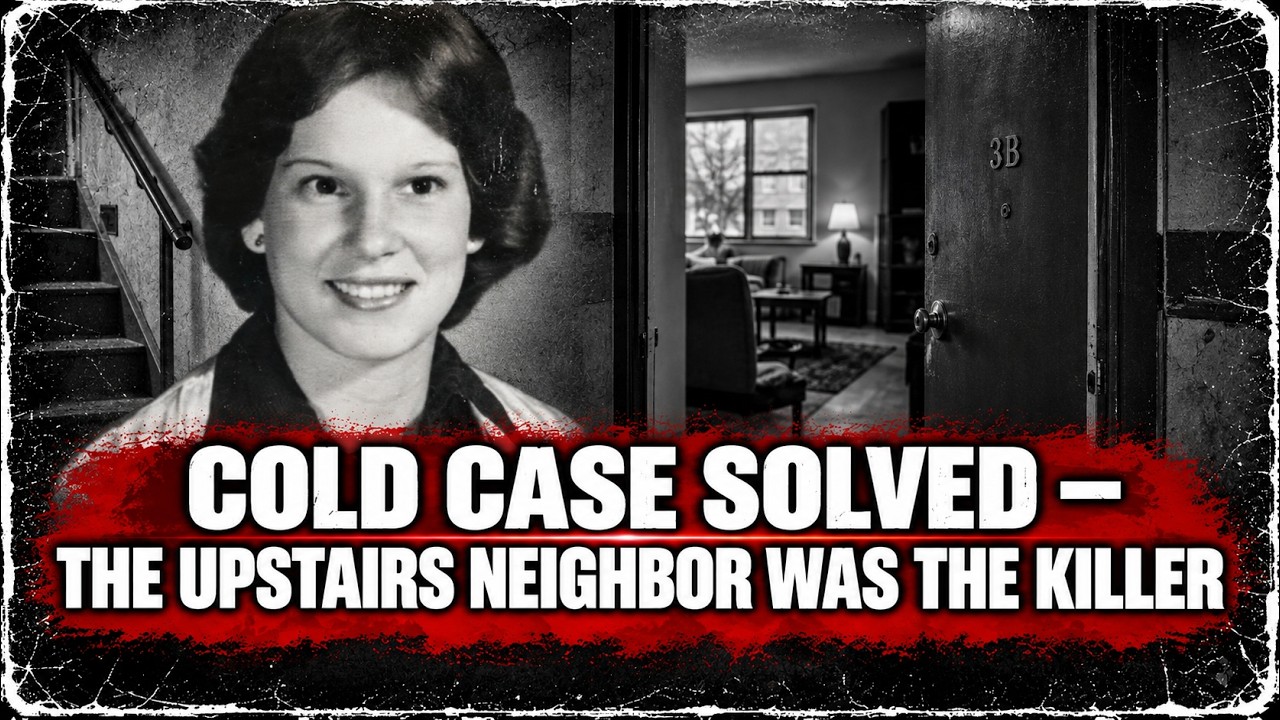
Investigators at the time collected blood evidence, lifted a fingerprint, and recorded the apartment on video. The fingerprint was sent to the FBI, but there was no match on file. With blood typing as the main forensic tool, investigators could not narrow the field far enough, and the case went cold. Police interviewed a man who lived in the apartment directly above Debbie’s.
His name was James Vanest, and he was in his mid-20s at the time. He was interviewed several times, but police said he was never treated as a suspect, and the years passed without charges. Vanest’s later record placed him in regular contact with the law. In 1995, he was charged in federal court with armed bank robbery and related firearm offenses, and he was sentenced to 15 years in prison.
Decades later, a U. S. Marshal described his history as extensive and violent going back to the 1970s. In 2021, a retired Mansfield police lieutenant named Dale Fortney asked a detective about the old case, believing it needed just one more piece to be solved.
Detective Terry Butler, whose great-uncle had been among the first officers at the scene in 1981, took up the case with the department’s DNA analyst, Don Fryback. The team treated the case as if it had happened yesterday, according to police leadership. Fryback ran more than 80 different tests on the stored evidence, and over and over, DNA profiles matching Vanest appeared, many of them mixed with Debbie’s DNA on items directly tied to the homicide, including the kitchen items from the original scene. The old fire department video helped investigators map the apartment and show where each person’s DNA turned up, and prosecutors tracked down a former FBI serology expert who understood the blood testing methods used in 1981.
That expert was reportedly the last person still working there with that knowledge. In November 2021, Butler visited Vanest at his home in Canton without mentioning DNA. Vanest spoke unprompted, claiming a homeless man had tried to break into Debbie’s apartment and that he had chased him off. He then said that on the early morning of April 29, on his way home from a bar, Debbie invited him in, and he became sick and left.
Butler heard the significance immediately. Vanest had placed himself inside the apartment on the very morning Debbie was found, before anyone had raised the DNA evidence with him. Police leadership said it looked like a man trying to build an alibi, and the Associated Press reported that Vanest admitted what he told police in 1981 was not true. A second interview was scheduled for June 2024 to discuss the DNA findings, but Vanest ended it quickly, accused Butler of building a case against him, and asked for an attorney.
Shortly afterward, Vanest sold his house, bought a pickup truck and an enclosed trailer, and left for West Virginia. He was a convicted felon, but he left several firearms behind at his Canton home. West Virginia authorities stopped him and found two more guns, leading to state charges. Federal agents from the ATF later took over the gun case, and Vanest was indicted on federal firearms charges.
Ohio prosecutors were preparing to take the murder case to a grand jury. On November 18, 2024, U. S. Marshals and a fugitive task force located Vanest at a motel in Jackson Township near North Canton.
When officers served the federal gun indictment, Vanest barricaded himself in the motel room and opened fire. A round hit Patrick Lewis, a North Canton police officer serving on the SWAT team, striking him in the arm. Lewis, a nine-year veteran, required multiple surgeries but survived and later received the police purple heart. Officers returned fire, and Vanest died at the scene.
Inside the room, officers found two firearms and multiple shell casings. The murder case never reached a courtroom. Police and prosecutors said the evidence they had built pointed clearly at Vanest, but no jury ever heard it. On December 30, 2024, Mansfield police held a press conference to announce that the case was closed.
The chief said the DNA from multiple items, combined with the investigation, established proof beyond a reasonable doubt that James Vanest committed the murder of Deborah Miller. The department acknowledged that closing the case would not bring Debbie back or replace the 43 years her family had lived through, but officials said they hoped it would bring some closure. The chief said the family was grateful the case was finally resolved. He also noted that as officers, they always want to see handcuffs on the person responsible, but seeing the family’s relief mattered more.
The chief offered a guess as to why Vanest fled and fired that day, while making clear it was only a guess. Vanest had bonded out on the West Virginia gun charges, and he may not have known a federal indictment was coming. The chief thought Vanest might have believed officers were there for the Debbie Miller case rather than the guns. Investigators also said they believed Vanest knew authorities were planning to charge him with the murder.
No court ever ruled on the murder allegation. Vanest was never charged with Debbie’s death, never tried, and never convicted. The police finding was based on the DNA evidence and Vanest’s own words, but it was not a jury verdict. The case passed through many hands across the decades: the building owner and maintenance worker who found Debbie, the officers who preserved the evidence, the retired lieutenant who refused to let the case go, the detective with a family link to the original scene, the analyst who ran the tests, and the prosecutors who kept building the case.
An officer was wounded and required surgery. Vanest died in the motel room. And a case that should have ended with a jury ended in the messiest way possible. After 43 years, the question that had hung over Mansfield finally had a name attached to it.
What was once a mystery had become a record. Debbie Miller was 18 years old. She was a senior at Malibar High School with plans for college. She worked at Mr.
Te’s coffee shop on Park Avenue West, and she had a place of her own with a door to lock at night. Details of her personal life have not been made public, and officials have not speculated about them. What can be documented is the work done to bring her case back into the light: a retired lieutenant who never forgot, a detective whose family had been at the scene in 1981, an analyst who ran more than 80 tests, and prosecutors who built the case step by step. The 1981 investigators who stored the evidence carefully could not have known what science would later make possible.
They saved it anyway, and their careful work spoke decades later. The building where Debbie lived is gone now, replaced by a parking lot behind the Renaissance Theater. In 1981, it was full of ordinary life, including the man in the apartment above hers. Vanest never stood trial.
Police say the DNA proves he killed Debbie Miller beyond a reasonable doubt. Whether that is enough to call the case solved, or whether a case like this needed a verdict, is a question the record leaves open.