On August 27, 1979, a 79-year-old man took his family fishing off the coast of Mullaghmore, Ireland. He had taken the same boat from that harbor every summer for three decades. Minutes after leaving shore, a bomb tore the boat apart.
Lord Mountbatten, cousin to Queen Elizabeth II, mentor to Prince Charles, and a celebrated war hero, was pulled from the water barely alive. He died before reaching shore. The IRA claimed responsibility and called it an execution.
But some have speculated the IRA knew something else—something the FBI had documented decades earlier. In 1944, the FBI opened a file on Mountbatten. They were not tracking his military career. They were tracking his private life.
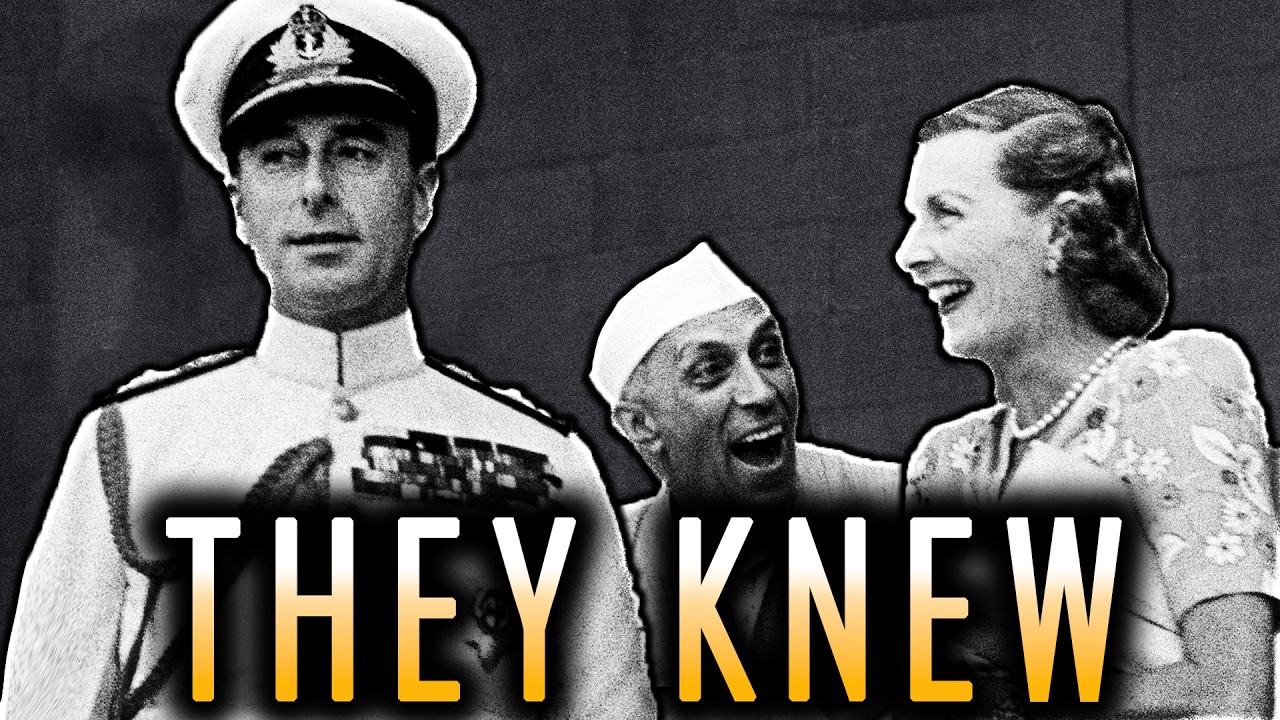
Their conclusion was blunt. They described Mountbatten and his wife, Edwina, as "persons of extremely low morals." Some believe the IRA knew exactly what the FBI knew, and that is why they chose him.
To understand how a man like this became one of the most trusted figures in the British royal family, you have to go back to the beginning.
Prince Louis of Battenberg was born on June 25, 1900, at Frogmore House in Windsor. His title was Serene Highness, not Royal Highness. That distinction mattered. His family was royal, but only just—a branch of German nobility that had married into the British line through Queen Victoria.
His great-grandmother was Queen Victoria herself, who also served as his godmother. His godfather was Tsar Nicholas II of Russia, his cousin. As a child, young Louis visited the Russian Imperial Court in St. Petersburg, where he fell in love with another cousin, Grand Duchess Maria, one of the Tsar's daughters. He kept her photograph by his bedside for the rest of his life, even decades after the Bolsheviks executed her entire family.
The family called him Dickie. Queen Victoria had suggested Nicky, but that name was already taken by the Tsar. So Dickie it was—a childhood nickname that stuck for 79 years.
His father, also named Prince Louis of Battenberg, had built a distinguished career in the British Royal Navy. By 1914, he had risen to First Sea Lord, the highest operational rank in the fleet. A German-born prince commanding the greatest navy on earth.
Then came World War I. Britain versus Germany. Suddenly, everything German was suspicious. German shops were burned. German dogs were kicked in the streets. Families who had lived in England for generations were accused of being spies.
The problem was that the British royal family was German. The House of Saxe-Coburg and Gotha sounded like the enemy. In 1917, King George V renamed the royal house to Windsor. It sounded English. It sounded safe.
But for Dickie's father, the damage was done. Despite 46 years of loyal service, the whispers were too loud. A German commanding the British Navy was unacceptable. He was forced to resign, pushed out in disgrace.
The family changed their name too. Battenberg became Mountbatten. Young Dickie was 17 years old. He watched his father's humiliation in silence and made a vow. He would join the Royal Navy. He would rise higher than his father ever had. He would restore the family name, no matter what it took.
By the early 1920s, Mountbatten had a problem. He was ambitious, well-connected, and determined to rise through the ranks. But he was also broke. His salary as a naval lieutenant was £310 a year—respectable for an officer, nowhere near enough for a man with royal tastes and dynastic ambitions.
Then he met Edwina Ashley. Edwina was the granddaughter of Sir Ernest Cassel, a German-born financier who had become one of the richest men in the British Empire. When Cassel died in 1921, he left behind a fortune worth over £7 million. Most of it went to Edwina.
Overnight, she became one of the wealthiest heiresses in England. Young, beautiful, and suddenly drowning in money. Mountbatten saw his opportunity.
They had known each other since childhood, but now the dynamic was different. He was a prince with a title and no cash. She was a commoner with a fortune and no status. It was, by all accounts, a practical match.
Edwina later admitted she was not sure she was truly in love when she accepted his proposal. But Mountbatten was charming, handsome, and offered something money could not buy—a direct line to the royal family.
On July 18, 1922, they married at St. Margaret's Church in Westminster. It was the wedding of the year. The Prince of Wales served as best man. King George V and Queen Mary sat in the front pews. The guest list read like a registry of European aristocracy.
For their honeymoon, the newlyweds toured the royal courts of Europe, visited Niagara Falls, and sailed to Hollywood. Charlie Chaplin filmed them in a short home movie. Mountbatten, ever image-conscious, was thrilled to brush shoulders with film stars.
Back in England, Edwina's money transformed their lives. Grand houses, endless parties, a lifestyle that would have been impossible on a naval salary. Mountbatten later confided to his daughter that in the early years, he and Edwina sometimes struggled to spend their £60,000 of annual post-tax income.
But beneath the glamour, cracks were already forming. Edwina was restless, easily bored, hungry for excitement her husband's naval duties could not provide. Mountbatten was obsessed with his career, his image, his climb to the top. They were rarely in the same room.
Within a few years, the marriage would become something else entirely.
The cracks appeared almost immediately. After their first daughter, Patricia, was born in 1924, Edwina grew restless. Mountbatten was consumed by his naval career. Edwina was left alone in their grand house with nothing but time, money, and boredom.
She filled the void with men. Her first affair was with Lord Molyneux, an aristocrat from her social circle, often described as the best-looking man in society. Then came an affair with Steven "Laddie" Sanford, an American millionaire and champion polo player. Then Mike Ward, the handsome editor of a London newspaper.
She did not bother ending one before starting another. Sometimes she juggled all three at once. The staff at Brook House, the Mountbattens' London residence, learned to manage the chaos. One afternoon, the housekeeper found herself with five of Edwina's lovers waiting in different rooms.
By the time their second daughter, Pamela, was born in 1929, Edwina's affairs had reached legendary proportions. There was Bobby Sweeney, the American golf champion. Larry Gray, a well-known playboy. Two Californian brothers, Ted Phillips and then his sibling Bunny. She met them on a cruise to Mexico and worked through both.
When Mountbatten discovered the truth, he was devastated. They discussed divorce. For a man obsessed with image and reputation, the scandal would have been catastrophic. But he loved her money. She loved his connections. Divorce was off the table.
Instead, they struck a deal. An open marriage held together by money, status, and mutual convenience.
Mountbatten wasted no time finding his own consolation. Her name was Yola Letellier, the glamorous wife of a French newspaper publisher and mayor of Deauville. Yola was sophisticated, discreet, and utterly devoted to him. Their affair lasted years. She would later inspire a character in Colette's famous novel "Gigi."
Strangely, once Mountbatten had his own lover, he stopped being jealous of Edwina's. The arrangement stabilized. Dickie with Yola, Edwina with whoever caught her interest.
The great love of Edwina's life before India was Harold "Bunny" Phillips, a towering 6'5" lieutenant colonel in the Coldstream Guards. Thrillingly handsome, steady, kind. Even the Mountbatten daughters adored him. Patricia later said, "He made my mother easier to be around."
The four of them—Dickie, Edwina, Yola, and Bunny—actually traveled together. Holidays in the south of France, weekends in the country. An unconventional arrangement that somehow worked.
Then in 1944, Bunny announced his engagement to another woman, Gina Wernher, a distant Mountbatten relation. Edwina had introduced them. She was shattered. Her family watched her take long walks alone by the river. They feared the worst.
But the war had already begun to change her, and what came next would transform her completely.
While Edwina was reeling from Bunny's engagement, Mountbatten was already at war. In June 1939, he took command of HMS Kelly, a brand new destroyer. Fast, modern, heavily armed. This was his ship, his chance to prove himself.
December 1939: a German mine tears off Kelly's stern. The ship limps back to port for three months of repairs, costing £150,000.
March 1940: Kelly collides with another British destroyer in a snowstorm. More damage, another £40,000.
May 1940: a German torpedo boat catches Kelly off the Dutch coast. The torpedo destroys the entire midsection, ripping her nearly in half. For four days, Kelly crawled home at three knots. Bombers attacked. Enemy boats circled. The crew fought to keep her afloat while Mountbatten refused to abandon ship.
When they finally reached port, the repair bill came to £250,000 and seven months in dry dock. Add it all up: £440,000 in damage, enough to build two brand new destroyers. In a single 14-month stretch, Kelly spent just two weeks actually fit for duty.
Within the Admiralty, Mountbatten earned a nickname. They called him the "Master of Disaster." But his men loved him, and that loyalty created a legend.
May 1941: Kelly is back in action, deployed to the Mediterranean. The Germans have invaded Crete. Mountbatten's flotilla is sent to intercept enemy reinforcements and bombard German positions.
On the morning of May 23rd, 24 Junkers Ju 87 dive bombers found them. Kelly's sister ship HMS Kashmir was hit first. A 1,000lb bomb tore her apart. She sank in minutes. Then they came for Kelly.
A bomb struck the ship while she was turning at full speed. She rolled to port and kept rolling. Within seconds, Kelly was upside down in the water, then gone. Half the crew went down with her—130 men.
The survivors clung to wreckage, treading water while German planes strafed them. Another ship, HMS Kipling, braved the attack to pull them out. When the survivors gathered in Egypt, Mountbatten gave a speech that would become famous.
"We didn't leave Kelly," he told them. "Kelly left us."
His friend Noel Coward was so moved by the story that he turned it into the film "In Which We Serve." It became one of the most celebrated British war movies ever made. Mountbatten wasn't named in the film, but everyone knew. Overnight, the Master of Disaster became a national hero.
Churchill rewarded him. In October 1941, Mountbatten became Chief of Combined Operations, in charge of planning commando raids against Nazi-occupied Europe.
August 1942: Mountbatten's plan was to land 6,000 troops on the French coast, mostly Canadians, to test German defenses and gather intelligence. The result was a massacre. Nearly 60% casualties. Over 900 Canadians didn't come home. Another 2,000 were captured.
Mountbatten later claimed the disaster taught lessons that made D-Day possible. Canadian veterans saw it differently. One historian called him "utterly unqualified for his role," a man protected by his royal connections.
But Churchill still believed in him. In 1943, he made Mountbatten Supreme Allied Commander of Southeast Asia. Edwina followed, throwing herself into relief work across the region.
By 1947, the war was over. But their biggest assignment was just beginning—one that would affect hundreds of millions of lives and end at least a million of them.
By 1947, the British Empire was dying, and nowhere was the end more painful than in India. For nearly two centuries, Britain had ruled the subcontinent. Four hundred million people—Hindus, Muslims, Sikhs, dozens of languages, thousands of communities—all held together by the iron grip of colonial power.
But after World War II, that grip was slipping. India wanted freedom. Britain, exhausted and bankrupt from the war, had no choice but to give it to them. The question was how.
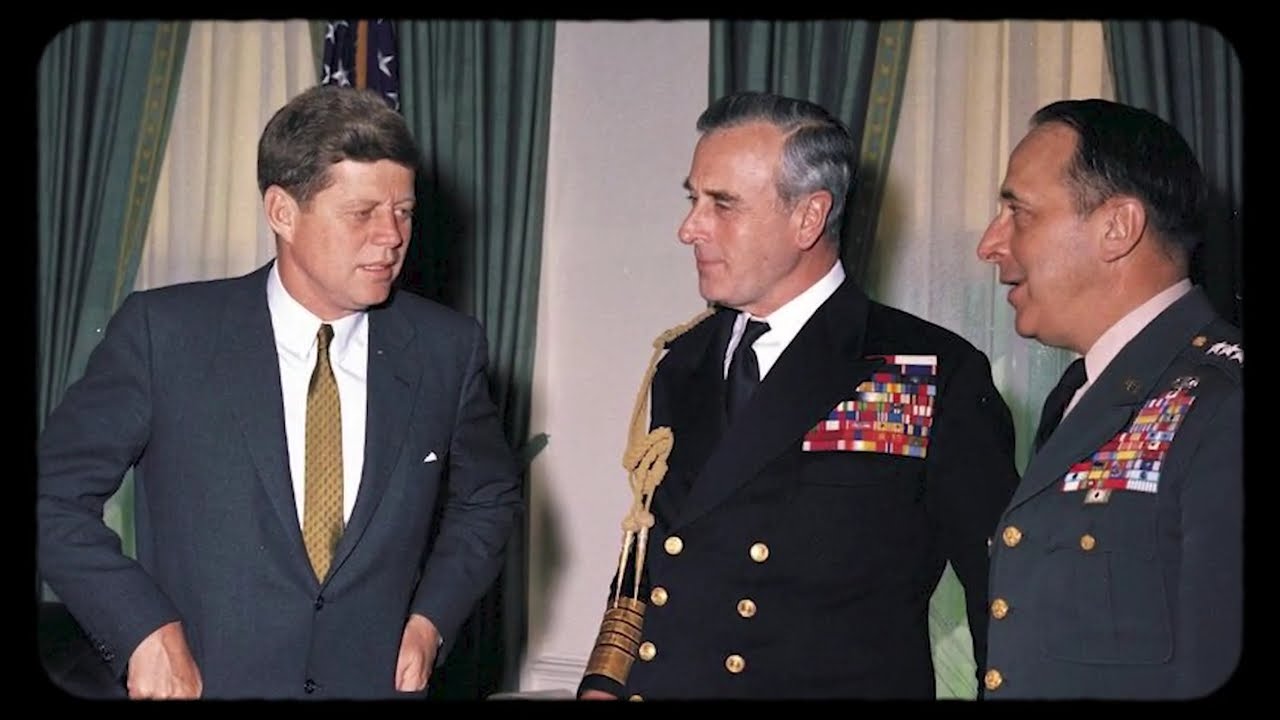
February 1947: King George VI made a decision. He would send his cousin to India as the last viceroy. The man who would close up shop on the greatest empire in history.
Lord Louis Mountbatten arrived in New Delhi on March 22nd. Edwina came with him, the glamorous vicereine, ready to charm the subcontinent's elite. His instructions were clear: oversee the transition to independence by June 1948. Keep India united if possible. He had 15 months.
Mountbatten took one look at the situation and decided 15 months was too long. The country was already burning. Hindu-Muslim riots were spreading. Cities were in flames. In Rawalpindi, entire neighborhoods had been wiped out.
Mountbatten's assessment: if he waited a year, there would be civil war. Millions would perish. He needed to move fast.
Critics said there was another reason. Mountbatten was desperate to get back to his naval career. The position of First Sea Lord—the job his father had been stripped of—was within reach. Every month in India was a month away from that goal.
And then there was Edwina. Almost immediately, she developed an intense bond with Jawaharlal Nehru, the sophisticated Cambridge-educated leader of the Indian National Congress. Nehru was a widower, charming, intellectual—everything that drew Edwina to a man.
They were seen together constantly. Private dinners, long walks in the Mughal Gardens, letters exchanged daily, sometimes multiple times a day. When the Mountbattens eventually left India, Nehru and Edwina continued writing to each other until her death 13 years later.
Was it a love affair? Physically, no one knows for certain. Mountbatten seemed unbothered. He reportedly encouraged the friendship. Some historians believe he saw it as useful, a way to keep Nehru close and cooperative during the negotiations.
Others saw something darker: a viceroy whose wife was intimately connected to one side of the negotiating table. A conflict of interest that may have tilted decisions toward Congress and against the Muslim League's Muhammad Ali Jinnah.
Whatever the truth, Mountbatten made his fateful decision. He moved the deadline forward not by weeks, but by 10 months. Independence would come in August 1947.
To draw the borders of the new nations, he brought in a British lawyer named Sir Cyril Radcliffe. A man who had never set foot in India before, who knew nothing of its geography, its communities, its fault lines. Radcliffe was given five weeks to divide 400 million people.
He worked from maps and census data in a bungalow in Delhi. Drew lines through Punjab and Bengal. Decided which villages would be Indian, which would be Pakistani, which families would be split apart.
When he finished, Mountbatten made another decision. He kept the map secret—even from Indian leaders, even from the provincial governors who would need to manage the transition. The borders weren't revealed until two days after independence. By then, it was too late.
August 15th, 1947. India and Pakistan became independent nations at midnight. Celebrations erupted across both countries. Mountbatten stood on the balcony in Delhi waving to crowds who cheered him as a liberator.
But in Punjab and Bengal, the cheering turned to screaming. Fourteen million people suddenly found themselves on the wrong side of the border. Muslims in India, Hindus in Pakistan, Sikhs caught in between.
Entire trains arrived at stations filled with corpses. Villages burned. Women attacked. Children slaughtered. Conservative estimates put the death toll at 200,000. Realistic estimates: 1 to 2 million.
Years later, a journalist confronted Mountbatten directly. "Do you know that you're held responsible for 1 million people lost?" His answer: "I couldn't hold the country together. I had to hasten the process."
The Kashmir dispute he left behind remains unresolved to this day. Two nuclear-armed nations still pointing weapons at each other.
But back in Britain, Mountbatten was a hero. And Edwina had discovered something unexpected in India: a purpose beyond parties and affairs. It wouldn't save their marriage, but it would define the rest of her life.
India changed Edwina. The woman who had spent decades chasing affairs and distractions found something else in the subcontinent. During the chaos of partition, while her husband was drawing maps and rushing deadlines, Edwina threw herself into relief work.
She visited refugee camps, held dying children, walked through hospitals overflowing with victims of the violence. For the first time in her life, she seemed to care about something beyond herself.
When they returned to England, she didn't stop. Edwina became deeply involved in charitable causes: the Red Cross, the St. John Ambulance, organizations serving the poor and displaced. The restless socialite had become, improbably, a humanitarian.
She and Mountbatten remained married. Still the same arrangement, still separate bedrooms, separate lives. But something had shifted. A mutual respect perhaps, an acknowledgement that they had both changed.
February 1960: Edwina was in Borneo on an inspection tour for the St. John Ambulance. She was 60 years old, exhausted from years of relentless travel. On the night of February 20th, she went to bed early. She never woke up.
The official cause was heart failure. She was buried at sea per her wishes, her body committed to the waters of the English Channel from a Royal Navy frigate.
Nehru was devastated. He reportedly wept when he heard the news. Their correspondence had continued until the very end. Over the years, they had exchanged thousands of letters. He kept hers until his own death four years later.
Mountbatten was alone now, 60 years old. His partner of nearly four decades gone. He threw himself into what he did best: shaping the royal family.
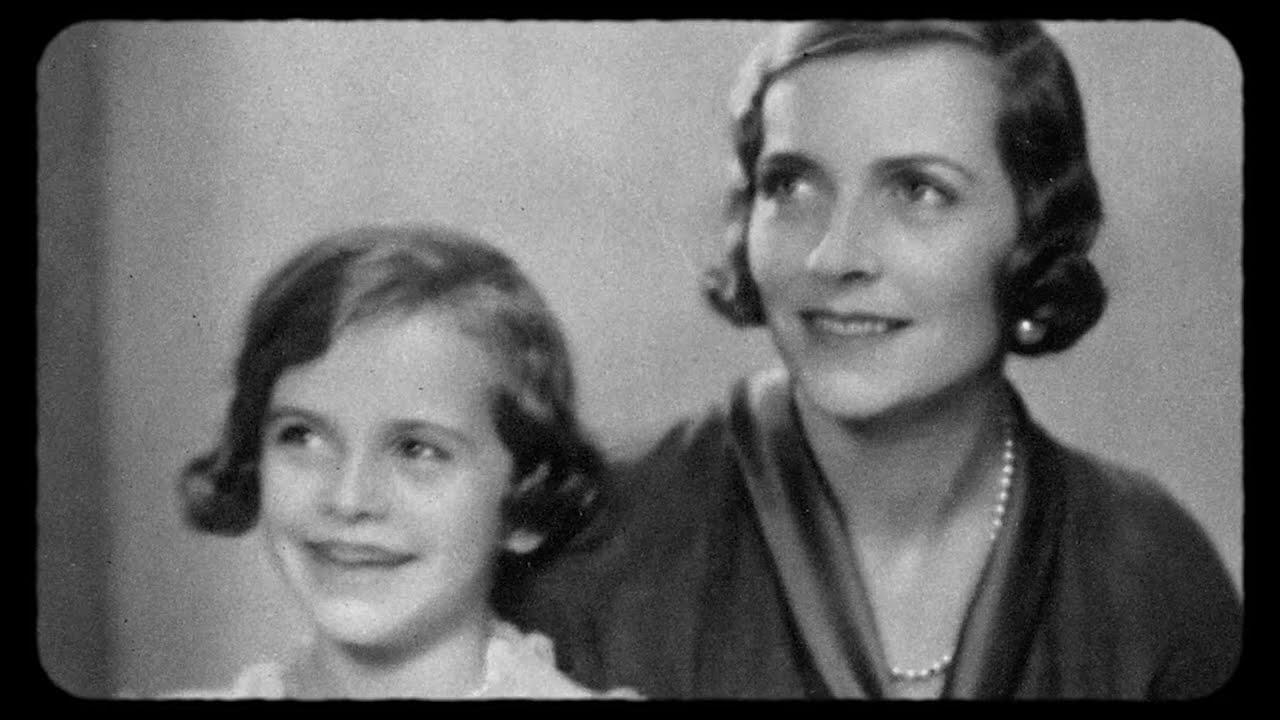
His nephew Philip was already married to the queen. That project was complete. Now Mountbatten turned his attention to the next generation: Prince Charles, heir to the throne, and by all accounts a lonely, sensitive young man struggling under the weight of expectation.
His mother was distant, consumed by duty. His father, Philip, was harsh, demanding, impatient with any sign of weakness. Mountbatten became what Charles desperately needed: a confidant, a mentor, someone who actually listened.
Charles called him "the grandfather I never had." They wrote letters constantly. Charles visited Mountbatten's estate at Broadlands whenever he could escape palace life. They talked about everything: duty, destiny, love—especially love.
Mountbatten's advice to the young prince was clear: "Sew your wild oats while you can. Date around. Have your fun. But when it's time to marry, choose someone young, innocent, with no past. A girl without baggage."
Coming from a man whose own marriage had been an open scandal, the advice was rich with irony. But Charles listened. He always listened to Uncle Dickie.
By 1974, Mountbatten had a new plan. He wanted Charles to marry his own granddaughter, Amanda Knatchbull. He even arranged a joint trip to India for 1980 to push them together. The symmetry appealed to him: another Mountbatten marrying into the direct royal line.
But Mountbatten wouldn't live to see that trip. Because by 1979, there were people watching him. People who had been planning something for years. And they were almost ready.
Mountbatten had been coming to Mullaghmore for three decades. Ever since 1949, when he first set eyes on Classiebawn Castle, a Victorian Gothic estate perched on a cliff overlooking the Atlantic. He fell in love with the place: the rugged coastline, the quiet village, the simple pleasure of taking his boat out to check the lobster pots.
What he didn't seem to notice—or didn't care about—was the geography. Mullaghmore sits in County Sligo in the Republic of Ireland, just 12 miles from the border with Northern Ireland.
And by the 1970s, that border was a war zone. The Troubles were at their peak. British soldiers patrolling the streets of Belfast and Derry. IRA bombs detonating in pubs, in shopping centers, in government buildings. Thousands dead on both sides.
And here was Lord Mountbatten—great-grandson of Queen Victoria, uncle to Prince Philip, symbol of everything the IRA despised—taking his summer holidays 12 miles from the front lines.
They'd been watching him for years.
By 1979, the warnings were coming from every direction. Maurice Oldfield, former director of MI6, personally advised Mountbatten that members of the royal family were being actively targeted. The Irish police, the Gardaí, urged him not to holiday in Ireland that year. The risks were too high, the area too volatile.
His own personal protection officer pleaded with him: "Stay away. Just this once. Find somewhere else."
An SAS-trained corporal assigned to his security detail filed a report. Shadow V was a soft target. The boat sat in an unguarded harbor. Anyone could walk up to it at night. Anyone could plant anything.
The same corporal spotted something else: a car with Belfast plates parked near the harbor. The driver watching Shadow V through binoculars, day after day. Intelligence services identified the car. It had been used before to transport IRA weapons. They bugged it, tracked it for months, and did nothing.
When his security team raised concerns, Mountbatten waved them off. He'd been coming here for 30 years. The locals loved him. He'd never had any trouble. Who the hell would want to hurt an old man anyway?
He refused armed guards. Said they made him uncomfortable. Refused to let police officers board his boat. Said it spoiled the atmosphere.
On the night of August 26th, 1979, while Mountbatten slept at Classiebawn Castle, someone slipped down to the harbor. They had 50 pounds of gelignite, a radio-controlled detonator, and a clear view of where the boat would be in the morning.
After Mountbatten's passing, the tributes poured in. War hero. Statesman. Royal patriarch. The grandfather Prince Charles never had.
But beneath the eulogies, there were whispers. Rumors that had followed Mountbatten for decades. Questions that nobody dared ask while he was alive.
In 2019, the whispers became documents. The FBI released files on Mountbatten under a Freedom of Information request. The dossier had been compiled starting in 1944, when he became Supreme Allied Commander in Southeast Asia. American intelligence had been watching him for 35 years.
The files described Mountbatten and his wife Edwina as "persons of extremely low morals." That much wasn't exactly secret. Mountbatten himself once admitted it: "Edwina and I spent all our married lives getting into other people's beds."
Another source, a writer named Robin Bryans, alleged in an Irish magazine that Mountbatten was part of a ring involving other establishment figures. The claims were explosive.
The most disturbing allegations centered on a place called Kincora Boys' Home in Belfast, a care facility for vulnerable children that became the center of one of the darkest scandals in Irish history. Staff at Kincora systematically abused residents for years.
When the scandal broke in the 1980s, investigations revealed a web of exploitation and cover-ups that reached into the highest levels of British intelligence. Several former Kincora residents came forward with claims that they had been trafficked beyond the home. Some alleged they were taken to Classiebawn Castle, Mountbatten's summer retreat in Mullaghmore.
The allegations were examined by the Northern Ireland Historical Institutional Abuse Inquiry. The inquiry's conclusion dismissed them. The inquiry stated that the original sources did not give any basis for connecting Mountbatten to Kincora.
John Barratt, Mountbatten's private secretary for 20 years, denied the allegations categorically. He insisted it would have been impossible for such activities to be concealed from him.
Mountbatten was never charged, never tried, never convicted of anything. Some have speculated, without evidence, that the IRA knew of the rumors, that the allegations factored into their decision to target him.
What is certain is this: the full truth about Lord Mountbatten may never be known. The man who shaped kings and divided nations took his secrets to the grave.