Jacqueline Lee Bouvier was born in New York City on July 28, 1929, into a family of old money and high expectations. Her father, John Jack Bouvier III, was a charismatic stockbroker, while her mother, Janet Lee Bouvier, came from a wealthy banking family. On the surface, her childhood appeared to be a fairy tale, but behind the scenes, her parents' marriage was turbulent, and they divorced in 1942 when Jackie was just 13.
The divorce was a scandal in New York high society, leaving Jackie caught between two very different worlds. Her father was free-spirited and encouraged her to dream big, while her mother remarried a wealthy man named Hugh Auchincloss and became focused on molding Jackie into the perfect debutante. Janet's strict lessons covered everything from posture to table manners, leaving little room for error. This pressure gave Jackie a steel backbone and a knack for keeping her cool under pressure.
Young Jackie was far from a cookie-cutter rich kid. She was a champion equestrian, winning trophies at horse shows from a young age. She was also a devoted reader who loved poetry and had a vivid imagination. Her bond with her father was strong, and he fed her creativity and encouraged her to think big. Despite the chaos at home, Jackie developed a quiet defiance and a fierce inner fire.
Jackie's education was top tier. She attended Miss Porter's School from 1944 to 1947, then went to Vassar College in 1947. In 1949, she studied in Paris at the Sorbonne, where she fell in love with French art, fashion, and culture. That year in Paris unlocked a vision of sophistication that would define her style forever. She finished her education at George Washington University, earning a BA in arts in 1951. She was fluent in French and Spanish and could hold her own in Italian.
After college, Jackie jumped into the workforce as a photojournalist for the Washington Times Herald at age 22. She interviewed senators, congressmen, and other powerful figures in Washington, DC, holding her own in a male-dominated world. The job put her right in the thick of the political scene that would soon shape her destiny.
In June 1952, Jackie got engaged to a stockbroker named John Husted Jr. But the spark wasn't there, and she called off the engagement. She was not interested in a safe, predictable life. That same year, she met John F. Kennedy, the dashing senator from Massachusetts, at a Georgetown dinner party. The chemistry was instant. JFK was captivated by her intelligence and grace, and she was drawn to his ambition and charm.
JFK proposed in early 1953 with a Van Cleef & Arpels ring. They were married on September 12, 1953, in Newport, Rhode Island, in what the press called the wedding of the century. More than 800 guests attended the ceremony at St. Mary's Church, and 3,000 fans lined the streets outside. Jackie wore an ivory silk taffeta gown designed by Anne Lowe, with a portrait neckline and a rose point lace veil. The reception at Hammersmith Farm was a lavish affair with 1,200 guests, a ten-foot cake, and endless champagne.
Marriage to JFK was no fairy tale. The couple welcomed four children, but their journey as parents was marked by both joy and unimaginable pain. In 1956, their daughter Arabella was stillborn. Their daughter Caroline was born in 1957, and their son John F. Kennedy Jr. was born in 1960. In August 1963, their youngest son, Patrick Bouvier Kennedy, was born prematurely and died just two days later. Through it all, Jackie carried her grief with quiet dignity while pouring her love into Caroline and John Jr.
JFK's reputation as a ladies' man was an open secret. Rumors of affairs with everyone from Hollywood icons to DC staffers swirled constantly. Insiders say Jackie knew about his wandering eye but chose not to let it define her. She focused on her children, her passions, and her role as the impeccable wife of a rising star. Some historians suggest there was an unspoken agreement: JFK had his freedom, and Jackie maintained the image of the perfect couple.

JFK also struggled with severe health issues, including chronic back pain and Addison's disease. He was in and out of hospitals and took a cocktail of medications just to function. Jackie was his rock, managing his medical needs with precision while keeping up her flawless public image. She was not just a wife but a partner in every sense.
Marrying into the Kennedy family meant joining one of America's most intense dynasties. The Kennedys were loud, competitive, and always gunning for the top. Jackie's quiet elegance made her a standout. She won over her father-in-law, Joseph P. Kennedy, who saw her as a secret weapon for the family's image. She also formed a deep bond with her brother-in-law, Robert Bobby Kennedy, who shared her love for big ideas and became a grounding force for her.
As JFK climbed the political ladder, the spotlight on Jackie grew brighter. Every outfit, word, and gesture was analyzed by the press. When JFK won the presidency in November 1960, Jackie became first lady at just 31. She was one of the youngest ever to take on the role, and the world's eyes were glued to her.
Jackie's fashion sense made her a global sensation. She loved French haute couture from designers like Chanel, Givenchy, and Dior. But as first lady, she had to play it smart to avoid seeming un-American. She partnered with New York atelier Chez Ninon to recreate Parisian looks with an American twist. Her signature pillbox hats, oversized sunglasses, and elbow-length gloves became iconic. Women everywhere copied her style, from Paris to small-town America.
Jackie's vision for the White House was revolutionary. When she moved in, she found the decor lacked character and felt like a soulless government office. She launched a massive restoration project, diving into archives to uncover the building's original designs. She assembled a team of historians and curators, charmed donors, and raised funds to track down authentic artifacts. The transformation was jaw-dropping, turning the White House into a living museum.
On February 14, 1962, Jackie starred in a CBS special, A Tour of the White House with Mrs. John F. Kennedy. An astonishing 56 million viewers watched as she guided them through the restored rooms. She earned an honorary Emmy for the broadcast. It was a love letter to the nation, making history feel alive and relevant.
Jackie also rewrote the first lady playbook by turning the White House into a cultural hub. Her state dinners were legendary, featuring French-inspired menus and intimate round tables that fostered real conversation. She mixed Nobel Prize winners with opera singers and jazz legends. One dinner so impressed French cultural minister André Malraux that he later arranged for the Mona Lisa to be loaned to the US. She brought in the American Ballet Theater, hosted Shakespearean actors, and even welcomed a youth orchestra led by a teenage Yo-Yo Ma.
In the fall of 1963, Jackie was at the height of her game. JFK needed to secure support in Texas for the upcoming 1964 election, and Jackie agreed to join him on a multi-city tour. On November 21, the Kennedys touched down in Texas, charming crowds in San Antonio, Houston, and Fort Worth. The trip was a success, and the couple was buzzing with optimism as they headed into the final leg in Dallas.
November 22 dawned bright and sunny in Dallas. Jackie wore a custom-made pink Chanel suit, a double-breasted wool bouclé with navy trim and a matching pillbox hat. At around 11:40 a.m., the Kennedys boarded their Lincoln Continental Convertible for a motorcade through downtown Dallas. Thousands of people lined the streets, cheering and waving signs. At 12:30 p.m., the motorcade neared Dealey Plaza, and then the world fell apart.
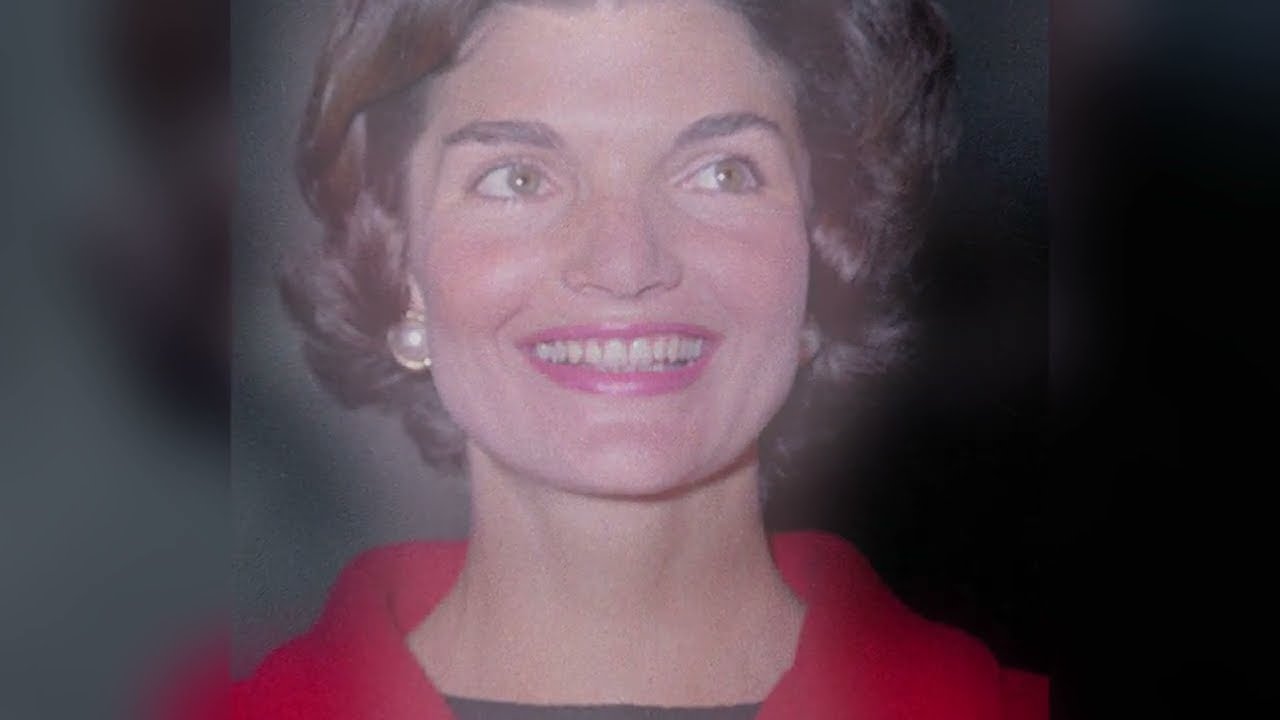
A sharp crack split the air, followed by two more shots. A bullet struck JFK in the neck and head. He slumped forward, blood spreading across his shirt. In that moment, Jackie witnessed something horrific: a piece of JFK's skull was blown off. Driven by pure instinct, she climbed onto the trunk of the moving car, reaching for that piece. Secret Service agent Clint Hill leaped onto the car, pushing her back into the seat as the driver sped toward Parkland Memorial Hospital.
The ride to Parkland felt like an eternity. Jackie cradled JFK's head in her lap, her pink suit soaked with his blood. Doctors rushed JFK into trauma room 1, but his wounds were catastrophic. At 1:00 p.m., just 30 minutes after the shots rang out, John F. Kennedy was pronounced dead. Jackie, at 34, was now a widow.
When aides urged Jackie to change out of her bloodstained suit, she refused. "No," she said. "Let them see what they've done." She wanted the world to face the reality of her husband's murder. That pink Chanel suit, once a symbol of her elegance, became a symbol of her courage. She wore it like armor, a deliberate choice to confront the world with the unfiltered horror of the moment.
On Air Force One, as Lyndon B. Johnson was sworn in as the new president at 2:38 p.m., Jackie stood just feet away, still in that suit. Her face was a mask of grief, but her posture was unwavering. She refused to change, even as they landed at Andrews Air Force Base in the dark of night. The image of Jackie, heartbroken yet resolute, burned into the nation's psyche.
In the days that followed, Jackie took charge of planning JFK's funeral, drawing inspiration from Abraham Lincoln's funeral. She chose every detail: the eternal flame at Arlington National Cemetery, the riderless horse with boots reversed in the stirrups, and the solemn procession through Washington's streets. The image of little John John saluting his father's casket became one of the most iconic moments of the century.
On November 25, Jackie walked barefoot behind the caisson from the White House to Saint Matthew's Cathedral, holding Caroline and John Jr.'s hands. The streets of Washington were lined with mourners. At Arlington National Cemetery, Jackie lit the eternal flame at JFK's grave site. The London Evening Standard captured it perfectly: "Jacqueline gave the American people their majesty."
A week after the assassination, Jackie sat down with journalist Theodore H. White for an interview with Life magazine. She compared JFK's time in office to Camelot, the mythical kingdom of King Arthur, a place of hope, idealism, and fleeting perfection. The term spread worldwide, cementing JFK's image as a visionary leader cut down too soon. It was a testament to her storytelling genius.
After the public rituals, Jackie stepped back from the spotlight. She moved out of the White House just weeks after the funeral, settling in a Georgetown townhouse. For nearly a year, she stayed out of sight, focusing on her children and herself. She spent time in Hyannisport and took quiet trips to New York and Virginia. She leaned on close friends and family, especially Bobby Kennedy, who became a rock for her and the kids.
In June 1968, Bobby Kennedy was assassinated just months after announcing his presidential run. The murder confirmed Jackie's worst fears: the Kennedy family seemed to be a target. With two assassinations shaking her world, Jackie's priority was clear: keep her kids safe and get out of the spotlight. Enter Aristotle Onassis, a Greek shipping magnate who was one of the richest men alive.
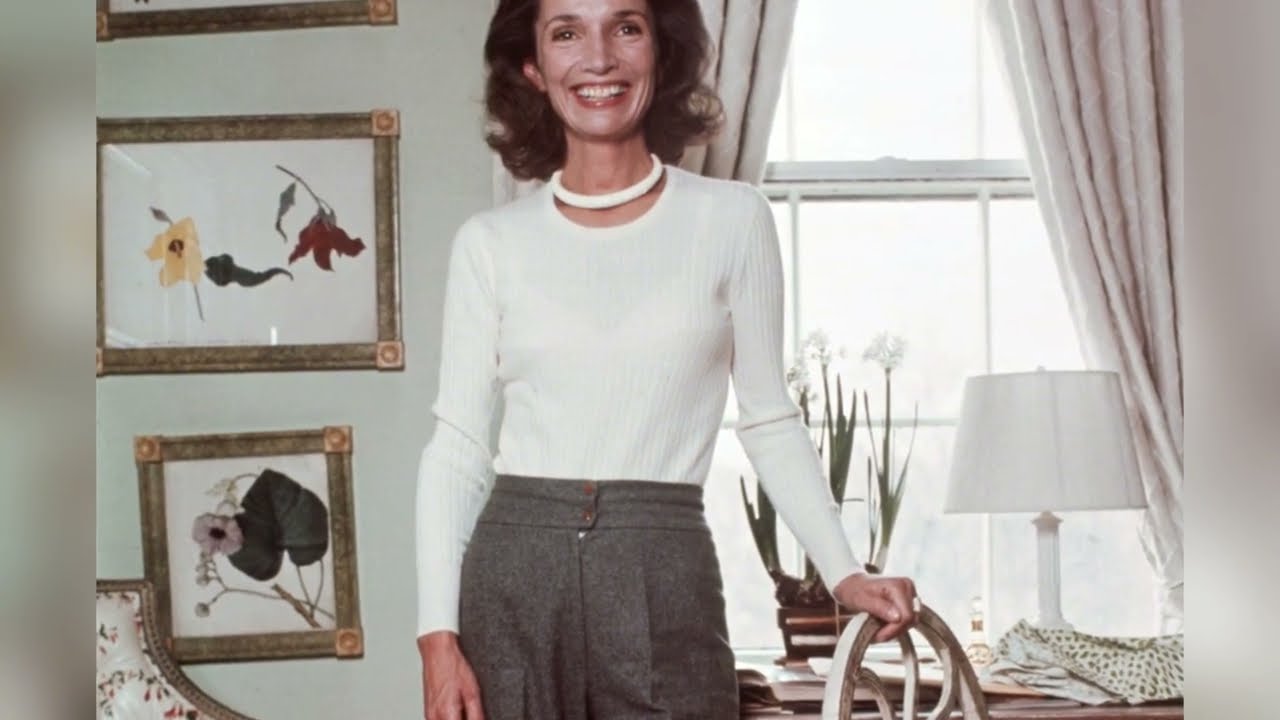
Jackie and Onassis had crossed paths in the 1950s, but their connection deepened in the mid-1960s. After Bobby's death, Jackie saw Onassis as a lifeline, a man with the resources and power to shield her and her kids from danger. On October 20, 1968, she married Onassis on his private island of Scorpios in a small, private ceremony. She wore a simple, elegant Valentino dress of ivory lace.
The marriage was a strategic alliance. For Jackie, it was an escape hatch, a way to find safety and privacy. Onassis's wealth meant private security, secluded estates, and a lifestyle that kept the world at arm's length. In return, Jackie gave Onassis social prestige, elevating him from a wealthy businessman to a figure of international intrigue. It was a deal: security for status.
Onassis was great with Jackie's kids, taking them sailing on his yacht and letting them run wild on Scorpios. But his daughter, Christina Onassis, was not happy about the marriage. At 18, she saw Jackie as an outsider and their relationship was frosty at best. Life with Onassis was a whirlwind of luxury, but by the early 1970s, cracks were showing. Onassis's health was declining, and rumors swirled that he was considering a divorce.
On March 15, 1975, Aristotle Onassis died in a Paris hospital at age 69. Jackie was by his side. His death left her a widow for the second time, but it also came with a massive inheritance, reportedly $26 million, plus a trust fund for her and the kids. For Jackie, it was never about the money. It was about safety, freedom, and a chance to rebuild.
In 1975, at age 46, Jackie returned to New York City and surprised everyone by becoming a book editor at Doubleday. This wasn't a vanity gig. She was a hands-on editor, working on manuscripts, scouting new talent, and shaping stories that mattered. She edited books like The Power of Myth by Joseph Campbell and worked with Michael Jackson on his memoir Moonwalk. Her colleagues were floored by her work ethic.
Jackie also found love again with Maurice Tempelsman, a Belgian-born diamond merchant and financier. He was understated, intellectual, and deeply loyal. They lived together in Jackie's Fifth Avenue apartment and spent time at her Martha's Vineyard estate. Unlike her marriage to Onassis, this relationship was private, grounded, and free from the tabloid frenzy.
Jackie also threw her weight behind preserving New York's architectural treasures. In the late 1960s, she was a key player in the fight to save Grand Central Terminal from being bulldozed for a skyscraper. Her efforts paid off, and Grand Central was designated a landmark in 1976. In the 1980s, she helped stop a proposed high-rise at Columbus Circle that threatened to cast shadows over Central Park.
In late 1993, Jackie started feeling off. In January 1994, she was diagnosed with non-Hodgkins lymphoma. She kept the news quiet, sharing it only with her closest circle. She started treatment, enduring chemotherapy and radiation with the same stoicism she showed in Dallas. But the cancer was aggressive, and by spring, it was clear the prognosis wasn't good.
On May 19, 1994, at 10:15 p.m., Jackie passed away in her sleep at her Fifth Avenue apartment, surrounded by her loved ones. She was 64. Her funeral, held on May 23 at St. Ignatius Loyola Church in Manhattan, was private but broadcast nationwide. She was laid to rest at Arlington National Cemetery beside JFK under the eternal flame she lit 31 years earlier. Her headstone reads Jacqueline Bouvier Kennedy Onassis, but during the ceremony, the priest skipped the Onassis part, a subtle tribute to her eternal role as America's most beloved first lady.
From 1975 to 1994, Jackie was at her most authentic. She wasn't just a former first lady or a billionaire's widow. She was a woman who kept evolving, finding purpose in work, love in a new partnership, and meaning in fighting for history. Her battle with cancer showed the same courage she brought to every challenge. And her quiet exit left a legacy that is still alive today.