On May 6, 1910, in a bedroom at Buckingham Palace, Edward VII lay dying. The King of the United Kingdom and Emperor of India had lungs filled with fluid and a face the color of wet stone. He collapsed repeatedly over 48 hours, yet between coughing fits, he insisted on standing, demanded to be dressed, and received visitors as if sheer stubbornness could renegotiate the terms of his death. It would not.
His wife, Queen Alexandra, watched from across the room. It was a position she knew well after 47 years of watching him flirt, deceive, spend, gamble, and consort with half the ladies of the English aristocracy, while she remained at Sandringham with their children, her dogs, and her silence.
Divorce court scandals and gambling affairs had followed him for decades. His mistresses boasted in London salons with the confidence of women who knew their standing and felt no shame. Despite all of it, for nearly five decades, Alexandra stood firm.
Now, as his breathing grew shallow and the doctors exchanged glances they thought she did not notice, she did something that astonished everyone in the room. She did not send for the Archbishop of Canterbury or any of his ministers. She sent for Alice Keppel, Edward's mistress. The woman who had accompanied him to dinner parties, country house weekends, and the Riviera for the past twelve years while Alexandra moved in a completely separate world.
She sent for Keppel, allowed her into the room, and permitted her husband's mistress to bid him farewell. It was a gesture so striking, so devoid of the bitterness that a lifetime of humiliation might justify, that those present could not fully comprehend it. Courtiers who expected anger, or at least cold rejection, instead watched a queen consort offer a kindness that no obligation demanded and no audience would reward.
Biographers return to this scene again and again because it seems to crystallize something almost incomprehensible in Alexandra's character. Not anger, revenge, or even grief in the literal sense, but something closer to exhausted nobility. A kind of generosity that only appears after decades of swallowing what should have been unspeakable.
So why did she stay?
On March 10, 1863, inside St. George's Chapel at Windsor Castle, the 18-year-old Princess Alexandra of Denmark married Albert Edward, known universally as Bertie, Prince of Wales and eldest son of Queen Victoria. The groom, barely 21, seemed younger in temperament. The bride seemed older to many. She arrived from Copenhagen with striking features, a dignified presence, and an upbringing steeped in the modest, pious values of the Danish royal family. A family so frugal and close-knit it seemed eccentric to the sprawling, turbulent British royal apparatus.
The early years held genuine affection. Six children were born in rapid succession between 1864 and 1871, and for a brief period, the marriage carried something like warmth. Bertie was generous, cheerful, even affectionate when it suited him. Alexandra, beautiful and beloved by the British public in a way that made Bertie envious, seemed to be his anchor. There was something real between them, at least at first.
But the structure of the relationship cracked early, and the cracks ran in predictable paths. Bertie belonged to London, to the clubs, the horse races, the country house weekends, the smoke-filled card rooms, and the private dinner parties that ended after midnight, often with women other than his wife. He built a social system known as the Marlborough House Set, named after his London residence. This glittering circle of aristocrats, actresses, gamblers, and society hostesses became his true family circle.
Alexandra, meanwhile, withdrew. Sandringham, the vast estate in Norfolk, became her sanctuary. A place of children, animals, familiar routines, and quiet. She filled the rooms with family, kept her own schedules, and built a life that asked little of her husband. Their social calendars rarely intersected except when public duty demanded it.
Edward dined out six or seven nights a week during the London season, surrounded by the titled, the beautiful, and the reckless. Alexandra preferred the rhythm of Sandringham, morning walks with the dogs, long afternoons with her daughters, and correspondence she managed despite increasing difficulty hearing the servants who delivered her letters. The contrast between their domestic worlds sharpened with each passing year.
By the time Edward finally ascended the throne in 1901 after Victoria's death, the couple lived in parallel orbits with no sign of convergence. He became king at 59. She became queen consort at 56. They appeared together at public ceremonies, exchanged polite letters, and maintained what historians describe as genuine, though platonic, affection. The remnants of an early bond long frozen into something resembling a professional partnership.
Edward's infidelities operated on a scale that eliminated any pretense of secrecy and turned shame into public spectacle. His affairs were so public and so continuous for decades that they generated three major scandals during Victoria's reign, each more humiliating for Alexandra than the last.
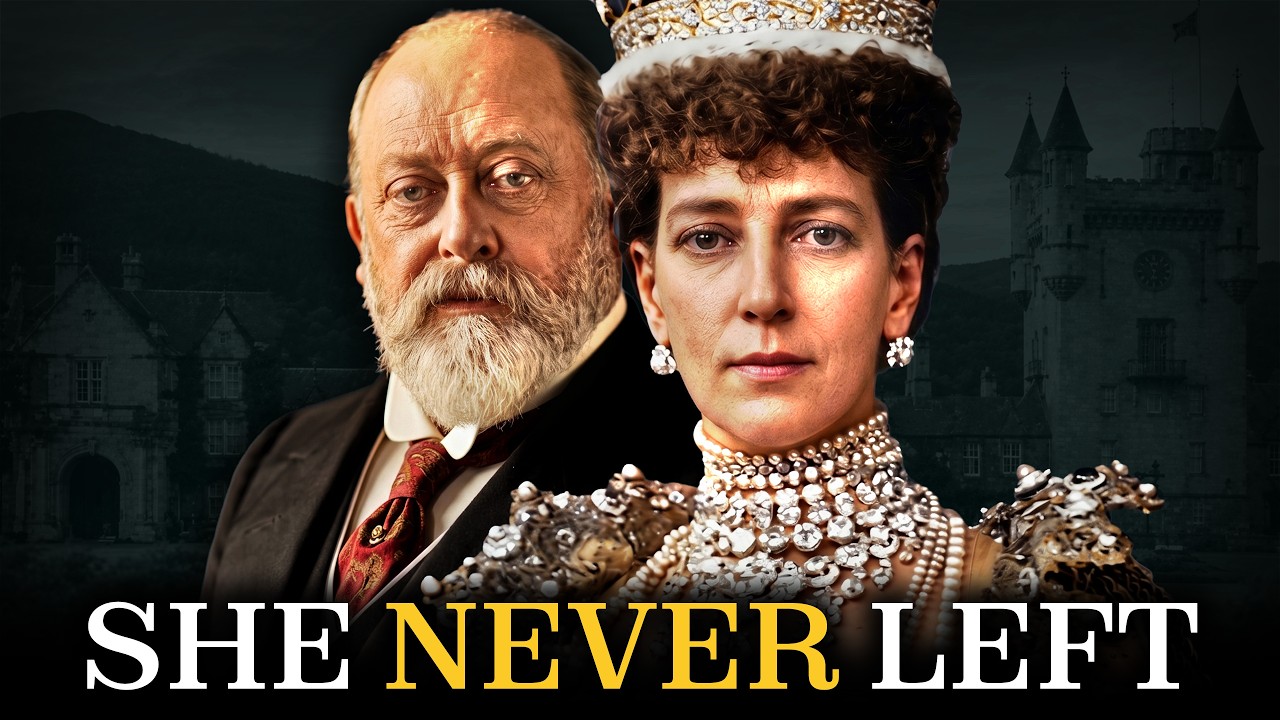
The first exploded in 1870, just seven years into the marriage, with the Mordaunt divorce case. Sir Charles Mordaunt petitioned to divorce his young wife, Lady Harriet, after she confessed to adultery with several men. Among the names she gave was the Prince of Wales. Edward found himself summoned to court, the heir to the British throne standing in a public courtroom, denying under oath any improper relationship. Whether he told the truth remains a question biographers still debate. What no one disputes is the damage. A future king appearing in a divorce case, publicly linked to adultery and marital ruin, excited the press and horrified a nation still governed by the moral values of his mother's court. Alexandra took the blow in silence, still clinging to hope that her husband would eventually settle down.
Six years later came the Aylesford affair from a different angle. Lord Aylesford discovered his wife was having an affair with Lord Blandford and sought a divorce. Edward, who had encouraged Aylesford to accompany him on a tour of India, found himself targeted by Lord Randolph Churchill, who threatened to publish embarrassing letters written by the prince to prevent the divorce. The proper word for this, stripped of noble veneer, was blackmail. The scandal swept British society for months before being extinguished, but not before branding Edward again as a man whose appetites brought chaos to every room he entered.
Then came the Tranby Croft affair of 1891, a scandal centered not on a mistress but on a gambling table. During a weekend party, a guest named Sir William Gordon-Cumming was accused of cheating at baccarat, then an illegal game. The case became a lawsuit, and Edward, who had organized the game and witnessed the alleged cheating, found himself compelled to testify in court for the second time in his life. The press devoured the scene. A Prince of Wales under oath, surrounded by the wreckage of another elite gathering gone wrong.
For Alexandra, the Tranby Croft affair carried a different sting. It confirmed, in the most public forum, that Edward's recklessness extended beyond marital infidelity into a broader pattern of behavior no amount of wifely patience could contain. These three episodes pierced the privacy the monarchy usually protected behind protocol, and in each case Alexandra occupied the same position. Present, visible, silent. She absorbed the public association with betrayal, gambling, and aristocratic disorder without a single recorded complaint.
Behind those scandals, the affairs continued without interruption. Edward maintained what amounted to a parallel emotional life, organized around three long-term mistresses who succeeded each other in sequence. Lillie Langtry, the socially ambitious actress whose beauty and wit made her a star in her own right, held the role first. She was followed by Daisy Greville, Countess of Warwick, who was politically active, outspoken, and far more complex than Langtry. Finally, beginning in 1898, Alice Keppel assumed the role and held it until the day Edward died. Keppel managed the position with a discretion her predecessors lacked. She became so integral to Edward's daily life that she ceased to be a secret and became an informal institution, accepted by the court, tolerated by Alexandra, and resented only by moralists without the social influence to object openly.
Alexandra interacted with many of these women at social events because the aristocratic system demanded it. The same dinner tables, the same country houses, the same horse races. Imagine sitting across from the woman who sleeps with your husband, smiling, exchanging pleasant conversation about the weather or horses, not once but at every gathering for years while everyone watches to see if you will break. She never broke, at least not publicly.
Why didn't she leave? The question seems natural to contemporary ears. A husband who publicly humiliates you, maintains a series of exposed affairs, and forces you to share social space with his mistresses. Surely the answer is obvious. Ask for a divorce, take the children, start over. In the 21st century, this scenario writes itself. In the 19th century, it could not even begin.
Before 1858, obtaining a divorce in England required a private act of Parliament. Not a lawsuit or a petition, but literal legislation, debated and voted on by the Lords and Commons. Between 1700 and 1857, only four women in the entire nation managed to obtain a parliamentary divorce. Four women over 157 years. The process required extraordinary wealth and connections, along with a willingness to endure the kind of public exposure that destroyed reputations as surely as it ended marriages. Practically speaking, it did not exist.
The Matrimonial Causes Act of 1857 changed the mechanism but preserved the bias. It created a civil divorce court where marriages could be ended without an act of Parliament, but it enshrined a double standard so stark that even its supporters struggled to justify it seriously. A husband could divorce his wife by proving one thing only: simple adultery. If she strayed, the marriage could end, cleanly, quickly, finally.
For a wife, the burden looked entirely different. She could not divorce her husband for simple adultery. The law made this distinction without shame, and Parliament defended it without apology. A man's infidelity, in Victorian jurisprudence, constituted a moral failure but not a legal injury. Any wife who discovered her husband had a mistress, or two, or seven, could express her displeasure through whatever private channels marriage allowed, but the courts would not hear her complaint unless she could prove something in addition to adultery. An aggravating factor that transformed mere betrayal into legally recognized cruelty.
The list of acceptable aggravating factors read like a catalog of horrors: physical cruelty, desertion for two or more years, adultery with bigamy, incestuous adultery, or, as the statute itself put it, rape, sodomy, or bestiality. Without proving her husband beat her, abandoned her, committed incest, or assaulted her in ways Victorian legal imagination barely allowed itself to mention, a wife found no exit. Adultery alone, no matter how flagrant, no matter how humiliating, no matter how many mistresses appeared at dinner parties, adultery alone did not count.
Applied to Alexandra's situation, the door closed with near-mechanical finality. Edward did not beat her, did not desert her, did not commit any of the strange crimes enumerated in the statute's final desperate clauses. He simply conducted affairs relentlessly and publicly for decades. Under the law as it stood from 1857 until the double standard was abolished by the Matrimonial Causes Act of 1923, Alexandra lacked the legal grounds to petition for divorce. The system designed to adjudicate broken marriages deliberately ensured that a wife in her position could not use it.
The double standard persisted unchanged from 1857 until 1923. For 66 years, English law treated a husband's infidelity as a minor domestic inconvenience while treating a wife's infidelity as a marriage-ending crime. Alexandra spent her entire married life, from the wedding in 1863 until Edward's death in 1910, inside this legal framework, watching it protect her husband at every turn. The cruelty of the arrangement lay not in its ambiguity but in its transparency. Everyone understood what the law permitted and what it forbade, and that a man could take mistresses with complete legal impunity while his wife remained bound.
Even if Alexandra had assembled the legal grounds, even if she had found a sympathetic judge willing to stretch the boundaries of the Matrimonial Causes Act, the constitutional structure of the British monarchy erected a second wall behind the first. And this wall had teeth.
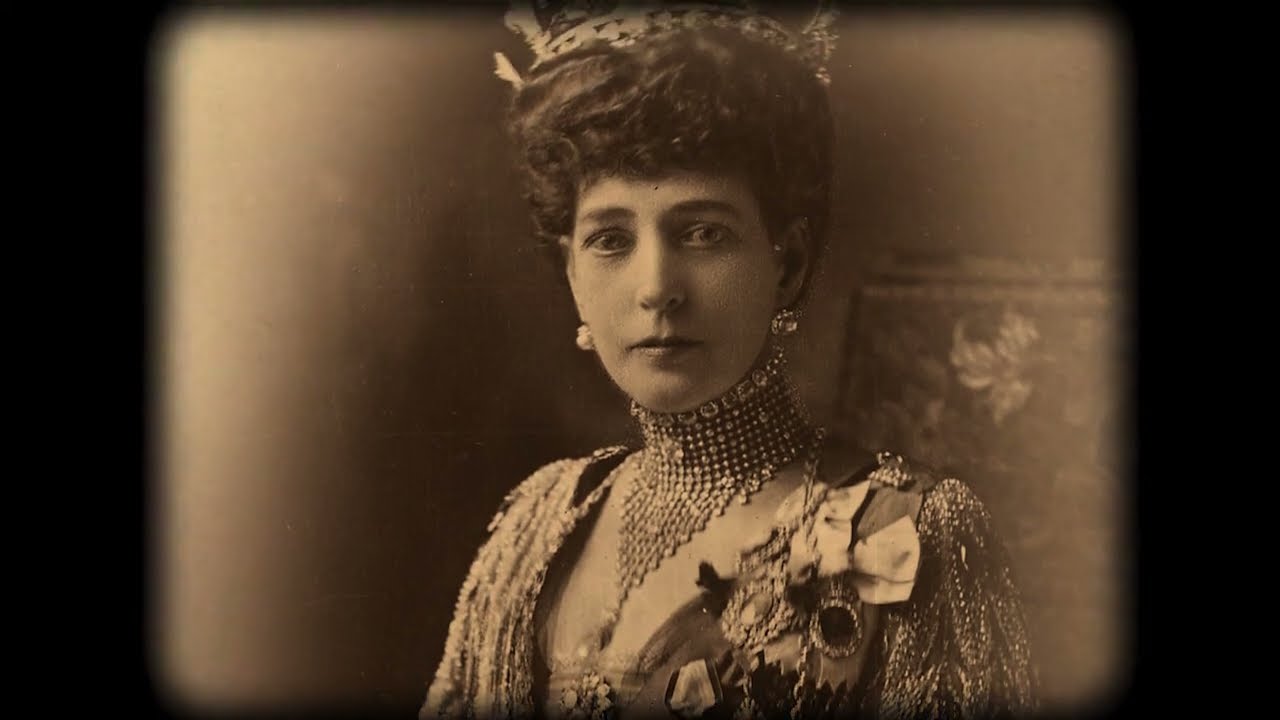
Edward occupied a position unlike any other husband in England. As Prince of Wales and heir to the throne, he would eventually become Supreme Governor of the Church of England, the institutional body with absolute authority over the spiritual lives of his subjects. The Church of England in the late 19th century did not merely discourage divorce; it condemned and prohibited it. A divorce involving the future head of the Church would have triggered a constitutional crisis of the sort no prime minister, archbishop, or queen consort could survive.
The public legitimacy of the monarchy depended on the illusion that the royal family practiced what the Church preached. Any divorce would shatter that illusion before the entire nation.
But the constitutional barrier, for all its weight, may not have been what mattered most to Alexandra personally. A more private threat loomed behind it. The near-certainty that she would lose her children.
In 1717, during a bitter dispute between King George I and his son over custody of the royal grandchildren, the king demanded a formal legal ruling on the matter. His judges issued what became known as the Great Opinion of the Royal Family's Powers. Its conclusion was stark. The reigning sovereign holds legal custody and absolute authority over minor members of the royal family, not the parents. This was not a dusty theoretical idea. It had immediate force.
In practical terms, this meant Queen Victoria, not Edward or Alexandra, held ultimate legal authority over Alexandra's own children. The Crown's prerogative powers over minors operated as a kind of super-custody that overrode ordinary parental rights. In any scenario where a royal family member sought to destabilize the monarchy, divorce or even formal separation would place Alexandra in direct conflict with the full weight of this legal precedent. Victoria, who abhorred scandal above almost everything, would have possessed every legal tool needed to seize the children from Alexandra's care, and every political incentive to do so.
Think for a moment about what this meant practically. Alexandra's six children formed the center of her emotional world. Biographers consistently describe her devotion to them as intense, even suffocatingly attached. She clung to them with a ferocity contemporaries sometimes found excessive. These children represented not just duty or dynasty but the core of whatever private happiness she had managed to extract from a marriage that gave her status, wealth, and public admiration, but almost nothing else.
Divorce would have cost her everything. Not just a partial settlement, but the entire structure of her emotional life. The morning walks, the bedtime routines, the birthday celebrations, the simple daily closeness that formed the emotional bedrock of her existence. In return, she would have gained the freedom to live alone, disgraced, stripped of her titles and purpose. In a society that would have viewed her departure from the royal family not as liberation but as betrayal. A Danish princess with a limp and growing deafness, cast out of the British court, separated from her children by royal decree, dependent on whatever financial settlement the Crown chose to grant her.
These calculations required neither courage nor cowardice to resolve. They required only the ability to count.
In 1867, four years into her marriage and still in her early twenties, Alexandra contracted a severe case of rheumatic fever. The illness nearly killed her. When she recovered, it left permanent reminders: a stiffened knee that caused a noticeable limp for the rest of her life, and the early acceleration of a condition she had likely inherited, otosclerosis, a progressive hardening of the middle ear bones that stole her hearing gradually and irreversibly.
Alexandra's deafness became increasingly apparent in her thirties, dominated her social life by her forties, and by the time she became queen in 1901, she lived in a world of muffled sounds and missed conversations. Trapped on the wrong side of a sensory barrier that no amount of royal privilege could breach.
Her deafness isolated her from more than just sound. It separated her from the one arena where Edward excelled: conversation. The Marlborough House Set surrounding him depended on quick, overlapping, competitive wit. A verbal tennis match played at speed, full of double meanings and theatrical timing. Alexandra could not keep up. The jokes arrived too quickly, delivered in too many simultaneous voices, at volume levels her damaged ears could not distinguish. She sat at tables surrounded by people performing for her husband's approval, catching perhaps one word in three. Laughter erupted at jokes she had not heard. Gossip circulated in whispers designed for sharper ears than hers.
Imagine attending a party in a language you once spoke fluently but can no longer master. Familiar enough to wound, foreign enough to exclude. Everyone in the room understood her difficulty, accepted it with varying degrees of sympathy or condescension, and then continued their conversations without pause. Conversations would not slow down for a Princess of Wales. Edward's circle valued speed, and Alexandra could not match that rhythm.
Sandringham absorbed her completely. Its quiet, its vastness, its distance from the noise of Edward's London life. It was the one place where she could control her environment, where conversation moved at a pace she could follow, where her children, her dogs, and her daily routines provided the structure her marriage could not. She filled the place with family and animals, building within the walls of that country estate a domestic world that asked nothing of her husband and received nothing from him.
Some biographers push toward a more uncomfortable reading of Alexandra's isolation. Her upbringing in the strictly religious atmosphere of the Danish royal court may have left her sexually repressed, inclined to view intimacy as a marital duty rather than a source of pleasure. If so, the gap between Alexandra and Edward ran deeper than infidelity or temperament. It reached the bedroom itself, where two fundamentally different appetites collided and produced not passion but withdrawal. Edward withdrew toward the women who welcomed his attention. She withdrew toward the children who demanded hers.
None of this excuses Edward, but it illuminates the contours of Alexandra's survival. It did not resemble confrontation, rebellion, or cold negotiation. What she built instead was something like a parallel marriage. A quiet, deliberate construction of a separate life within the institution itself. Sharing the name and the palace, but sharing almost no time.
She poured her emotional energy into her children with an intensity some described as unsettling. She also cultivated an enormous public popularity that became her shield. The British people loved her with a simple warmth they rarely granted her husband. Divorce would have meant surrendering not just her children and her status, but the love of a nation that regarded her as something close to a living saint. That love, built over decades of public appearances, charitable work, and the quiet dignity with which she bore her private suffering, may have meant more to her than any legal settlement could compensate.
One final complication lies at the heart of every biography written about this marriage: the deliberate, systematic destruction of evidence. Edward VII died on May 6, 1910. Before his death, he left instructions for his private secretary, Francis Knollys, to burn his personal papers. Knollys carried out the order. Letters, diaries, notes, the documentary record of a man who lived one of the most documented romantic lives of the 19th century, fed the flames and vanished.
Whatever Edward thought of his own behavior, whatever he wrote to his mistresses or about his wife, whatever calculations, regrets, or justifications he committed to paper, all of it disappeared. Alexandra outlived him by 15 years, dying in 1925 at age 80. Her executors performed the same task at her death, destroying the bulk of her personal correspondence and eliminating any private record she might have kept of her inner life. Her feelings about Edward's betrayals, her reasons for staying, her thoughts about Keppel, Greville, and Langtry, her grief, her anger, or her strange perpetual calm, all of it went up in smoke.
The two people most capable of explaining this marriage chose, through their representatives, to ensure that no one ever could. What remains comes from the margins. Letters written by courtiers, notes recorded by friends, gossip filtered through the memoirs of contemporaries who saw only what the couple allowed them to see. Any definitive claim about Alexandra's true feelings toward Keppel, Greville, or Langtry remains scholarly inference rather than documented fact.
Historians have built their interpretations on these secondary materials, and their conclusions diverge in ways that reveal as much about the biographers as about the marriage itself. Jane Ridley, whose 2012 biography of Edward ranks among the most analytically rigorous, portrays Alexandra as fundamentally incompatible with her husband, not just emotionally but intellectually. Beautiful and loving, but ultimately childish, unable to provide the mature female companionship Edward craved, though deeply wounded by his betrayals.
Richard Hough, writing in 1992, takes a different angle. His account focuses on their mutual political and social dependence, how the marriage worked, regardless of its private failures, as a machine for displaying royal power. In Hough's telling, the marriage survived not because of love or even forgiveness, but because both partners needed it for reasons beyond personal happiness.
Theo Aronson, author of The King in Love, challenges the narrative of Alexandra as a flawless victim. He notes that the patriarchal system protected both Edward and Alexandra while the women Edward discarded bore the heaviest costs. Daisy Greville, Countess of Warwick, who spent years as Edward's companion only to find herself replaced by Alice Keppel, suffered real social damage when the relationship ended.
Georgina Battiscombe, whose 1969 biography Queen Alexandra remains the definitive mid-century account, builds the version of Alexandra most people still carry in their minds. The poignantly isolated wife, made more sympathetic by her deafness, ennobled by her suffering, and crowned with moral authority by that single act of summoning Alice Keppel to Edward's deathbed. Battiscombe firmly established the story of Alexandra's quiet suffering, connecting it to the physical reality of her progressive hearing loss and how it isolated her from the social machine around her, forcing her into a solitude no one around her could fully comprehend. She treats the deathbed summons as the defining gesture of Alexandra's life, the moment that transformed decades of silent humiliation into something approaching greatness.
Each of these readings contains truth, but none can claim certainty. Because the primary documents were burned, because the parties involved chose silence over testimony, every biography of this marriage rests on a foundation of informed speculation atop the surviving fragments. However hard biographers work, they know what Alexandra did without knowing for certain why.
Return one final time to that room at Buckingham Palace. Alice Keppel enters, summoned by the wife of the man she loved for 12 years. What passes between her and the dying king happens behind a curtain history has never fully lifted. Some accounts describe her composure breaking, her grief becoming so apparent that Alexandra, the wife, the woman who sent for her, eventually asked her to leave. Others suggest the scene proceeded with restrained dignity from all parties. The details change depending on the source, and since those involved left no record, the exact nature of those minutes in that room will never be recovered.
What remains is the act itself. Unrequested, unscripted. Protocol demanded nothing of the sort. No courtier suggested it. No constitutional obligation required the queen consort to summon her husband's mistress to his deathbed. Alexandra chose to do it. With that choice, she performed an act biographers have spent over a century trying to classify. Mercy, masochism, defiance, exhaustion, or simply the final expression of a woman who had long since stopped competing for a man she could not keep.
General Sir Dighton Probyn, who served Alexandra faithfully for decades and managed her troubled finances with patience approaching devotion, referred to her with reverence as the Blessed Lady. The title captured something formal titles could not express. Probyn watched her spend lavishly on charities and gifts, forgive debts she should have collected, and shower warmth on people who could offer nothing in return, all while swallowing a private humiliation that would have made most people the opposite of generous. He noted her resilience alongside her extravagance, how both qualities seemed to spring from the same source. An enormous emotional capacity that her marriage consumed without reciprocating.
She survived because the alternative did not exist. The law denied her any exit. The constitution blocked every side passage. Royal prerogative threatened to tear her children from her arms if she even tried. Beyond these structural barriers, her growing deafness confined her to an isolation that made the idea of building a life outside the monarchy pure fantasy.
She stayed not because she forgave Edward, and not because she lacked the courage to leave. She stayed because 19th-century England designed, with exquisite precision, a system that made staying the only rational choice for a woman in her position, and then congratulated her for the grace with which she did so.
The word refused tells the story too neatly. It suggests a will, a decision, a moral calculation weighed and settled. Nothing was that clear. Alexandra endured a marriage she could not escape, sustained by her children, her public, her dogs, her Norfolk retreat, and whatever private resources of stubbornness, faith, or emotional discipline carried her from year to year. She did not refuse to divorce Edward VII. Divorce was refused to her long before she could ask for it, in language written by men who never imagined she might want one.
She died at Sandringham on November 20, 1925, at age 80. Her executors burned her private papers. Silence settled over the place, and the Blessed Lady finally escaped the only way the system allowed.