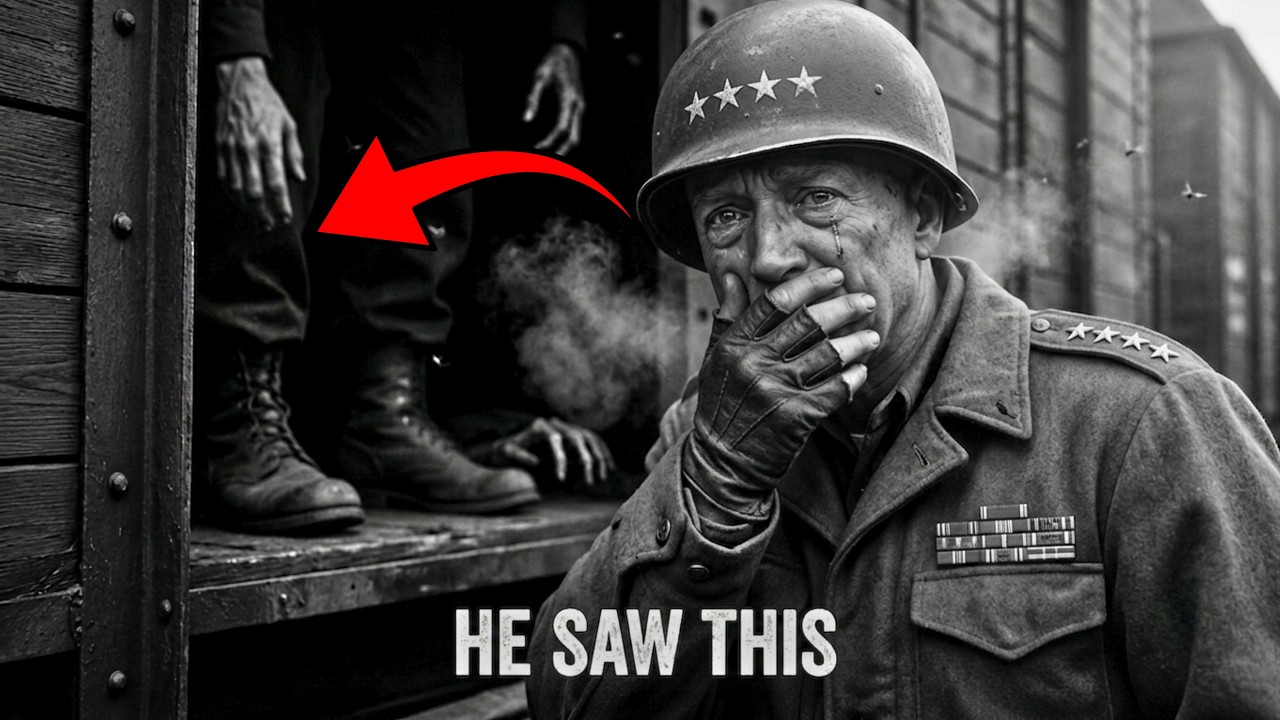
On April 29, 1945, soldiers of the US 45th Infantry Division were advancing through Bavaria toward what they believed was a standard military objective. Instead, they encountered a railroad siding near the Dachau concentration camp complex. There, they found 39 cattle cars sitting motionless in the cold. Inside were the bodies of thousands of starved and frozen prisoners. The scene became known as the Dachau death train.
The American troops were combat veterans who had survived some of the worst fighting in Europe. They had seen friends killed by artillery and watched men burn inside tanks. But the sight of roughly 2,000 corpses piled inside the rail cars was beyond anything they had processed. One young soldier from Oklahoma dropped his rifle and collapsed into the snow, sobbing. Others felt their shock turn into a cold, focused rage.
When the infantrymen breached the camp’s main gate, they found that the commandant had fled. A 20-year-old SS lieutenant named Heinrich Wicker approached with a white flag, wearing a polished uniform and expecting to surrender under the protections of the Geneva Convention. An American officer spat in his face. Within moments, chaos spread across the camp.
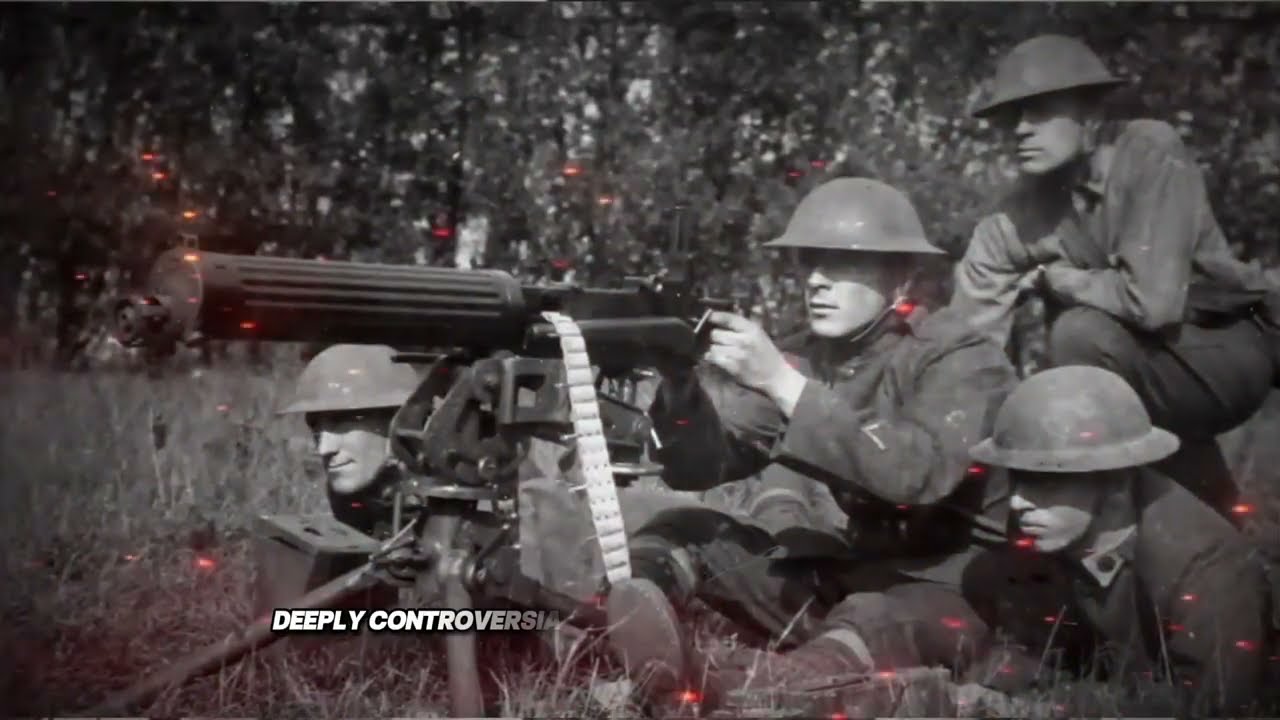
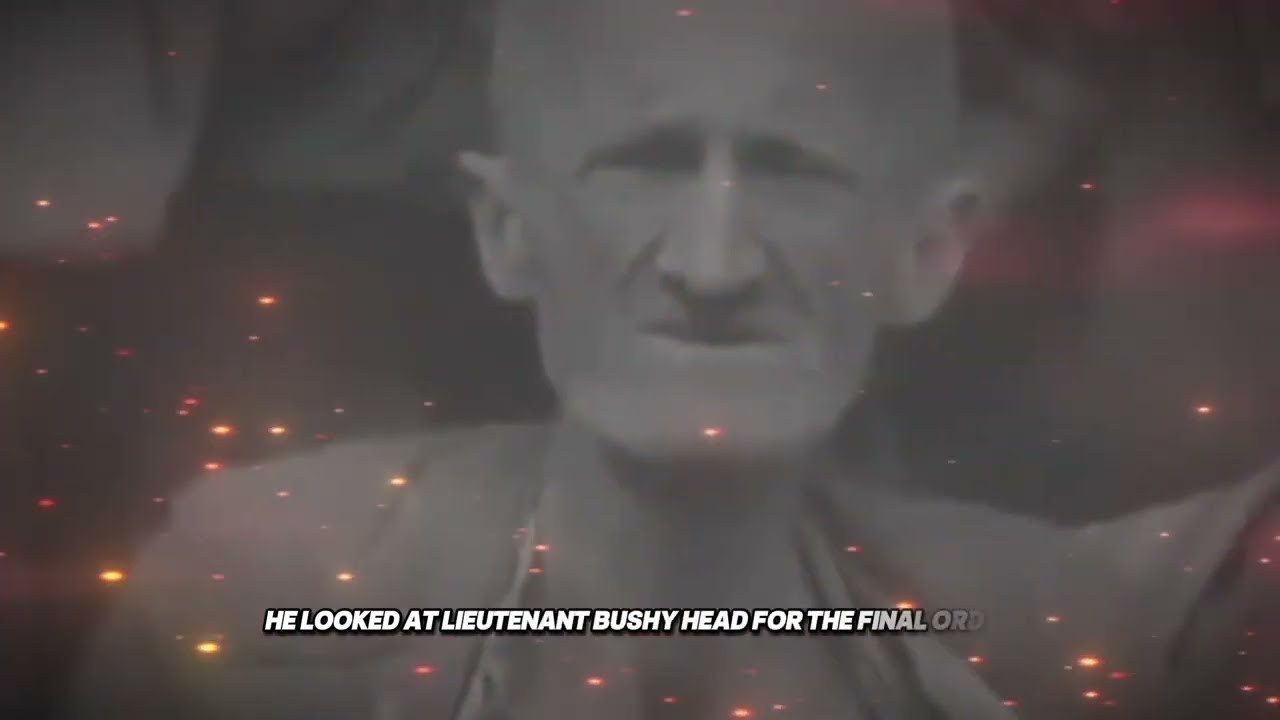
A group of about 50 SS guards attempted to surrender near a brick wall by a coal yard. They threw down their weapons and shouted that Hitler was finished. They expected the Americans to accept their submission. Instead, an American lieutenant, widely identified as First Lieutenant Jack Bushyhead, a Native American officer from Oklahoma, gestured toward the wall. A machine gun was set up. When Bushyhead gave a slight nod, the gunner opened fire.
The sustained burst lasted about ten seconds. When the smoke cleared, the SS guards were dead, their bodies piled against the wall. Lieutenant Colonel Felix Sparks heard the gunfire and ran to the scene. He fired his pistol into the air and ordered the men to stop. The machine gunner looked up with tears on his face and said, “Colonel, they deserved it.”
The coal yard shooting was not an isolated incident. For roughly an hour, the camp was effectively turned over to the liberated prisoners and the American troops. SS guards climbing down from watchtowers to surrender were shot before they reached the ground. Others were fired upon as they floated in the camp moat. Liberated prisoners, many of them skeletal and weak, hunted down SS guards and kapos who had collaborated with the Nazis. American soldiers formed a perimeter and did not intervene. When a junior officer asked a sergeant whether they should stop the violence, the sergeant replied, “No. Let them finish.”
The events were documented by combat photographers. Within days, the military bureaucracy opened an investigation. Lieutenant Colonel Joseph Whitaker led a team that compiled a report titled *Investigation of Alleged Mistreatment of German Guards at Dachau*. The report concluded that American troops had violated international law and recommended court-martials for the officers and machine gunners involved.
The report was sent up the chain of command to General George S. Patton, commander of the US Third Army. Patton was known as a strict disciplinarian. But he had recently toured the horrors of Ohrdruf and Buchenwald. He had vomited after seeing the conditions at the camps. He had forced local German civilians to walk through the camps and view the dead. He referred to the SS as the “absolute slime of the earth.”
When the investigating officer presented the report in Patton’s Munich office, Patton rejected it. He argued that his men had been pushed beyond human psychological limits. He reportedly said, “You walk into a place like that. You see 2,000 dead bodies on a train and you expect my boys to follow the rule book? Hell, no.”
Patton refused to allow court-martials. Depending on the account, he either burned the report or ordered it buried in classified archives. He told his staff there would be no trial. General Dwight D. Eisenhower, the Supreme Allied Commander, was briefed on the incident and the photographs. He allowed Patton’s decision to stand, recognizing that prosecuting the liberators of Dachau would damage morale and create a public relations disaster.
Lieutenant Jack Bushyhead returned to Oklahoma after the war. He never gave interviews and rarely spoke of the events at Dachau. He died in 1977.
The Dachau liberation reprisals remain a deeply debated moment in World War II history. Some revisionists have tried to use the events to claim moral equivalence between the Americans and the SS. Historians and veterans generally reject that framing. The massacre at the coal yard was not a planned genocide. It was a violent, human reaction to the discovery of industrialized evil.
The soldiers of the 45th Infantry Division made a choice that morning. General Patton made a choice to protect them from the legal consequences. The SS guards who died in the coal yard were responsible for the conditions that produced the death train. On April 29, 1945, they faced the consequences of that responsibility.
Many of the American soldiers carried the memory of the death train for the rest of their lives. Some suffered nightmares. Some drank to forget. But as one aging veteran later said, “I know killing surrendering prisoners is legally wrong, but that day, at that specific place, it felt like the absolute only right thing to do.”