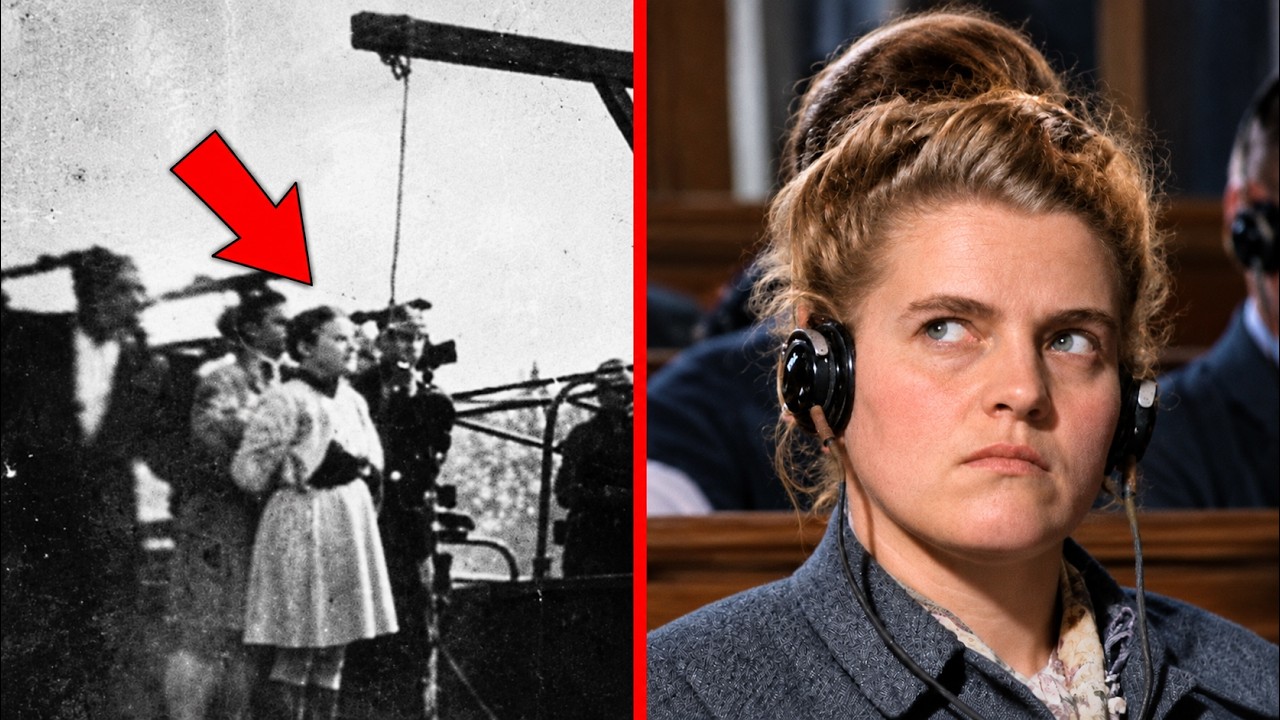
The trapdoor opened at dawn, and the woman who had sent half a million people to their deaths screamed for her own life. Maria Mandel, the senior SS overseer at Auschwitz-Birkenau, fought the guards, the noose, and the drop with a desperation she never afforded a single one of her victims. Her final, gasping words were not a plea for divine mercy, but a declaration in Polish, the language of the people she had spent years destroying: “Poland lives.”
The execution at Montelupich Prison in Krakow on January 24, 1948, ended the life of a woman prisoners called “the Beast.” At just 36 years old, Mandel had risen to become the most powerful female figure in the Nazi concentration camp system, a position she used to orchestrate the deaths of approximately 500,000 people. Her final moments, marked by terror and resistance, stood in stark contrast to the cold efficiency with which she had administered death for three years.
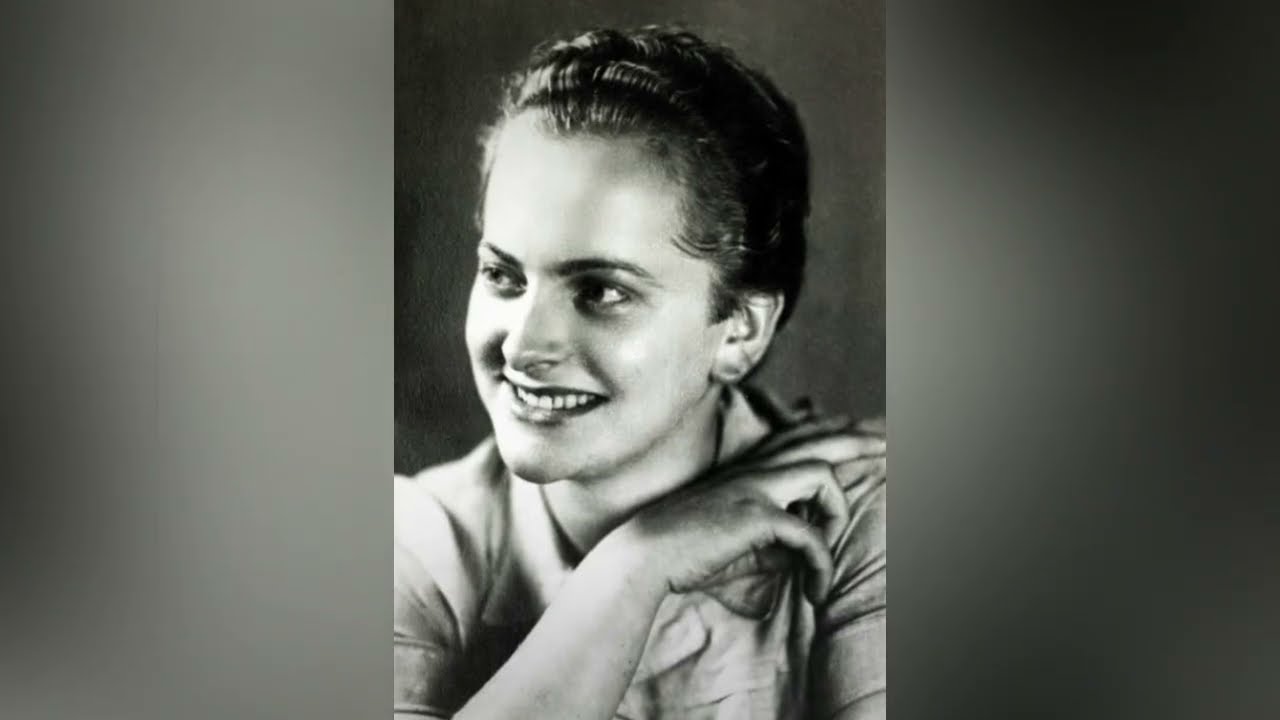
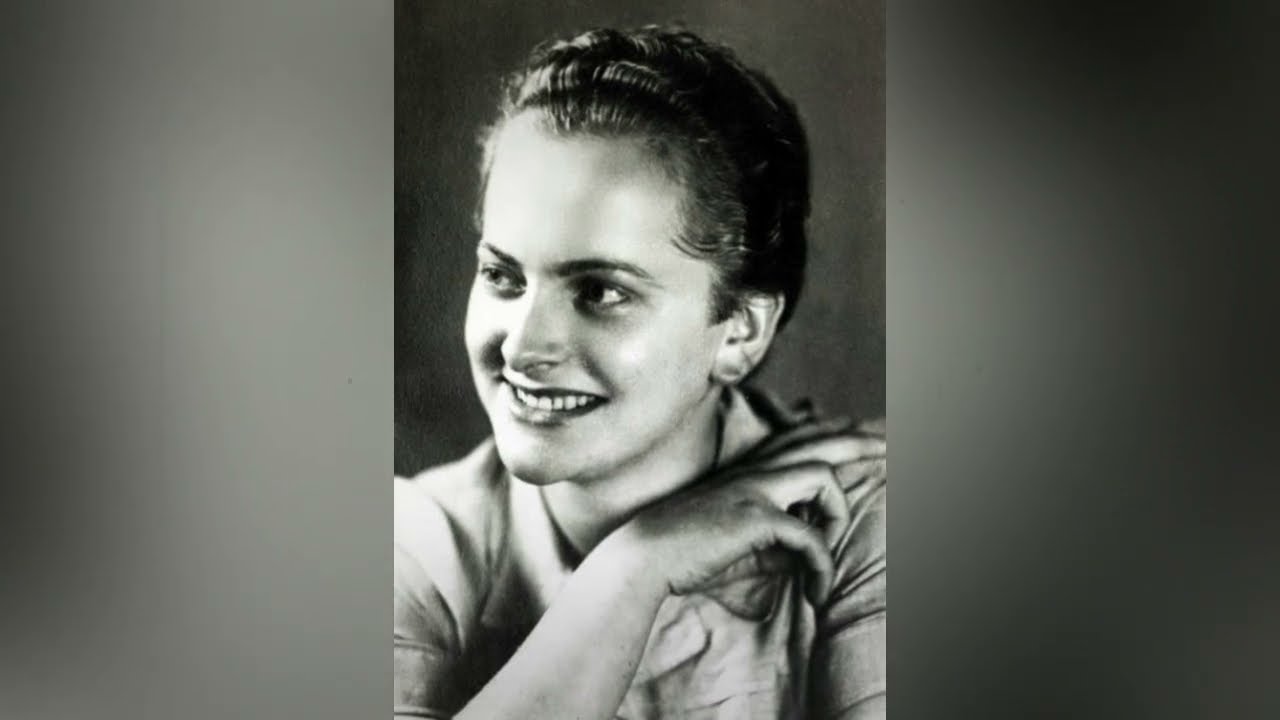
 Born in the small Austrian village of Münzkirchen on January 10, 1912, Mandel was the daughter of a shoemaker. Neighbors would later describe her as pleasant and hardworking, an unremarkable girl from a good family. Nothing in her quiet upbringing hinted at the industrial-scale cruelty she would later command.
The Anschluss, Germany’s annexation of Austria in 1938, provided the catalyst that redirected her ordinary life into the heart of the Nazi killing machine.
Seeking work in the “new order,” the 26-year-old Mandel moved to Munich and found employment at the Lichtenburg concentration camp in October 1938. She joined as an Aufseherin, a female overseer, entering a system that was just beginning to formalize the administration of human suffering. When Lichtenburg’s operations were transferred to the newly constructed Ravensbrück camp in May 1939, Mandel went with them, sharpening her skills in an environment built specifically for female prisoners.
At Ravensbrück, Mandel’s capacity for cruelty became evident. She oversaw roll calls that stretched for hours in freezing weather, ordered floggings, and personally administered beatings. Her diligence was rewarded with a formal Nazi Party membership in April 1941, and a promotion to SS-Oberaufseherin a year later.
 She had mastered the machinery of the camps from the ground up, positioning herself for the most devastating assignment the regime could offer.
On October 7, 1942, Mandel was transferred to Auschwitz-Birkenau and appointed SS-Lagerführerin, the chief overseer of the women’s camp. It was the highest position a woman could hold in the SS hierarchy, answering only to the camp commandant. Beneath her command lay an empire of suffering, encompassing tens of thousands of women crammed into barracks designed for a fraction of their number, with starvation-level food and unchecked disease.
Survivor testimony paints a chilling portrait of contradiction. Mandel could occasionally help individual prisoners, yet she also ordered and delivered beatings as a matter of routine policy. Her signature on death lists was the most damning evidence of her crimes, as she personally participated in selections, deciding who was fit to work and who would be sent to the gas chambers.
 She complained when too much time passed without a fresh selection, viewing murder as a necessary tool for managing overcrowding.
The paradox that haunts historians is Mandel’s genuine love for classical music. She personally founded the women’s orchestra of Auschwitz, staffing it with talented prisoner musicians whose skill was their only ticket to survival. The same hands that signed death lists handed out violins and cellos, not out of mercy, but because she wanted beautiful music to accompany her walks among the barracks.
She also mentored Irma Grese, a young guard who earned her own savage reputation at Bergen-Belsen.
 As the Red Army closed in during November 1944, Mandel was transferred to the Mühldorf subcamp of Dachau. When the war collapsed entirely in May 1945, she fled into the Bavarian mountains with her lover, camp commandant Walter Adolf Langlist, and a Jewish prisoner. For three months, the woman who had decided the fate of half a million people evaded capture before American military police arrested her in Hof on August 10, 1945.
Interrogators found Mandel highly intelligent and utterly unrepentant, still dedicated to the work she had done. In November 1946, the United States handed her over to Poland, the nation that had suffered the overwhelming majority of her victims. At the Auschwitz trial in Krakow, the evidence against her was overwhelming: survivor testimony, death lists bearing her signature, and witnesses to her personal role in selections and beatings.
In her defense, Mandel framed herself as a cog in a system larger than herself, a perpetrator’s justification that the tribunal rejected. She was convicted of crimes against humanity and sentenced to death. While awaiting execution, she shared a wing with fellow condemned guard Therese Brandl, and both women asked a Polish survivor imprisoned nearby for forgiveness in the language of the people they had persecuted.
The composed administrator who had signed away half a million lives without hesitation did not meet her own end with the same discipline. Witnesses described her fighting and screaming, a woman who had enforced silence and obedience on others unable to enforce either on herself. Her last words, “Poland lives,” served as the final contradiction in a life built entirely out of them.
Maria Mandel remains one of the highest-ranking women ever convicted for Holocaust crimes. Her story proves that the machinery of genocide was not staffed by monsters born fully formed, but built rank by rank out of ordinary people who chose to climb. A shoemaker’s daughter became the most feared woman in the deadliest place on Earth, and when the reckoning came, all her discipline deserted her, leaving only a woman screaming at the end of a rope she had helped build for half a million others.