The experts call it a doom loop, a death spiral, and once you see the pattern, it is hard to argue with them. The Royal Navy cannot recruit enough sailors, so the government scraps warships. But scrapping warships makes the service smaller, less visible, less attractive, and that makes recruiting even harder, which leads to more ships being scrapped. On and on it goes.
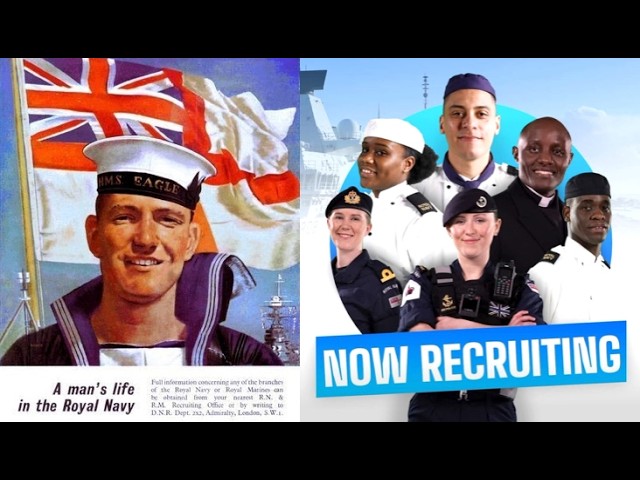
The Navy is now the smallest it has ever been, and yet Britain still holds global defense commitments that have barely changed in twenty or even thirty years. It is a vicious circle with no obvious way off. I have made videos about this, and if you have not seen them, you should. People write to me all the time, serving and retired Royal Navy personnel, and they tell me the same things.
They share their frustration, their anger, at what politicians have done to the senior service. And I understand that anger, because I care about what happens to the Navy too. Most British families have some connection to it, and mine is no different. My brother serves as an officer in the Royal Marines Reserve.
I had a relative who spent forty-eight years in the Royal Navy, eventually commanding a naval training school, teaching new recruits. The school is long closed now, of course. But the point stands. We are an island nation, and the Navy sits at the very heart of our national story.
One of the proudest moments of my life came when the Royal Navy asked me to deliver an address about a forgotten naval battle fought in Shanghai in 1941. In 2013, I stood aboard HMS Daring, moored at the same spot on the river where that battle had taken place. A Royal Marines bugler blew the Last Post across the famous Bund, the first time that sound had been heard there since 1945. It was a deeply emotional moment, a commemoration of the British sailors who had perished on that river seventy years before.
I had been trying to get an official memorial erected for them, and my project received the personal support of His Royal Highness Prince Philip, the Duke of Edinburgh, himself a World War II naval veteran, as well as the staff of the British Consulate in Shanghai and the embassy in Beijing. So I decided to look at something specific, how Royal Navy recruiting advertisements have evolved since the end of the Cold War. As the fleet has shrunk, how has the Navy tried to tempt young people to join? What has changed in the pitch, in the promises, in the image they project?
It is a revealing question, and I invite you to share your own thoughts in the comments. But first, let us begin near the end of the Cold War, when the ads still had a certain confidence about them. One of those early advertisements opened with a montage of childhood ambitions. When I grow up, I’m going to be a racing driver.
When I grow up, I want to be an astronaut. Boys and girls, full of plans and dreams. And then the message turned toward the Navy itself. When you join the Navy, we know exactly how you’ll feel.
Green. No, not seasick, but out of your depth. There was a sense of being overwhelmed, of not knowing which way to turn. An aircraft inbound towards the ship.
Not this one. Where? What time? Wait for results and then confirm.
The message was honest about the challenge. The Navy would push you, throw you into situations you had never faced before. But pretty soon, the ad promised, you would start to settle in. You would learn new skills, discover hidden talents, see new places, make new mates, earn new qualifications.
In no time, you would feel different. More decisive. More confident. Less green.
You might not notice the change in yourself, but when you went home, your family would see a huge difference. The tagline was simple. Join the Navy and see the world differently. Then came a surprising turn in the advertising strategy.
It surprised them, so it might surprise you. Over the last three years, the Royal Navy had seized illegal drugs with a street value of over 120 million pounds. Royal Navy. The team works.
The message was clear. This was not just about travel and personal growth. The Navy was a working force, fighting real battles, doing real and dangerous work. You could be part of that team.
The engineering ads took a more practical, step-by-step approach. So, you can fix a board. Then you can fix a bike. And if you can fix a bike, then you can fix a car.
If you can fix a car, then you can learn to fix a 24C boat, a 4. 5-inch naval gun, a Sampson radar system, or a Type 45 destroyer. And when you can fix all that, you’ll be a Royal Navy engineer. Start your journey.
The implication was that anyone, with the right training and the right attitude, could build themselves up to handle the most complex machinery in the fleet. One weapon engineer shared his story. He had not been bothered at school. He left at sixteen and went to work as an estate agent.
But he loved working with his hands, and he always wanted more. So he joined the Royal Navy as a weapon engineer. Suddenly, he went from staring out the window to getting stuck in. From the streets of Enfield to seeing the world.
The best thing about the Navy, he said, was the kit they got to work on. He had always wanted to work with big guns, and now he did it for a living. Then there were his mates. They were always ashore.
They always had a story to tell. And he had earned a stack of engineering qualifications he could take with him if he ever left. When something difficult used to come up, he said, you used to think, I can’t be bothered. But he could not be bothered now.
He just knew he would be able to do it. I was born in London, he said, but I was made in the Royal Navy. Another advertisement took a more personal, family-focused angle. When you’re a kid, people ask you, what do you want to be?
They usually mean when you grow up. But one young man admitted he had not known what he wanted to be from the start. The scene moved to a family dinner. Looks delicious, Bobby.
Raj? Dinner plans, Gina? I’ve actually applied to join the Royal Navy. The silence was heavy.
The message was clear. His family did not approve. Raj, this is not what we do. But he went anyway.
In the end, finding out where I belonged helped me discover where I came from. I was born in West London, but I was made in the Royal Navy. The implication was that joining the Navy did not mean abandoning his heritage or his family. It meant finding a place where he could grow into the man he was meant to be.
The submariners had their own story to tell. The thing that I love the most about working as a submariner, one of them said, is the fact that you’re part of a close-knit family. Your crew on board rely on you heavily, and you rely on them. When you’re at sea, the camaraderie is brilliant.
And when you’re alongside, there’s plenty of things to do. Everybody always gets together, and you just enjoy your life. Another sailor described a childhood that had been scattered and chaotic. Growing up, my life was all over the place.
Turns out, I craved order. And when I joined the Navy, that’s what I got. My life is still all over the place, but now in a really good way. I was born in Southend, but I was made in the Royal Navy.
The theme of friendship ran through several of these stories. The Navy introduced me to lots of things, one young woman said. But the best thing was this lot. I feel at home with them, even when we’re out at sea.
We’re not just mates, we’re shipmates. I was born in Basildon, but I was made in the Royal Navy. Then there was the man who had hated his civilian job. I used to hate going to work.
Now, I love it. Goodbye 224 bus. Hello 224 patrol vessel. I swap four buses a day for four countries a month.
Best commute ever. I was born in Liverpool, but I was made in the Royal Navy. But here is the uncomfortable question running underneath all of these appeals. What happens when the Navy you are being asked to join is shrinking every year?
What is the pitch once the fleet is smaller than it has ever been? These advertisements are full of ambition and camaraderie and personal transformation. They promise adventure, skill, purpose, family. And yet, the ships those recruits are being asked to serve on are being taken out of service faster than new ones can be built.
The sailors who do join find themselves watching their own ships being decommissioned, their own trades being cut, their own futures reduced to a steady drumbeat of bad news. The death spiral is not just about numbers on a spreadsheet. It is about morale. It is about trust.
It is about a young person deciding whether to give years of their life to a service that politicians seem determined to run into the ground. Why sign up to be part of a shrinking family? Why pour your effort into learning skills that might become redundant in a few years? The Navy asks young people to be made in something, to be forged and shaped into something stronger.
But what does that promise mean if the thing that made you is being dismantled piece by piece? The recruiting ads have tried to adapt. They have tried the practical approach, the emotional approach, the family approach, the action approach. They have shown big guns and radar systems and submarines and patrol vessels.
They have shown sailors who found order in chaos, who found family in strangers, who found purpose in service. But none of that changes the fundamental problem. The fleet is shrinking, and with it, the Navy’s ability to recruit, and with that, the political will to rebuild, and so the cycle continues. We should all be concerned, sailor and civilian alike.
Because the Navy is supposed to be our first line of defense. We are an island nation, and we have always understood that our security depends on the sea. For centuries, the Royal Navy was the shield that protected us, the force that kept our trade routes open, our enemies at bay, our interests secure around the world. That was the Navy my relative served in for forty-eight years.
That was the Navy my brother chose to serve in his own way. That was the Navy that asked me to stand aboard HMS Daring in Shanghai and remember the sailors who gave their lives on that river in 1941. And that is the Navy that is now caught in its own doom loop, growing smaller and smaller, struggling to attract the very people it needs to survive, losing the confidence of the country it is supposed to protect. The advertisements tell stories of transformation and belonging, and those stories are true.
I have met the men and women who have lived them. But a story can only carry you so far. Eventually, you need ships to sail in, missions to carry out, a future to believe in. And right now, for the Royal Navy, that future looks increasingly uncertain.
I was born in Britain. We all were. But what we become, what the Navy becomes, what this island nation becomes, that is still being decided.
And at the moment, the signs are not encouraging.