The ground at the head of Joseph Stilwell’s road went hard in the last week of October 1943. The rains had stopped over the Podkai Hills, and for the first time since spring, the mud along the trace south of Leato would carry a machine without swallowing it. Three bulldozers had spent the monsoon crawling over the old refugee trail to reach a village on the line of the road, and from there the crews cut in both directions—back toward India and forward into Burma. On the 17th of the month, a colonel named Lewis Pik took over the whole works.
Before the war he had drawn the flood control plan for the Missouri River. Now he ran a road the way a plant floor runs, with engineer battalions arriving by the month, machines working forward as fast as the ground allowed, and a front bulldozer that covered more than 20 miles between the end of October and the end of November. He sent 19 men 100 miles ahead to lay out a depot for the first truck convoy. The road was the American theater’s reason for being in Asia at all—a landline to China—and it was Stilwell’s mission.
In the same week, in Chungking, Chiang Kai-shek told General Somervell that he wanted the man removed at once. Somervell was the president’s envoy. He had flown out to introduce the Generalissimo to the new Southeast Asia command and to get his assent to the arrangement. Part of the arrangement was that Stilwell, already the Generalissimo’s chief of staff, would also be the new Supreme Commander’s deputy.
In Delhi, where that command was still in packing, Mountbatten’s chief of staff wrote the crisis into his diary in two short sentences: “Chiang wants to fire him. Mountbatten wants to keep him on. ” The diarist was Lieutenant General Sir Henry Pownall, and he had already made up his mind about the arrangement itself. An American general serving as a British admiral’s deputy while he answered to a Chinese head of state struck him as a hopeless combination—in his own phrase, “rather a paper affair got up to suit the politics between the two nations.
”
A week later, the deputy came back from Chungking, and the diary noted that his position had been “very wobbly” and that at the last moment he had been saved, probably by Madame Chiang. What had happened in Chungking that week was written down in other files by other hands, and part of the answer sat in the office next to the diarist’s own. “Probably” was the diary’s word—a guess made in Delhi about a room in Chungking he had not been in. Pownall kept the diary for himself.
It went into print almost 30 years later, edited by the historian Brian Bond. Bond wrote in his introduction that the diary’s account of Mountbatten’s enthusiasm in his meetings with Chiang Kai-shek, Stilwell, and Wingate had to be weighed against one fact about the three, all of whom Pownall detested. The November arguments were about aircraft—generals round a table trying to screw three Dakotas out of somewhere, anywhere, and never getting the same figures two days running. Chennault and the deputy sat through two days of it.
By December, the complaint had a shape. “The headquarters was having quite a bit of bother with the American side,” Pownall wrote, and then drew a line that mattered: the ones on Mountbatten’s own staff were admirable, so much so that the deputy’s people in Stratemeyer’s air headquarters in Calcutta accused them of having turned pro-British. The new command had inherited a long discord between the theater across the way and the old Indian high command. Over the previous 18 months, the Americans in India had rather behaved as an army of occupation.
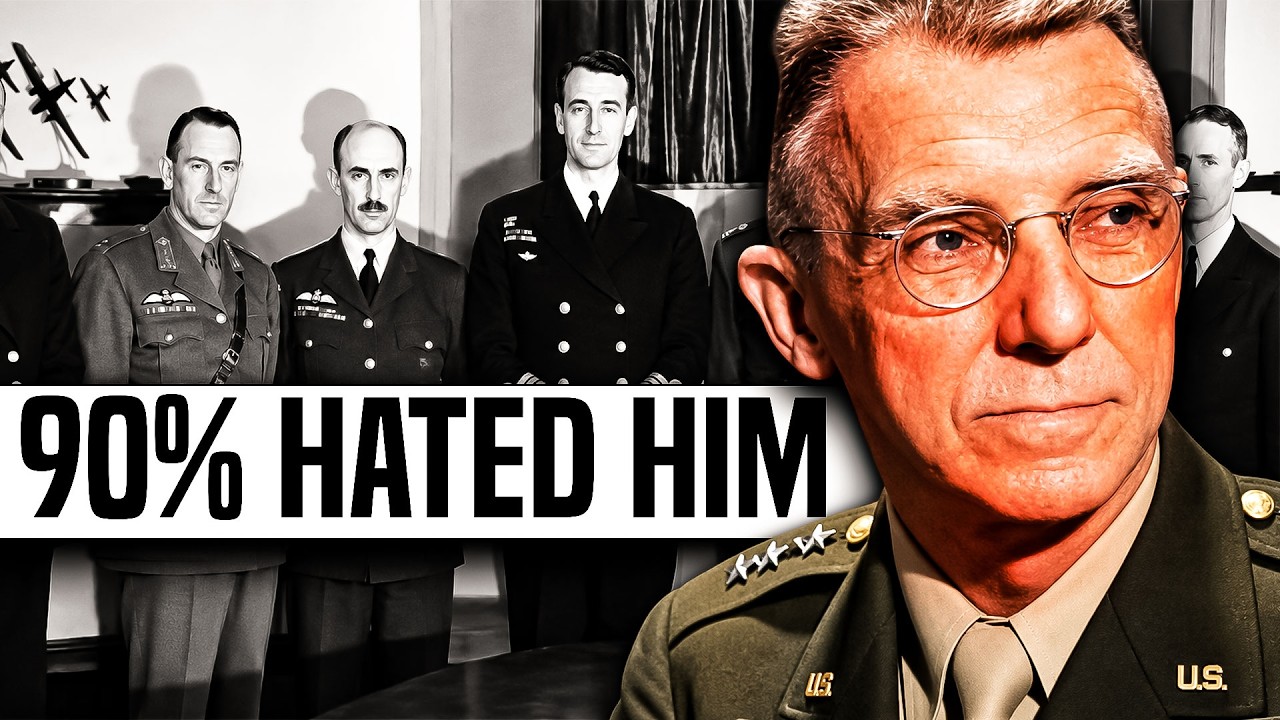
Mountbatten put his own version into a private letter to Field Marshal Dill in Washington while the headquarters was still in Delhi. All the British he had met, he told Dill, held the lowest possible opinion of his deputy’s intellect and his willingness to cooperate, and he had been told that 90% of the Americans hated his guts. Then he added that the two of them so far got along well, to his own surprise, and that he meant to keep it that way. The road came into the diary in January, when the staff was working up its case for a landing on Sumatra instead of a campaign in Burma.
One difficulty, Pownall wrote, would be to induce the Americans to scrap their cherished Ledo Road scheme. Stilwell and Delhi and MacArthur’s chief of staff in America would oppose it—he was sure they did—and the fight went into the newspapers. In February, the diary accused the deputy of pushing stuff into the press to back up his own ideas and of getting those ideas spread in Washington behind the headquarters’ back. A recent article in Time, Pownall wrote, had come out with the statement that there was a rift between the two men at the top.
The admiral went further than his diarist. He complained to London that the joint chiefs in Washington had taken their line from his deputy—with everything that implied about a subordinate going around his chief—accused him of inspiring a press campaign, and asked that his relief from the command be arranged. The American official history is exact about what came back. Marshall had looked into the press indiscretions.
They had originated with a naval officer of the United States. The man accused bore no responsibility for them, and the Prime Minister and the chief of staff in London had concluded at once that he had. The American voice inside Mountbatten’s headquarters belonged to Major General Albert Wedemeyer, the deputy chief of staff sent out from the War Department’s operations division. Years later, he wrote that in spite of Stilwell’s hatred of the British and all other imperialists, “Vinegar Joe” reminded him of the best type of British Indian Army officer—the kind who damned the nationalists and loved his soldiers.
He also remembered Stilwell holding forth on British bluffing, on a partner that had no intention of fighting in Burma to reopen a road to China. In March, Pownall wrote that relations with the theater across the way had improved, for the most part through effort on his own side, with notable cooperators on the other—Sultan and Stratemeyer above all. But the fact he wrote was that so long as Stilwell was there, things never would. The same month, Mountbatten signaled London that he wanted his deputy moved up to China and out of Southeast Asia altogether, and he went on wanting it.
The headquarters moved to Kandy and Ceylon in April. In June, with the campaign in North Burma at its height and the Chinese divisions near the point where their commander had agreed to stop taking orders from Slim, Pownall wrote the paper. The whole setup, it said, wanted re-examination with particular regard to the deputy. The quite unpractical duality of functions handed to him at Quebec had been still further complicated by his command of the fighting in North Burma.
He had stopped functioning as deputy, had stopped functioning as chief of staff to Chiang Kai-shek, and had handed most of his own theater to Sultan. On the 20th of May, Stilwell had given notice that he would soon leave Slim’s control. Mountbatten in his later report to the combined chiefs says he took the moment to ask London to raise with Washington the appointment of an officer to fill the deputy’s place in the command. It was the tidiest thing the headquarters turned out that summer.
Pownall wrote it in London, where he had gone at the start of the summer and where the chiefs of staff needed no persuading. Its real destination was Marshall, and it had to reach him through Sir Alan Brooke—which is one way to be sure a paper arrives. Marshall was in London in June for meetings of the combined chiefs. After one of them, Brooke took him aside.
He thanked him first for his many kindnesses to Field Marshal Dill, who was very sick. Then he told him that Stilwell would have to be brought home because he did not get along with the admiral’s principal subordinates or with the British in Burma. Dill was dead by November. The Americans said they found that hard to understand and asked why—the only aggressive and successful commander-in-chief Mountbatten had should be the one singled out.
Brooke answered that the British meant to relieve General Somervell and the air commander as well, which put a different light on it. Pownall’s diary has Marshall taking it as a personal attack on Stilwell. The entry goes on that the chief of staff of the United States Army had said that Stilwell was a fine fighter and that, with the exception of Mountbatten himself, the British had nobody out there who showed any inclination for battle. He had been told all that, Pownall wrote, by the deputy and others, including some members of the headquarters’ own staff.
Because the admiral had never commanded a big ship, the Americans thought little of him as a commander in any sense—so prejudiced were they. Whether the paper Brooke put across the table was Pownall’s own text or a version worked over in the war office is not something the diary settles, and the account on the other side comes from Marshall’s memory five years afterward. That was as far as a headquarters paper could carry anyone—to the door of the room where the decisions were made, and no further. On Marshall’s return to Washington, the joint chiefs began to study sending Stilwell up to China, which was what Mountbatten had been asking for since March.
On the 4th of July, they put a memorandum in front of the president. One man alone, it said, had been able to get Chinese forces to fight the Japanese in an effective way, and that man was Stilwell. It noted that the British were pressing for a readjustment of command in Southeast Asia on the ground that his two posts were incompatible, and that the British would undoubtedly concur in his relief from the deputy’s post. Then it recommended that the president promote him to full general and urge Chiang Kai-shek to place him in command of every Chinese army.
So the chief of staff’s paper had reached Washington after all—as one supporting clause in a memorandum for a fourth star. The promotion came on the 1st of August. Four other men in the United States Army held the rank: Marshall, MacArthur, Eisenhower, and Arnold. Wedemeyer had written to Marshall five days after the memorandum, from inside the headquarters at Kandy.
The commanders-in-chief, he reported, resisted Mountbatten as supreme commander. It was notable, he added, that Stilwell, though often cantankerous, cooperated without delay the moment he had a clear-cut directive from the admiral. The summer entries thin out. Pownall had noted in the late spring a new habit of Marshall and Arnold dealing direct with Mountbatten’s subordinates, which he took as a sign of who held the dominating position, and Sultan pressing the headquarters for details of how it proposed to do something it did not want to do.
At the end of June, the admiral wrote to Dill about relieving Gifford, whose approach to fighting he found negative, and Somervell, who had treated him as the chairman of a committee. In August, from London, Pownall wrote that having finished with the commanders-in-chief, the headquarters again had a problem from Stilwell: “Bless him, over the way he was driving the Chindits. ”
Marshall that same summer warned his general that the offense he gave in small affairs to the Generalissimo and the president had cost him their support for years, and the general pledged to avoid unnecessary irritations and called the command on offer “a heavy load for a country boy. ”
In the third week of October, Mountbatten flew to Cairo, where the Prime Minister and Brooke were passing through on the way home from Moscow.
Pownall’s diary has Brooke being pressed there, at Pownall’s own urging, to square the Americans on Oliver Leese’s release as land commander so that a naval officer would stop being his own commander on land. As the party came back, signals for Marshall were waiting. Stilwell was on his way home. Nobody in the Southeast Asia command had a say in it.
The decision belonged to Chungking and Washington—to the Generalissimo’s paper of the 25th of September demanding it, and the President’s answer of the 18th of October granting it with an order to leave the theater at once. The Generalissimo’s paper said something else, and it answers the question Pownall had guessed at a year earlier. The previous October, Chiang wrote, he had meant to ask for Stilwell’s removal, and when the general gave his solemn promise to obey orders, he had withdrawn the request. The official history fills in the week.
The envoy in Chungking received a radio from the War Department ordering him to stay in the theater until further orders, and drew the obvious conclusion: Marshall was weighing Somervell’s own name as the replacement. The thought of being seen to have had a hand in removing a man he respected made the envoy fight harder to keep him. Mountbatten reached Chungking on the 16th of October, heard the demand, decided that he had no wish to take the Chinese divisions into Burma without the officer who had commanded them for two years, and had the Generalissimo told so. The next day, the Generalissimo’s wife and her sister, Madame Kung, came over to Stilwell’s side.
That evening, the wife called him to the residence and told him what to say. He said it. Chiang made two conditions: that his chief of staff understand the duties of a commander-in-chief and a chief of staff, and that he avoid any superiority complex. “All balderdash,” Stilwell wrote that night, and the two men shook hands.
So the hand that kept him in his job in October 1943 was the one the diary guessed—and it was also the hand of the diarist’s own chief, who had told the president’s envoy that he would not take the Chinese divisions into Burma without him. Where the accounts fail is on what the Generalissimo was complaining of in that first October. The official historians could only say that in retrospect he seems to have been troubled by Stilwell’s dual status—one man answering to two masters, which is the same duality Pownall’s paper would name from the other side eight months on. Nobody at Kandy was asked before the signals arrived.
On the 27th of October 1944, Stilwell’s aircraft left Karachi for the United States. That night at Kandy, Wedemeyer lay in his bunk with the moonlight coming through the Venetian blinds and a civic cat scrambling somewhere outside, thinking about a report that said the Germans would not last the winter, when a British orderly knocked, apologized for the hour, and handed over an envelope marked for his eyes alone. It sent him to Chungking as chief of staff to the Generalissimo and commander of the American forces in China. Sultan took the theater in India and Burma and the Chinese divisions with it.
The deputy’s chair at Kandy went to Wheeler, the engineer in charge of the command’s logistics. Three men took the three jobs, and Wedemeyer flew out two days later.