On the night of January 25, 1986, inside a New Orleans hotel meeting room just hours before Super Bowl XX, Buddy Ryan delivered news that shattered the Chicago Bears defense. The legendary defensive coordinator, the architect of the most feared unit in NFL history, told his players he was leaving. Philadelphia had already hired him to become their next head coach. The room erupted.
Defensive tackle Dan Hampton, a future Hall of Famer, silently kicked a steel film projector across the floor. Steve McMichael hurled a chair through a blackboard with such force that it splintered the wood. No one tried to stop them. This was not anger over a game plan.
It was grief from grown men who had been taught that showing emotion was weakness, losing the only coach who truly understood them. Ryan had built the Bears defense from nothing since 1978. His scheme, named the “46” defense after the jersey number of former safety Doug Plank, sent more pass rushers than any offensive line could handle. By 1984, his unit set an NFL record with 72 sacks in a single season, a mark that still stands today.
In 1985, that same defense allowed fewer points and fewer total yards than any other in the league, carrying the Bears to a 15-1 regular season. The roster featured future Hall of Famers who owed their careers to Ryan. Richard Dent led the league in sacks. Dan Hampton and Mike Singletary anchored the middle, with Singletary winning Defensive Player of the Year.
Ryan had personally recruited, coached, and protected each of them, and their loyalty bordered on devotion. Tension between Ryan and head coach Mike Ditka was no secret around the league. Ditka mostly let Ryan run the defense because the results spoke for themselves, but the friction was felt by players every day. In December 1985, during a nationally televised Monday night game against Miami, the undefeated Bears collapsed to a 31-10 halftime deficit.
Inside the locker room, with cameras nearby, Ditka challenged Ryan to a fight. Players separated them before it escalated beyond shouting and shoving. The Bears lost that game, their only defeat of the season. So when Ryan entered that hotel meeting room hours before the Super Bowl, his players already knew the two coaches did not get along.
What they did not know was that the tension had already cost them their coach. Philadelphia had been preparing him to become their new head coach, and word had spread through the building for days. Ryan decided to tell his players directly rather than let them read about it in the papers after the biggest game of their lives. Through tears, his voice breaking, he told them they would always be his heroes and asked them to go out and win big.
Then everything in the room fell apart. The next afternoon, before a television audience of more than 90 million people, the Bears dismantled the New England Patriots. The defense recorded seven sacks and six takeaways. New England finished the entire first half with minus 19 yards of offense, a figure that remains stunning decades later.
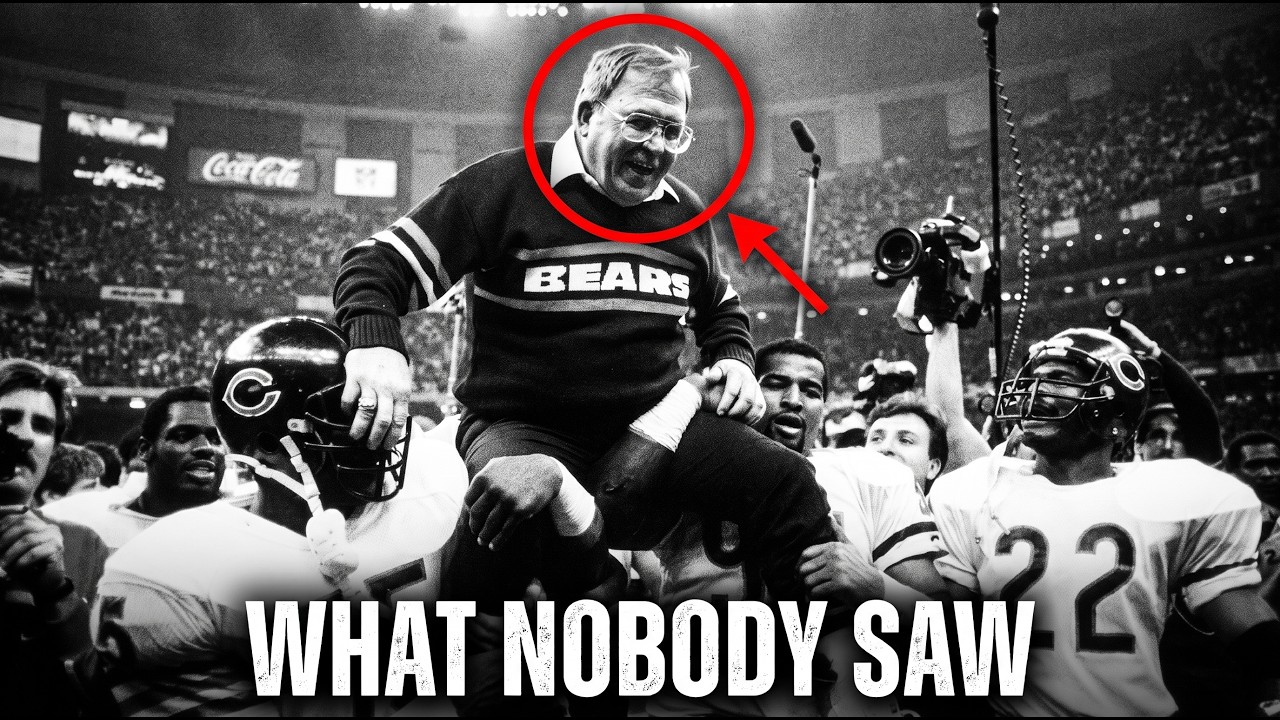
The final score was 46-10, the most lopsided result in Super Bowl history at that time. As the final seconds ticked away, Ryan’s defense carried him off the field on their shoulders. He remains the only assistant coach in NFL history to receive that honor after a Super Bowl. Just a few feet away, McMichael and William Perry did the same for Ditka, the head coach Ryan had nearly fought on national television.
Two men who could not stand each other for most of that season were lifted into the air at the same moment by the same team. Ryan had every reason to be distracted in that final game, already mentally in Philadelphia. Instead, he coached that defense as if it were the only thing left in his life. No press conference, no farewell tour, no tribute montage.
Just one more game played entirely for the men who threw chairs and kicked equipment because losing him hurt too much. The feud between Ryan and Ditka did not end that night in New Orleans. It followed both men through their coaching careers and public interviews for years. But in 2010, at the 25th reunion of that championship team, the two men met again, both in their seventies.
Ditka opened his arms, and Ryan embraced him. Ditka later admitted it took him years to understand what Ryan meant to that defense, saying he had never seen players love a coach the way they loved Ryan. When Ryan died in 2016, Ditka delivered one of the most honest eulogies of the week. He called Ryan simply a great coach, noting that players loved him in a way no coach could fake.
Then, with characteristic bluntness, Ditka made an admission few rivals ever make: Ryan beat him when it came to winning the love of players. He said it was not even close. Forty years later, almost no one remembers the projector or the chair that flew across that hotel room.
They remember the scoreboard reading 46-10, and a defense that loved its coach enough to carry him off the field one last time before letting him go.