George Lucas was a young director with one commercial failure behind him when he decided to write about something nobody in Hollywood believed was worth a movie: teenagers driving in circles on a Saturday night. Every major company that read the script passed on it. The picture they turned down cost under $800,000 to make, earned back more than a hundred times that amount, and rebuilt Lucas’s reputation so completely that it paid for the space opera nobody wanted either. Behind the easy warmth of American Graffiti lie a shutdown location, a cast that kept breaking the script, and an ending the co-writers begged Lucas to drop.
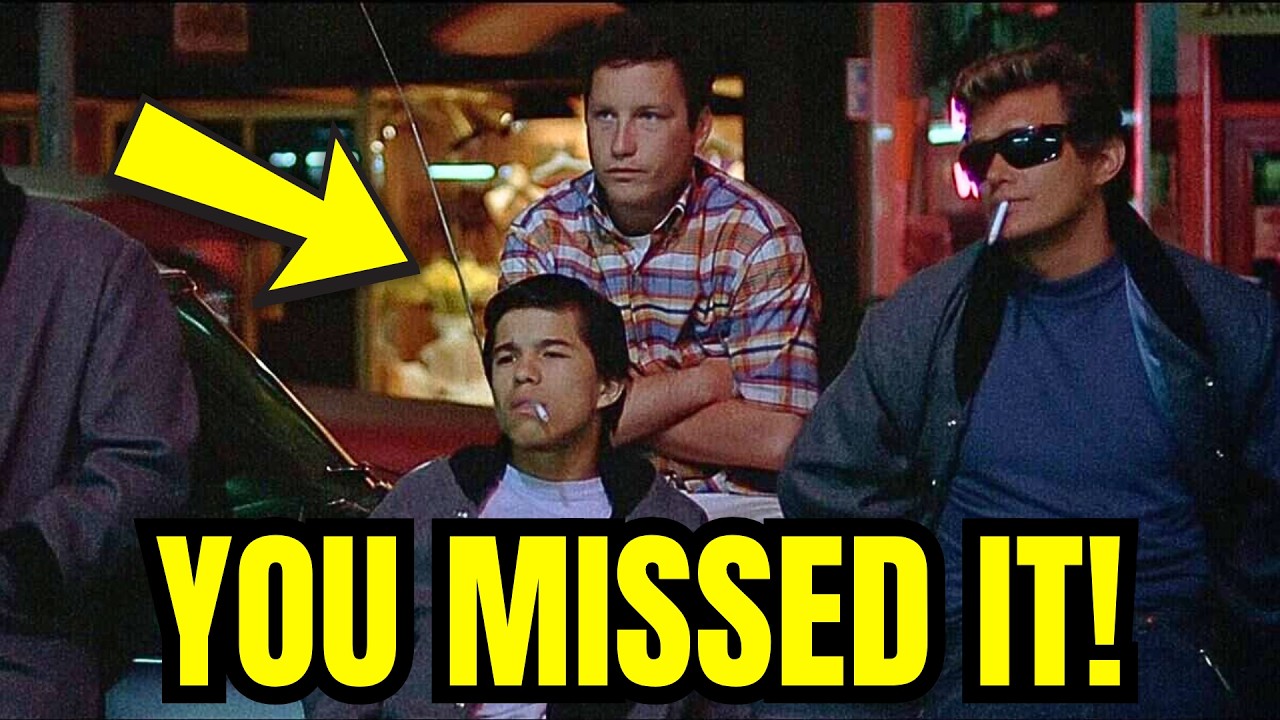
It all started with a teenager driving up and down the same stretch of road in a Central Valley farm town. Lucas grew up in Modesto, California, and spent his late teens driving the main strip after dark alongside everyone else his age. When he sat down to write, he did not construct a generic early-1960s setting. He compressed several years of his own evenings into one fictional stretch of hours in 1962.
The characters Curt, Terry, and John were each assembled out of pieces of himself or people he had known, while Steve he considered largely invented. The police car stunt in the film, where a parked cruiser has its rear axle torn clean off by a cable hooked to the bumper, came from the same well. Lucas would not have invented it, because most writers were not 16 years old in a town where that sort of thing actually happened. The pecking order at the drive-in, the shape of the conversations, and the particular way an evening could feel enormous while going nowhere at all were all drawn from memory.
The strip Lucas was remembering had already gone. Modesto had changed so much by 1972 that the production could not shoot a single frame there. Francis Ford Coppola pushed Lucas to get personal. After THX 1138 arrived in 1971 to a cool reception and thin returns, the verdict inside the business hardened quickly: Lucas was a gifted technician who could not reach an audience.
Coppola, who had executive produced that film, kept needling his younger friend, telling him he was thought of as a cold fish and should go make a warm, funny movie. Lucas described it afterwards as a dare, roughly along the lines of “I bet you can’t do it. ” He took the bet. Instead of reaching for another invented world, he went backwards into his own, producing a story about kids, cars, and a disc jockey nobody could locate.
His wife Marcia had been pressing a version of the same argument for a while, saying the earlier film never involved its audience emotionally. She had warned him before it opened, then pointedly refused to say she had told him so. The script that finally convinced the industry he could reach ordinary viewers began life partly as an attempt to win a private argument with the two people closest to him. Getting anybody to pay for it took far longer.
During a stopover in New York at Coppola’s apartment, Lucas went to see the president of United Artists about a film he had not yet written. The pitch was a low-budget story about high school kids driving up and down a main street to old rock records. United Artists developed it, then dropped it. After that, the rejections came steadily.
Nearly every major company in town read the treatment or the screenplay and declined. American International showed some interest without ever committing. Gloria Katz, who co-wrote the script with Willard Huyck, later described how the material was regarded at the time. Teenagers were seen as the lowest form of subject matter alive, which made this the movie everyone wanted to avoid.
Universal became the exception, and only because one executive pushed. Vice President Ned Tanen championed it internally, calling it the first screenplay he had read where the soundtrack was half the script itself. Even then, the studio attached a condition. Coppola had just released The Godfather and was briefly the most valuable name in American film.
Universal wanted him formally aboard as producer before writing a check. He agreed, and the money appeared. Tanen said afterwards that he had been the last person in town to see the screenplay, since everybody else had already read it and passed. On screen, the evening seems improvised, as though a camera simply followed whoever happened to be interesting at that instant.
On paper, it was closer to a timetable. Four young men split off into separate adventures, keep crossing paths by accident, and each has to arrive at a personal turning point before sunrise. Walter Murch, who handled the sound, put the difficulty plainly. Two characters can be juggled easily, three with effort, but four becomes a problem because the audience has to hold four sets of wants in mind at once while the film keeps swapping between them.
The screenplay went through many versions before that footing felt solid. Katz and Huyck were brought in to help, and their contribution was largely in the dialogue: funnier, looser, more like the way people actually talk over an engine. Their draft also ran long, coming in at around 160 pages, which alarmed everybody. They retyped it in the smallest font available until it presented as 125.
Mackenzie Phillips was found at the Troubadour. A band of four school friends was on stage at a Los Angeles club one open-mic evening, and the 12-year-old at the microphone had put the group together herself with three classmates. Watching from the room was Fred Roos, casting director on a film that needed a girl young enough to be an irritation and old enough to hold a scene against an adult lead. Phillips had no professional acting experience of any kind.
Roos brought her in to read for Carol regardless, and she got the part. Lucas’s approach leaned on faces that seemed caught instead of cast, and her unpolished delivery gave Carol a bratty, unguarded quality no trained child actor would have produced. She was also the source of several of the film’s best small reactions, since a child that age has not yet learned how to disguise one. Lucas built whole beats around watching her react to Milner in the seat beside her.
Of the entire ensemble playing high school kids, only two were genuinely teenagers during the shoot, and she was too young to be one of them. Ron Howard remembered telling Lucas at his audition that he could not carry a tune. The answer he got back was that no one would be singing, though it was still a musical. That was not a joke.
Lucas had written across the front page of his screenplay that the film was a musical containing singing and dancing. While none of its characters would sing or dance, the music would come from elsewhere. Every song in the picture arrives through car speakers as part of one continuous all-night broadcast playing across every street at once. Because everyone is hearing the same program, a track that begins in one car can carry over into another on the far side of the strip, stitching four separate story lines into a single shared evening without a line of dialogue doing the work.
A conventional score would have told the audience how to feel. This tells them where they are. Wanting the music was the easy half. Two much harder problems arrived later, one legal and the other acoustic.
Carpentry was paying Harrison Ford better than acting was, which nearly cost him the part of Bob Falfa, the out-of-town racer. He was offered $485 a week and turned it down because weeks spent on a film were weeks he was not earning on building sites. He asked for $15 more a week to cover the difference between the two trades. The production went to $500, and he took it.
Then came a second disagreement. Lucas wanted period-correct hair, meaning a flat top, and Ford would not do it, reasoning that walking around with a 1962 crew cut could cost him other jobs for months afterwards. He was 30 years old, still largely unknown, and in no position to be turning down auditions. Neither man gave way, so the argument traveled sideways, and the wardrobe department solved it.
Instead of the haircut, Falfa was handed a white cowboy hat, which covered the length at the back while the character kept every inch of his menace. Twenty miles north of San Francisco, on Fourth Street in the quiet Marin County town of San Rafael, the owner of a bar had heard enough. The film crew outside his windows had been working through the small hours, his trade had suffered, and he threatened to sue. City Hall took his side.
The whole concept rested on real streets, real shop fronts, and real cars moving in an unbroken loop after dark. Modesto itself had modernized past the point of use, so the production had gone looking for somewhere that still resembled 1962 and found San Rafael. Permission was withdrawn almost immediately after the first evening’s work. Filming limped on for another day or so, and within two nights the crew was gone.
Losing the location meant losing the film, since there was no budget to build a main street and no time to hunt for another one at leisure. Lucas got into his car and drove north. Twenty miles further up the highway sat Petaluma, where the mayor and city council could hardly have been more welcoming, and where the main drag had barely changed in a decade. There is a moment outside the drive-in where Terry loses control of a scooter and puts it through a row of trash cans.
It plays a little too convincingly to be choreographed, because it was not. Charles Martin Smith genuinely could not stop the thing. Lucas watched it happen, decided it suited the character better than anything written, and kept it. Actors were given room to behave instead of being walked through precise blocking, with two cameras chasing whatever developed.
Not everyone worked that way. Howard and Cindy Williams preferred to rehearse, since their scenes carried the tightest emotional writing in the film and needed the shape. A water balloon thrown at Carol was meant to burst against the car frame, missed, and caught Phillips full in the face. Her laugh in that shot is a real 12-year-old being soaked without warning, and it is one of the warmest seconds in the picture.
Two of the biggest laughs in the finished film were accidents that occurred while the camera was running. The shops along the main drag stayed bright long after closing, with no one inside them and nothing for sale. Their owners were paying those bills themselves. Merchants kept their window displays burning through the small hours so the crew had usable light to work with, because there was no money for the lighting rigs a night shoot on that scale would normally demand.
The schedule ran from around 9:00 in the evening until sunrise, night after night for 28 nights. Northern California turns cold once the sun is down. The cars caused constant logistical trouble, and the tiredness compounded until arguments came easily. Lucas has said the shoot felt rushed from beginning to end, and a typical evening could involve a vehicle running over a piece of equipment or a small fire needing to be put out.
The 1932 Ford five-window coupe driven by John Milner was chosen with as much care as any line of dialogue, because Lucas treated the cars as characterization. What a boy drove told you what he thought he was. The coupe is loud, already dated by 1962 standards, and completely uninterested in changing. Look at the license plate made specially for the shoot, and it reads THX 138, a quiet wave at the science fiction feature Lucas had directed immediately before this one.
The car was doing louder work beyond the Easter egg. Milner is the oldest of the four boys, the local champion nobody has beaten, increasingly aware that the title is the only thing he owns. A chopped 1932 coupe in 1962 was already a relic lovingly kept, refusing to move with the decade. The coupe went on to become one of the most copied hot rods in America, plate included.
Two weeks into the shoot, the footage coming back was too dark to use. Lucas had chosen Technoscope, an older and grainier anamorphic process the budget made attractive, and was working with two young camera operators using mostly available light. Filming after dark in 1972 was hard in a way that is easy to forget now. Stocks were slow, fast lenses were expensive, and a moving car offers nowhere to hide a lamp.
Lucas called Haskell Wexler, an old friend who had already won an Academy Award for Who’s Afraid of Virginia Woolf? Wexler came in as visual consultant, took deferred payment because the money was not there, and commuted up from Los Angeles, where he was still shooting commercials by day. He hid small lights inside storefronts and car ashtrays, anywhere a source could sit unseen, then worked out how to imitate the sweep of headlights from passing traffic. For most of the running time, the voice coming out of every car speaker belongs to a man none of the characters can locate.
He is a rumor with a signal howling somewhere out past the edge of town. When Curt finally goes looking for him, the search plays like a pilgrimage. The strange part is that the man was entirely real. Robert Weston Smith had been broadcasting under that name from a border station whose signal drifted up the California coast at night, which is exactly how a teenage Lucas had heard him.
Casting him meant putting a piece of his own adolescence directly into the frame. Smith discovered how far that fascination went the moment he read the screenplay. On almost every page, he kept finding the oddest things the director remembered. The black sedan that turns up looking for a race had already crossed America once before in a different film.
Three 1955 Chevrolet 150s were built in 1970 for Two-Lane Blacktop, a road picture about two men who did nothing but drive and race. When that production wrapped, the survivors went into storage on a back lot. Preparing for this shoot, the transportation supervisor collected two of them, had both painted black, and modified one so it could work as a camera car. A third Chevrolet, a junked hardtop dressed to match, was used for the rollover at the end of the drag race.
Mechanical trouble ran through the sequence throughout. The completed picture never seems to pause for breath. What came out of the editing room was almost an hour longer than what audiences eventually saw. The work happened in a guest space over the garage of a house belonging to Coppola.
Verna Fields, once Lucas’s teacher at film school, was brought on at Universal’s insistence, while Marcia Lucas worked alongside her. Their first assembly ran roughly 165 minutes. Cutting toward two hours broke the structure outright, because four story lines braided together do not survive having material removed from one strand without the others losing their footing. The film had to be rebuilt after being shortened, not merely trimmed.
Marcia Lucas also assembled the entire radio program heard throughout the film, close to two hours of music cut as a continuous broadcast. Both editors were nominated for an Academy Award for what they made of it. Somewhere in Tennessee, a lawyer knocked on the door of an elderly woman to ask whether he could use a record her late son had made. She said yes, and “Chantilly Lace” went into the film.
That errand was one small piece of 14 months of work by Tom Pollock, the attorney handling music rights. Rock and roll in the 1950s had been a badly organized business. Tracing who actually owned a recording from 1958 could mean following a chain of defunct labels to somebody’s garage, where the master sat in an unlabeled shoebox. Some owners could not be found at all.
Others wanted far more than the production could pay, so first choices were dropped and replacements written into the same scenes. 42 tracks made the final film. They cost about $80,000, roughly $2,000 apiece for performance and copyright, close to a tenth of the entire production budget. Elvis Presley was wanted and proved simply unaffordable.
Two Beach Boys recordings came in through co-producer Gary Kurtz, who happened to be friendly with Dennis Wilson. Universal, watching the invoices mount, thought the whole business outrageous and proposed hiring a band it knew to record imitations of the originals instead. Lucas refused outright, on the grounds that the point of the songs was that the audience had lived through them, and a copy of a familiar record is worth nothing at all. A year later, after the film became a hit, securing those same recordings a second time cost over a million dollars.
The crowd at the North Point Theater in San Francisco was young, loud, and applauding before the first song had finished. It was a Sunday evening in late January 1973, six months after the shoot wrapped, and by every visible measure, it went beautifully. People laughed in the right places. They cheered at the end.
Ned Tanen sat through all of it deeply unhappy. He believed the audience had been stacked with friends of the production. Afterwards, he and Coppola fought in the lobby, with Tanen describing the film as unreleasable, while Coppola, by his own admission years later, offered to buy it outright and reimburse every dollar it had cost. Paramount and Fox reportedly made offers of their own.
Universal refused to sell, then announced its intention to bring in another editor and recut the picture. Lucas, exhausted and unwell by that point, watched the argument happen around him. What broke the deadlock was unrelated. That March, The Godfather won Best Picture, and the producer the studio had insisted on attaching became difficult to overrule.
Universal backed down, settling for the removal of a few minutes rather than a full recut. The same record never quite reaches your ear identically twice in this film, though the recording itself never changed. What changed was the air it had traveled through before hitting a microphone. Walter Murch took the finished broadcast Marcia Lucas had assembled and played it out of a loudspeaker into the garden of the house in Mill Valley where the film was being cut.
Standing as far away as the garden allowed, he recorded it again with a moving microphone while Lucas swung the speaker slowly from side to side. Sometimes the two faced each other. Sometimes they pointed in opposite directions. Then they did the whole two hours again, knowing the second pass could never be matched to the first.
That left three separate versions in the mix: the clean program plus two drifting atmospheric ones. Depending on the scene, Murch could push a song forward until it filled the car or let it dissolve behind dialogue without quite vanishing. He called the technique “worldizing. ”
The original release was mono, so none of that spaciousness came from the cinema.
All of it had been recorded into the tracks in a suburban garden months earlier. Universal’s final demand amounted to about four minutes. Three scenes went: Terry cornered by a fast-talking used car salesman, Steve bumping into a former teacher who turns out to be far smaller than the figure he remembered, and Falfa serenading Laurie in the front seat of his Chevrolet, badly. None of the three carried any plot weight, which was the case for cutting them.
All three were character, exactly the sort of material a nervous distributor removes first. Lucas lost that fight in 1973 and did not forget it. By 1978, he had far more standing in the business, and when the picture was sent back into theaters that year with a new stereo mix, the missing four minutes were quietly restored. The consequence is quietly strange.
The version almost everybody alive has watched is not the version that played to audiences in 1973. It was the first occasion Lucas reopened a completed film of his own to put material back into it, at a point when hardly any director had ever done such a thing. $777,000 went in. Well over a hundred million came back out, and the Academy handed the film five nominations, including Best Picture, Best Director, and Best Original Screenplay.
The scale of that was not anticipated by anybody. This was a cheap picture with no stars, shot at night by a director whose previous feature had failed, greenlit by one executive against the judgment of nearly all his colleagues. The money mattered because it put Lucasfilm on solid ground as a company. The credibility mattered more.
A director who has just delivered a return like that can walk into a meeting, describe something expensive, strange, and unproven, then be taken seriously while he does it. What he described next was a space fantasy. He also negotiated hard on the terms, keeping sequel and merchandising rights the studio saw no value in, a bargain only available to somebody with a hit directly behind him. The picture nobody wanted bought him the right to make the picture nobody understood.
For nearly two hours, the film asks little of an audience beyond enjoying the ride. The last 30 seconds change what all of it meant. Curt looks down from a plane and sees a white Thunderbird on the road below. Then four yearbook photographs appear against the sky, a line of text under each.
John was killed by a drunk driver in June 1964. Terry was reported missing near Stockton in December 1965. Steve sells insurance in Modesto. Kurt is a writer living in Canada, which in 1973 every adult in the audience read as a young man who had left rather than be drafted.
Katz and Huyck argued against the whole idea. They found it bleak and peculiar, unearned darkness dropped onto a comedy, and tried repeatedly to talk Lucas out of it. They objected just as strongly to what the cards left out, since Laurie, Debbie, and Carol received no future at all. Lucas answered that including the women meant a second card, and a second card meant stretching an ending he wanted short.
Film critic Pauline Kael later took him to task for it in print. He would not move. The setting is the summer of 1962, roughly a year before Dallas and several before the draft calls climbed, and everything the audience has just enjoyed gets reclassified in a moment as the last of something. Whether that ending is the most honest thing in the film or the cruelest is still being argued, mostly by people who love it.
Half a century on, the cars and the songs are why people put American Graffiti on. What stays with them is smaller and harder to name, because the film catches the exact point at which a familiar street stops feeling permanent. That it exists at all came down to a director with something to prove, a producer willing to put his name on the paperwork, a town that left its lights burning, and a lawyer who spent 14 months chasing down record labels.