A letter from an academic stranger in 1967 set two Harlan County brothers on a path that would take more than two years and ultimately overturn an official record their family had carried for eight decades. Denny Feltner read the letter standing at his mailbox in the cold March weather. It was from Dr. Harold Voss, a historian at the University of Kentucky, who had found federal archives in Frankfort pertaining to the 1887 trial and execution of one Luther Monroe Feltner.
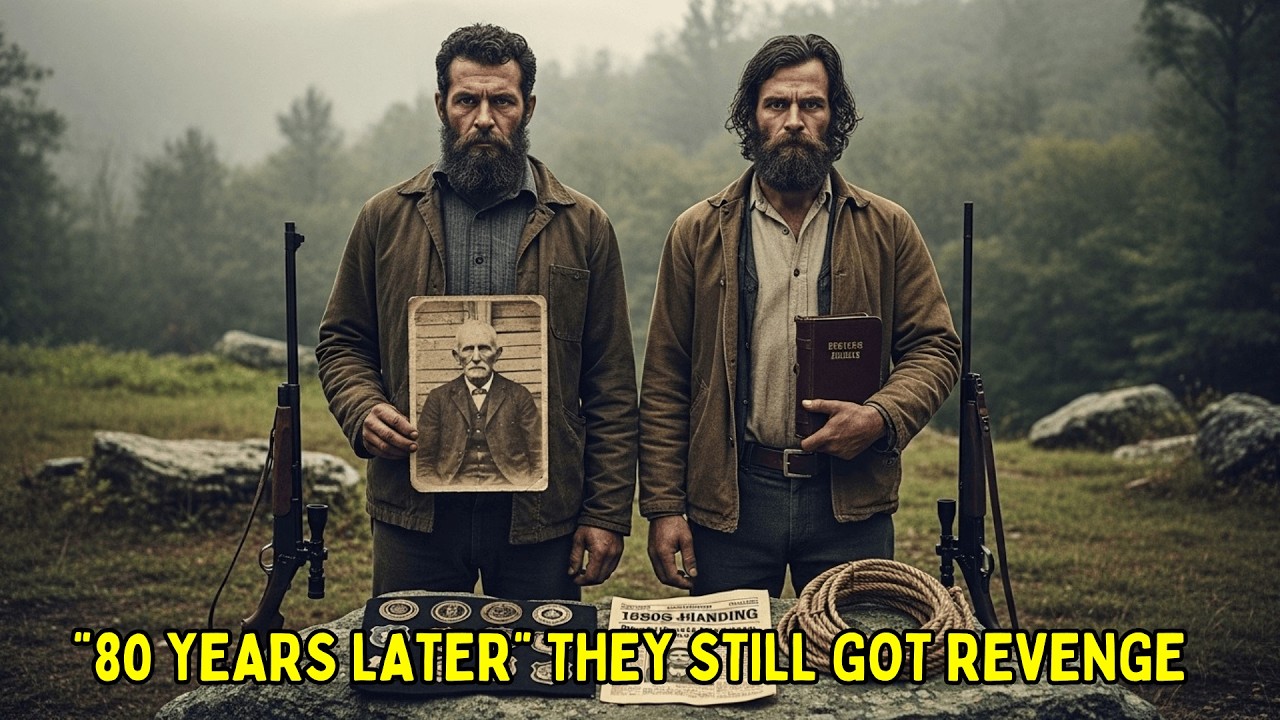
Voss wrote that the documentation suggested circumstances surrounding the proceeding differed substantially from the official record. The name Luther Monroe Feltner was not new to Denny. His grandmother, Cora Feltner, had told him on a Sunday afternoon in 1954 that his great-great-grandfather was “a man who was wronged by the law. ” She had said little more and refused to elaborate.
Denny and his brother Roy, both coal miners, drove to Lexington in April 1967 to meet Voss in person. The historian had found letters exchanged between the federal district attorney and the senior attorney for the Harlan Mountain Coal and Coke Company, dated months before Luther Feltner’s execution. The letters never explicitly stated a plan. But according to Voss, their language suggested the company wanted Feltner’s 40 acres of coal-rich land above Clover Fork, and had arranged for the legal system to resolve its property problem through a pending criminal charge.
Luther Monroe Feltner was executed in October 1887 for the murder of coal company agent Silas Croft. He maintained his innocence until his death. His wife, Patience, wrote to a trusted friend in the household after the execution, insisting and noting in carefully chosen words that her husband did not commit the crime for which he died. Voss had traced 19 individuals involved in the 1887 proceeding with documented ties to the company or its associates.
All were dead by the time the brothers learned the full story. The last had died in 1961. The brothers hired Lexington attorney Patricia Brewer. She filed two legal challenges at once: a federal habeas petition and a petition to the Kentucky Board of Pardons and Paroles for a posthumous pardon.
While compiling evidence, Roy Feltner interviewed elderly residents of Harlan County. In September 1968, he met 87-year-old Alma Brackett, who gave him three items she had preserved for decades: a photograph of Luther Monroe Feltner, a note from Patience, and a written confession from the trial’s key witness. Ord Bassett, the witness who had testified to seeing Feltner near the road the night of the killing, had written to Alma’s mother in the 1940s. He was dying and confessed he had been told what to say.
Brewer called the letter essential. Though it could not be admitted as formal legal evidence, it was exactly what she needed for an administrative pardon petition. The board heard the case in Frankfort in May 1969. In July 1969, the Kentucky Board of Pardons and Paroles granted the posthumous pardon, finding that the conviction had been procured by conspiracy and fraud.
The record was corrected 81 years after Feltner’s death. The brothers visited the old ridge above Clover Fork where their ancestor’s home had stood, and Denny Feltner carried the photograph of Luther with him to the place the man had loved. The outcome of the case went beyond the Feltner family.
Brewer was later reported to have planned a law review article about the case, the first successful posthumous pardon petition in Kentucky history argued on the grounds of manifest injustice.