On April 6, 1941, Nazi Germany launched Operation Retribution, the invasion of Yugoslavia, with hundreds of Luftwaffe fighter bombers dropping bombs on Belgrade. Hitler viewed Yugoslavia as a potential threat to the southern flank of his planned attack on the Soviet Union and sought to secure crucial supply routes for German forces in the Balkans. Nineteen German divisions, supported by Italian, Hungarian, and Bulgarian troops, conquered the country in 11 days.
On April 10, 1941, before the surrender of the Yugoslav Army, the Germans and Italians endorsed the proclamation of the so-called Independent State of Croatia by the Ustaša, a fanatically nationalist, fascist, separatist, and terrorist organization. After seizing power, the Ustaša authorities erected numerous concentration camps across Croatia, where they isolated and murdered Jews, Serbs, Roma, and other non-Catholic minorities, as well as Croatian political and religious opponents of the regime. The largest of these camps, Jasenovac, became the third largest concentration camp in Europe, notorious for its barbaric practices and the large number of victims.
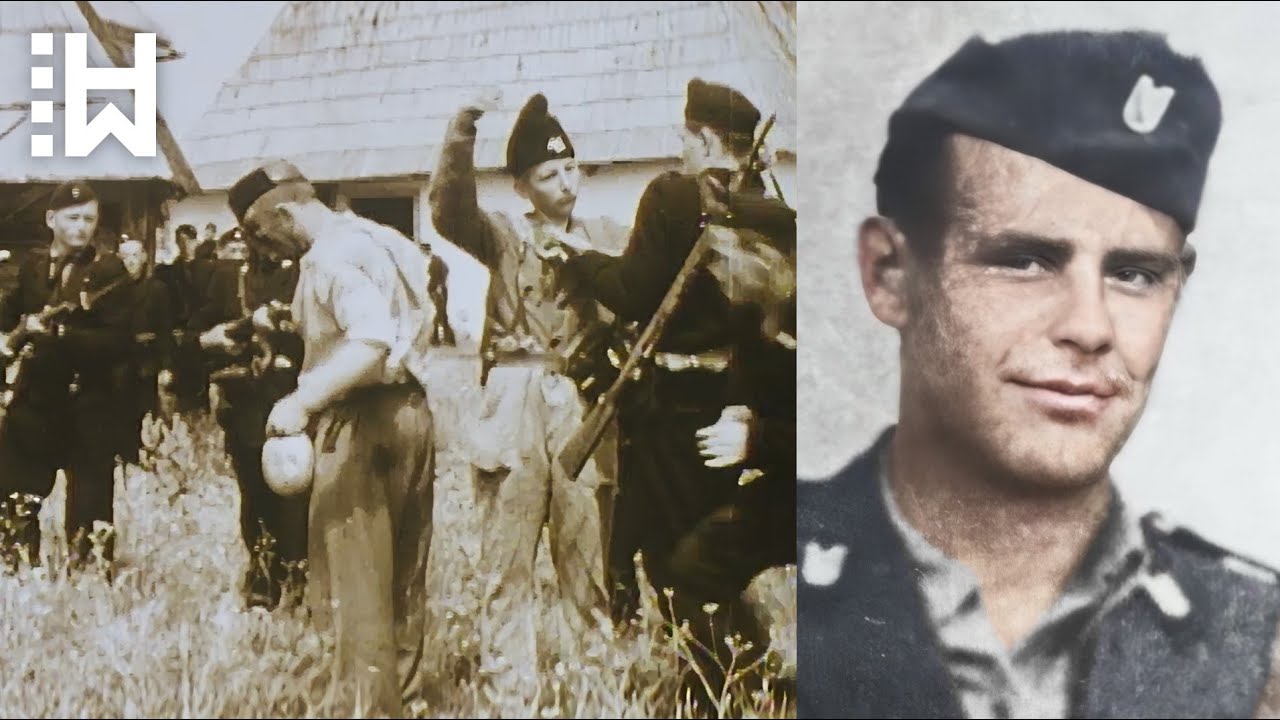
Among the camp's personnel was a former Franciscan friar and Catholic priest who, for his sadism, became nicknamed "Brother Satan." His name was Miroslav Filipović.
Filipović was born on June 5, 1915, in Jajce, today part of Bosnia and Herzegovina, then part of Austria-Hungary. In 1938, he joined the Franciscan order at the Petrićevac Monastery near Banja Luka and took Tomislav as his religious name. He was ordained a priest the following year.
The Second World War began on September 1, 1939, when Nazi Germany invaded Poland. When Germany's ally Italy failed to conquer Greece in the late autumn and winter of 1940 to 1941, Germany became more concerned about securing its southeastern flank in the Balkans. Greece's success in repulsing Italian forces allowed its ally Great Britain to establish a foothold on the European continent. To subdue Greece and move the British off the European mainland, Nazi Germany sought to bring Yugoslavia and Bulgaria into the Axis alliance.
On March 25, 1941, Yugoslavia joined the Axis and agreed to permit transit through its territory to German troops headed for Greece. The announcement was extremely unpopular in many parts of the country, particularly in Serbia and Montenegro, and the Yugoslav government announced it would not honor its obligations. Hitler was furious, and although the Prime Minister, Colonel Dušan Simović, saw within days to retract this statement, Hitler ordered the invasion of Yugoslavia.
The invasion commenced on April 6, 1941, and the Yugoslav Army surrendered on April 17. The country was then occupied and partitioned by the Axis powers. In the so-called Independent State of Croatia, the Ustaša leadership instituted a reign of chaotic terror so extensive that German and Italian troops essentially had to administer the countryside. The Ustaša was a Croatian fascist, ultranationalist, and terrorist organization whose members fiercely hated Serbs, Jews, Communists, and non-Catholics. The regime murdered or expelled hundreds of thousands of Serbs residing in its territory. In rural areas, Croatian military units and Ustaša militia burned down entire Serbian villages and murdered the inhabitants, frequently torturing men and raping women. All Croatian authorities killed between 320,000 and 340,000 ethnic Serbs in Croatia and Bosnia between 1941 and 1942.
In January 1942, after completing his theological exams in Sarajevo, Filipović became a military chaplain with the Ustaša. He was assigned to the Second Bavić Bodyguard Battalion. On February 7, 1942, he accompanied elements of his battalion in an operation aimed at wiping out Serbs in the villages of Drakulić, Motike, and Šargovac. A few Serbs survived, but overwhelmingly the operation achieved its objective. More than 2,300 Serb civilians, including men, women, and children, were killed, usually with axes or pickaxes. At Šargovac, Filipović instigated the killing of 52 children at the village primary school by slitting the throat of a schoolgirl, possibly at the request of the Italian Royal Army, which was then occupying part of the territory.

Filipović was court-martialed by the Wehrmacht for his involvement in the operation. He was jailed, and the papal legate, Giuseppe Rampolla, suspended him. He was also expelled from the Order of Friars Minor on October 22, 1942, the date on which he was transferred to Stara Gradiška, one of the five detention facilities of the Jasenovac camp complex established between August 1941 and February 1942.
Conditions in the Jasenovac camps, often referred to as the "Aiths of the Balkans," were horrendous. Prisoners received minimal food and shelter, and sanitary facilities were totally inadequate. The guards cruelly tortured, terrorized, and murdered prisoners at will. In early 1942, Filipović killed an inmate at Stara Gradiška for hiding a loaf of bread. Shortly thereafter, he became chief guard responsible for mass executions. He got a new surname, Majstorović, derived from a local word meaning "master" or "craftsman."
With his fellow camp executioners, Marinko Pokić and Jerko Maričić, Filipović competed over which of them was a better butcher. Witness Jelica Rolić stated that victims had to kneel in front of them until they were touching their foreheads to the ground, and the executioners would fire their revolvers at the backs of their heads. If death wasn't instant, one of them would grab a knife and slit the victim's throat.
Another particularly vicious killing was described by former Jewish prisoner Egon Berger in his book *44 Months in Jasenovac*. Berger recalled the priestly face of Miroslav Filipović, all made up and pouted, dressed in an elegant suit and green hunter's hat, watching with delight as the victims approached. He approached the children and even stroked their heads. Filipović told the mothers that there would now be a baptism for their children. The children were taken from the mothers. One child, in its innocence, caressed the painted face of his killer. The distraught mothers offered their lives for mercy for the children. Two children were placed on the ground while the third was thrown like a ball into the air. Filipović, holding a dagger upwards, missed three times, while the fourth time, with a joke and a laugh, a child was impaled on the dagger. The mothers began throwing themselves on the ground, pulling their hair and shouting terribly. Ustaša guards took them away and killed them. When all three children were so brutally killed, these two-legged beasts exchanged money because they seemed to have had a bet on who would be the first to stick a dagger in a child.

In May 1942, Filipović rose to commander of the Jasenovac subcamp. In October, having been a Franciscan, the inmates called him "Brother Satan." Filipović was often seen shooting prisoners during so-called public executions and forcing prisoners to kill other prisoners with sledgehammers. A Croatian medical doctor, Dr. Nikola Nikolić, who had been imprisoned at Jasenovac, recalled standing in the second row of a group of prisoners who had been lined up to watch as another group was herded in front of Filipović. Filipović summoned Nikolić to the front so that, as a doctor, he could witness a surgery being performed without anesthetic. Filipović then shot dead two prisoners and told a colleague to finish off the rest.
According to some survivors, Filipović, though expelled from the Franciscan order, continued to act as a chaplain while commanding the camp and sometimes wore his Franciscan robes while carrying out his crimes. As a result, he came to be known as "Friar Satan." Witness Šimo Kmić recalled that at Christmas 1942, Filipović ordered mass and later a muster where he killed four inmates with a knife while forcing a Jew, Isak Alkalai, to sing. Filipović then ordered Alkalai to approach him, stabbing him in the chest and slashing his throat. Then he killed 56 Bosnian Jews by tying them with wire and hitting them with an axe so they all fell into a well. Afterward, he shot around 40 Bosniak villagers in the head. After he killed them, Filipović sat on a chair and said, "Justice has been done."
During 1943 and 1944, Filipović acted as an intelligence officer in Bosnia and Central Bosnia and as an assistant commander of the Fourth Ustaša Association in Lika. In September 1944, he was appointed to sit on an ad hoc court-martial convened to try prisoners accused of forging links with the Partisans and plotting an escape.
In early May 1945, Filipović fled to Austria, where he was captured by the British and extradited to Yugoslavia. Between its establishment in 1941 and its evacuation in April 1945, Croatian authorities murdered between 77,000 and 100,000 people at Jasenovac, many of them shot at the nearby killing sites of Granik and Gradina.
Justice finally caught up with Filipović when, in 1946, he stood trial in Belgrade for war crimes. He gave evidence consistent with his statement to the Croatian war crimes commission, admitting his participation in some crimes and denying involvement in others. Jasenovac survivor Josip Bolić testified that Filipović seemed kind and gentle except when the slaughtering was going on. "Then he was incomparable. He was the leader of all the mass killings at Gradina. He went off to conduct the slaughtering every night and came back covered with blood."
For the crimes he committed during the war, Miroslav Filipović was found guilty and sentenced to death. He was hanged on June 29, 1946, at the age of 31. Despite his expulsion in 1942, Filipović was executed while wearing the habit of the Franciscan order. There were no tears shed for Miroslav Filipović.