In the summer of 1995, the face of a smirking 17-year-old stared down from posters at bus stops and movie theaters across America. It was the promotional image for the film *Kids*, and the face belonged to a character named Telly — a predatory, sociopathic teenager at the center of one of the most controversial movies of the decade. The boy who played him, Leo Fitzpatrick, was not actually an actor. He was a 15-year-old suburban skateboarder from New Jersey who had been pulled into the project almost by accident.
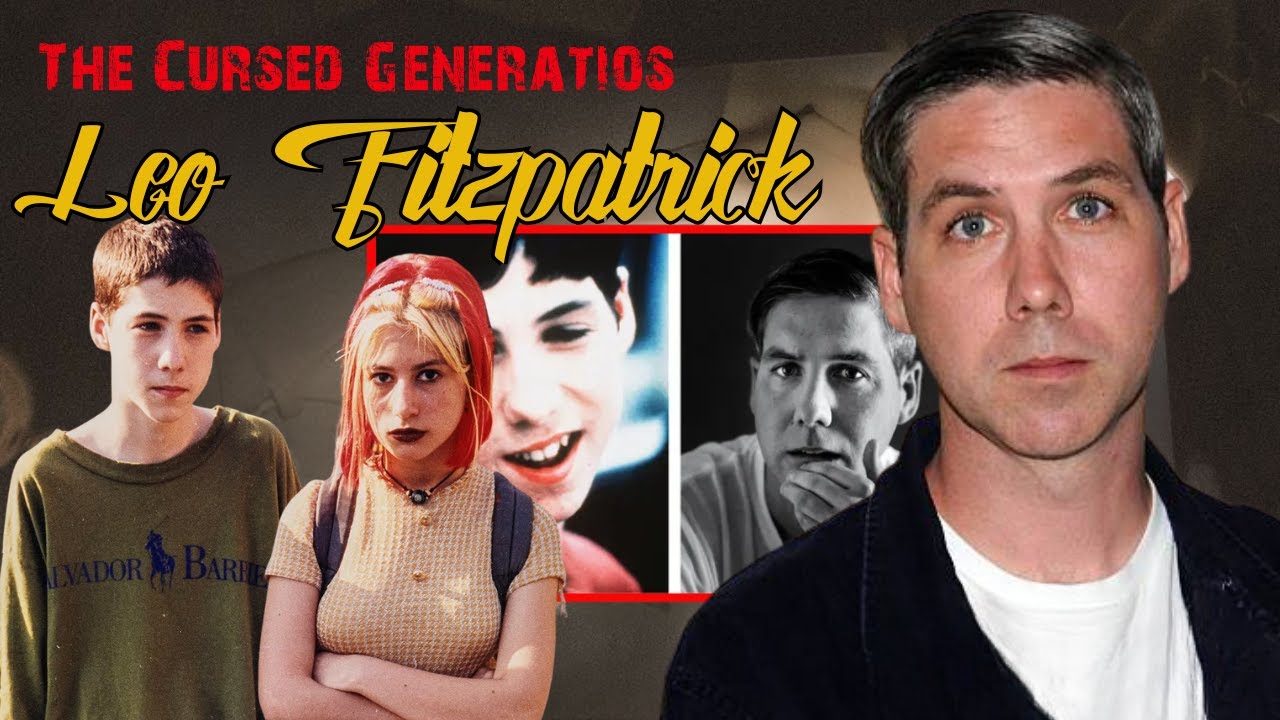
While several of his young co-stars were later consumed by the same chaotic world the film depicted, Fitzpatrick survived. Behind the public image was a man quietly rebuilding his life — moving through acting, then into the contemporary art world — while carrying the guilt of outliving friends who died one by one. In the early 1990s, New York City was still emerging from the crack epidemic and struggling with a near-record murder rate. AIDS, by 1994, was the leading cause of death for Americans aged 25 to 44.
Among the city’s youth, there was a fatalistic sense of invincibility that would become the era’s defining theme. Two artists collided in this environment. Larry Clark, a photographer in his 50s known for raw images of self-destructive youth, wanted to make a film about the new generation but didn’t know their language. Harmony Korine, a 19-year-old skateboarder and high school dropout, knew that world intimately.
The two met in Washington Square Park, where skaters, runaways, artists, and dealers gathered. Korine reportedly wrote the entire brutally authentic script in just three weeks. Rather than casting through agencies, Clark and Korine pulled kids directly from the park. That is where they found Leo Fitzpatrick.
Born on August 10, 1978, in West Orange, New Jersey, Fitzpatrick was not a New York City kid. He was from a stable, middle-class family of Irish and English descent. His identity revolved around skateboarding, which drew him into Manhattan and into the tight-knit crew at Washington Square Park that included future legends like Harold Hunter and Justin Pierce. When Clark approached the 15-year-old, he wasn’t looking for a performer.
He saw a face and a look that fit his vision. Fitzpatrick, shy and uninterested in acting, was initially offered the role of Telly and turned it down flatly. He was repulsed by the character — a sociopath in skate shoes who bragged about infecting young women with HIV. He knew kids like that and didn’t want to become the public face of the worst part of his own subculture.
He preferred the role of Casper, Telly’s goofier sidekick. There was debate during pre-production, and another boy was given the role of Telly while Fitzpatrick was set to play Casper. Then the other kid was out. Justin Pierce took Casper, and Fitzpatrick was cornered by Clark, who pressured him relentlessly until he agreed.
The reported pay was $1,000 a day — an unimaginable sum for a 15-year-old in 1994. The shoot took place in the summer of 1994 under chaotic conditions. Clark wanted authenticity above all else. Much of the dialogue was improvised by the young cast.
Many of the most emotionally demanding scenes were performed without professional support systems such as on-set counselors. According to later accounts, some cast members relied on drugs and alcohol to create emotional distance from the material. When the film premiered at the Sundance Film Festival in early 1995, it caused an immediate upheaval. Audiences gasped, some walked out, and critics were torn.
A bidding war followed, and the distribution rights were acquired by Miramax, whose corporate parent was the family-oriented Disney. The film’s explicit content involving underage characters led to an NC-17 rating, which limited traditional distribution. Harvey Weinstein turned the restriction into a marketing gift. He created a shell company, Shining Excalibur Films, to release the movie and built the entire narrative around the controversy.
*Kids* was positioned as contraband — the dangerous, banned film Disney didn’t want audiences to see. The marketing campaign centered on Fitzpatrick’s face, which became synonymous with moral panic. Critics were divided. Janet Maslin of *The New York Times* called it a wake-up call and a remorselessly gripping masterpiece.
Roger Ebert was disturbed, questioning whether the kids were being exploited. Senator Bob Dole, then running for president, attacked the film as another example of Hollywood poisoning the nation’s youth. For Fitzpatrick, who had just turned 17, life changed overnight — and not for the better. The documentary-style realism worked too well.
People believed he really was Telly. He couldn’t walk down the street or skate in the park. Men approached him to congratulate him, treating the character as a twisted hero. Others, especially women, crossed the street to avoid him.
He was spat on, threatened, and drawn into physical confrontations. He felt betrayed and exploited by Clark. With no media training or publicist, he gave few interviews and angrily insisted the film was just a movie and the dialogue was stupid. But the performance was too convincing, and the narrative was too powerful.
The character had erased the person. The same fame that poisoned Fitzpatrick’s identity proved even more lethal for others. Among the young cast, this became known as “the curse of *Kids*. ” Chloë Sevigny, already connected to the fashion world, built a successful career and later earned an Oscar nomination.
Rosario Dawson, stunningly beautiful and clear-eyed, avoided typecasting and became a major Hollywood star. For the boys at the film’s core, the path was much darker. Harold Hunter, the charismatic, gap-toothed soul of the park, became a New York icon and professional skater. But the fame amplified his partying.
On February 11, 2006, he was found dead in his Lower East Side apartment at age 31. The cause was a cocaine-induced heart attack. Justin Pierce, who brilliantly played Casper, tried harder than most to build an acting career. He won an Independent Spirit Award, moved to Los Angeles, married, and had a child.
But he struggled with severe depression and addiction. On July 10, 2000, five years after *Kids* was released, he was found dead in his room at the Bellagio Hotel in Las Vegas. He had taken his own life. He was 25.
Fitzpatrick watched his friends die. He was also drinking heavily and using drugs, caught in the same scene that was killing the people around him. In later interviews, he spoke of profound survivor’s guilt. He identified the one thing that saved him: he could go home to Montclair, New Jersey, to his stable middle-class family — people who knew him as Leo, not Telly.
Justin and Harold had no such escape. The park was their home, and the scene was their family. Fitzpatrick realized that if he didn’t kill the character of Telly, the character would kill him. He couldn’t just run from it.
He had to actively erase it. His first major move was surprising: in 2001, he appeared in *Bully*, Larry Clark’s second feature film. The choice seemed baffling, given his feelings about the director. But his role was a direct antidote to Telly.
He played Derek, a pathetic, awkward follower who is manipulated into participating in a murder plot. It was a complete reversal from the predatory confidence of Telly. The role that truly finished the transformation came in 2003. Fitzpatrick was cast in the second season of HBO’s *The Wire*, widely considered one of the greatest television dramas ever made.
He played Johnny Weeks, a goofy, good-natured dockworker who becomes a heroin addict. Over the course of the season, audiences watched him deteriorate from a harmless kid into a shivering, desperate man living in a boarded-up rowhouse with the veteran addict Bubbles. In one of the season’s most devastating moments, Bubbles returns to find Johnny unresponsive after an overdose and tries desperately to revive him. It is useless.
For a new generation of viewers, Fitzpatrick was no longer Telly. He was Johnny Weeks — the heartbreaking addict. The performance completely annihilated his original image. After *The Wire*, Fitzpatrick worked steadily as a respected character actor, appearing in *Carnivàle*, *My Name Is Earl*, and *Sons of Anarchy*.
With each role, he buried Telly deeper. But acting, it turned out, was never the end goal. It was the escape route. His true passion was always skateboarding, and in the New York of the ’80s and ’90s, that meant being immersed in the art world.
Fitzpatrick was part of that downtown ecosystem. Through the 2000s, as his acting career solidified, he quietly built a parallel life in the art world. He began making his own text-based art and zines, showing work in small group shows and earning credibility in a scene that was notoriously skeptical of celebrity interlopers. More significantly, he began curating.
After decades of being the subject of art — the face in the photograph, the character in the film — he became the one framing the art, selecting the voices, and shaping the narrative. In 2012, he joined Half Gallery as a partner and co-owner. The East Village space was just blocks from Washington Square Park and the streets where *Kids* had been filmed. The name carried layers of meaning: a joke about the tiny storefront, a nod to his own dual identity as half actor and half artist, and an acknowledgment that the public had only ever seen half of him — the monstrous fictional half.
Half Gallery became one of New York’s most respected small galleries, giving early launching shows to artists who went on to become global names, including Genevieve Figgis. Fitzpatrick had moved from exploited subject to gatekeeper and tastemaker. His personal life finally stabilized as well. In 2016, he and his partner Chrissy Miller, a creative director, had a son named Otis.
On March 3, 2018, Fitzpatrick married Miller. The man once known as the world’s most infamous teenager was now a father, a husband, and a respected pillar of the New York art world. More than three decades after the film’s release, the debate over *Kids* has never fully ended. Was it art or exploitation?
Was Larry Clark a brave truth-teller or, as one critic memorably said, a vampire feeding on young performers? The question remains unanswerable. The film undeniably captured a specific time and place with shocking intimacy. It changed independent cinema and launched major careers.
But the human cost is also part of its legacy. Critics have noted that the set placed untrained minors in situations of intense stress, with some cast members later saying they were drunk or high during key scenes. The deaths of Justin Pierce and Harold Hunter remain a haunting part of the film’s history. They were real boys, not characters, and the machine that celebrated them for their authenticity ultimately consumed them.
Fitzpatrick’s relationship with the film has changed over time. In recent interviews, he no longer sounds like the angry teenager or the haunted young man. He sounds like someone who has made peace with his past. He now acknowledges the irony: the film he despised is the singular reason for everything good in his life.
It gave him his start, the platform to build an acting career, and the connections and resources to pursue his real passion in the art world. The poison was, in the end, the source of the antidote. Today, in his mid-40s, Fitzpatrick is still a father, a husband, and a gallery owner. He still acts in interesting projects.
His story is neither the abrupt tragedy of his friends nor the meteoric rise of his more famous co-stars. It is a quieter, more complex narrative of survival. Given a mask at 15 that he never asked for, he fought back not with headlines but with patience and steady work. Over three decades, he built a new face — that of a character actor, an artist, a curator, and a father.
He didn’t just escape the shadow; he outgrew it. The monster on the poster finally became, after all this time, just a character in a movie.