In 1988, a woman with no publishing experience launched a magazine named after herself, paid for entirely with the proceeds of one of the largest divorce settlements ever recorded. Frances Lear was 64 years old when the first issue of Lear’s hit newsstands, selling 77 advertising pages to buyers that included Cadillac, BMW, and Volvo. The launch party was held at the Rainbow Room atop Rockefeller Center in New York City on February 22, 1988. It was a symbolic location for Lear, who had once paid to dance in that very room while working as a low-paid retail clerk.
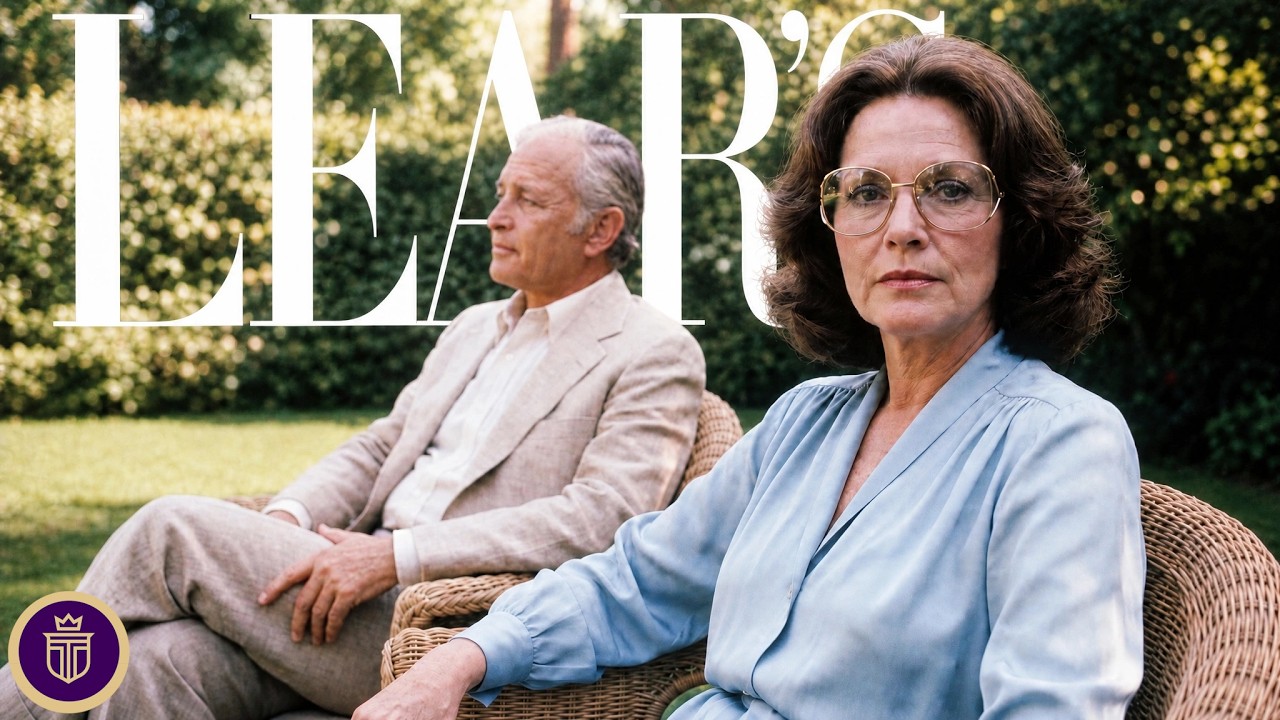
Now, the room was reserved in her name for a magazine that also carried her name. Lear was born Evelyn in 1923 in Hudson, New York, at a home for wayward girls, to an unmarried mother. No father was listed on her birth record. She was adopted at 14 months old by Herbert and Ellen Loeb and renamed Frances, launched her magazine with a direct editorial philosophy that she openly admitted was autobiographical.
She told the Los Angeles Times that year that she was the woman of the magazine and knew what that woman wanted. Before her marriage to Norman Lear, the producer behind All in the Family, Maude, and The Jeffersons, Frances had survived a difficult childhood. Her adoptive mother was reportedly vain and harsh. When Frances was ten, her adoptive father died by suicide.
Beginning at age twelve, she was sexually abused for years by her adoptive mother’s second husband. When she revealed the abuse to a psychiatrist and her mother confronted the man with the accusation, her mother sided with him. Frances left home with no money, no protection, and no completed education. She moved to New York City, working secretarial jobs she later said she was constantly fired from.
She moved into retail, working at Bloomingdale’s and Lord & Taylor, and later as a photographer at the Copacabana nightclub, where she learned to read rooms and sell to strangers under pressure, skills she would later use to court advertisers. Her first two marriages ended before she turned 33. She married Norman Lear in 1956 and moved with him to Los Angeles. Their daughters Kate and Maggie were born in 1957 and 1959.
The marriage lasted 28 years. While her husband built his television empire, Frances reportedly had strong opinions about scripts and politics, but her name was attached to none of his work. She became active in Eugene McCarthy’s presidential campaign and the National Organization for Women. The character Maude, played by Bea Arthur, was widely assumed in the industry to have been inspired by her.
She claimed this publicly for decades, but Norman Lear never confirmed it during their marriage. In his memoir, he wrote that of all the characters he created, the one most like himself was Maude. The dispute was never truly resolved. Around age 50, Frances was diagnosed with manic depression, now called bipolar disorder.
She had a long history of alcoholism and wrote openly about multiple suicide attempts. She once described herself as always strong and fragile at once, noting she had to be strong because fragility was always ready to take over. In 1985, at age 62, she finally left the marriage. The settlement was widely reported at around $100 million, though some sources cited $112 million, and the Los Angeles Times estimated the range at $100 to $125 million.
It was not a court-ordered judgment, but a negotiated agreement reached between the couple and their lawyers. Frances never clarified the exact figure. She arrived in New York on October 31, 1985, with a plan to launch a magazine for women over 40. She argued that advertisers ignored older women who controlled significant discretionary spending.
She funded the operation herself, budgeting $25 million initially, with Time later reporting the figure at $30 million. The announcement came on November 17, 1986. The magazine launched in February 1988 as a bimonthly with an initial circulation base of 125,000 copies. Advertisers paid $5,150 per color page, the annual subscription cost $15, and the newsstand price was $3.
The industry response was not kind. Industry observers treated her project with suspicion and mockery, often framing it as a wealthy divorcee buying herself a magazine the way a woman with no publishing experience might buy a horse. Some academics argued the magazine reinforced social control over older women rather than liberating them. But the readers showed up.
Paid circulation rose from 370,000 to 453,000 by mid-1990, and reached 503,000 by the end of 1993. The average reader was 45. 3 years old. The publication sold 459 advertising pages over a nine-month period in 1990.
The audience Frances Lear had identified, essentially by looking in the mirror, turned out to exist exactly as she described. Still, financial pressure grew. The magazine competed with large publishing groups that could bundle magazines into advertising deals at discounts no independent title could match. Frances Lear covered the gap between costs and advertising revenue from her own settlement every month.
Internal tensions surfaced on May 31, 1990, when 25 of the 83 editorial staff members were dismissed, a week after the president and CEO hired the previous year departed. The magazine was not shrinking at that point, it remained profitable in circulation terms, but the owner, editor, subject, and financier were all the same person, and staff reportedly struggled with her temperament. In February 1992, Carol Decker was appointed publisher. In March 1992, Frances stepped down as editor-in-chief, handing the role to Caroline Miller, a senior editor at Variety who had been reportedly wary of accepting the job because of the founder’s editorial interference.
Frances kept the title of founder, retained a monthly lunch meeting, and staff made clear the change was not a resignation. That same year, Knopf published her memoir, The Second Seduction, which she promoted on Fresh Air and Charlie Rose. The end came quickly. Caroline Miller left in early 1994 to edit Seventeen.
On March 10, 1994, Frances Lear gathered the staff and announced the magazine was finished. They were told to leave the building by four o’clock that afternoon. Final paychecks would arrive by mail, there was no severance confirmation, and the April issue, featuring Tipper Gore on the cover, was the last one printed. The New York Times examined the public explanations of an advertising recession and tough market conditions and rejected them.
The paper concluded that none of those factors caused the magazine’s closure, and that when Lear lost interest, she simply stopped the publication. One senior editor said staff were relieved it was over, while the executive editor said they felt they had done their best work there. When asked about the money she had spent, Frances Lear said she wanted to tell people it cost her nothing, because she spent the money on a magazine, and there was a difference. On the possibility of selling, she said that would have been impossible, and that she could not imagine her name on a magazine telling women they had to be 23 and sexy.
She said she would rather die than see that happen. Months after the closure, she started a television company and invested $500,000 in a 90-minute money management video titled Take Control of Your Money. She was diagnosed with breast cancer and fought it for two years before dying at her Manhattan home on September 30, 1996, at age 73. A second book, Frances Lear’s Guide to Work and Family in the 21st Century, was completed but never published.
Norman Lear, who had spent decades refusing to confirm how much of his work owed to her influence, said after her death that she had glamour, great taste, and rare elegance, and that she was a unique personality. The magazine remains a subject of debate among those who worked on it. One former staff member argued that Lear’s was never about Frances Lear, it was about the readers. The circulation numbers support that view.
But her own statement that she was the Lear woman points the other way. The gap between those two positions defined her life and her enterprise. Her money still works under her name. The Frances Lear Foundation received its IRS determination in 1999.
In 2024, it distributed roughly $794,500 across about 40 grants benefiting organizations such as Ballet Hispanico, the Tides Foundation, and the Rainforest Alliance, with her daughters and son-in-law on the board and her younger daughter Maggie serving as president. Her name, given to her by strangers, now appears on annual grant letters written correctly and belonging to no one but her.